
Posted in General Interest, Niamh Clune

A Nairobi Lesson!

Recently, a friend of mine, Patricia Tilton, reviewed a lovely little book for children on her blog: My Paper House by Lois Peterson about a little girl who comes from Kibera in Nairobi.

Reading her review, memories of my first impressions of the frantic, noisy, city of Nairobi inspired me to write something for my Insights Corner. At the time, I was doing a consultancy for Oxfam. I rode in my air-conditioned Toyota Landcruiser (until it was stolen) through the then-failing traffic system with its drive-on-the-left, traffic lit, roundabouted road infrastructure ~ a testament to Pre-Uhuru British colonialism.

Heat bounced off the pot-holed, tarmacked roads, causing them to soften and shimmy.

I remember driving through the parts of town where the rich lived. Roads were lined with mansions and gated-compounds guarded by Askaris. Pepper trees and Bougainvillea grew everywhere. I knew I was in Africa because of the glaring, daring colours ~ flowers and vibrant Kangas worn by local women. Only they can wear such colour. Their blue-black skin makes that of a white person’s seem bleached, devoid of life.

The relentless sun forces everything to exude its fragrance. house nairobihouse nairobi

I drove to another part of town. Glinting corrugated tin roofs bounce the sun back into your eyes ~ mirroring something of the reality of contrasts in that part of the world. The Kibera slums occupy a space not quite as large as Central Park. Kibera is jammed full of ramshackle tin huts. Beneath those roofs, men, women and children live in unimaginable poverty. Urine and feces run in open ruts across the ground. There is nowhere to walk, no streets, street lights, or running water. The walking paths (if you can call them that) are filled with rubbish and human waste.
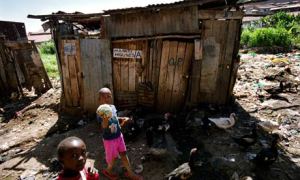
1,000,000 men, women and children live there. There are approximately 1300 people per toilet. If a toilet is occupied, a person squats over a plastic bag (which is a rare commodity) tries to tie it, then jettisons it into space (“flying toilet”).

Kibera is a breeding ground for Diptheria, Malaria and Typhus. Many children don’t live to see five years.

Kibera is an eye-sore, stinking, outrageous and offensive in every way imaginable.slums
Yet, I learned something from my visit (which does not make it right, justify its existence or create a holier-than-thou chance to evangelise in search of a raison d’etre.)

A child of about nine years old approached me. “Mama!” she said. “Give me that.” I looked at what she pointed to. I had a plastic container that I considered rubbish and would (being ecologically minded) recycle. “Give me that,” she said again in English.

I gave it her, and she smiled her thanks. She seemed delighted. I learned later that this little raggedy girl lived on rubbish. Every day of her life, she foraged in Nairobi rubbish dumps to find anything of value that she might then sell on for a few shillings. I had given her something that, for me, was worthless trash, but to her, meant she could eat Ugali that day.

Interestingly, my house-girl (I didn’t invent the terminology or the servant-driven economy) had a plastic container just like it on the window-sill of her hut (of which she was intensely proud). Once, it had been filled with succulent strawberries, now, it was Crosby’s bead box. And she thought it beautiful.

Insight? Apart from the outrage I felt/feel that this goes on in the world and we, collectively, do nothing about it, I looked into that little girl’s eyes. I saw a look of achievement, hope, pride. I did not see failure or despair. She had survived that day. She wanted to survive, thrive, live. Only 8% of girls in Kibera are educated. Just think what this child might achieve if she were given the chance!

Sometimes all we need is a chance. That little girl would grab the taken-for-granted thing and run with it ~ for years and years ~ propelled by its value.

– Niamh Clune

© 2014, essay, Niamh Clune, All rights reserved; photo #1 courtesy of Mwanamwiwa; photo #2 The Guardian News Service; photo #3 © Nairobi Slumbs Schools Project Trust;
430564_3240554249063_1337353112_n-1orange-petals-cover_page_001DR. NIAMH CLUNE (Plum Tree Books Blog) ~ is the author of the Skyla McFee series: Orange Petals in a Storm, and Exaltation of a Rose. She is also the author of The Coming of the Feminine Christ: a ground-breaking spiritual psychology. Niamh received her Ph.D. from Surrey University on Acquiring Wisdom Through The Imagination and specialises in The Imaginal Mind and how the inborn, innate wisdom hidden in the soul informs our daily lives and stories. Niamh’s books are available in paperback (children’s books) and Kindle version (The Coming of the Feminine Christ). Dr. Clune is the CEO of Plum Tree Books and Art. Its online store is HERE.  Niamh’s Amazon page is HERE.
Posted in Essay, Photography/Photographer, Spiritual Practice, Terri Stewart

Sacred Space in the Frame

This month is interNational Photography month! Here at The Bardo Group, we will be playing with this theme all month long. On Sundays, we will be focusing on where the practice of photography intersects with our own experience and expression of spirituality.

Thomas Merton has a photograph he titled “Sky Hook.” He wrote about it, “It is the only known picture of God.” It is definitely not what you would expect! No heavenly skies, no angels, no beard. What was Merton thinking…a simply construction hook hanging from the sky towards the earth. (You can see the photo many places on the internet, but I couldn’t find a place with clear permissions.)

Often we see photos that prompt us to stop, look, and to appreciate what we have seen but also to wonder about something more. That something more can be something bigger or something smaller. My new friend and photographer, Paul Jeffrey, takes photos for the United Methodist Church for the General Board of Global Ministries—yes! He is a photographer-missionary. He typically focuses on the beauty and stories found in people. There is a photo of a young child in a box (all kids like to sit in boxes, no matter where they are in the world!)  He recently shared this photo with us in a small group and talked about the story. He said there was a huge reaction to the photo. Such a beautiful, young child abandoned in a box! What the photo does not show is that the family was just out of the frame.

How we frame our photographs tells a story.

What if Merton’s photo had the construction equipment in it? What if Jeffrey’s photo had the family in it? Would it tell a different story? Would that story be better? Worse? More effective? Less effective? What does this say about how we frame the stories of our own lives?

Framing is a spiritual practice. Or at least knowing what we are cutting from the frame. If we willingly cut off parts of the frame to focus our attention onto another part, that is fine. For the moment. But if we willingly cut of parts of the frame and never return to the whole, something is lost. I am thinking, in particular, of people who do things like cutting science out of their lives or people who cannot see the whole spectrum of society. When we get caught up in our own particularity, we forget the universal journey. And we forget that the child in a box has a loving, concerned family.

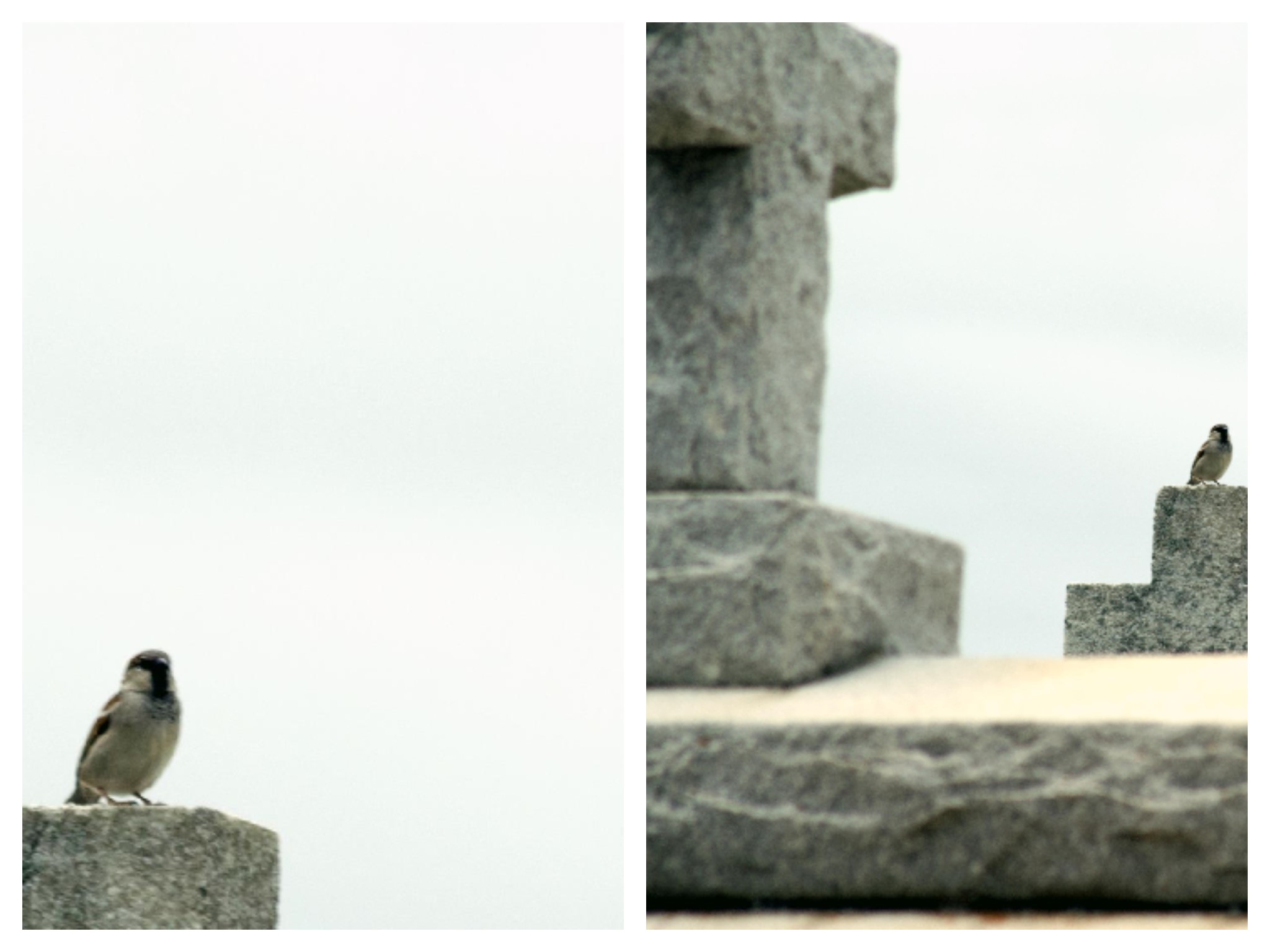
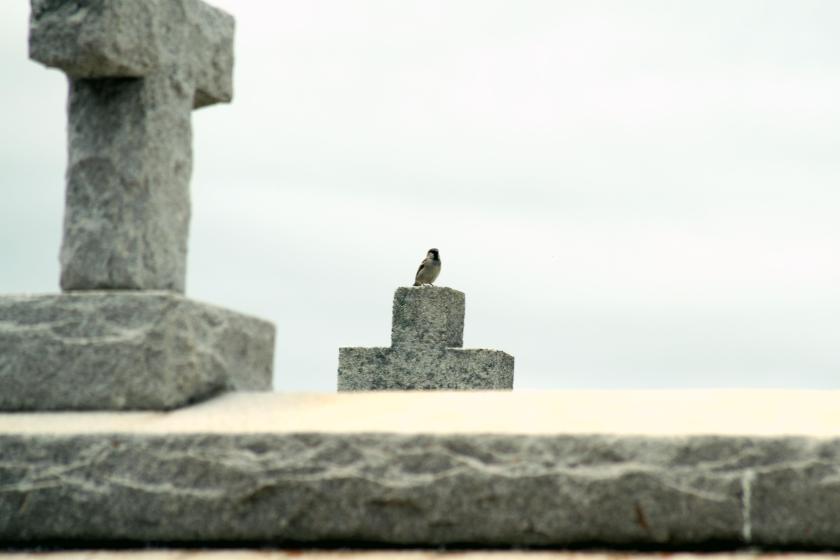
Below is a collage of one of my photos that I framed in two different ways. They tell completely different stories, in my opinion!

birdcollage

You don’t even have to be a photographer to understand the importance of framing. Hold your hands up around your face, blocking parts of your viewing field, and you will be able to frame your vision. Sitting right where you are!

In photography, we can say, “Where does framing help tell the story? Where does it hurt the story?”

In our lives we can say,

Where has framing helped you tell your own story? Where has it hurt you?

I’d love it if you would share your blog and perhaps a photo comparing two different ways of framing. That would be wonderful! 

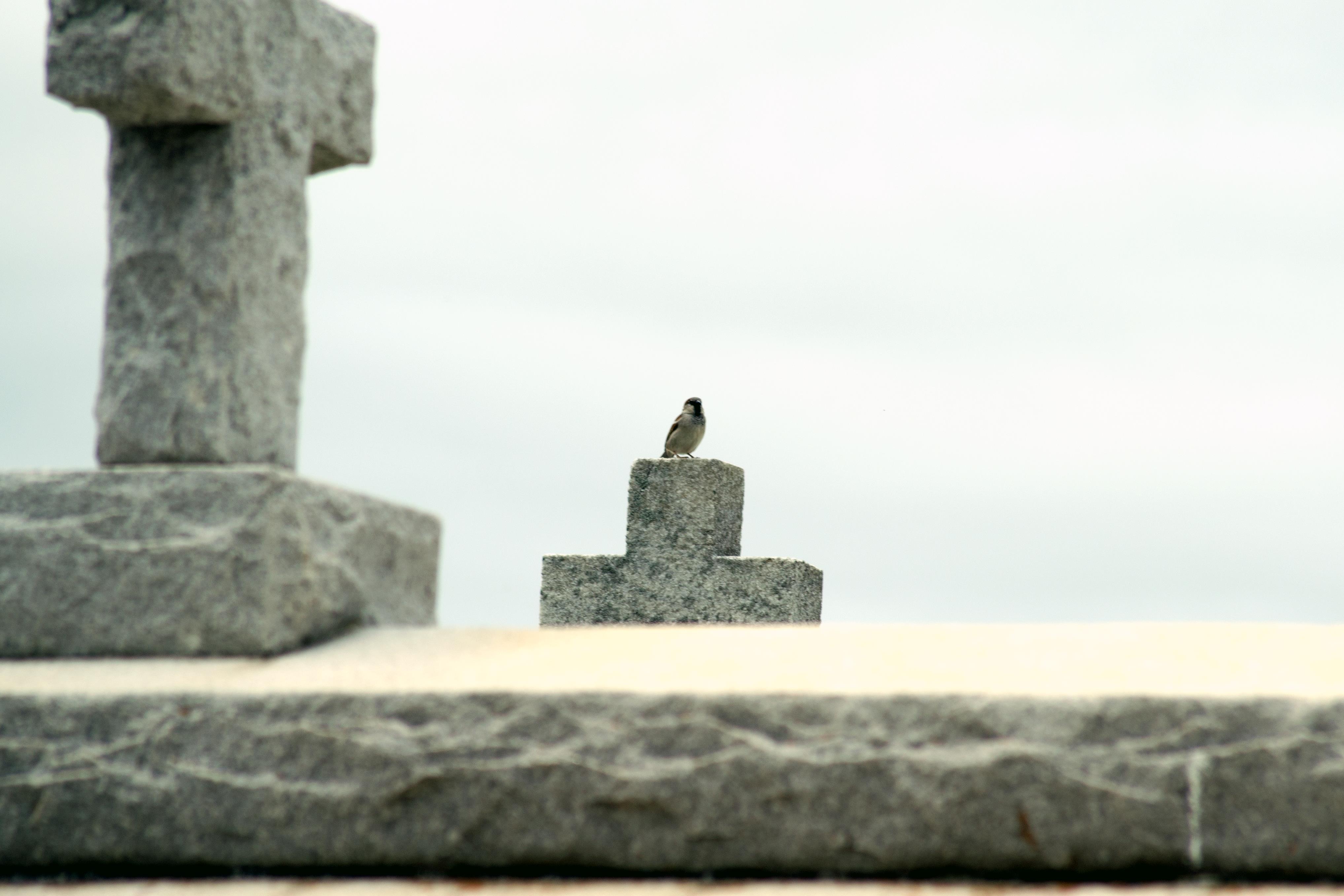
birdatcemetary

    Shalom and Amen!

Post by Terri Stewart, 2014
CC License (CC BY-NC)

terriTerri Stewart ~ a member of our Core Team,  comes from an eclectic background and considers herself to be grounded in contemplation and justice. She is the Director and Founder of the Youth Chaplaincy Coalition that serves youth affected by the justice system. As a graduate of Seattle University’s School of Theology and Ministry, she earned her Master’s of Divinity and a Post-Master’s Certificate in Spiritual Direction with honors and is a rare United Methodist student in the Jesuit Honor Society, Alpha Sigma Nu. She is a contributing author to the Abingdon Worship Annual.

Her online presence is “CloakedMonk.” This speaks to her grounding in contemplative arts (photography, mandala, poetry) and the need to live it out in the world. The cloak is the disguise of normalcy as she advocates for justice and peace. You can find her at www.cloakedmonk.com,www.twitter.com/cloakedmonk, and www.facebook.com/cloakedmonk.  To reach her for conversation, send a note to cloakedmonk@outlook.com.
Posted in Essay, Spiritual Practice, Terri Stewart

Sacred Space in the Doorway

Often, in religion-land, we talk (I talk) about being created in the image of God. Imago Dei. I usually think about this in terms of other people. I look and I see a beautiful youth, a reflection of the divine, and know that they are loved and are love.

But what about looking at myself?

Monday, I was at the IRS. Ugh. I have had my identity stolen. I needed to prove to the IRS I was who I said I was so that they would let H&R Block file my taxes. The proving part was easy, and a criminal case has been opened. What was hard was the waiting. And the human hubris.

Sunday, I was at Lake Washington UMC, presiding and preaching. It was a blast and I tackled a difficult subject–radical nonviolence. Especially, the nonviolence that begins with myself–interior nonviolence. I was greatly moved when a woman talked to me afterwards about now hearing the internal put-downs as doing violence to herself. “Awesome!” I thought. And I was really feeling it–this tug towards nonviolent action that starts with yourself.

Monday, waiting in line at the IRS, there were 40 people jammed into a little office and 40 people waiting in the hallway of the office building the IRS rents space in. Then the vacuum lady came. She said, “Everybody get out of the hallway now! Get inside!

Confusion amongst the people.

“Get inside or go downstairs!”

She just wanted to vacuum and the company rules are that no vacuuming can occur unless there are zero people in the hallway. Some liability issue with the cord and people tripping. :-/

I looked at the amount of people jammed into the office and thought, “There is no way. This is unsafe, someone will get hurt.” And I thought of going downstairs and losing my place in line, and I thought, “There is no way I am losing my place in line.” And there may have been curse words interspersed in there.

I said, “It is unsafe, capacity in this office is exceeded.” I then stood on the edge of the doorway between the office and the hallway. I now view that doorway as a liminal space–a sacred space of potentiality.

She said, “I will shut the doors to the office.”

I thought, “Bring it!

How quickly I devolved from nonviolence to violence in my thinking and communication. At least my internal communication. I didn’t say anything to her, but I am sure that my stance and eyes communicated all that needed to be said. Which was, “Call the cops on me–I don’t care.” Yep. I was willing to risk arrest so that I would not lose my place in line at the IRS. That may or may not be bordering on the ridiculous.

The upshot is, where do we see the divine? Is it in perfected behavior? In the “love” and “patience” and “serenity?” Or can we see it in the “anger” and “frustration?” Because if we are honestly made in the image of the Divine, then those must be qualities that come from God!

Anyway, after the vacuum-lady left, the IRS called a bunch of numbers and we were all confused as to who they were because nobody came when the numbers were called (some people actually did go downstairs). Until one number was called and we all knew who it was–a family with little kids. And we knew that they had gone downstairs. People spoke up. They were willing to extend their wait in line to see that the injustice of losing their place in line was righted. The staff went downstairs and got the family, taking more of their time when they had a bunch more people impatiently waiting. This family was cared for.

Maybe that is where we see the best of the imago dei. The willingness to extend our own discomfort to ensure that justice is done.

“The Lonely Vacuum of Space ”This Sucks” by JD Hancock CC BY 2.0 at Flickr.com
The Lonely Vacuum of Space
”This Sucks”
by JD Hancock
CC BY 2.0 at Flickr.com

Post by Terri Stewart (c) 2014, originally posted at www.BeguineAgain.com

terriTerri Stewart ~ a member of our Core Team,  comes from an eclectic background and considers herself to be grounded in contemplation and justice. She is the Director and Founder of the Youth Chaplaincy Coalition that serves youth affected by the justice system. As a graduate of Seattle University’s School of Theology and Ministry, she earned her Master’s of Divinity and a Post-Master’s Certificate in Spiritual Direction with honors and is a rare United Methodist student in the Jesuit Honor Society, Alpha Sigma Nu. She is a contributing author to the Abingdon Worship Annual.

Her online presence is “CloakedMonk.” This speaks to her grounding in contemplative arts (photography, mandala, poetry) and the need to live it out in the world. The cloak is the disguise of normalcy as she advocates for justice and peace. You can find her at www.cloakedmonk.com,www.twitter.com/cloakedmonk, and www.facebook.com/cloakedmonk.  To reach her for conversation, send a note to cloakedmonk@outlook.com.
Posted in Essay, General Interest, John Anstie

Good Friday, Good Fortune and Forgiveness

“Never let the sun set on an unforgiving thought” © 2012 John Anstie

It started one Good Friday morning, three years ago, sitting, as we sometimes do on a weekend, in bed, with a cup of tea, reading, reviewing, talking, relaxing.

Because the finances are my responsibility, unusually, I used this moment to run through the ‘state of the nation’. We then fell to looking ahead to our imminent retirement and the likely income from our pensions, such as they would be.

Every time we fell to talking about pensions, I was irresistibly drawn to musing about the first of my four different private pensions, which exist by virtue of changing employers. This pension was with the steel company, for whom I worked for the first eleven years of my career, which was ‘frozen’ upon its merger with another company. The process of reviewing whether to leave my original pension frozen or move it into a private fund was aided by a ‘friend’ who worked with a mutual insurance company at the time. Given that this was in the midst of the Thatcher era and the new market economy, ‘advice’ abounded that pensions should become more portable as the work force became more mobile and everyone was getting on Norman Tebbit‘s proverbial bike!

Long story short, the outcome was that I chose to move it to the private pension recommended by my ‘friend’ and the fund ended up being worth one third of what it would be had I left it where it was. So it was too late to make up the loss.

Whether or not I forgive my ‘friend’ for whatever responsibility he could himself reasonably shoulder for this advice, was rendered irrelevant by my next prompt, which occurred whilst I ate my breakfast and watched the second half of an hour-long documentary on BBC1, “What’s The Point of Forgiveness?”, presented by Historian, Bettany Hughes. It took a look at the history of this virtue, which emanates from the apocryphal words of Jesus, “forgive them, they know not what they do…”. In her thesis Hughes presents the alternative to forgiveness as being the vicious cycle of revenge, which inhibits recovery, engenders pain and does not allow us to move on.

Two significant events that I saw, cited in this programme, were the ‘Truth and Reconciliation Commission‘ setup up in South Africa, following the release of Nelson Mandela and his election as president, and an interview with the wife of the co-pilot of Flight Eleven, which was deliberately flown into one of the Twin Towers in New York in 2001, who, in spite of her emotional struggle to come to terms with the loss of her husband and father to her two children, had somehow found it in her to forgive the terrorists. Both these events stand out in a way that gives us hope for humanity and human spirit. Whilst we can all understandably feel vengeful and hateful against those who harm us or our families, our tribes, our communities, it is only by forgiveness and by not antagonising the perpetrators of atrocities against humanity into a vicious cycle of destructive and vengeful argument that they may become capable of contrition and able to feel remorse. People who have achieved genuine forgiveness, like those already mentioned, accordingly become living proof that genuine forgiveness is the only road to reconciliation and peace.

So, how can I complain when I am able, as I did at the time of writing this, to sit in our sun-bathed garden, ringing with bird song, cup of coffee in hand, in good health and with the freedom to write what I want to say on almost any subject in this blog, here, now, any time it pleases me to do so. How can I feel vengeful toward someone about a pension shortfall, when there are people in the world, who can forgive acts of inhumanity that defy belief; that have caused the loss of life, the torture of innocent people, the deprivation of the most basic of human rights affecting whole communities, populations… there is truly no need to answer this question. One question does, however, remain.

That question is simply this: how can I, in spite of all the good fortune I have had in my life, in spite of the fact I am no longer an angry young man – for which there may have been a little justification early in my life – and in spite of the fact that the sun is shining; how can I follow this advice and ensure that, deep down, I can genuinely forgive anyone, who is guilty of anything, whether it be a simple thoughtless slander or the most unspeakable inhumanity. I feel this is the question I should continually ask myself and strive to achieve the only result that common sense points toward with undoubted clarity. It is so obvious to me that to forgive someone is to take the wind out of their angry or irrational sail; make it pointless for them to consider acting in such a way again, rather like a petulant child who, in moments of insecurity, challenges their parents by pushing at the boundaries, trying to get a reaction; when they don’t get it and the parents show forgiving, but calm and disciplined resolve, they gradually adjust their behaviour. It has to be said, nonetheless, that if it were the easy option, we’d all be able to forgive.

It should be easy for me in my relatively privileged social and economic circumstances, but how much more difficult is it for someone who is wired differently from me; who is younger and is just setting out on life’s difficult journey trying to survive; who may even have more justification for their anger or who is simply wired in an ‘angry’ sort of way. I don’t know the answer to this, but, whatever happens, if the message of Easter is to mean anything, whether or not you are, unlike me, an active Christian, then we ought to keep on trying… to be grateful for good fortune, to forgive and move on. What better cause is there to encourage harmony whenever and wherever in the world we can.

[A longer version of this article was first published on John’s prose blog, ‘Forty Two’ in April 2011.]

Photo and Text © 2014 John Anstie

John_in_Pose_Half_Face3JOHN ANSTIE (My Poetry Library and 42) ~ is a British poet and writer, a contributing editor here at Bardo, and multi-talented gentleman self-described as a “Family man, Grandfather, Occasional Musician, Amateur photographer and Film-maker, Apple-MAC user, Implementation Manager, and Engineer. John participates in d’Verse Poet’s Pub and is a player in New World Creative Union. He’s been blogging since the beginning of 2011. John is also an active member of The Poetry Society (UK).

*****

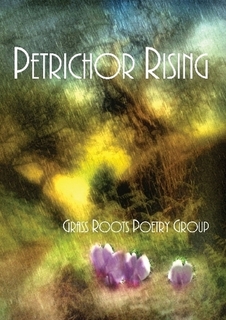
Petrichor Rising Book Cover.phpd'Verse Anthology Book CoverJohn has been involved in the recent publication of two anthologies that are the result of online collaborations among two international groups of amateur and professional poets. One of these is The Grass Roots Poetry Group, for which he produced and edited their anthology, “Petrichor* Rising. The other group is d’Verse Poet Pub, in which John’s poetry also appears The d’Verse Anthology: Voices of Contemporary World Poetry, produced and edited by Frank Watson.
Petrichor – from the Greek pɛtrɨkər, the scent of rain on the dry earth.

Posted in Essay, Guest Writer, Poems/Poetry, Poets/Writers

The Burden of a Shared Name

571px-Blaga_Dimitrova_YounI used to hate her, foolish, a teenager’s hate that can only be explained in a parallel universe where logic doesn’t exist. I was a sixteen-year-old girl in a class with additional studies of mathematics. I was supposed to have the sharp brain, the emotion-free behavior required for someone who was a shining star in solving mathematical problems. Then suddenly there it was: the literature lesson about her and one of her poems I don’t even remember. The teacher decided that I was the one who should talk about her that day because of the first name we shared. 41GHNKWJ10L._SY344_BO1,204,203,200_

It was a disaster! I hadn’t read a word from what was written in the school books about her and her poetry. When I was asked the question ‘What do you think Blaga Dimitrova’s poem symbolizes?’ all I could think about to answer was, “The only person who really knows what the words in a poem meant is the author herself. We, as readers, can interpret as we feel right and only hope we’ve reached close enough the thoughts of the writer.’ Wrong answer! A bunch of literature critics that wrote the school book of literature, had already decided what her poetry signified, just like they had decided what every other writer we had studied represents with their work.

I got a bad mark that day and I had come to a conclusion that no one should want to be a poet in a country where we are told what to think. The bad mark wasn’t the worst. After the lesson everyone started calling me Dimitrova. I didn’t like it, I could feel it was meant to be a joke with my personality; to label me with the weakness of feelings only poetry could carry because this is what I used to think about poetry and poets – weak people spilling their weaknesses… Ridiculous, isn’t it? And who knew that I would become one of those weak people. Who knew that one day I would learn  to squander my emotions elegantly on a piece of paper and love doing it too?

At the same time Blaga Dimitrova was vice president of my country, Bulgaria. That was another reason to dislike her. I didn’t dislike her because she was in politics. Who was I to judge someone I have seen only on tv? I disliked Dimitrova because I couldn’t understand why a sane person would stand to support the President we had at that time, and I just couldn’t understand why he was elected. I didn’t know him either. I was way too naïve and young to have the maturity to understand the political situation, but on his face was written all over “I’m capable of nothing.”

When a year later Blaga Dimitrova resigned from her post as a Vice-President due to a disagreement with the President she gained my respect and with that come the urge to re-evaluate her poetry. It was a shock to find that I actually loved her style, her words. The first poem I read and understood from her was:

Tag

I keep forgetting my clock
to escape the time.
But it catches up with me and I whirl
with the whopping, falling leaves.

I enter the sea with the clock on my wrist
to drown the time.
But it slaps me in the face
with the bells of the foam.

I’m not counting the beats of the pendulum;
I want to put the time away.
But it lands right on my nose
with the first snow.

At night I don’t set the alarm
with the hope the time will stop.
But it’s waiting for me in the cold bed
with love already gone.

– Blaga Dimitrova

Then I read her novel Journey Toward Myself.  It’s a book about a girl who tries to escape her past, which is not an easy task in the years of communism, especially if you were born in the wrong family. The message is rather strong and easy to apply to anyone of us. No matter how much we travel and how much we search for the person we are supposed to be, sometimes what we are meant to be is right there where we started our journey.

My favorite quote from Blaga Dimitrova’s book is: “I blessed him with a smile. It dissolved him completely. There was no need for words. I should have tried with a smile at first. I tend to forget that this is my most faithful weapon. I have never thought what impact a smile can have. Only here in the land of rocks and coarse people I found the strength of my smile. It’s worth to travel so far for such a discovery of your own possibilities.”

It’s somewhat hard to explain Blaga Dimitrova’s work and to try to extract a short conclusion that could fit into one review. There is always that special feeling left in the heart after you read her. Maybe that’s why I grew very fond of her poems and stories over the years and maybe that’s why it’s really difficult to fit everything I want to say about her in one blog post.

I can tell you that she comes from a family with professional parents. Her mother was a teacher and her father was a lawyer. She attended a roster of prestigious schools and gained an education that supported her talent. She was honored with many literature awards.

One of her books, Avalanche, was made into an acclaimed movie,  one of the best Bulgarian movies ever in my opinion. Some of Blaga Dimitrova’s work was forbidden in the 80s, because of the strong anti- communism touch. I could tell you that some people liked her and some not. Be it for her political views, be it for her writing, it doesn’t matter to me. On the 2nd of May in 2003 after a long battle with cancer, Blaga Dimitrova died. She was eight-one years old.

I believe on that day Bulgaria lost a great talent. Many years have passed. I am no longer the sixteen-year-old girl who didn’t know how to appreciate the good things in life. I have left Bulgaria for my own reasons and maybe I am still traveling towards myself to find who I really am. It hurts sometimes when I go back home to see that nothing from great people like Blaga Dimitrova was passed on to the new generation. Sometimes I still feel the burden of the shared name with the poetess, not because I am embarrassed to be connected to the weakness of poetry, but because I am afraid I will not be able to stand up worthy of the name Blaga like Ms. Dimitrova did with her talent. I love so many of Blaga Dimitrova’s poems, it’s hard to choose the best, but this one I had written on my wall in the room where I was living during my years at University. It is the one I cherish most.

Lyrical

In the sunset of every love
occurs pain and sadness.
After sunset every night
comes darkness and silence.

When somebody leaves you,
you don’t have the strength to stop him.
When you see that love dies
you can’t die along with it.

You understand that the dreams have never been real
that you have loved, but there wasn’t love,
that the memories are a pain that has fled already,
that you were happy, but you didn’t notice it.

– Blaga Dimitrova

For everything I have translated in this post, there probably could be a better translation. I’ve said it many times, some poems are best to be read in the language they have been written, but I did the best I could. My thanks to The Bardo Group for the opportunity to share the story and poems of a great Bulgarian poetess with readers here in honor of interNational Poetry Month.

© 2014, essay, Blaga Todorova, All rights reserved
Photo credit ~ Merolina under CCA-SA 3.0 Unported license via Wikimedia Commons

unnamed-6BLAGA TODOROVA (Between the Shadows and the Soul) ~ was born in Bulgaria, lives in Greece and doesn’t stop dreaming about finding new country for herself. She doesn’t consider herself a writer, but just someone who sometimes is lucky enough to be at the right place, with the right person, with the background of the right music that will bring the right words. Blaga has been blogging for many years now and has won the friendship and following of other poets and writers for her insights, humor and sense of romance and of justice. English is not her first language, but she uses it well and it is her favorite language for her favorite artistic pursuit, writing. She has a novel in progress. She is also a rather accomplished photographer.

Posted in Culture/History, General Interest, grief, Liz Rice-Sosne, memoir, poem, Poems/Poetry, poetry, Poets/Writers

November 22, 1963, Lives in Memory

Haibun

I had been to lunch in Third House.  It was a warm spring day, just the sort of day to leave lunch early and walk in the sunshine.  I ambled over to Second House and plopped down in front of the TV.  I had spent my sophomore year here and I had always loved it – it felt like home more than any other dorm.  However, that day I was a senior, an upperclassman of 17 years of age.  While at Dobbs’ I had lived in each of these Queen Anne houses.  Today I lived in First House.  They were rickety and old, painted a dull boarding school gray.  None the less I was quite comfortable for they represented home for me for three of my four years at school.  I comfortably seated myself on a couch in front of the television.  It might no longer be my dorm, but it still felt cozy and I felt confident, that day so long ago.  That confidence must have come from some of that upperclassman swagger that one acquires as they move though their grades (although, to be honest, I didn’t have much swagger).  It felt strange as I did not have many confident days in my youth.

wild grey geese above

flew in perfect formation

chaos left behind


Haibun

I flipped on the black and white TV, there was no color in those days. “Oh My God. What was happening?” I was in an instant state of shock. President Kennedy had been shot right in from of my eyes – in his limo in Dallas, Texas. “Was this true?” There was growing chaos everywhere on the television, then this horrific  event seemed to ebb out of the television and blanket me. It was thick and dark. I knew that I must get away. I had to get up, go back to the lunchroom and tell of the shooting. I thought of our beautiful first lady and what her sadness must be like. It was so hard to move. I made myself leave.

woodpecker knocking

high above in the maple

a chick all grown up


Haibun

I ran back to the lunchroom and shouted out the news. I do not remember another thing that afternoon. I do remember crying myself to sleep that night filled with such emptiness, dread and a sense of loneliness. Of late, I have been reading a good deal about the Kennedys. I will never believe that this assassination evolved out of the crazy thoughts of one lone Soviet sympathizer. I also suspect that the full truth of those moments in Dallas that November 22nd of 1963 will not be known by the public within my lifetime.

shells upon a beach

dry cool windy autumn day

creation of sand

unnamed-2LIZ RICE-SOSNE a.k.a. Raven Spirit (noh where), perhaps the oldest friend to Bardo, is the newest member of The Bardo Group Core Team. She is also our new Voices for Peace project outreach coordinator and our go-to person for all things related to haiku.  She says she “writes for no reason at all. It is simply a pleasure.” Blogging, mostly poetry, has produced numerous friends for whom she has a great appreciation. Liz is an experienced blogger, photographer and a trained shaman. We think her middle name should be “adventure.”

Posted in Essay, Spiritual Practice, Terri Stewart

Sacred Space in Opposition

I have been at a conference all week where we have been discussing how to organize ourselves to create social change. One of the most fun exercises what a Bible study linking the Book of Esther from Hebrew scripture with organizing for social change.

In the story of Esther, there is no mention of the Divine Name or any prayers offered, instead, it is a primer for racism and overcoming broken political systems.

Plot summary:

King Ahasuerus wants his wife, Queen Vashti, to come and show off her beauty to a bunch of drunk men (including the King). She says, “No.” She is then banished because she is a bad example for all women and all women must “know their place.”

Then the King is on a hunt for another wife. Mordecai pimps out Esther and Esther is brought into the royal harem. Why? She is beautiful, but primarily because she found favor with the eunuchs and maid servants. And they taught her how to find favor with the king.

Haman, one of the king’s guys, gets all pissy about Mordecai not bowing to him and asks to write a law that would destroy the Jews. The King is then able to rubber stamp the law (he gives away his ring) while never getting his own hands dirty.

When the new law passes, the Jews and Mordecai where sack cloth and mourn. Esther hears about the situation from the Eunuchs and encourages Mordecai to wear normal clothing. Mordecai then has the Eunuchs relay to her the situation (she was definitely isolated).

Esther convinces the King that this is a bad situation and the injustice that would have wiped out the Jews is fixed.

Yay! Injustice is fixed!

So, we all face injustice in our context. It may be threats to peace, the justice system, economics, poverty, etc. But we all face it! And some are actively working to correct injustice–creating sacred, healing, wholly, holy, space. In organizing ourselves, the question becomes, can we name:

  • Who are the Kings?
  • Who is the Queen who will lay down their power in order to maintain a just world?
  • Who are the Mordecais? Those who would be persecuted?
  • Who are the Esthers? The ones who know the King and can be educated as to a new way of living justly?
  • And who are the maids and Eunuchs? The ones who are also persecuted and underprivileged? Who may have sympathy for the justice issue?

What is wonderful about this is that it allows us to think creatively rather than to think that those with power are the only ones who can cause change. In this story, everyone becomes a change agent! Change for a more just world is another way of creating sacred space.

So mote it be!

And now for some inspiration from slam poetry, “Addressing Food Inequality.”

Post, Terri Stewart (c) 2014

terriTerri Stewart ~ a member of our Core Team,  comes from an eclectic background and considers herself to be grounded in contemplation and justice. She is the Director and Founder of the Youth Chaplaincy Coalition that serves youth affected by the justice system. As a graduate of Seattle University’s School of Theology and Ministry, she earned her Master’s of Divinity and a Post-Master’s Certificate in Spiritual Direction with honors and is a rare United Methodist student in the Jesuit Honor Society, Alpha Sigma Nu. She is a contributing author to the Abingdon Worship Annual.

Her online presence is “CloakedMonk.” This speaks to her grounding in contemplative arts (photography, mandala, poetry) and the need to live it out in the world. The cloak is the disguise of normalcy as she advocates for justice and peace. You can find her at www.cloakedmonk.com,www.twitter.com/cloakedmonk, and www.facebook.com/cloakedmonk.  To reach her for conversation, send a note to cloakedmonk@outlook.com.


Posted in Culture/History, Essay, General Interest, Priscilla Galasso

Good Gawd, Y’all!

Another school shooting hit the news yesterday. The impact seems dull. Repetition has begun to numb my response. The predictable media storm continues, but just as raindrops seem less penetrating after your clothes are soaked, I simply can’t absorb this horror. And that is rather shocking.

 I Googled “List of school shootings in the U.S.” The Wikipedia article’s chronology goes by decade, starting with the 1760s. There is one entry there. The next listing is 9 decades later. Two items there. The narration continues to list shootings for every decade. When we get to this millennium, the bullet points are replaced by a chart. From 2000 – 2010, there are 46 different shooting events chronicled. From 2010 – 2014 (n.b. Not even half a decade!) there are 65, including yesterday’s. And I may have lost count of one while scrolling down through the list.

Obviously, this storm is escalating. This is a flood. Our country is awash in violence being perpetrated against school children. School children! What can that be about? What madness has overtaken our culture that young people at their studies have become targets? I’m pretty sure it’s not so much about the targets as it is about target practice.

 Our culture has target practice deeply embedded in its psyche and readily available in its entertainment, military and politics. Angry? Take aim. Proud? Take aim. Patriotic? Take aim. Need security? Take aim. Impoverished? Needy? Insulted? Invisible? Defiant? Miffed? Whatever the uncomfortable feeling you have, you can get relief by pulling out a weapon and taking aim at some target. Children in school apparently make a pretty easy gallery.

 This approach is like using the same tool for every situation, no matter what it is. Would you use a hammer to wind your watch or play your piano or punch down your bread dough or crochet a sweater? No. And how did you learn to lay your hands on the appropriate tool for each of these situations? Most likely, at a very young age, you watched someone do it. A role model. Perhaps a parent or grandparent. Someone you trusted, who spent time with you, doing everyday kinds of things.

P1040287

 Let’s look around. Where are the role models that are pulling out weapons for every crisis? Where are the role models who are negotiating, discussing, creatively engaging, brainstorming and experimenting with different non-violent approaches? Who are the role models who have multiple tools in their belts and use the appropriate ones for the situation? And violence, what is it good for? Is it ever the best tool for the job?

 And, c’mon, let’s be creative. Why does our entertainment have to follow this unimaginative formula of violence? There are a million other options. There are a million other roles to play. Playing something different will make us smarter, wiser, more flexible, more open, more like children. School children….our vanishing resource.

© 2014, essay and photograph, Priscilla Galasso, All rights reserved

004PRISCILLA GALASSO ~ started her blog at scillagrace.com to mark the beginning of her fiftieth year. Born to summer and given a name that means ‘ancient’, her travel through seasons of time and landscape has inspired her to create visual and verbal souvenirs of her journey.

Currently living in Wisconsin, she considers herself a lifelong learner and educator. She gives private voice lessons, is employed by two different museums and runs a business (Scholar & Poet Books, via eBay and ABE Books) with her partner, Steve.

Posted in Corina L. Ravenscraft, Essay, poem, Poems/Poetry, poetry, Poets/Writers, Writing

April is Poetry Month!

Since 1996 in the United States and 1998 in Canada, April has been deemed by poets, librarians, booksellers and teachers as the best month to celebrate poetry, as it has been recorded as the time of year when it can garner the most participation. Although the celebration of poetry in April started as national events in US and Canada, the Bardo Group is celebrating the month as International Poetry Month, since we are a multi-country, multicultural collaborative. Here is some history on how and why poetry month started and some ideas for ways in which you might celebrate with your friends and family.

image borrowed from http://thelivepoetsociety.wordpress.com

It was started by the Academy of American Poets as “an ultimate effort to encourage poetry readership year-round.”Source HERE is a great page and resource for what it’s all about. You can even receive daily poems by e-mail, if you like! THIS page has a list of thirty ways to celebrate. My three favorites among these suggestions are: * Put poetry in an unexpected place. I love this idea because the surprise element adds something extra – the very fact of it being unexpected may make more of an impact upon the person who sees/reads the poem, and perhaps will leave more of a lasting impression. 🙂 I’m already scouting out unexpected places to leave a poem or two! Post-it * Play the Exquisite Corpse game. (Rules can be found here) Simply put, it’s a game where the participants agree beforehand on what sentence structure to use, then provide one word and pass it along to the next person who has no idea what the word before is…and then that person passes along their word, and so on. It could be just a simple line of poetry or an entire poem, depending on how many people participate and/or how many times each person submits a word. What a fantastic idea to get people to have fun and collaborate, creating a unique poem in the process. I need to find some people willing to play, and if it turns out to be a success, I’ll post the results. 😀

Image borrowed from http://diaryofasmartchick.com

* Take a poem out to lunch. My “lunch-time” normally falls between 9:30 p.m. and 10:30 p.m. because I work the night shift, so I don’t often have company with me. However, this is the perfect excuse to take someone to lunch with me on one of my days off and bring a poem! Maybe the person I take can bring one, too, for twice the enjoyment and twice the discussion. 🙂

Image borrowed from http://blogs.thenews.com.pk

However you decide to celebrate, I hope you DO decide to at least read or write one new poem and help spread the appreciation to others. One of my favorite ways to enjoy poetry is by searching and finding the perfect picture for a poetic verse or quote. It can be a lot more challenging than you might think, and the image/poetry combination is often times far more striking and memorable to the reader/viewer than a simple line of type. Of course, always be sure to give proper credit for both picture and poem.

Though on The Bardo Group blog we won’t exclusively post poems everyday this month, we’ll certainly celebrate with many poems and poets from different times and many places. Along with the Academy of American Poets, we’ll celebrate A Poem in Your Pocket on Thursday, April 24, when everyone is invited to share a poem here and/or a piece about a favorite poet no matter the poet’s time or place. Mister Linky will go up and you can link in your own work or share a URL to work you admire. Or, if you prefer, you can share a poem or comment on a poet in the comment section of that day’s post. Mister Linky will open at 12:01 a.m. on the 24th. We look forward to seeing what you have to share then.

Image borrowed from http://rationallyspeaking.blogspot.com

In closing, here are a few of my favorite quotes about poetry from some of my favorite poets. How about you? Any celebration ideas? Favorite poems or poets to share?

“Poetry is a deal of joy and pain and wonder, with a dash of the dictionary.”Khalil Gibran

“Poetry is when an emotion has found its thought and the thought has found words.”Robert Frost

“Poetry is an echo, asking a shadow to dance.” Carl Sandburg

“Genuine poetry can communicate before it is understood.” T.S. Eliot

© 2014, essay, Corina Ravenscraft All rights reserved

effecd1bf289d498b5944e37d8f4ee6fAbout dragonkatet Regarding the blog name, Dragon’s Dreams ~ The name comes from my love-affairs with both Dragons and Dreams (capital Ds). It’s another extension of who I am, a facet for expression; a place and way to reach other like-minded, creative individuals. I post a lot of poetry and images that fascinate or move me, because that’s my favorite way to view the world. I post about things important to me and the world in which we live, try to champion extra important political, societal and environmental issues, etc. Sometimes I wax philosophical, because it’s also a place where I always seem to learn about myself, too, by interacting with some of the brightest minds, souls and hearts out there. It’s all about ‘connection(s)’ and I don’t mean “net-working” with people for personal gain, but rather, the expansion of the 4 L’s: Light, Love, Laughter, Learning.

Posted in Essay, Shamanism, Spiritual Practice

A Second Spiritual Experience – Part One

I feel privileged to be in the company of those who write here upon The Bardo.  It is an honor.  Though untrue, I often feel as though we write together.  That is comforting to me.

Spiritual experiences are by their very nature exceptionally private.  They can be difficult to speak of due to that private nature and due to the lack of an adequate lexicon.  I am not terribly private.  So, I would like to share one of my own experiences with you, as it radically changed my life.  It was 2005 and I had been retired for two years.  I served on several boards as a volunteer but otherwise I was bored.  So I will say to you before you read further – do not be offended by anything that I say.  This is a personal experience.  I am not proselytizing nor would I ever.  I am merely sharing.

I have never served in the military and I have never been to war.  The closest I came was in 1967-8 when formerly married and living on Okinawa, close to the war in Vietnam.  But that experience bears no relation to this experience.  This experience of which I speak was the second life changing spiritual experience that I have had within my lifetime. The first was Christian in nature in 1973.

This life-changing experience came to me via my plea one day to God: “What do you want me to do? What should I do now?”  At about the same time I began an ongoing conversation with a Vietnam Veteran, a former B-52 Bomber Pilot.  The experiences that followed were all a part the answer to my question. This experience was shamanic in nature. Shamanism is something that I studied in the 80s and 90s. This experience lasted about 6 weeks, it appeared to many that I might be having a “nervous breakdown.”  My friends were worried. My husband trusted me but worried nonetheless.  The experience was very dramatic, very painful and most ecstatic. I knew that I was doing exactly what I was meant to do.  None-the-less, I hung on for dear life. It was extremely hard to remain grounded. To do so I engaged the services of three different people, a body-worker, an exercise therapist and a counselor.  I remember and will recount one particularly humorous thing that happened.  Tomorrow.

unnamed-2LIZ RICE-SOSNE a.k.a. Raven Spirit (noh where), perhaps the oldest friend to Bardo, is the newest member of The Bardo Group Core Team. She is also our new Voices for Peace project outreach coordinator and our go-to person for all things related to haiku.  She says she “writes for no reason at all. It is simply a pleasure.” Blogging, mostly poetry, has produced numerous friends for whom she has a great appreciation. Liz is an experienced blogger, photographer and a trained shaman. We think her middle name should be “adventure.”

Posted in Essay, Poems/Poetry, Terri Stewart

Sacred Space in Music and the Next Generation (Cue Star Trek Theme Song)

I am bringing a piece that I wrote some time ago about music and children and words. It relates to the post from last week inspired by Dr. Cornell West and Rabbi Abraham Joshua Heschel. That focused on the pietic, the poetic, and the prophetic. This, inspired by my children, ties the three together for me.

I can almost hear everyone asking, “What do you mean?” Well, let me tell you! The pietic are those personal practices that bring greater spiritual freedom and spaciousness – music, prayer, walking – whatever floats your boat! Poetic is the words and the music that describe that inner spaciousness (quite literally what is below). And last, the prophetic, an outward movement of the inner spaciousness to bring greater freedom to the world. Here, quite literally, it is in my children as they are moving outward now bringing an inner spaciousness outward. This is what we do here.

In addition to the poem below, inspired by listening to my children get musical, I’ve linked in a Youtube recording from my son today. He was in the National Academy of Teachers of Singing (NATS) competition in Seattle today and placed second. He inspires me and in him and his friends, I see a generation coming of young people that continue to strive to bring an expansiveness to the cosmos that we have not felt or seen yet.

OK…the video is not necessary, but being the proud mama of this chick I have inflicted out into the world, I wanted to share! Thanks for your indulgence!

Love

by Terri Stewart, April 19, 2011
there is something

about that note
and the melody that
languidly curls in the air
a feathered piece of straw
catching your ear held
by the hands of mozart
and elvis and even
p.d.q. teasing
driftly softly down
blown by the soft
breeze of progeny
cascading joy rising up
like incense
holding the gift of
past, present, and future
the slightest brush of an
angel’s wing carrying
the melody onward

Terri Stewart ~ a member of our Core Team,  comes from an eclectic background and considers herself to be grounded in contemplation and justice. She is the Director and Founder of the Youth Chaplaincy Coalition that serves youth affected by the justice system. As a recent graduate of Seattle University’s School of Theology and Ministry, she earned her Master’s of Divinity and a Post-Master’s Certificate in Spiritual Direction with honors and is a rare United Methodist student in the Jesuit Honor Society, Alpha Sigma Nu. She is a contributing author to the Abingdon Worship Annual.

Her online presence is “CloakedMonk.” This speaks to her grounding in contemplative arts (photography, mandala, poetry) and the need to live it out in the world. The cloak is the disguise of normalcy as she advocates for justice and peace. You can find her at www.cloakedmonk.com,www.twitter.com/cloakedmonk, and www.facebook.com/cloakedmonk.  To reach her for conversation, send a note to cloakedmonk@outlook.com.
Posted in Corina L. Ravenscraft, General Interest, poem, Poems/Poetry, poetry

~ Soothsayer, You ~

((Shakespeare has had quite an influence on my life, from his poetry to his plays, to the point that not a March can come without me thinking of Caesar and the dreaded “Ides of March”. This came to me the other day as I was thinking about those Ides…I think all Muses must somehow be drawn to thoughts of The Bard…hahaha. Good, bad, I leave it up to the reader to decide. But the sentiment behind it is one I believe in 100%. Enjoy. 🙂 ))

Image borrowed from http://pkphotoshop.blogspot.com

Beware the Ides, and bitter tides of Life
That can catch you, drifting, unaware.
Beware whispered doubts and inner asides
That can make you feel
A restless need to compare.

“Energy flows where attention goes.”
I’ve heard it said, and choose to believe it.
You’re the only one who truly knows
What you want from life.
So go, my friend. Be bold, retrieve it.

Cast aside the toxic multitudes,
Stay clear of those who drag you down.
Beware of those with swiftly-shifting moods,
Like a riptide or current,
You can fall in, and drown.

Leave the negative Nellies to their nots.
Choose your path with purpose,
Sans rose-colored glasses.
Temper reality with positive thoughts;
Rise above the plastic, saccharine masses.

Know your strengths, believe in who you are.
Test limits, and accept that sometimes,
You’ll fail.
Self-confidence makes the journey less far,
Be your own soothsayer —
That’s how you’ll prevail.

~ © C.L.R. 2014 ~

© 2014, essay, Corina Ravenscraft

effecd1bf289d498b5944e37d8f4ee6fAbout dragonkatet Regarding the blog name, Dragon’s Dreams ~ The name comes from my love-affairs with both Dragons and Dreams (capital Ds). It’s another extension of who I am, a facet for expression; a place and way to reach other like-minded, creative individuals. I post a lot of poetry and images that fascinate or move me, because that’s my favorite way to view the world. I post about things important to me and the world in which we live, try to champion extra important political, societal and environmental issues, etc. Sometimes I wax philosophical, because it’s also a place where I always seem to learn about myself, too, by interacting with some of the brightest minds, souls and hearts out there. It’s all about ‘connection(s)’ and I don’t mean “net-working” with people for personal gain, but rather, the expansion of the 4 L’s: Light, Love, Laughter, Learning.

Posted in Culture/History, Essay, General Interest, Priscilla Galasso

Model Behavior

I don’t have a television, so I don’t see a lot of commercials. Still, I find NBA games on the internet and catch a few ads in the process. There’s one for a fried chicken franchise that particularly bothers me. Here’s the set-up: two teenaged kids have made a rare venture out of their rooms to join their parents for dinner. They are still plugged into their media devices and never speak or make eye contact with the camera or their parents. The African-American family sits in the living room with a bucket of chicken on the coffee table. Mom & Dad tell the camera that the chicken is the occasion for them to have this special “family” experience. Dad jokes that if the batteries run down, they might actually have a conversation.

 Sigh. Is this an accurate snapshot of our current culture? Rewind about 100 years.

 I’m reading a book called Nothing To Do But Stay: My Pioneer Mother by Carrie Young. The author describes her life in North Dakota during the Great Depression. Her mother had acquired land as a homesteader, married and raised 6 kids on the farm. Her sisters struggled to become educated and get jobs as school teachers in local one-room schoolhouses. One particularly brutal winter, their parents found it more sensible to drop off the 18-year-old daughter, the teacher, with the two younger sisters at school and let them stay there during the week instead of transporting them back and forth through the snow drifts by horse-drawn wagon. The week turned into months. Fresh supplies were delivered every week, but these 3 young ladies spent that winter relying on their own resourcefulness for their daily life — with no electricity, simply a coal-burning furnace in the basement and a woodstove with one burner in the classroom. How is that possible? I’m sure that life was one that their parents had modeled for years.

 Compare these two snapshots and imagine the changes that have swept through our country. What has “adult living” become? What do we model for our children these days? What skills are being delegated to machines or service companies or ‘experts’ that used to be more universal and personal? Besides modeling tasking skills, how do we model social and moral skills in this decade?

 When more families were farming, children grew up alongside their parents and were incorporated into communal activities. They helped milk the cows, tend the garden, and make the food and clothing they all needed to live. In the 50s, when more families lived in cities and suburbs, Dad would drive off in the morning and work out of sight of his kids all day while Mom would turn on appliances to do the chores around home. The kids learned consumerism. Then the Moms left the house and went into the workforce leaving the kids in daycare. In 1992, someone came up with “Take Your Daughters To Work Day”. That was expanded to include boys a decade later. What was first perceived as a Feminist issue of role modeling was recognized as a parenting void: children had no clue how adults spent their work days.

Musing about these changes made me consider what my own children had learned from my husband and me. My daughter made a calligraphy sign when she was in High School: “My father didn’t tell me how to live; he lived and let me watch him do it.” (Clarence B. Kelland) She was 23 when her father died. What we intended to model and what she actually learned are most likely two different things. One thing I do know. She did learn to cook her own chicken.

joy 2

© 2014, essay and photograph, Priscilla Galasso, All rights reserved

004PRISCILLA GALASSO ~ started her blog at scillagrace.com to mark the beginning of her fiftieth year. Born to summer and given a name that means ‘ancient’, her travel through seasons of time and landscape has inspired her to create visual and verbal souvenirs of her journey.

Currently living in Wisconsin, she considers herself a lifelong learner and educator. She gives private voice lessons, is employed by two different museums and runs a business (Scholar & Poet Books, via eBay and ABE Books) with her partner, Steve.

Posted in Disability, Essay, General Interest, memoir, Mental Health, Michael Watson

The Olympics, Polio, and the Medicine Wheel, Part One

Snowy-MorningEditor’s Note: This is the first of a two-part piece on Perfectionism originally posted on Dreaming the World. Part II will post here tomorrow.

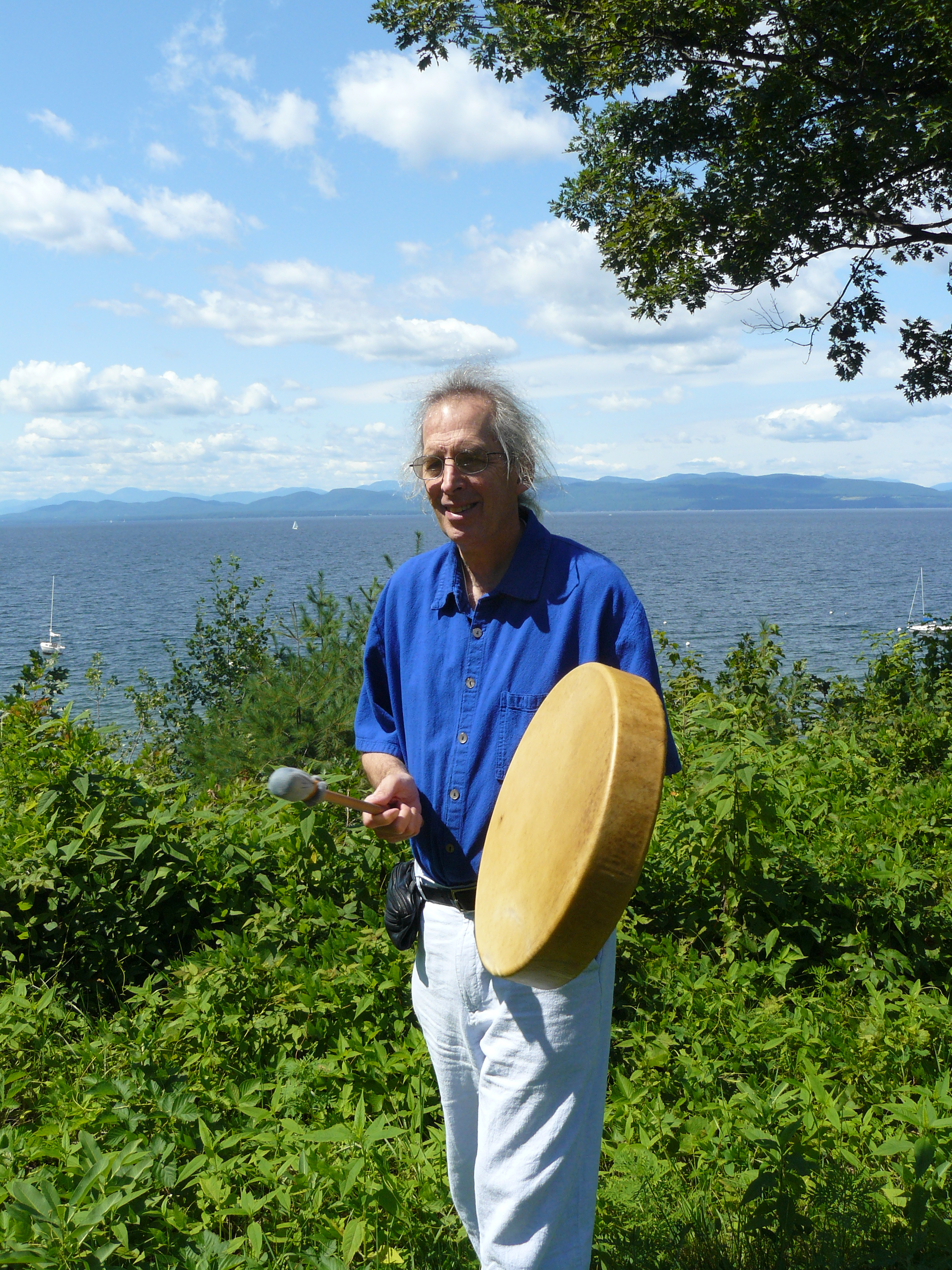
I am an elder, and as such I am given the task of teaching and supporting the young. On the Medicine Wheel of this lifetime I am in the Northwest, the place of honoring the challenges of my life, understanding them as best as I am able, and sharing what I have learned with others. Perhaps you will share your thoughts about the experiences I share below; I would greatly value that.

We, along with many others, spent a good deal of time during the past two weeks watching the Olympics. Over time we noticed, especially from NBC’s coverage, that the commentators seem to believe winning and perfection were all important. This is a sad thing. One does not have to watch much before one becomes aware the announcers are ceaselessly pointing out errors and failures. Rather than empathy for the competitors, one is barraged with demands for perfection and minute details about failure to achieve such.  There is very little celebration of the athletes who fail to meet the announcers’ or judges’ criteria.

This hits home on two fronts. The first is cultural. I was raised to appreciate the efforts of all. Winning is fun, but should not shame others. Nor should anyone be left behind after the games are over. Further, perfection was considered suspect. One was advised to build imperfection into one’s art and welcome it in one’s life. After all, we are not the Creator although we are aspects of His/Her creation. Only the Creator can be perfect, and it is likely even S/He makes mistakes; as we are reflective of the Creator this suggests that even mistakes can be good and holy. The unbridled pursuit of perfection endangers the individual and the culture, the community and the ecosystem.

The second part is I am a survivor of Bulbar Polio. My phsysiatrist says I am “a walking quad”; rather than disparaging, this is a simple statement of truth. I have severe neurological injuries; Polio destroyed motor neurons all over my body. My arms and hands have considerably diminished capacity; my legs and feet lack strength and mobility; breathing can be a challenge. I am not perfect by the dominant culture’s standards.

Add to this my Native American heritage and the soup becomes thick indeed. I once heard a man, who understandably thought he was with other Europeans, say something like,  “There is nothing more pathetic than a disabled Indian.”  What are we to do with that? Indeed, what are we to do with NBC’s virtual silence on the topic of the Para-Olympics?

Herein lies the difficulty. One one hand I was encouraged to accept  and honor imperfections. On the other, as a Polio survivor I was taught to do my level best to pass as normal, to overcome limitations, and to forget my illness and its  aftermath. Additionally, as a child in a Native family that was actively passing, I was taught to be invisible, a lesson that surely applied to Polio as well.

It is a profound challenge to resist the limiting messages of our families and the dehumanizing ones of the dominant culture. I have done my best, yet I have also spent much of my life seeking to achieve others’ views of perfection, even though not even normalcy was not an option.This has been painful.

I don’t know whether you have ever thought about the Wounded Healer.  In Traditional cultures ill youngsters are often expected, should they recover, to become healers. I use the term “recovery” loosely. Youngsters who face and survive catastrophic illness may not have the same physical capacities as their normative friends. Yet their illness may also give them abilities and insights not readily available to others. When the child is ill the healers do their best to aid. They also seek to discern the nature of the illness; often such illness are understood to be calls from the spirits, initiations into the realm of healers. When there is a spirit call, training in the healing arts accompanies recovery. The illness frequently leaves a footprint in the life and work of the survivor; he or she becomes a wounded healer, knowledgeable about many of the territories and challenges that accompany illness.

This is a different model than the academic learning focus of the West. Of course, the two paths are not mutually exclusive. Indeed, they may intersect, even overlap at times. Both address the needs of the body. Some Western trained healers have adopted the Indigenous understanding that the soul and psyche must also be attended to.  (Milton Erickson, although not to my knowledge Indian, comes to mind as someone who walked both roads well.)

I have come to this point on the Medicine Wheel by living my life from within this severely injured body. This is a sharp contrast to the physically perfection of elite Olympic athletes, or the health and wealth gurus we see on PBS and on innumerable infomercials. The television sages convey the message to us that illness, poverty, loneliness, and all other forms of suffering are moral failures. They do not speak this directly, rather they hold up their carefully managed perfection as a mirror to our human frailties. They offer advice, even salvation; for a fee we can be just like them. But I, and many others, cannot.  The very lifestyles they espouse harm us, and endanger our precious planetary ecosystem and all that lives therein. Where, I wonder is their wisdom and compassion?

We approach the Spring, the East in the Abenaki view of the Medicine Wheel, the place of rebirth and awakening. I am curious how my changing understanding of this beloved, traumatized body will blossom in the coming year.  I wonder whether our culture can set aside the deeply held values of independence, competition, and perfectionism that shaped the  our country (the very ones espoused by those television commentators). Can we own our imperfections, and acknowledge the harm we have inflicted on ourselves and so many others, inside and outside our country? Can we embrace those who suffer illness, poverty, displacement, abuse, or isolation?

As we follow the journey of the sun into the East, we are invited to begin again, to open our eyes and practice compassion and understanding. May we  find the courage to do so.

– Michael Watson, Ph.D.

© 2014, essay and photographs (includes the one below), Michael Watson, All rights reserved

michael drumMICHAEL WATSON, M.A., Ph.D., LCMHC (Dreaming the World) ~ is a contributing editor to Into the Bardo, an essayist and a practitioner of the Shamanic arts, psychotherapist, educator and artist of Native American and European descent. He lives and works in Burlington, Vermont, where he teaches in undergraduate and graduate programs at Burlington College,. He was once Dean of Students there. Recently Michael has been teaching in India and Hong Kong. His experiences are documented on his blog. In childhood he had polio, an event that taught him much about challenge, struggle, isolation, and healing.

Posted in Essay, Terri Stewart

Sacred Space in What You Are Already Doing!

flickr photo by On Being  cc licensed ( BY NC SA )
flickr photo by On Being
cc licensed ( BY NC SA )

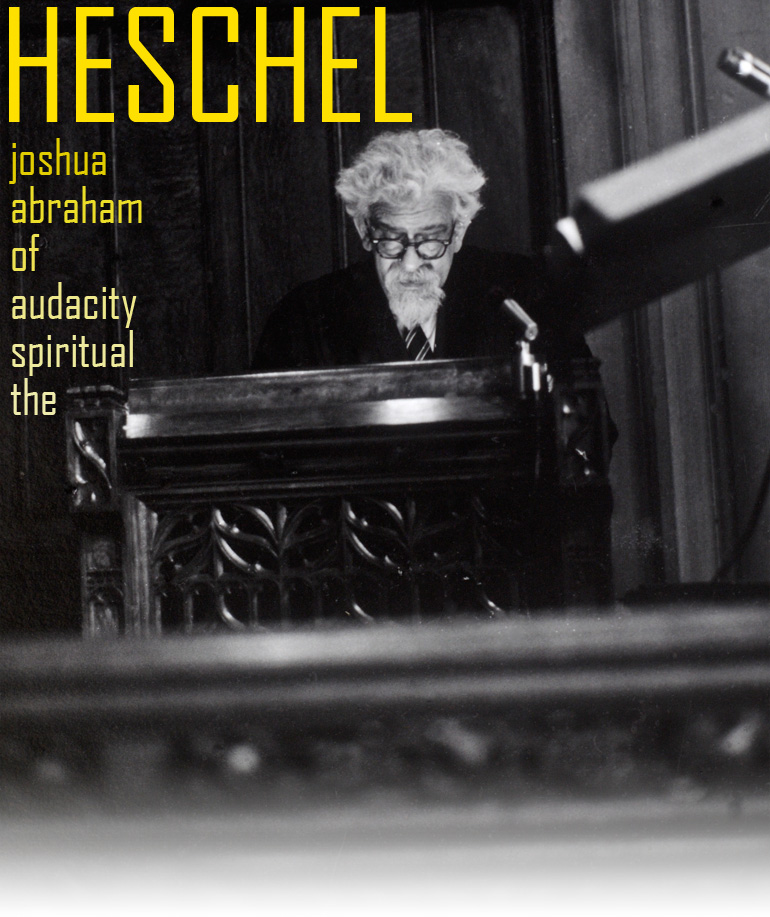
Tonight I went to see Dr. Cornel West along with two young men that I work with. We were all inspired by the passionate energy that Dr. West brings to his presentation! Tonight, he was particularly focused on the work of Abraham Joshua Heschel. He describes the arch of Heschel’s work in a way that I totally relate to the Bardo community!

Pietic–>Poetic–>Prophetic

Meaning, personal piety not bound by religious rules but bound by reverence or seeing the sacred worth in all be-ings. For West’s interpretation of Heschel, the pietic leads to the poetic. A poetry that is not grounded in nihilism or optimism, but grounded in hope. He said, Heschel was “not a person of optimism, but a person of hope.” And that Heschel’s hope as expressed in poetry was hope for the world–not just the Hasidic Jew world–but the entire world. And lastly, but using poetic imagination, we move to the prophetic: speaking truth to power. The importance of the poetic imagination cannot be overstressed! And that is what you are already doing! And it is a sacred journey that leads to wholeness and healing just by the simple transformation of words. And make no doubt, words are action and words cause action. Words can change perceptions which can bring about changes in the world. So, today, embrace your poetic imagination. Allow it to mold you and change your vision so that you see the “faces everywhere” that are longing with thirst. And use that imagination to call the world into prophetic compassion with each other.

There is no space more sacred than that which causes compassion.

Intimate Hymn

by Rabbi Abraham Joshua Heschel

English version by Rabbi Zalman M. Schachter-Shalomi
Original Language English, Yiddish

From word to word I roam, from dawn to dusk.
Dream in, dream out — I pass myself and towns,
A human satellite.

I wait, am hopeful, as one who waits at the rock
For the spring to well forth and ever well on.
I feel as bright as if I tented somewhere in the Milky Way.
To urge the world to feel I walk through lonesome solitudes.

All around me lightning explodes sparks from my glance
To reveal all light, unveil faces everywhere.
Godward, onward to the final weighing
overcoming heavy weight with thirst.
Constantly, the longings of all born call out, “Is anyone around?”
I know each one is HE, but in my heart there writhes a tear;
When of men and rocks and trees I hear;
All plead “Feel us”
All beg “See us”
God! Lend me your eyes!

I came to be, to sow the seed of sight in the world,
To unmask the God who disguised Himself as world–
And yes, I wait to be the first to announce “The Dawn.”

– from “Human, God’s Ineffable Name,” by Rabbi Abraham Joshua Heschel, freely rendered by Rabbi Zalman M. Schachter-Shalomi. Available from the Reb Zalman Legacy Project

Shalom and Amen!

~Terri

(c) 2014, Terri Stewart

simultaneously published at http://www.BeguineAgain.com

REV. TERRI STEWART is The Bardo Group’s Sunday chaplain, senior content editor, and site co-administrator. She comes from an eclectic background and considers herself to be grounded in contemplation and justice. She is the Director and Founder of the Youth Chaplaincy Coalition that serves youth affected by the justice system. As a graduate of Seattle University’s School of Theology and Ministry, she earned her Master’s of Divinity and a Post-Master’s Certificate in Spiritual Direction.

Her online presence is “Cloaked Monk.” This speaks to her grounding in contemplative arts and the need to live it out in the world. The cloak is the disguise of normalcy as she advocates for justice and peace. You can find her at www.BeguineAgain.com ,www.twitter.com/cloakedmonk, and www.facebook.com/cloakedmonk.

Posted in Essay, General Interest, Spiritual Practice, Terri Stewart

Finding Sacred Space in the Story

Below is the beginning of a parable written by an unknown person. As an exercise of finding yourself and sacred space, please place yourself in the story from whatever perspective you feel speaks to you and finish the story! Are you a chicken? The eagle? The farmer? An unseen or unknown person? Let us know!

A long time ago in a remote valley, there lived a farmer. One day he got tired of the daily routine of running the farm and decided to climb the cliffs that brooded above the valley to see what lay beyond.

He climbed all day until he reached a ledge just below the top of the cliff; there, to his amazement was a nest, full of eggs.

Immediately he knew they were eagle’s eggs and, even though he knew it was profoundly un-ecological and almost certainly illegal, he carefully took one and stowed it in his pack; then seeing the sun was low in the sky, he realized it was too late in the day to make the top and slowly began to make his way down the cliff to his farm.

When he got home he put the egg in with the few chickens he kept in the yard. The mother hen was the proudest chicken you ever saw, sitting atop this magnificent egg; and the cockerel couldn’t have been prouder.

Sure enough, some weeks later, from the egg emerged a fine, healthy eglet. And as is in the gentle nature of chickens, they didn’t balk at the stranger in their midst and raised the majestic bird as one of their own.

So it was that the eagle grew up with its brother and sister chicks. It learned to do all the things chickens do: it clucked and cackled, scratching in the dirt for grits and worms, flapping its wings furiously,flying just a few feet in the air before crashing down to earth in a pile of dust and feathers.

It believed resolutely and absolutely it was a chicken.

Then, later in its life, the eagle, doing all the all the things chickens do – it clucked and cackled, scratching in the dirt for grits and worms, flapping its wings furiously,flying just a few feet in the air before crashing down to earth in a pile of dust and feathers – suddenly took flight and flew up into the nearest tree, high above his brother and sister chickens. And there he perched…

And now, you tell the rest of the story!

photo by Linda Tanner cc licensed (BY) flickr
photo by Linda Tanner
cc licensed (BY) flickr

(c) 2014, post, Terri Stewart

parable in its complete form found at http://www.spiritual-short-stories.com/spiritual-short-story-602-Chicken+and+the+Eagles.html

REV. TERRI STEWART is The Bardo Group’s Sunday chaplain, senior content editor, and site co-administrator. She comes from an eclectic background and considers herself to be grounded in contemplation and justice. She is the Director and Founder of the Youth Chaplaincy Coalition that serves youth affected by the justice system. As a graduate of Seattle University’s School of Theology and Ministry, she earned her Master’s of Divinity and a Post-Master’s Certificate in Spiritual Direction.

Her online presence is “Cloaked Monk.” This speaks to her grounding in contemplative arts and the need to live it out in the world. The cloak is the disguise of normalcy as she advocates for justice and peace. You can find her at www.BeguineAgain.com ,www.twitter.com/cloakedmonk, and www.facebook.com/cloakedmonk.

Posted in Essay, Liz Rice-Sosne, memoir, poem, Poems/Poetry, poetry

I Imagine …

I imagine Mummy

She is listening for Doodle Bugs

Running past St James Square

They make a swooshing noise before

Hitting their targets

Windows are darkening now

As she scurries by them

Like a mouse

Shades being pulled down

All light receding and gone

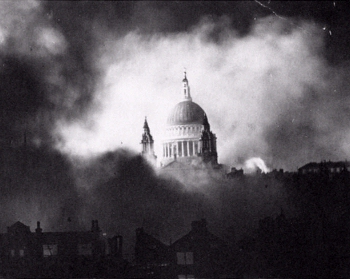
She is heading towards St Paul’s

She is meeting with a friend

At the statue of St Ann

Dinner was to soon follow

Constant gray clouds of dust

Engulfed her in dirt

London was under

Aerial bombardment

The Luftwaffe would spend

Fifty-seven nights

Bombing this great city

Wishing to eradicate it

From the face of the earth

This symbol of London and God

But London endured

St Paul’s remained standing

A symbol of British

endurance

Mummy lived to return home

To the USA

But I still imagine

I still wonder

Was it the war that

Shaped her personna

Making her harsh

She once said to me

During a phone call

With Mummy

Not long before her death

She told me that

The war was the most

Thrilling period of her life

I understand that feeling

I know what she was saying

She is gone

St Paul’s is standing

London thrives

Yet still I imagine

We all must come to terms with our upbringing.  For some there is more pain to work through than for others.  I had what one might call a proper upbringing.  Yet still, one filled with much pain.  My mother was not in London during those 57 nights of the Blitz.  This was of course poetic license on my part.  However, she was living in London during 1943 and 1944 in WWII.  She became a lifelong Anglophile.  This fact set up some difficult goals for her children to attain for they were not British (and we came after the war).

Sometimes due to her scrapbooks I feel as though I was there, in London during the war.

There was a time that I knew nothing about war.  A spiritual experience that I was willing to have in 2005, dictated that I learn about war.  Mummy never spoke of her work in London during WWII.  She worked for the US propaganda office or the OWI – Office of War Information.  I really never knew until I found two scrapbooks while cleaning out the family home.  Finding these scrapbooks made me realize what a vary brave woman she had been.  As a result, instead of harboring resentment towards her (resentment that she earned) I came to have significant admiration for her.

I wish to redo these books as they are in a state of disintegration.  However, it is exceptionally difficult for me to work with them.  I am very emotional about the subject.

Politicians never give thought to the consequences of wars into which they enter.  They have no clue as to the gravity of the collateral damage that accompanies their warring ways.  The United States of course had to enter WWII.  But, Hitler did not have to begin The War To End All Wars.  That war like so many have touched people down through the ages, times long past the end of the war in question.  War shapes people for generations to come.  Peace begins at home.  Not in the country, the state or the city.  No peace begins in the heart of the individual.  For it is when you get peaceful individuals together, one at a time that real peace begins to grow into a movement.  It becomes sizable and a peaceful nation is born.

The following paragraph is taken word for word out from Wikipedia:

“On 31 December, the Daily Mail took the unusual step of publishing the photographer’s account of how he took the picture:[

I focused at intervals as the great dome loomed up through the smoke. Glares of many fires and sweeping clouds of smoke kept hiding the shape. Then a wind sprang up. Suddenly, the shining cross, dome and towers stood out like a symbol in the inferno. The scene was unbelievable. In that moment or two I released my shutter.”  – Herbert Mason

Stpaulsblitz

© 2013, essay and photographs, Liz Rice-Stone, All rights reserved

unnamed-2LIZ RICE-SOSNE a.k.a. Raven Spirit (noh where), perhaps the oldest friend to Bardo, is the newest member of The Bardo Group Core Team. She is also our new Voices for Peace project outreach coordinator and our go-to person for all things related to haiku.  She says she “writes for no reason at all. It is simply a pleasure.” Blogging, mostly poetry, has produced numerous friends for whom she has a great appreciation. Liz is an experienced blogger, photographer and a trained shaman. We think her middle name should be “adventure.”

BLOGGERS IN PLANET LOVE

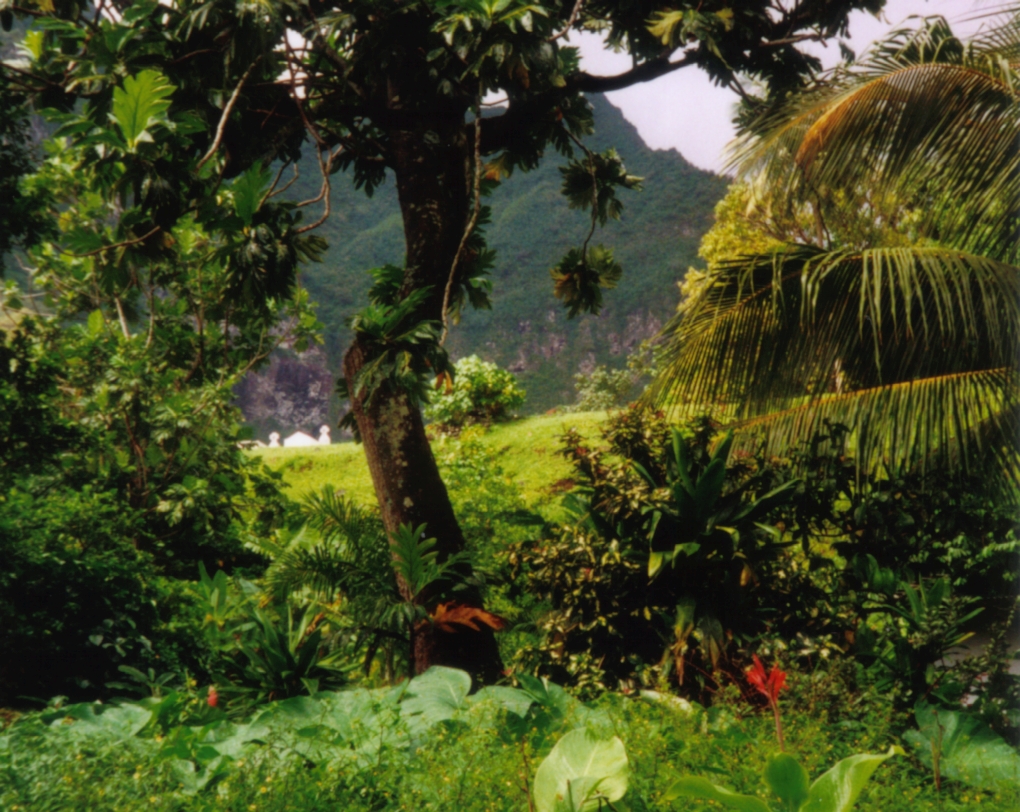
Rainforest_Fatu_HivaPLEASE JOIN US: Beginning at  7 p.m. PST this evening, we are celebrating Valentine’s Day with love – not the love of and for another person – but our love for our mother planet ….

WE INVITE ALL writers, poets, artists, photographers, musicians and other creatives to join us at The Bardo Group for our Valentine’s Day event, BLOGGERS IN PLANET LOVE. Link in your work that shares your appreciation for the beauty of nature or your concern for environmental issues. You can share the url to your post via Mr. Linky, which will stay up for seventy-two hours. Corina Ravenscraft (DragonDreams) hosts. Jamie Dedes (The Poet by Day) will visit sites and comment. We hope you will also visit others and comment on their work, lending support and encouragement and making connection.

If tonight is date-night for you, remember that you do have seventy-two hours to link your work in. It doesn’t have to be a new or recent piece, just something in the spirit of the event, something that expresses your love of our planet.

Photo credit ~ Tropical Rainforest, Fatu Hiva Island, Marquesas Islands, French Polynesia by Benutzerseite: Makemake via German language Wikipedia under CC A-SA 3.0 Unported license.

Posted in Corina L. Ravenscraft, General Interest, Mental Health

National Shut-In Visitation Day

February is such a long, dreary month, don’t you think? It has grey skies and brown landscapes, cold and wet outside, seemingly endless. Many folks are getting “Spring Fever” already, so tired of being cooped up inside with nothing to do.

Image borrowed from http://www.aclutteredmind.org/the-blogging-blahs/

I was looking for a way to make a post for February that didn’t have anything to do with Valentine’s Day. It seems like when the middle of January hits, it becomes the Hallmark season for hearts and candy and flowers, etc. I have nothing against Love, per se, I just wish it weren’t so commercialized, is all.

Image borrowed from http://www.treehugger.com/culture/be-my-anti-valentine.html

Anyway, I did some digging, and I discovered that there is a holiday in February that probably not many people know about: February 11th is “National Shut-In Visitation Day”. 🙂 I rather like that, because it shows the true spirit of “love” when people can take the time out of their busy lives to spend an hour or two with someone who never or hardly ever gets to go outside and enjoy so many of the things that a lot of us take for granted.

Image borrowed from http://weighing-success.blogspot.com/2013/02/february-11-national-shut-in-visitation.html

What if you couldn’t just go outside and take a walk when you wanted? Or what if you couldn’t just jump in your car and drive to the store when you needed? For thousands of people, this is the case. They may be bound to a wheel-chair. They may be in a nursing home or place where they are not allowed to just “get up and go”. They may be elderly, or sick, or blind, too young, too old, or a hundred other things that make them a “shut-in”.

The true spirit of LOVE, in my mind, is the one that connects ALL of us. It’s the one that reaches out with compassion to say, “I’m here. I care.” Even when…no, make that especially when…it’s to a stranger. So perhaps if you have an hour or so to spare, you could visit a nursing home, a children’s hospital, or someone you may even know personally who isn’t able to get out and enjoy life the way you do. Your visit might very well be the only bright spot in their day! 🙂 Wouldn’t it be wonderful to bring some happiness and cheer, some sunshine to someone who would really appreciate it? I guarantee you that if you do, you will BOTH be much better for it!

And maybe next year when February rolls around again, you’ll remember how nice it was to celebrate “National Shut-In Visitation Day”. Or heck, who says you have to wait until February? 😉

© 2014, essay, Corina Ravenscraft, illustration, Ursula Vernon All rights reserved

Editor’s note: This was supposed to post on February 11, which is National Shut-in Visitation Day. We apologize for the delay. It was the editor’s bad, not the writer’s.  

effecd1bf289d498b5944e37d8f4ee6fAbout dragonkatet Regarding the blog name, Dragon’s Dreams ~ The name comes from my love-affairs with both Dragons and Dreams (capital Ds). It’s another extension of who I am, a facet for expression; a place and way to reach other like-minded, creative individuals. I post a lot of poetry and images that fascinate or move me, because that’s my favorite way to view the world. I post about things important to me and the world in which we live, try to champion extra important political, societal and environmental issues, etc. Sometimes I wax philosophical, because it’s also a place where I always seem to learn about myself, too, by interacting with some of the brightest minds, souls and hearts out there. It’s all about ‘connection(s)’ and I don’t mean “net-working” with people for personal gain, but rather, the expansion of the 4 L’s: Light, Love, Laughter, Learning.