
The Contemplative Monk on Facebook HERE for comfort and inspiration.Recommended.
The Contemplative Monk on Facebook HERE for comfort and inspiration.Recommended.

Editor’s Note: The deadline for submissions to the December issue is November 15. Forward submission to bardogroup@gmail.com. Submissions via comments or Facebook will not be considered. Details HERE.
“How do you perceive that word, spirit? How do you measure it? What sort of entity is it? What value is it to living things? What value is it to human beings, who are perhaps most responsible for its consequences? The answers appear to be as numerous as its definitions …
Spirit – noun
1. the principle of conscious life; the vital principle in humans, animating the body or mediating between body and soul.
2. the incorporeal part of humans: present in spirit though absent in body.
3. the soul regarded as separating from the body at death.
4. conscious, incorporeal being, as opposed to matter: the world of spirit.
5. a supernatural, incorporeal being, especially one inhabiting a place, object, etc., or having a particular character: evil spirits.
6. a fairy, sprite, or elf.
7. an angel or demon.
8. an attitude or principle that inspires, animates, or pervades thought, feeling, or action: the spirit of reform.
9. (initial capital letter) the divine influence as an agency working in the human heart.
10.a divine, inspiring, or animating being or influence. Num. 11:25; Is. 32:15.
11.(initial capital letter) the third person of the Trinity; Holy Spirit.
12.the soul or heart as the seat of feelings or sentiments, or as prompting to action: a man of broken spirit.
13.spirits, feelings or mood with regard to exaltation or depression: low spirits; good spirits.
14.excellent disposition or attitude in terms of vigor, courage, firmness of intent, etc.; mettle: That’s the spirit!
15.temper or disposition: meek in spirit.
16.an individual as characterized by a given attitude, disposition, character, action, etc.: A few brave spirits remained to face the danger.
17.the dominant tendency or character of anything: the spirit of the age.
18.vigorous sense of membership in a group: college spirit.
19.the general meaning or intent of a statement, document, etc. (opposed to letter ): the spirit of the law.
20.Chemistry. the essence or active principle of a substance as extracted in liquid form, especially by distillation.
21.Often, spirits. a strong distilled alcoholic liquor.
22.Chiefly British, alcohol.
23.Pharmacology. a solution in alcohol of an essential or volatile principle; essence.
24.any of certain subtle fluids formerly supposed to permeate the body.
25.the Spirit, God.
The spirit is incorporeal. It is not bound by mind, body, ‘fact’ and opinion. It is beyond simple definition. can it be beyond commercial value? I do hope so, and is it perhaps beyond measurement. For me, it is part of the individual human ‘heart’, the non-physical heart. It is that part of a human body that echos throughout our universe long after the body is dead and perhaps even long after life on Earth is extinguished.
It is called upon, like the artist’s muse, so often when the mind and body are under stress, under pressure that it cannot sustain for too long; when conflict and threat to livelihoods and even life itself, sharpens the mind. It can come into its own, when ego, pride and prejudice are dispensing their know desires for individual, selfish survival; when individuals begin to fear the loss of their survival and start thrashing about and fighting for their gene pool; when the search for truth is no longer possible by simple logic, ‘reasoning’, science, well articulated, but biased speeches … this is when we have our greatest need to resort to the spirit. Whether that spirit is your God, or an established religious faith and and its set of scriptures, prescriptions for the easement of stress and improvement of self, or whether it is music, poetry or the writings of great minds, or simply great visual art, it is, from my perspective, all very valid. Humans need a spiritual guide, wither it’s external or internal. Without this, the wayward spirit can lead us further from the truth. When our spirit is strong, we can conquer the World.
May we all be able to poem, paint and play until our hearts are healed, to help us further pursue the quest for truth, through the spirit.
P.S. You may like to consider the future of digital technology in art. Can you envisage A.I. (artificial intelligence) being as capable as the human spirit in the part it plays in its creative inspiration for art?
© 2019, John Anstie / Lead for the December 2019 “The BeZine,” Volume 6, Issue 4, themed “A Life of the Spirit”
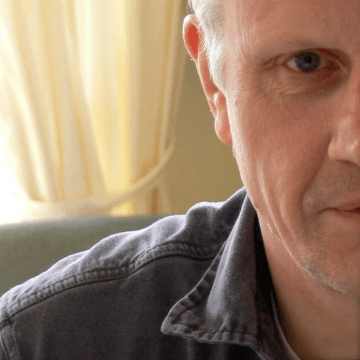 JOHN ANSTIE (My Poetry Library and 42) ~ is a British writer, poet and musician – a multi-talented gentleman self-described as a “Family man, Grandfather, Occasional Musician, Singer, Amateur photographer and Film-maker, Apple-MAC user, Implementation Manager, and Engineer”. He has participated in d’Verse Poet’s Pub and is a player in New World Creative Union as well as a being a ‘spoken-voice’ participant in Roger Allen Baut’s excellent ‘Blue Sky Highway‘ radio broadcasts. He’s been blogging since the beginning of 2011. He is also a member of The Poetry Society (UK).
Recent publications are anthologies resulting from online collaborations among two international groups of amateur and professional poets. One of these is The Grass Roots Poetry Group (Petrichor* Rising. The other group is d’Verse Poet Pub, in which John’s poetry also appears The d’Verse Anthology: Voices of Contemporary World Poetry, produced and edited by Frank Watson.
* Petrichor – from the Greek pɛtrɨkər, the scent of rain on the dry earth.
|
|

~~~~~~~~~~~~~~~~~~
JOHN ANSTIE (My Poetry Library and 42) ~ is a British writer and poet, a contributing editor here at Bardo, and multi-talented gentleman self-described as a “Family man, Grandfather, Occasional Musician, Singer, Amateur photographer and Film-maker, Apple-MAC user, Implementation Manager, and Engineer”. He has participated in d’Verse Poet’s Pub and is a player in New World Creative Union as well as a being a ‘spoken-voice’ participant in Roger Allen Baut’s excellent ‘Blue Sky Highway‘ radio broadcasts. He’s been blogging since the beginning of 2011. He is also a member of The Poetry Society (UK).
*****
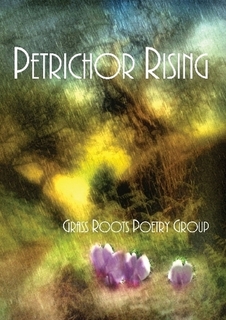
 John has also been involved in the recent publication of two anthologies that are the result of online collaborations among two international groups of amateur and professional poets. One of these is The Grass Roots Poetry Group, for which he produced and edited their anthology, “Petrichor* Rising” in 2013. The other group is d’Verse Poet Pub, in which John’s poetry also appears The d’Verse Anthology: Voices of Contemporary World Poetry, produced and edited by Frank Watson.
* Petrichor – from the Greek pɛtrɨkər, the scent of rain on the dry earth.
|
|
~~~~~~~~~~~~~~~~~~
JOHN ANSTIE (My Poetry Library and 42) ~ is a British writer and poet, a contributing editor here at Bardo, and multi-talented gentleman self-described as a “Family man, Grandfather, Occasional Musician, Singer, Amateur photographer and Film-maker, Apple-MAC user, Implementation Manager, and Engineer”. He has participated in d’Verse Poet’s Pub and is a player in New World Creative Union as well as a being a ‘spoken-voice’ participant in Roger Allen Baut’s excellent ‘Blue Sky Highway‘ radio broadcasts. He’s been blogging since the beginning of 2011. He is also a member of The Poetry Society (UK).
*****
John has also been involved in the recent publication of two anthologies that are the result of online collaborations among two international groups of amateur and professional poets. One of these is The Grass Roots Poetry Group, for which he produced and edited their anthology, “Petrichor* Rising“. The other group is d’Verse Poet Pub, in which John’s poetry also appears The d’Verse Anthology: Voices of Contemporary World Poetry, produced and edited by Frank Watson.
* Petrichor – from the Greek pɛtrɨkər, the scent of rain on the dry earth.


If you would like to share your work with us (and I hope you will) use Mr. Linky at the bottom of this post, or add your link in the comments.
To access Mister Linky (below in green):
• Write your submission and post it on your blog.
• Copy and paste the URL to your submission along with your identifier in the spaces provided by Mister. Linky.
• Visit and comment on other participants, as time allows.
• Enjoy the process. It is not a challenge, but rather an invitation.
I’m fortunate to live in a mostly rural area in the Sierra Nevada, about 30-40 minutes from beautiful Lake Tahoe. And I’m ashamed to say I’m lucky if I get there once a year. I’m glad for this opportunity to change that in the near future.
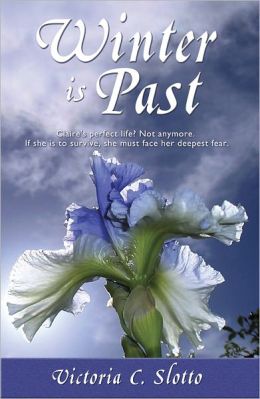
 VICTORIA C. SLOTTO (Victoria C. Slotto, Author: Fiction, Poetry and Writing Prompts) ~ is an accomplished writer and poet. Winter is Past, published by Lucky Bat Books in 2012, is Victoria’s first novel. A second novel is in process. On Amazon and hot-off-the-press nonfiction is Beating the Odds: Support for Persons with Early Stage Dementia. Victoria’s ebooks (poetry and nonfiction) are free to Amazon Prime Members. Link HERE for Victoria’s Amazon page. Victoria’s poetry collection is Jacaranda Rain, Collected Poems, 2012, Beautifully done.
Writers’ Fourth Wednesday prompt is hosted by Victoria from January through October. Victoria’s next Fourth Wednesday writers’ prompt will post at 12:01 a.m. PST on September 24. Please join us. Mister Linky will remain open for seventy-two hours so that you can link your response to this blog. If you find Mister Linky too cumbersome to use, please feel free to leave your link in the comments section on Wednesday. Victoria and Jamie will read and comment and we hope you will read each other’s work as well, comment and encourage.
The video was uploaded to YouTube by tomasisms and is the work of Andrea Dorfman. The poem was written by Tanya Davis, poet, writer, musician. Thank you to Michael Yost (Michael’s Lair) for sharing this one with us.
~~~~~~~~~~~~~~~~~~~~
JOHN ANSTIE (My Poetry Library and 42) ~ is a British writer and poet, a contributing editor here at Bardo, and multi-talented gentleman self-described as a “Family man, Grandfather, Occasional Musician, Singer, Amateur photographer and Film-maker, Apple-MAC user, Implementation Manager, and Engineer”. He has participated in d’Verse Poet’s Pub and is a player in New World Creative Union as well as a being a ‘spoken-voice’ participant in Roger Allen Baut’s excellent ‘Blue Sky Highway‘ radio broadcasts. He’s been blogging since the beginning of 2011. He is also a member of The Poetry Society (UK).
*****
John has also been involved in the recent publication of two anthologies that are the result of online collaborations among two international groups of amateur and professional poets. One of these is The Grass Roots Poetry Group, for which he produced and edited their anthology, “Petrichor* Rising“. The other group is d’Verse Poet Pub, in which John’s poetry also appears The d’Verse Anthology: Voices of Contemporary World Poetry, produced and edited by Frank Watson.
* Petrichor – from the Greek pɛtrɨkər, the scent of rain on the dry earth.
You ask me where these come from,
and I can’t say with certainty,
because there is nothing certain
about our days. Sometimes
the shadow of a heartbeat,
the sound of a color,
the taste of the darkness,
the touch of solitude,
they come to you from
over your horizon.
And horizons know
no direction. There’s
no east or north in you,
no sud or oeste.
There’s only ever-moving circles
surrounding you,
encouraging you
to sense the inspirational It
between yourself and
the infinite, to tell its truth
as you will know it.
We’ve not stumbled upon
one another yet. This is
just another page
in the journal we’ll share
when we finally do.
– Joe Hesch
© 2014, All rights reserved
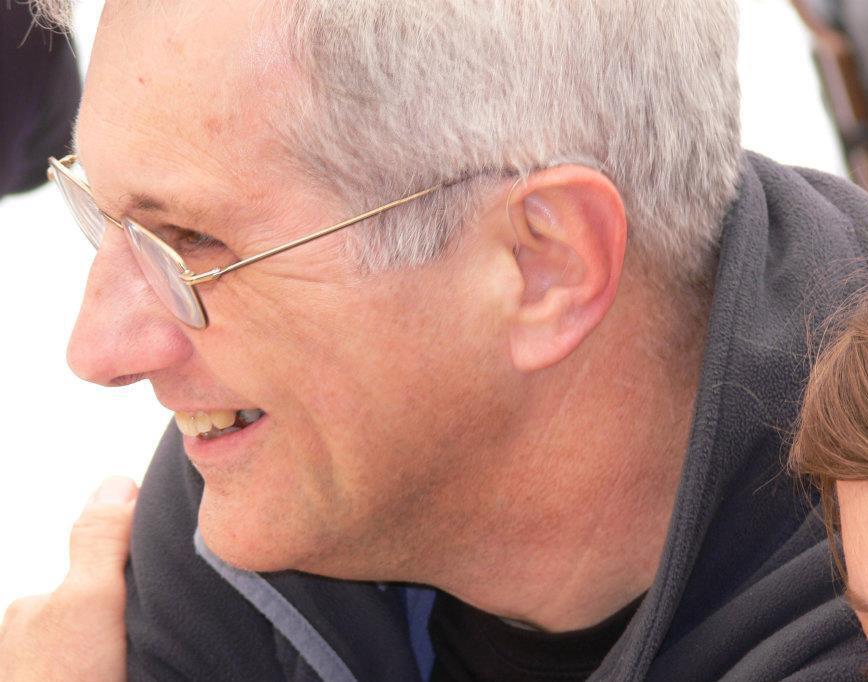 JOSEPH HESCH (A Thing for Words) is a writer and poet from Albany, New York , an old friend of Bardo and a new core team member. Joe’s work is published in journals and anthologies coast-to-coast and worldwide. He posts poems and stories-in-progress on his blog, A Thing for Words. An original staff member at dVerse Poets Pub website, Joe was named one of Writers Digest Editor Robert Lee Brewer’s “2011 Best Tweeps for Writers to Follow.” He is also a member of the Grass Roots Poetry Group and featured in their 2013 poetry anthology Petrichor Rising.
In the dark, ceiling-staring
into the nightly abyss,
I became not-alone.
Twilight dreams before sleep
projected a life of never be,
but would never leave
in the soft dawnlight glow
behind my hooded eyes.
I lie there thinking of
the living, the dead
and the one beneath
those covers who was neither.
With one more sigh,
t’was then I saw them,
short strings of expression
rising from my body,
five knots in the first,
seven on the next.
They repeated over and over,
a rope ladder I climbed
past soft women,
and hard worlds,
elevating my spirit
and body to a near-waking
breath and breath
exhalations of unrhyming song.
The blood-rush in my ears,
wave upon wave, sounded like
“Wish, which, wish,.”
To which I replied,
“This, these, this.”
© 2014, poem, Joseph Hesch, All rights reserved
JOSEPH HESCH (A Thing for Words) is a writer and poet from Albany, New York , an old friend of Bardo and a new core team member. Joe’s work is published in journals and anthologies coast-to-coast and worldwide. He posts poems and stories-in-progress on his blog, A Thing for Words. An original staff member at dVerse Poets Pub website, Joe was named one of Writers Digest Editor Robert Lee Brewer’s “2011 Best Tweeps for Writers to Follow.” He is also a member of the Grass Roots Poetry Group and featured in their 2013 poetry anthology Petrichor Rising.
What a gift it is–those moments when I remember to notice life in detail. To stop and watch the diamonds scattered across the grass in early morning hours, to catch the sun, back-lighting the soft white fuzz of my dogs or breath in the scents of earth and jasmine in our garden. I wish that I could learn to be aware in each and every moment–that I could learn to silence the mindless conversations I have with myself, to let go of fears about the future or regrets about the past, to ignore gnawing worries about what others think.

An exercise I’ve used before that has been the source of many poems is this: at the end of every day (or even as the day progresses) jot down, in detail, some things that you notice. I usually try to create a list of ten. Here’s an example:
1. In the West, large white clouds hang heavy on the mountains. Someone has painted their underbellies with a wash of Payne’s gray.
2. Sparky lies curled at my feet, head erect like a Sphinx, but his eyes are at half-mast.
3. A hummingbird perches on the feeder outside my window. I think he’s in love with his reflection.
What are you noticing today? Is there a poem waiting for you to bring it forth?
– Victoria C. Slotto
© 2014, essay, Victoria C. Slotto, All rights reserved; © 2014, photograph, David Slotto, All rights reserved
VICTORIA C. SLOTTO (Victoria C. Slotto, Author: Fiction, Poetry and Writing Prompts) ~ is an accomplished writer and poet. Winter is Past, published by Lucky Bat Books in 2012, is Victoria’s first novel. A second novel is in process. On Amazon and hot-off-the-press nonfiction is Beating the Odds: Support for Persons with Early Stage Dementia. Victoria’s ebooks (poetry and nonfiction) are free to Amazon Prime Members. Link HERE for Victoria’s Amazon page.
Editorial note: Congratulations, Victoria, on that the long awaited publication of print copies of Jacaranda Rain, Collected Poems, 2012, Beautifully done.
Writers’ Fourth Wednesday prompt is hosted by Victoria from January through October. Victoria’s next Fourth Wednesday writers’ prompt will post at 12:01 a.m. PST on May 28. Please join us. Mister Linky will remain open for seventy-two hours so that you can link your response to this blog.If you find Mister Linky too combersom to use, please feel free to leave your link in the comments section on Wednesday. Victoria and Jamie will read and comment and we hope you will read each other’s work as well, comment and encourage.

This month is interNational Photography month! Here at The Bardo Group, we will be playing with this theme all month-long. On Sundays, we will be focusing on where the practice of photography intersects with our own experience and expression of spirituality.
In my journey with photography, I have become more aware of light. The presence of light, the absence of light, how it causes reflection, my friend, Paul Jeffrey, told us once that he always turns the flash off, taking advantage of natural light. (I’m sure the rule is “almost always.”) I find that in photographing nature, that I try to stick to that rule and rely on photo-editing software to help me out if I need it. He also taught us how to make a faux tripod to steady ourselves when our shutter speed is taking just a little bit too long.
Light is a dominant theme in religious traditions also.
The general thrust is that light is a metaphor for that which brings us to a higher consciousness or awareness, provides hope, guidance, and love. It is a beautiful thing when, through appropriate use of light, we can communicate a deeper exploration of these qualities—awareness of what is unseen, hope, love, beauty—a very real reflection of life. And sometimes, light lets you see something in a different way.
My favorite picture that I’ve ever taken of one of my children captures light and it seems, to me, to convey innocence and an essential quality of “child” that is so easy to forget. This is an old photo, by the way! And the picture isn’t perfect, but it still conveys a lightness of being that transcends the particular quality of the photo.

How do the following pictures and their use of light point to something beyond the images captured in the photo?

What do thoughts of light lead you to? Do you have a favorite photo that features light or the absence of light?
Shalom and Amen!
Post by Terri Stewart, 2014
Photography, CC License (CC BY-NC)
 Terri Stewart ~ a member of our Core Team, comes from an eclectic background and considers herself to be grounded in contemplation and justice. She is the Director and Founder of the Youth Chaplaincy Coalition that serves youth affected by the justice system. As a graduate of Seattle University’s School of Theology and Ministry, she earned her Master’s of Divinity and a Post-Master’s Certificate in Spiritual Direction with honors and is a rare United Methodist student in the Jesuit Honor Society, Alpha Sigma Nu. She is a contributing author to the Abingdon Worship Annual.
Her online presence is “CloakedMonk.” This speaks to her grounding in contemplative arts (photography, mandala, poetry) and the need to live it out in the world. The cloak is the disguise of normalcy as she advocates for justice and peace. You can find her at www.cloakedmonk.com,www.twitter.com/cloakedmonk, and www.facebook.com/cloakedmonk. To reach her for conversation, send a note to cloakedmonk@outlook.com.


YOU ARE INVITED TO SHARE YOUR PHOTOGRAPHS WITH US.
PLEASE LINK THEM TO THIS SITE USING MISTER LINKY BELOW
OR LEAVE THE LINK IN THE COMMENTS SECTION
THE LINK WILL STAY OPEN FOR 72 HOURS AND PRISCILLA WILL VISIT AND COMMENT
WE HOPE YOU WILL ALSO VISIT ONE ANOTHER TO COMMENT AND ENCOURAGE
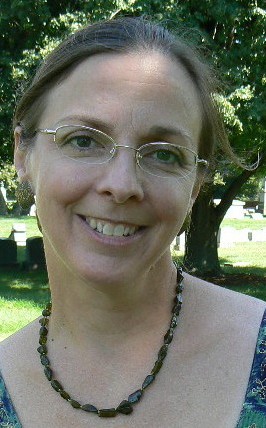 PRISCILLA GALASSO ~ started her blog at scillagrace.com to mark the beginning of her fiftieth year. Born to summer and given a name that means ‘ancient’, her travel through seasons of time and landscape has inspired her to create visual and verbal souvenirs of her journey.
Currently living in Wisconsin, she considers herself a lifelong learner and educator. She gives private voice lessons, is employed by two different museums and runs a business (Scholar & Poet Books, via eBay and ABE Books) with her partner, Steve.
People find the light in their life in so many ways and places. It can be as easy as turning on a switch.

Some find all the light they need in a sunset…

…or a moonrise.

Others find illumination in a church…

…a synagogue…

…a mosque…

…or a library.

Sacred is a place that lights up your heart.

It isn’t always easy to find…

Some look for it in food…

…at the bottom of a wine glass…

…or through yoga…

Some light up with the joy and anticipation of adventure.

And what constitutes an adventure is very personal.

Sometimes light comes in the form of a bright idea, a flash of inspiration…

The joy of creation in all of its many forms…


Everyone’s light shines through differently. To each his own.


It is there.

It is there.

It is there.

All words and images copyright Naomi Baltuck

 NAOMI BALTUCK ~ is a Contributing Editor and Resident Storyteller here
 at Bardo. She is a world-traveler and an award-winning writer, photographer, and story-teller whose works of fiction and nonfiction are available through Amazon HERE. Naomi presents her wonderful photo-stories – always interesting and rich with meaning and humor – at Writing Between the Lines, Life from the Writer’s POV. She also conducts workshops such as Peace Porridge (multicultural stories to promote cooperation, goodwill, and peaceful coexistence), Whispers in the Graveyard (a spellbinding array of haunting and mysterious stories), Tandem Tales, Traveling Light Around the World, and others. For more on her programs visit Naomi Baltuck.com
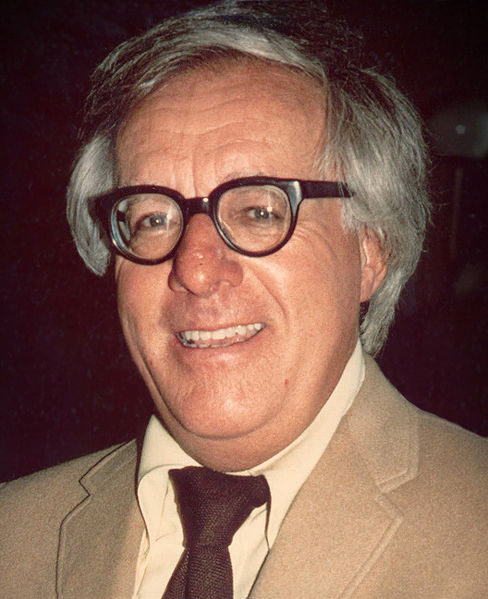
While there were many salutes to Ray Bradbury upon his death on June 5, 2012, we encountered none with as much warmth, insight and appreciation as this piece by Colin Blundell (colinblundell). Though it is far longer than our current 1,000 word limit ( one lesson experience has taught us is that the Blogosphere is largely a sound-bite world), we thought it was time to bring it out, dust if off and share it again. On reading this essay, you will understand why . . .
Forty years ago, I began teaching ‘English’ to 11-16 year-olds in a comprehensive school in a suburb of Luton, Bedfordshire UK—Stopsley High School. A class of 4th year boys was well on the way to defeating me till I discovered that reading Ray Bradbury short stories to them was a really good way of keeping them quiet for a whole lesson and even inspiring them to think and write. Ray Bradbury was the key that opened doors for these boys who had mostly been rejected by the system they found themselves enslaved by. Admittedly, by report, some of them later did a stretch in prison but not a few of them went on to get degrees, to become teachers and hold responsible jobs in local industry. I have sadly lost touch with all of them.
The short story that seemed to have the most immediate effect, and the one I always associate with that period of my life, was The Murderer from The Golden Apples of the Sun (1953). It was the story that perhaps meant most to me, one I could put my heart and soul into the reading thereof.
Music moved with him in the white halls. He passed an office door: ‘The Merry Widow Waltz’. Another door: ‘Afternoon of a Faun’. A third: ‘Kiss Me Again’. He turned into a cross corridor: ‘The Sword Dance’ buried him in cymbals, drums, pots, pans, knives, forks, thunder, and tin lightning. All washed away as he hurried through an anteroom where a secretary sat nicely stunned by Beethoven’s Fifth. He moved himself before her eyes like a hand; she didn’t see him. His wrist radio buzzed.
“Yes?”
“This is Lee, Dad. Don’t forget about my allowance.”
“Yes, son, yes. I’m busy.”
“Just didn’t want you to forget, Dad,” said the wrist radio. Tchaikovsky’s ‘Romeo and Juliet’ swarmed about the voice and flushed into the long halls.
Where are we? What’s going on? Forty years back there was no such thing as a mobile phone; the wrist radio is part of Ray Bradbury’s accurately terrifying vision of the future, which is now: the mobile phone is a symbol for the way life for many people seems to be threaded on messages from an imagined other place, messages, usually of no real consequence, that materialise to interrupt life while it is being lived, to divert attention from the concentrated flow of existence.
Once upon a time, you were able to move from experience to experience without the feeling that at any moment your flow was going to be interrupted by messages from an outer space which is not yours; life has changed and with it consciousness—it’s no longer a direct relationship between you and mountain, river, birdsong, zebra, touch of skin, and sensation of wind but something mediated by a mechanical drive to make contact with somebody to express the connection in some dull-witted way, or have it interrupted by somebody else’s account of their own experience of zebras and so on…
I do not remember that piped music was everywhere when I was growing up (I don’t think it was) but it’s more or less impossible to avoid the intrusiveness of the assault on the ears nowadays. The person with the switch assumes that it’s OK to bombard us with Muzak; most people don’t notice that it is washing over them—it’s the mechanical norm.
One might just consider oneself lucky to have Beethoven’s Fifth or L’après-midi d’un faune swarming about the long halls of the supermarket rather than the latest pop-crap but on the whole, instead of having others impose their banal choices on me, I prefer to organise my own listening schedule just when I want it to happen and not otherwise.
Ray Bradbury is simplistically referred to as a Science Fiction writer but it’s more the case that he is of that fraternity that seems to be plugged into the way things are going in fact rather than as fiction—those who are sufficiently tuned into human trends and weaknesses to understand where things are heading. H.G. Wells was another member of the clan.
“Prisoner delivered to Interview Chamber Nine.”
He unlocked the chamber door, stepped in, heard the door lock behind him.
“Go away,” said the prisoner, smiling. The psychiatrist was shocked by that smile. A very sunny, pleasant warm thing, a thing that shed bright light upon the room. Dawn among the dark hills. High noon at midnight, that smile. The blue eyes sparkled serenely above that display of self-assured dentistry.
“I’m here to help you,” said the psychiatrist, frowning. Something was wrong with the room. He had hesitated the moment he entered. He glanced around. The prisoner laughed. “If you’re wondering why it’s so quiet in here, I just kicked the radio to death.”
At length we find that our hero is Mr Albert Brock, who calls himself ‘The Murderer’. The psychiatrist, who intends to put him right, deems him violent, but Brock says that his violence is only towards ‘machines that yak-yak-yak…’
He quickly demonstrates his murderous intentions.
“Before we start…” He moved quietly and quickly to detach the wrist radio from the doctor’s arm. He tucked it in his teeth like a walnut, gritted, heard it crack, handed it back to the appalled psychiatrist as if he had done them both a favour. “That’s better.”
I often feel like doing this to mobile phones and other beeping implements on trains when my quiet reading is interrupted by them.
Deviant Behaviour
The psychiatrist asks Brock to talk about his deviant behaviour.
“Fine. The first victim, or one of the first, was my telephone. Murder most foul. I shoved it in the kitchen Insinkerator! Stopped the disposal unit in mid-swallow. Poor thing strangled to death. After that I shot the television set! … Fired six shots right through the cathode. Made a beautiful tinkling crash, like a dropped chandelier…”
“Suppose you tell me when you first began to hate the telephone.”
Because the telephone used to upset me as a child and because I would still rather not talk over the telephone I used to read the following explanation to my classes with extreme relish and rhetorical gusto, loudly and at increasing speed.
“It frightened me as a child. Uncle of mine called it the Ghost Machine. Voices without bodies. Scared the living hell out of me. Later in life I was never comfortable. Seemed to me a phone was an impersonal instrument. If it felt like it, it let your personality go through its wires. If it didn’t want to, it just drained your personality away until what slipped through at the other end was some cold fish of a voice, all steel, copper, plastic, no warmth, no reality.
It’s easy to say the wrong things on telephones; the telephone changes your meaning on you. First thing you know, you’ve made an enemy. Then, of course, the telephone’s such a convenient thing; it just sits there and demands you call someone who doesn’t want to be called. Friends were always calling, calling, calling me. Hell, I hadn’t any time of my own. When it wasn’t the telephone it was the television, the radio, the phonograph. When it wasn’t the television or radio or the phonograph it was motion pictures at the corner theatre, motion pictures projected, with commercials on low-lying cumulus clouds. It doesn’t rain rain any more, it rains soapsuds. When it wasn’t High-Fly Cloud advertisements, it was music by Mozzek in every restaurant; music and commercials on the buses I rode to work. When it wasn’t music, it was inter-office communications, and my horror chamber of a radio wrist watch on which my friends and my wife phoned every five minutes. What is there about such ‘conveniences’ that makes them so temptingly convenient? The average man thinks, Here I am, time on my hands, and there on my wrist is a wrist telephone, so why not just buzz old Joe up, eh? …I love my friends, my wife, humanity, very much, but when one minute my wife calls to say, “Where are you now, dear?” and a friend calls and says, “Got the best off-colour joke to tell you. Seems there was a guy…”
The climax came when Brock ‘…poured a paper cup of water into the intercommunications system’ at his office which shorted the electrics and had everybody running around not knowing what to do with themselves. Then Brock ‘got the idea at noon of stomping my wrist radio on the sidewalk. A shrill voice was just yelling out of it at me, This is People’s Poll Number Nine. What did you eat for lunch? I kicked the Jesus out of the wrist radio!’
A Solitary Revolution
Brock decided to ‘start a solitary revolution, deliver man from certain ‘conveniences’… Convenient for anybody who, out of boredom or aimlessness wanted a diversion.. “Having a shot of whisky now. Thought you’d want to know…” Convenient for my office, so when I’m in the field with my radio car there’s no moment when I’m not in touch…’
Why on earth should we ever wish to be ‘in touch’ with people, with contacts, with a million or so connections on the Internet, with ‘friends’ on Facebook? Why do we feel a need to communicate our insignificant ideas to anybody who will, we imagine, click in on a regular basis? Why am I writing this?
We are living the Twentieth Century illusion of total connectedness; we imagine an audience; we think we are making something happen. We are not. All that’s happened is that our concept of the world has changed; we like to think that we are all in it together—it could well be that this has affected the shape of ‘consciousness’ itself.
Why is it that the bosses imagine now that they can extend the working day 24 hours a day, 7 days a week by constantly having workers ‘in touch’? We let them get away with it.
In touch! There’s a slimy phrase. Touch, hell. Gripped! Pawed, rather. Mauled and massaged and pounded by FM voices. You can’t leave your car without checking in: “Have stopped to visit gas-station men’s room.” “Okay, Brock, step on it!” “Brock, what took you so long?” “Sorry, sir.” “Watch it next time, Brock.” “Yes, sir!”
Brock progressed his one-man revolution by spooning a quart of French chocolate ice cream—chosen because it was his favourite flavour— into the car radio transmitter.
The psychiatrist asked what happened next.
Silence
“Silence happened next. God, it was beautiful. That car radio cackling all day, Brock go here, Brock go there, Brock check in, Brock check out, okay Brock, hour lunch, lunch over, Brock, Brock, Brock… I just rode around feeling of the silence. It’s a big bolt of the nicest, softest flannel ever made. Silence. A whole hour of it. I just sat in my car, smiling, feeling of that flannel with my ears. I felt drunk with Freedom!”
Then Brock rented himself a ‘portable diathermy machine’. Now, if ever there was a sensible invention this is one. Often, especially on trains, I’ve thought to myself, “If only I had a ‘portable diathermy machine’, I could turn it on and silence all the inane chat, all the music blasting out of half-wit headphones, all the tapping and beeping that so disturbs me…”
I’ve even thought of trying to invent something that would do the trick. I once met a man who said he could help though there might be issues of legality. Brock, c’est Moi, I thought.
In the story, the effect of Brock’s murderous impulses was striking.
“There sat all the tired commuters with their wrist radios, talking to their wives, saying, ‘Now I’m at Forty-third, now I’m at Forty-fourth, here I am at Forty-ninth, now turning at Sixty-first.”
“I’m on the train…”
“One husband cursing, ‘Well, get out of that bar, damn it, and get home and get dinner started, I’m at Seventieth!’ And the transit-system radio playing Tales from the Vienna Woods, a canary singing words about a first-rate wheat cereal. Then—I switched on my diathermy! Static! Interference! All wives cut off from husbands grousing about a hard day at the office. All husbands cut off from wives who had just seen their children break a window! The Vienna Woods chopped down, the canary mangled! Silence! A terrible, unexpected silence. The bus inhabitants faced with having to converse with each other. Panic! Sheer, animal panic!”
“The police seized you?”
“The bus had to stop. After all, the music was being scrambled, husbands and wives were out of touch with reality. Pandemonium, riot, and chaos. Squirrels chattering in cages! A trouble unit arrived, triangulated on me instantly, had me reprimanded, fined, and home, minus my diathermy machine, in jig time.”
The psychiatrist, namby-pamby liberal democrat, suggests that Brock could have joined a club for gadget-haters, got up a petition, asked for a change in the law… Brock says he did all these things and more but he still found himself in an undemonstrative minority. The psychiatrist says that the majority rules.
“But they went too far. If a little music and ‘keeping in touch’ was charming, they figured a lot would be ten times as charming. I went wild! I got home to find my wife hysterical. Why ? Because she had been completely out of touch with me for half a day. Remember, I did a dance on my wrist radio? Well, that night I laid plans to murder my house… It’s one of those talking, singing, humming, weather-reporting, poetry-reading, novel-reciting, jingle-jangling, rockaby-crooning-when-you-go-to bed houses. A house that screams opera to you in the shower and teaches you Spanish in your sleep. One of those blathering caves where all kinds of electronic Oracles make you feel a trifle larger than a thimble, with stoves that say, ‘I’m apricot pie, and I’m done,’ or ‘I’m prime roast beef, so baste me!’ and other nursery gibberish like that. With beds that rock you to sleep and shake you awake. A house that barely tolerates humans, I tell you. A front door that barks: ‘You’ve mud on your feet, sir!’ And an electronic vacuum hound that snuffles around after you from room to room, inhaling every fingernail or ash you drop. Jesus God… ”
The psychiatrist suggests he minds his language.
“Next morning early I bought a pistol. I purposely muddied my feet. I stood at our front door. The front door shrilled, ‘Dirty feet, muddy feet! Wipe your feet! Please be neat!’ I shot the damn thing in its keyhole! I ran to the kitchen, where the stove was just whining, ‘Turn me over!’ In the middle of a mechanical omelet I did the stove to death. Oh, how it sizzled and screamed, ‘I’m shorted!’… Then I went in and shot the television, that insidious beast, that Medusa, which freezes a billion people to stone every night, staring fixedly, that Siren which called and sang and promised so much and gave, after all, so little…”
Having been arrested for destroying other people’s property, Brock was sent to the Office of Mental Health to be straightened out by a psychiatrist. Brock is unrepentant and says he’d do it all over again. The psychiatrist checks that he’s ready to take the consequences
“This is only the beginning,” said Mr. Brock. “I’m the vanguard of the small public which is tired of noise and being taken advantage of and pushed around and yelled at, every moment music, every moment in touch with some voice somewhere, do this, do that, quick, quick, now here, now there. You’ll see. The revolt begins. My name will go down in history!”
He’s prepared to admit that all gadgets were initially dedicated to making life less of a drudgery.
They were almost toys, to be played with, but people got too involved, went too far, and got wrapped up in a pattern of social behaviour and couldn’t get out, couldn’t admit they were in, even.
The gadgets have now become an unquestioned part of life. The next generation grows up with all the e-things and cannot understand old fogies like me wanting to, as they might see it, put the clock back.
Brock points out the irony that he ‘…got world-wide coverage on TV, radio, films… That was five days ago. A billion people know about me now. Check your financial columns. Any day now. Maybe to-day. Watch for a sudden spurt, a rise in sales for French chocolate ice cream!’
Brock looks forward to spending six months in jail, free from noise of any kind.
The psychiatrist’s diagnosis announced over the tannoy system is that Brock seemed convivial but ‘…completely disorientated’ refusing ‘… to accept the simplest realities of his environment and work with them…’
A Story to Shape the Soul
Re-reading Ray Bradbury’s brilliant short story on the day I heard of his death at 91, I realise, not for the first time, how much it has shaped my being; my disgust with the way the world is now, my refusal to compromise, my sense of horror at the way people are sucked into A Influences and diverted by gadgetry from the things that really matter: the life of the soul, responses to Nature and all that comes under the heading of Understanding properly nurtured by Knowledge and Being… Indiscriminate working with the realities of one’s environment means giving in to crass stupidity, mass resignation to the way things are fostered by Big Business brain-washing and the endless traps of Capitalism.
Accept nothing unless it nurtures the soul. Verify everything for yourself, says Gurdjieff…
Brock walks cheerfully to prison looking forward to a nice ‘bolt’ of silence. Meanwhile for the psychiatrist normal life resumes…
Three phones rang. A duplicate wrist radio in his desk drawer buzzed like a wounded grasshopper. The intercom flashed a pink light and click-clicked. Three phones rang. The drawer buzzed. Music blew in through the open door. The psychiatrist, humming quietly, fitted the new wrist radio to his wrist, flipped the intercom, talked a moment, picked up one telephone, talked, picked up another telephone, talked, picked up the third telephone, talked, touched the wrist-radio button, talked calmly and quietly, his face cool and serene, in the middle of the music and the lights flashing, the two phones ringing again, and his hands moving, and his wrist radio buzzing, and the intercoms talking, and voices speaking from the ceiling. And he went on quietly this way through the remainder of a cool, air-conditioned, and long afternoon; telephone, wrist radio, intercom, telephone, wrist radio, intercom, telephone, wrist radio, intercom, telephone, wrist radio, intercom, telephone, wrist radio, intercom, telephone, wrist radio…
End of a Story…
What I would dearly love to know is whether The Murderer penetrated the soul’s of the lads I taught all those years ago as much as it has penetrated mine. Amongst others, Paul, Martin Chris, Richard, Stephen, John and also Chris & Pete who went off to swim unwillingly amongst the stars in the 1970’s.
If any of you should chance to read this, please get in touch, as they say…
– Colin Blundell
© 2012, essay and portrait (below), Colin Blundell, All rights reserved
 COLIN BLUNDELL (colinblundell) ~ is a generous and informed writer whoand covers the range: poetry, fiction, and philosophical tomes. When he isn’t writing, he is busy making music and hand-made paperback books, painting watercolours, and going on long-distance motorbike treks. He’s left off being a wage-slave in 1991. He is now an independently teaching Neuro-Linguistic Programming (NLP), Accelerated Learning, Steven Covey’s Seven Habits, Change Management, Problem-solving and Time Management, and the art and practice of the Enneagram.
Our thanks to Laurel D. for contributing this film clip.
http://theladyinnumber6.com
https://www.facebook.com/theladyinnum…
The Lady in Number 6 is one of the most inspirational stories ever told. 109 year old, Alice Herz Sommer, the world’s oldest pianist and oldest holocaust survivor, shares her views on how to live a long happy life. She discusses the vital importance of music, laughter and having an optimistic outlook on life. This powerfully inspirational video tells her remarkable story of survival and how she managed to use her time in a Nazi concentration camp to empower herself and others with music. See the entire documentary at:
https://twitter.com/AliceTheFilm
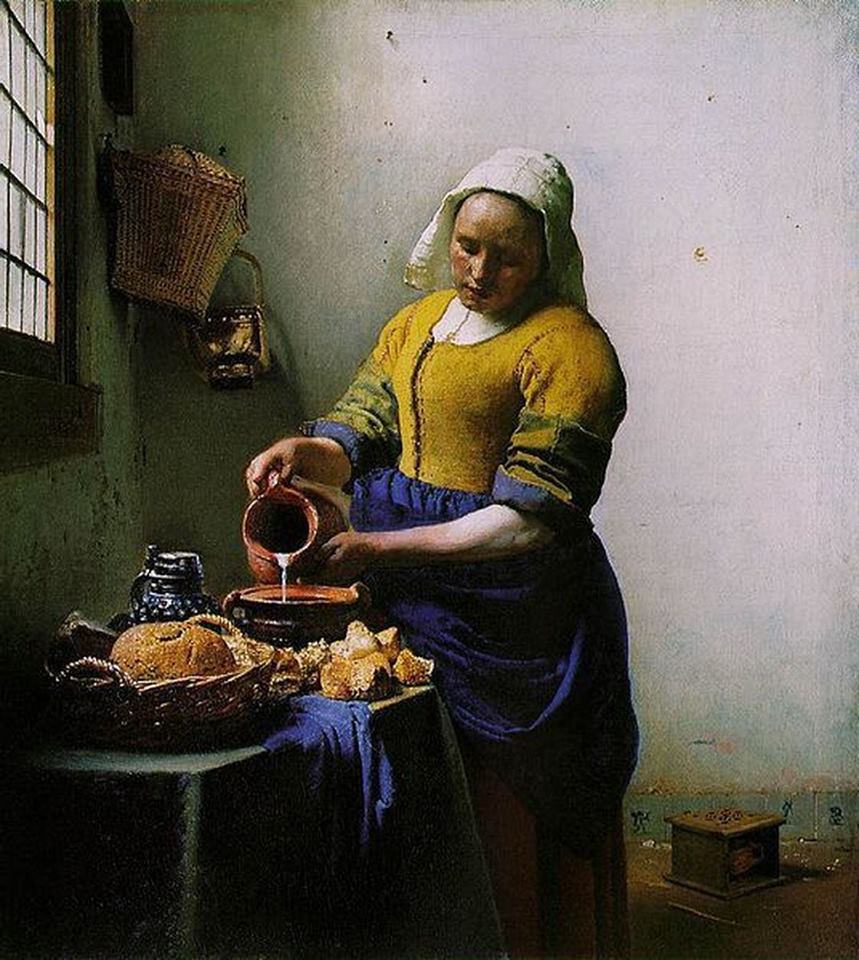
My first memory of art was in a dictionary, when I used to gaze dreamily at a portrait by Johannes Vermeer, The Milkmaid, a woman wearing a white cap, standing by a table covered with a blue cloth pouring milk…I was so fascinated by the painting, by the humble tranquil atmosphere and the basket of bread that resembled ours…and the dancing light on the maid’s face and arm. I knew nothing about this Vermeer but the few lines in the dictionary that never satisfied my curiosity: “a Dutch painter, born in Delft, his paintings, mostly about everyday life and domestic scenes were characterized by use of subtle light ”
Johannes Vermeer was my first inspiration, even his name had poetry or so I thought. After The Milkmaid I started a notebook and wrote about every painter I discovered. I made sure I kept it well hidden from my family.
My mother never understood why I spent most of my day holding that heavy dictionary just staring at paintings, I was a mercurial child and a picture could easily define and change my mood!! So my discoveries continued with Dutch art, some paintings by a mysterious looking guy called Rembrandt and another with an ironic look called Van Gogh.
My friends outside were so far from my world as a million star years. I remember their looks, half sarcastic half pitiful on a girl always lost in reverie, befriending ghostly figures in a dictionary and talking about places they never heard of.
I was always asking: how can this famous Van Gogh paint such a naïve painting like les douze tournesols? I can do it better!! What was le jeune homme au gilet rouge of Cézanne thinking?
Of course my childish mind always separated and catalogued them: the cheerful ones like the only painting by Rénoir that made me so fond of Paris le Moulin de la galette and those beautiful ballerinas in la classe de dance by Degas. The sad ones like femmes de Tahiti by Gauguin. Eespite the suggestive earthy colours of those exotic women I couldn’t miss the touch of melancholy on their faces. Géricault frightened me with his méduse so did the painting of Goya el tres de Mai that reminded me of my history classes about the Algerian revolution. Les mendiants made me cry and have nightmares (with all respect to Bruegel l’ancien). I hated the dismembered people and the cruelty of the act, but those who evoked me the most were those that made my fertile imagination drift even more.
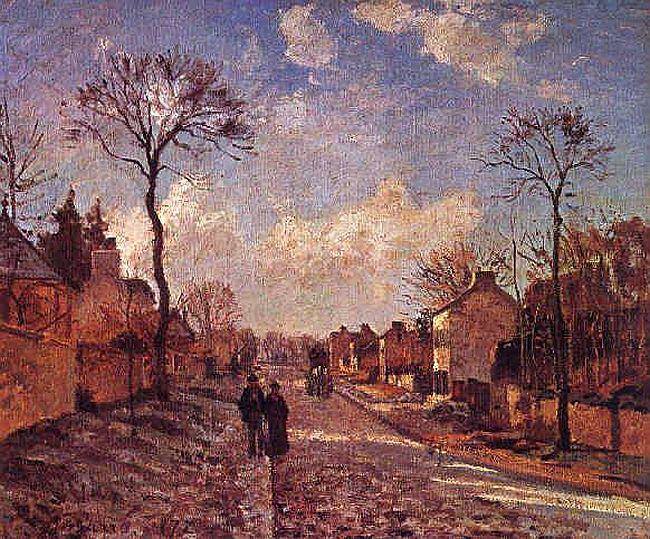
When I walk back home from school I close my eyes and imagine myself walking with the couple in la route de Louveciennes despite the difference between Pissaro’s perfect painting and my village disappointed me, it gave me extreme pleasure, only equaled by floating with Chagal.’s women in autour d’elle a name I found extremely romantic. Nothing matched that serene blue bathed in moonlight and those strange looking women I wanted so bad to look like.
I loved the fantasy in autour d’elle but another painting made me laugh and cemented the impression that this Picasso used squares and triangles only!! Because I always loved the light sprinkled on Rénoir’s canvas…Musiciens aux masques was as funny as humorous, because I never knew any instrument but the guitar, or who those three men were and never saw the dog under the table until recently.
I was drowning bit-by-bit in this world of colours, I knew Kandinsky, Caravaggio, Durer and Poussin and their names had a sensual sonority for my Arabic ear, not that I could pronounce them correctly because I could only manage the French ones. I continued to dream about the Louvre and cities I can visit when I become older. I continued to have my nocturnal conversations with Vermeer, Cézanne and Rénoir and make my own versions of la route de louveciennes and
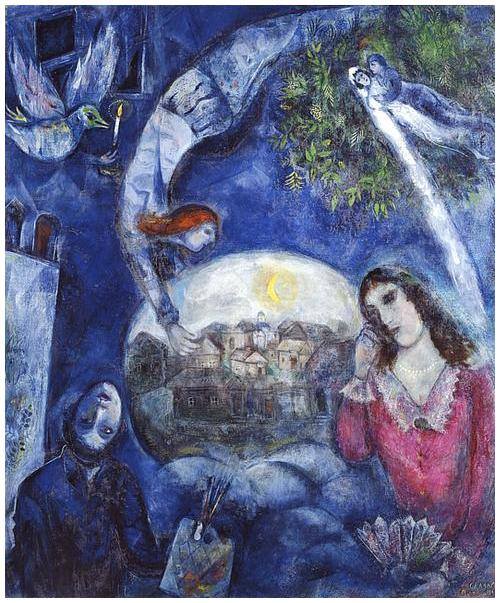
Vlaminck’s nature morte, this widened the gap between me and my friends who thought that I was weird and treated me suspiciously, my mother still couldn’t understand my attachment to this dictionary I wasn’t using to explain difficult words.
These memories came rushing back the moment I finished reading Tracy Chevalier’s novel Girl With a Pearl Earing, a gift from my beloved uncle who lives in Italy.I am still faithful to my Vermeer but through another equally mesmerizing painting la Joconde du Nord, and I know more about the art world now, my childish impressions and convictions are dramatically changed now. I can pronounce those names perfectly and I have wonderful friends who share my enthusiasm and passion.
But…despite internet and the thick art catalogues of le Figaro in my aunt’s library, despite the documentaries, TV shows and the long biographies I can read for hours, that dictionary still has the favour and a dear place in my heart, heavy, torn in places with its red cover and a single Arabic word written in black…
… that was my first art class.
– Imen Benyoub
© 2013, essay and photograph(below), Imen Benyoub, All rights reserved
Illustrations courtesy of Imen Benyoub
 IMEN BENYOUB ~ is a milti-lingual, multi-talented essayist, poet, and artist living in Guelma, Algeria. She is a regular contributor to Into the Bardo.
Editorial note and reminder: In two weeks, Wednesday, October 23, at 7 p.m. we will host a second writing challenge (Writer’s Fourth Wednesday) featuring Victoria C. Slotto, novelist and poet. The subject of this next challenge-yourself exercise is stream-of-consciousness. So writers read on, enjoy, write and mark your calendars for next week’s event. Mr Linky, which enables you to share your work with everyone, will remain open for seventy-two hours. Victoria and Jamie will visit all participants to read and comment.
Here an accomplished story-teller, Karen Fayeth (pronounced “faith” by the way), shares her experience of inspiration, story, and the NYC Midnight Flash Fiction competition.
Each year I enjoy participating in the NYC Midnight Flash Fiction contest. The challenge is to write a 1,000 word story over the course of one weekend.
But there’s more! The approximately 700 participants are divided up into groups and each group is given a genre, location and an object. All three must be incorporated in the resulting story. The tale must truly be in the genre, the majority of the story must take place in the location and the object must show up at some point.
It’s always amazing to see the wide array of stories that come from the same genesis. This assignment of genre, location and object can either be entirely freeing, allowing the writer a head start to leap from, or it can be incredibly constraining. It all depends on what genre, location and object gets assigned.
For the first round of the 2013 contest, I was assigned the romance genre. Bleah. Not my favorite but not awful. The location was a haunted house. Hmm. Possibilities abound, but not really for a romance? Hmm. Ok. And my object was marshmallows.
That was my place to start. Over the course of many of these contests I find the judges tend to like if you use the location and object in unique ways, so I always try to think of a twist or a different facet to use in my story.
I was quite busy over this first weekend of competition, doing some work for my employer and taking care of personal business, so there I found myself Sunday morning with nary a word written and a deadline of 9pm that night.
I opened the windows to my studio and let the light pour in. I felt the breeze through the screens and sat down at my computer to make magic.
Magic. Ha! There I sat looking at the curser on my computer screen, willing the magic to begin. It blinked. I blinked.
No magic was happening.
So I subscribed to the “just write something” theory and got started. I began typing words and thoughts and a character sketch. It was going. The magic was not quite lifting off, but it was certainly gaining speed.
That is when something caught my eye outside of the window. A little splash of orange on that first day of Autumn.
I was surprised to see a Monarch butterfly resting on the bush just to the side of the building where I live.
I rushed to get my camera, attached the longest lens I have, popped the screen out of my window, and began taking photographs.
I’m sure glad I did.

Photo Copyright 2013, Karen Fayeth
This gorgeous lone Monarch Butterfly was hanging out in the warm sun, using the ol’ proboscis to drink some nectar and gathering pollen on spindly legs. You know, general butterfly business.
As I watched, a couple of bees were highly displeased at the presence of the butterfly and kept strafing him (I say him but I looked up Monarch butterflies online and I think this might actually be a female, but I’m not sure).
These bees were executing deep aggressive fly-bys that only caused the butterfly to flap his wings a bit but stay put. The bees were quite persistent. They dive-bombed and I kept snapping away. I have some crazy action shots that I’m still editing.
After a while, the butterfly flew off and I downloaded and looked through my photos, very pleased with the results.
Then I sat back in my chair and smiled. After the visit from Mr. (Ms?) Butterfly, I felt totally motivated and completely creative. I turned back to my story and banged out about 1,300 words in one sitting.
Then I set the story aside and let it percolate while my husband and I went to explore a local street fair.
When we came back I had fresh eyes and gave the story a hard edit. I managed to pare it down to 999 words and submitted it about 45 minutes before the deadline.
Man-oh-man, hitting send on that story sure felt good.
I owe an awesome creative surge to a visit from a pretty orange butterfly on the first day of Autumn.
© 2013, essay and photo, Karen Fayeth, All rights reserved
 Karen Fayeth ~ is one of our regular writers. She is our tech manager, site co-administrator along with Jamie and Terri, and fiction and creative nonfiction editor. She blogs at Oh Fair New Mexico. Born with the writer’s eye and the heart of a story-teller, Karen Fayeth’s work is colored by the Mexican, Native American, and Western influences of her roots in rural New Mexico complemented by a growing urban aesthetic. Karen now lives in the San Francisco Bay area. When she’s not spinning a tale, she works as a senior executive for a science and technology research organization.
Karen has won awards for her writing, photography, and art. Recent publication credits include a series of three features in New Mexico magazine, an essay in the online magazine Wild Violet, and a short story in Foliate Oak. Her story “What Leibniz Never Learned” will appear in the Fall edition of The Storyteller.
“Be kind whenever possible. It is always possible.” His Holiness, the 14th Dalai Lama of Tibet
A lifetime ago I was privileged to work with folks who were everyday heroes in desperate circumstances. They were people transitioning into the mainstream and the workplace from welfare, foster youth programs, homelessness, drug and alcohol rehabilitation, catastrophic illness, disability, prison, violent environments, and job layoffs and plant closures.
There were many things we could do to help our clients. We helped them find jobs and housing. We encouraged them to get G.E.D.s and vocational training or retraining. We found ways to address learning disabilities and get people out of abusive relationships. We offered classes on nutrition and parenting. We facilitated a sense of community and support. In true hero fashion, our clients worked hard. They took advantage of and were grateful for whatever was made available to them. They honored their contracts and did all the extra things that can make a difference between failure and success. Over eighty-percent successfully turned their lives around.
In those days, my responsibilities included teaching a three-unit community college career-development class. To provide inspiration through the often overwhelming ups-and-downs, some of us made our students Keep Smiling Bags. A Buddhist might call these bags a Metta* Bag; a Catholic, a Caritas* Bag; a Jew, a Chesid* Bag, a Muslim, a Birr bag. To a Native American it might be a Medicine Bag. Since I learn from all and affiliate with none, I just call it a Keep Smiling Bag. It’s a gift of love and inspiration and you might even say it’s about attitude adjustment.
In these trying times, you may have a few people in your life who could use a Keep Smiling Bag. The bags also make nice token gifts for birthdays or holidays or as get-well gifts or party favors. Those who are crafty may especially enjoy this exercise and will no doubt create beautiful and unusual presentations, perhaps doing the card in calligraphy or hand-crafting the bag or hand-sewing cloth pouches in place of paper bags.
If you do make Keep Smiling Bags, make them with the intention to heal.
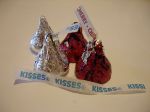
Here are the supplies you’ll need to gather:
♥ ♥ ♥ ♥
 JAMIE DEDES ~ My worldly tags are poet and writer. For the past five years I’ve blogged at The Poet by Day,the journey in poem, formerly titled Musing by Moonlight. Through the gift of poetry (mine and that of others), I enter sacred space.
 The BeZine
