Posted in Calls for submissions, General Interest

Woman, Life, Freedom | Call for Poetry Submissions

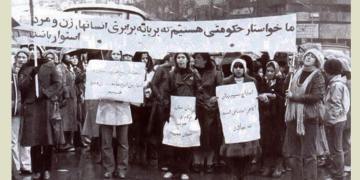
Tehran, March 8, 1979 – Women demand a government based on gender equality
Source

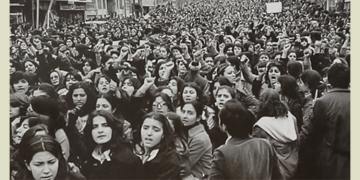
Since September 2022, protests by the longstanding women’s movement in Iran have been violently repressed by Iran’s government and complicit police forces. Among many incidents, hundreds of girls in Iranian schools have been targets of chemical attacks. Increasing rates of executions have emboldened solidarity across entire families to continue the protests for gender equality and the social, political, and economic changes possible with expanded civil rights for women. Journalists and artists have been documenting the local events as they occur. Because the Persian women’s movement is an international network of people who live in communities and work for institutions around the world, events in Iran have effects everywhere. International solidarity is turning into responsive international action.

Tehran, March 8, 1979 – Women demand a government based on gender equality
Source

If poetry has a role in social change for social justice, then surely the next several months will be time for literary publishers, poetry event organizers, and readers, to undertake that role on an international scale. Poems must be made available and accessibly distributed for that to happen.

Bänoo Zan, an Iranian-Canadian poet living in exile, and Cy Strom, an award-winning editor from Toronto, have a call for poetry submissions for an anthology with the Toronto publisher Guernica Editions, to be titled Woman, Life, Freedom: Poems for the Iranian Revolution. Submissions are currently open, and the deadline is March 15, 2024.

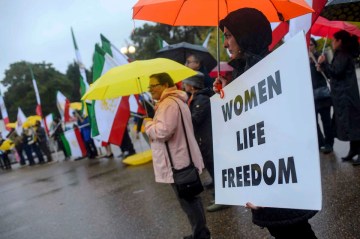
Demonstrators opposed to the Iranian regime hold a candlelight vigil to pay tribute to those who have died protesting the death of Mahsa Amini, a 22-year-old who was killed in police custody after allegedly violating the country’s hijab rules, outside the White House on Saturday. (Bonnie Cash/Getty Images)
Source

Submittable page.

Along with the call for submissions, Guernica and others are reaching out for further funding to this project for social change.

Women Life Freedom GoFundMe page.


©2023 Terry Trowbridge
All rights reserved


Posted in General Interest, interNational Poetry Month, Poems/Poetry

Unicorn Diasporic Birdwatching | Gili Haimovich

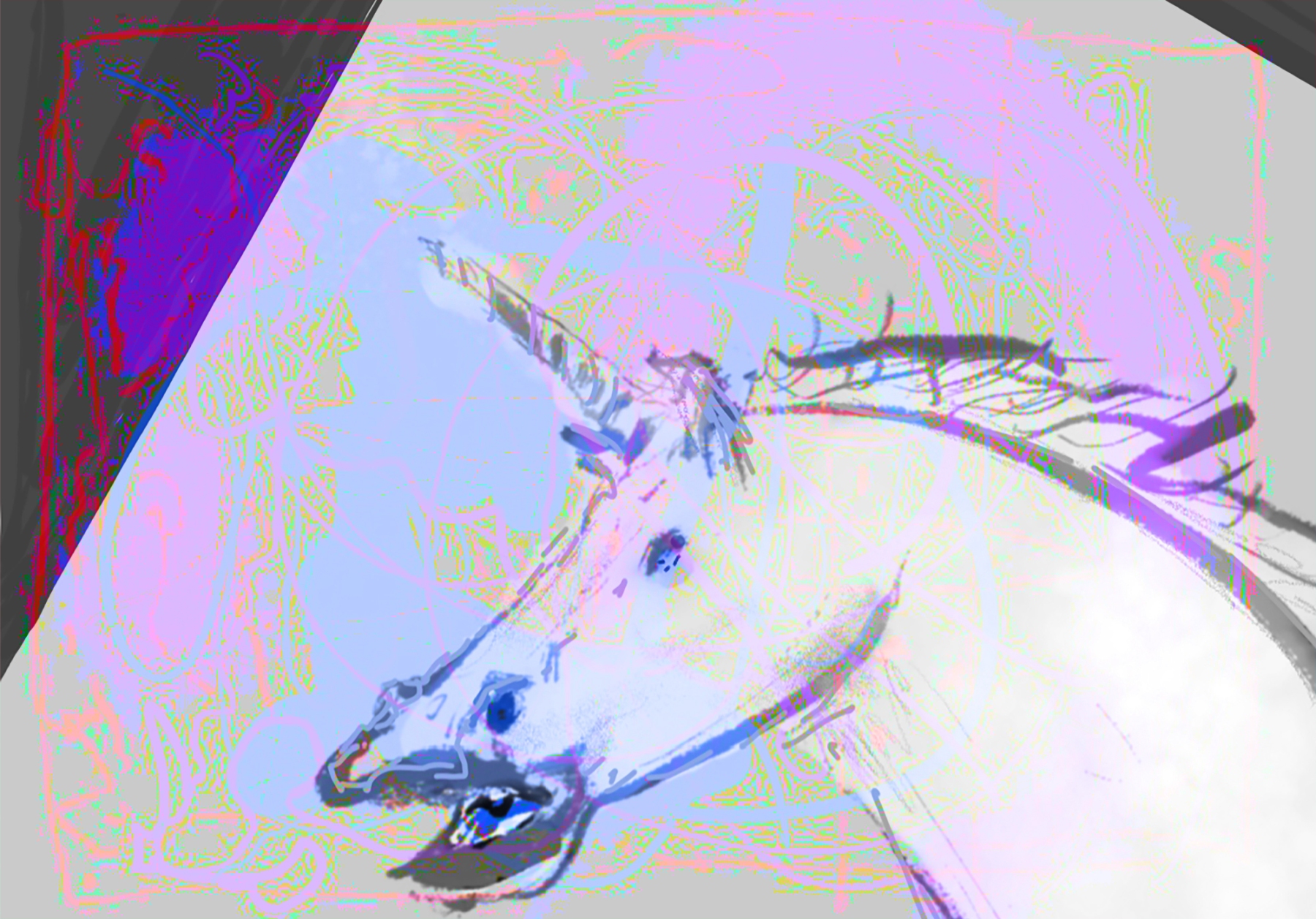
Unicorn

latent love
contrived happiness
kindness that can’t be helped
excluded from my own language

how can one be mad at a unicorn
for its rarity?

Unicorn 3
Digital art ©2023 Michael Dickel

Diasporic Nostalgia

We don’t feel shame when
we share memories
of when being in love was a novelty.
We’re nostalgic once a year
and hug a bit more often.
When we do reminisce
it’s not due to our deserted country
but because of the calendar
showing us one of our anniversaries.
Recently we started to hug a bit more frequently
and it is because of our frantic deserted country.
We love like we forgot it ever had a beginning.
and we continue to love like it will have no end.
We acknowledge eventually we’ll die
and discuss, almost negotiate,
how many marks we want to leave behind us.
We’re sick and merry, healthy and sad, we’re sad 
     and sick and merry and married.

Yes, we do like better
who we are
but not enough
not to the degree we’d want you to stare at it.

Birdwatching

Our world begged for existence.
We carried our valor secretly
no witnesses for our triumphs
for overcoming another day.
Not being able to save even ourselves,
we dropped on the bed
as if we’d lost a battle.

In the mornings we melted back
from sleeping like rocks
into floating bodies in a void.
We watched the birds
from our square-foot lawn and cherished
not just their movement –
their gift of coming from different worlds –
but our own growing ability,
while standing up, standing still
to notice them.

Foliage

Written before the Jewish New Year’s Eve of
the year 5782,
 2022 by the Gregorian calendar
I want to write something with the word foliage
but need a better language than this one,
one that will allow it to breathe in a poem
and won’t be florid.
Perhaps in Estonian
where it’s possible to love quietly
and to hate
and then grief.
Perhaps there,
where it’s okay to die every winter and remain naked.
Where it’s really unknown where a sentence will end.
Where you can breathe deeply
all the way down to bring foliage,
or even autumn’s fall, on the body,
but not rain like the desert here pleads for.
Where you can secrete miracles
without desecrating respect,
with no void to cross over forty years of desert
and then what?
Me, reduced of the desert’s wandering,
at the age of a girl starting the second grade.
May she have an ameliorated year,
a year that saturates, sprouts,
a year in which twigs are ignited into buds,
a preceding year before the winters of her life
that will bless her with the fluttering foliage of clear breath,
a sweet one,
a breath,
no more than an exhale of fresh breath that will ease
the severance every end brings

Mainland

Armored by slumber
I cross the flaming oceans
of the un-dared dreams.
Only the ones I didn’t dream
have been fulfilled.

Like a prime number
I am a core
in search for oneness.
Unable to divide into any other kernels
I multiply and withdraw
like waves coming and going — 
a pendulum movement
between the coarse golden ash of sand
to the silver moon-color of the waves.

Within their foam dissolving beauty
hides repetitive abandonment.
Roar at the winter
with nothing
to be hindered by.

The sand is just another foam
in a different consistency
engulfs, embraces
and yet forsakes as well,
but in slower motion.

Now I’m hushing oceans
into the fall of dusk,
searching ways
to turn into an islet
so there’s less of me
needing to be loved.

©2023 Gili Haimovich
All rights reserved


Gili Haimovich

…is a prizewinning bilingual Israeli poet with a Canadian background. She is the author of ten poetry books, four in English and six in Hebrew as well as a multilingual book of her poem ‘Note’. She was awarded prizes for best foreign poet at the international Italian poetry competitions I colori dell’anima (2020) and Ossi di Seppia (2019), a grant for excellency by the Ministry of Culture of Israel (2015) a fellowship residency at the International Writers’ Workshop Hong Kong (2021) and more, including several grants for her Hebrew books from The Pais Committee for Arts and Culture, The Acum Association of Authors and The Goldberg Grant  for Culture and Literature. She has full length books translated into French, Serbian and Estonian and more are forthcoming. Her poems are translated into 33 languages and featured worldwide in numerous anthologies and journals. Gili participates in festivals and literary events across the globe such as in Canada, France, Mexico, Italy, India, Romania, Hong Kong, Taiwan, Kosovo, Chile, Kenya, Mongolia and more. Gili also engages in photography and poetry translation as well as facilitating groups and individuals in creative writing in Israel, Canada and more.


The 2023 (Inter)National Poetry Month BeZine Blog Bash

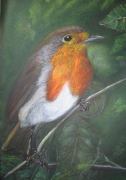
Pastel of European Robin perched on a small branch by Tom Higgins ©2021
Art: European Robin, pastels, ©2021 Tom Higgins

Posted in General Interest, interNational Poetry Month, Poems/Poetry, poetry

Am Feel Month | Brittney Cotrona

I Am…

I am Strong,
I am Invincible,
I am Kind,
I am Funny.

I am Smart,
I am Loyal,
I am Happy,
I am Joyful.

Abundance of love,
Is all I have.
For those around me,
And for anyone I come in contact with.

I make others happy,
I can make,
Myself,
Happy.

I am a blessing,
In others lives.
I am a blessing,
In my own life.

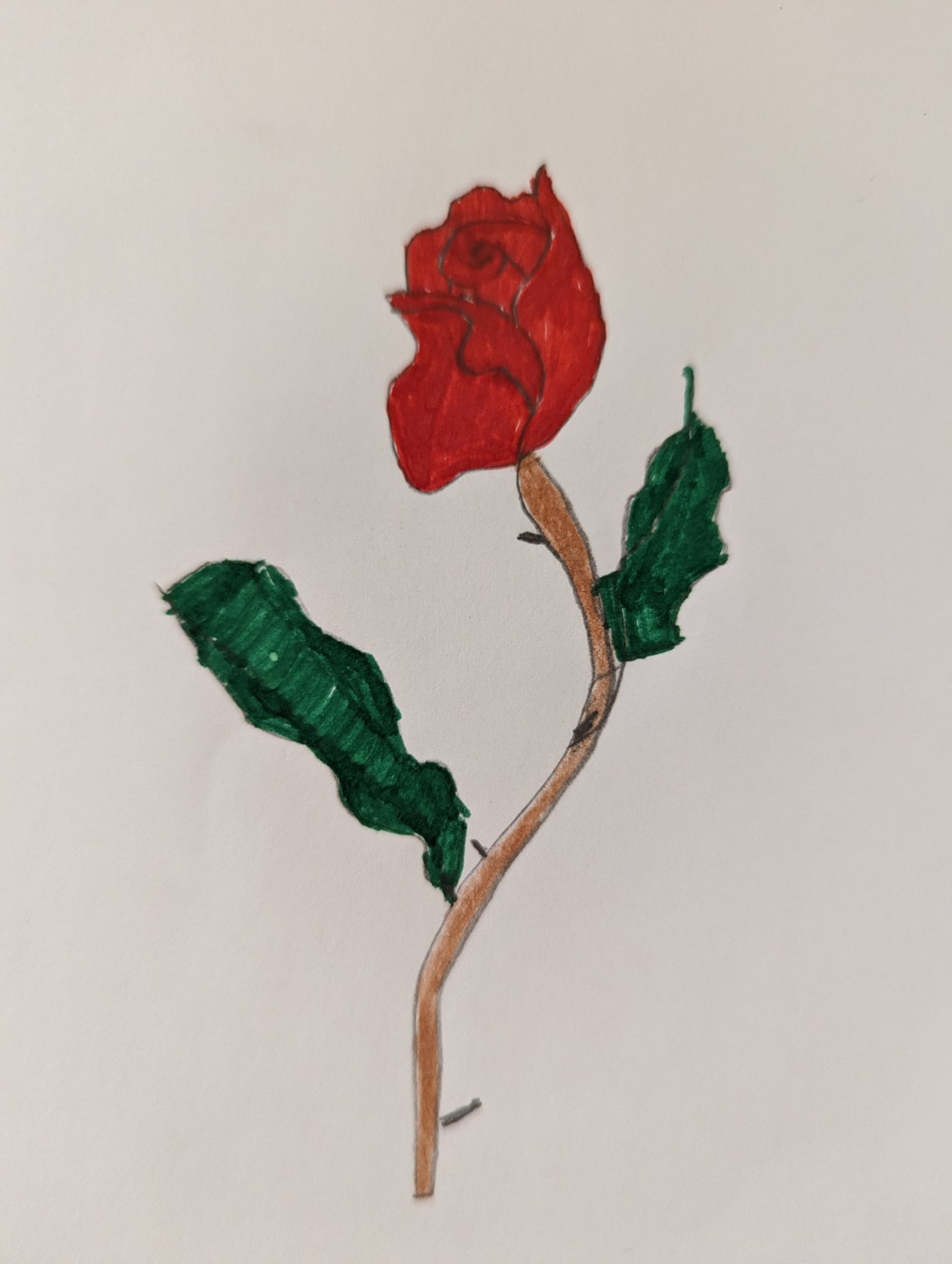
The Rose by ©2023 Brittney Cotrona

I Feel

I feel good
Like watching a sunset during summer
I feel free
Like a bird flying in the sky
I feel calm
Like water after a storm
I feel comfortable
Something that makes me want to enjoy life
I feel happy
Like a child eating ice cream on a sunny day
I feel like me again
Like the 7 year old me playing in the backyard
This feeling needs to stay
This feeling needs to never go away
I'm me again

1 Month…

The world was gray
No colors in my life
No joy in the little things
No hope in my eyes
No harmony in music
1 month of freedom
1 month of opportunities
1 month of changes
1 month of loving myself
1 month of happiness
1 month of solitude
1 month of care-free
1 month of hope
1 month of moving forward
1 month
I did the work
God intended me to do
1 month
Here's to another day

©2023 Brittney Cotrona
All rights reserved

Brittney Cotrona

…is a poet from Connecticut. Her poetry is filled with imagery. She writes about love,self-love and mental anguish, which many readers say they can relate to. Brittney graduated from Southern New Hampshire University in 2023 with her Masters in English Literature and Creative Writing. She is currently writing her own poetry book, while publishing a few poems to get her name familiarized in the poetry world

Website / Blog Linked


The 2023 (Inter)National Poetry Month BeZine Blog Bash

Pastel of European Robin perched on a small branch by Tom Higgins ©2021
Art: European Robin, pastels, ©2021 Tom Higgins


The 2023 (Inter)National Poetry Month BeZine Blog Bash

Pastel of European Robin perched on a small branch by Tom Higgins ©2021
Art: European Robin, pastels, ©2021 Tom Higgins

Posted in General Interest, interNational Poetry Month, poem, Poems/Poetry, poetry

Probation Plea | Pek-êng Koa

My Probation Plea Is Rejected Again

Translated by C. J. Anderson-Wu
1
They shouted, Democracy! Freedom!
I don’t know Democracy
And Freedom doesn’t know me
2
A Cockroach has climbed over mountain after mountain
Desperately, it rushes forward 
but crashes into a slipper at the gate of Freedom
3
A lone hawk’s wing broke
It hangs upside-down over the iron-barred window
looking inward at a corner where drafts of poems lie piled
4
My soul languishes a little bit
So I stew a poem to strengthen my bones and tendons
and swallow a tablet of homesickness to revitalize my spirit 
5
Tick Tock Tick Tock, the world is the same
Tick, Tock, the world is not the same
Needs a new battery
6
All right. Dreams have retreated
Friends, put away your teardrops
We are going to shop the market’s new morning dew.
7
My hope fell and got skinned
so a bandaid was enclosed
in a letter mailed from home
8
Dragging fetters, encountering
a bird feather dropped into the bars
I hear the sounds of clenching teeth
9
Mr. Freedom is sleeping
in a bed of clouds over heaven
It wouldn’t wake up even during a 10-magnitude earthquake
10
It only takes a randomly signed order on a piece of paper
to bend a prisoner’s backbone, dignity and dreams
into something unrecognizable

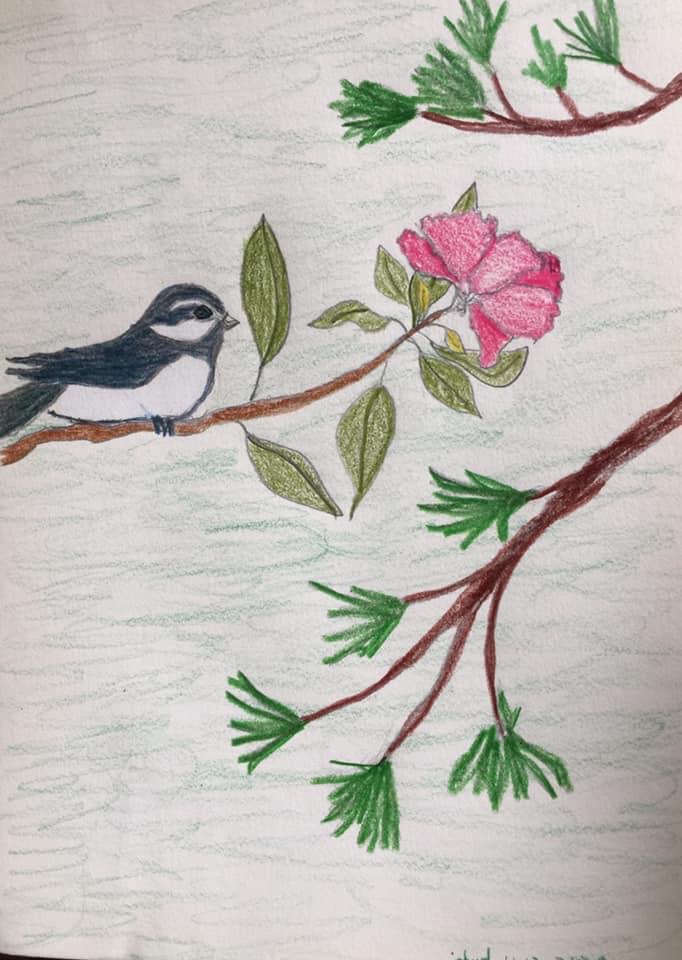
Bird and Flower
Drawing ©2023 jsburl

Translator's Note: Pek-êng Koa was formerly incarcerated for 16 years due to two charges of robbery. "My Probation Plea is Rejected Again" was created around 2007 and 2008.

Poetry ©2007-2008 Pek-êng Koa
English Translation ©2023 C. J. Anderson-Wu
All rights reserved


Pek-êng Koa

…is an award-winning Taiwanese poet, he is also a teacher and a campaigner for the creative writing of poetry in Taiwanese language. “My Probation Plea Is Rejected Again” was from his poetry A Firefly in the Fence(2010), published by the Tainan City’s Bureau of Culture.


C. J. Anderson-Wu

…is a writer and translator from Taiwan, her short fiction and poems can be found in Hennepin Review, Kitaab, Story Sanctum, and e-ratio, among other literary journals.


The 2023 (Inter)National Poetry Month BeZine Blog Bash

Pastel of European Robin perched on a small branch by Tom Higgins ©2021
Art: European Robin, pastels, ©2021 Tom Higgins

Posted in General Interest, interNational Poetry Month, Poems/Poetry, poetry

Spring Hope | jsburl

spring has come slowly

the morning sun rises in all its glory
to dusky rose colored clouds, tinting the world,
but from the west comes an ominous dark wall
high above the land, dosing fast.

rain drops begin to descend, softly, gently.
tears from heaven to cares the soul.
sultry as smoke, a wall of rain approaches
a deluge to wash away winter's last clutches.

quickly the last pockets of snow melt away.
uncovering the grey of stone walls long covered
soon will come the green of spring but all there is today
are a fow jonquils, hyacinths, and crocuses—spring's promise.

quickly the rain passes, leaving all shiny in its wake
as the swallows come out, in all there glory
to swoop and dance in the wind practicing their aeronautic prowess.

afternoon falls, darkness descends
and the snow once again begins to fall
and so i sigh, dreaming of the sun's warmth,
as i wait for the dawn anew.

hope

so beautiful
yet so fragile
hopes are easily dreamed
but so quickly dashed

we hope for the stars
and won't accept less
we are crushed
when what we don't want happens
but aren't thankful when it does

hope…
we need hope
but we shouldn't expect
shouldn't ask for what we don't need
yet we do
we should accept the little blessings
for what they are
tiny glimmers of hope
be thankful for friends and family
he glad to be alive in this beautiful world

and the rest
well
the rest is negotiable…

Art and Poems ©2023 jsburl
All rights reserved


The 2023 (Inter)National Poetry Month BeZine Blog Bash

Pastel of European Robin perched on a small branch by Tom Higgins ©2021
Art: European Robin, pastels, ©2021 Tom Higgins

Posted in General Interest, interNational Poetry Month, Poems/Poetry, poetry

intentional attention | Lonnie Monka

denying our disdain for the loneliness of honesty 

…heaped up chaos of knowledge
which fails to have an external effect…
—Nietzsche
denying our disdain for the loneliness of honesty
we emerge in these capitalistic space-time territories
where to be courageous you must hunt
beyond the bounds of automatable actions
staying at least one step ahead of the exponential hunger
as totalities fiend to feed off our labor:
this constant conversion of potential into actions

we devise devices to combat the need
to feel grounded in any given place & any given time
we manipulate ourselves with screens
distorting our sense of presence
with far off times & far off places, as if soon
     we'll never think
(thanks to this grace of our disgraces) to be where &
     when we are
transforming "when" & "where" into all time, all places

but please, let's not deny our purpose
let us instill intention into this attention

would you perhaps pretend to bother

would you perhaps pretend to bother
now that my current has begun its seduction
(dear timbre of distracted trees) now
my mind’s continuous & chaotic river
pulls you along as driftwood wishing to be burnt:
will you perhaps pretend to bother
to be my equal, my friend, my merging water?

the chaotic & continuous river of my mind
hostile & bitter, nourishing & sweet—this river
is playful deceptive, defiant, contiguous
rivers accept all confluence but mine contains residue
from Santa Fe, Austin, & New Orleans,
stretching from Sḥem to Jerusalem
& roaring with the ambiguous sounds of musical intent
—do I dare submerge you
into the unseen world of emerging re-emergences
merging—as equals, as friends, as water?

would you perhaps pretend to bother
to prevent malicious voices of the dead
from igniting false fires of renewal—those voices
that consume all that has yet to merge
with the water?
please merge, my merging, friendly water…
my mind’s chaotic & continuous river
carries your rolling body, soaked but still separate from me,
more present than any molecule & sharper than any atom:
pretend, pretend, pretend to bother
to be my equal, my friend, my merging water

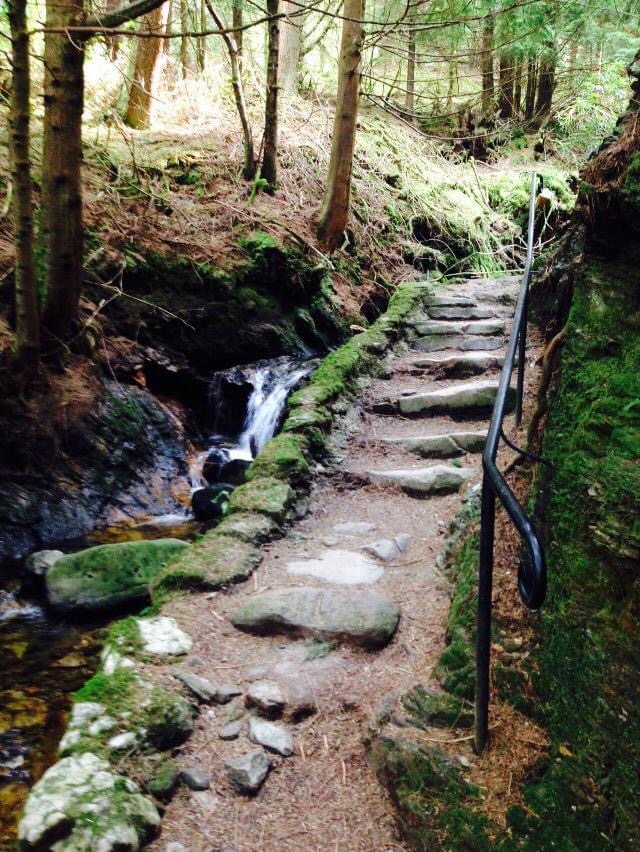
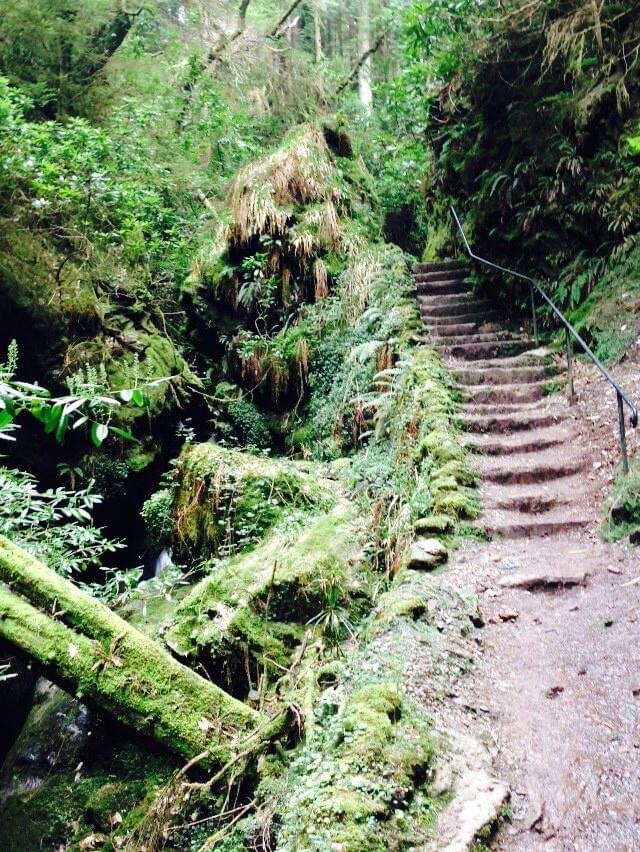
Puck’s Glen, Scotland
Photograph ©2023 jsburl

our future is not the future if we choose

It avails not, time nor place—distance avails not                     
I am with you, you men and women of a generation, or ever
so many generations hence.                                                
—Whitman
our future is not the future if we choose
to hide what we don’t choose: mortality
is not a mask we wear like relative morality
blind to its ends & aimed at exhausting what we know of
           mortality,
like the lifespan of a picture presenting some present
as impressive because more important than choosing
is to be chosen: seducing potentialities sings immortality

actualities! potentialities! being human & being born
into the condition of choosing choices that forget
the disdainful desire of being chosen to help
in this endless string of bearing: bear the future,
     bear the present,
bear these projected fractions of the self
presented to impress whoever might next approach:
new patterns emerge from the pain
of our having chosen & our having been chosen
because once the desire to defer presence was entertained
time & distance formed—allowing us to betray
one another, forming tears that tear out pain
of actual sadness from potential futures:
thinking of how everyone eventually will have been
we are all statisticians, analyzing time & space
for the pleasure of losing ourselves between patterns:
pattern forming—pattern finding—each pattern
      a seductive song
so go measure—measure & then deduce probable solutions

how do abstract thoughts suggest that they can affect?
whether as geometer or statistician, our wonder
ought to discover the pleasure enjoyed by those who
impart projections of future forces to imagined objects
because even abstract objects have the power to
     affect the world:
from the rivers of Babylon to the mountains of Sinai
from the cedars of Lebanon to the salt of the Dead Sea
all these times, places & songs—once measured—
     can be chosen

©2023 Lonnie Monka
All rights reserved


Lonnie Monka…

……founded Jerusalism, a non-profit organization to promote Israeli literature in English. He is a PhD student at Hebrew University, researching the intersection of modernist art and orality through a study of David Antin’s talk-poems, and is an OWL Lab Fellow.

Jerusalism


The 2023 (Inter)National Poetry Month BeZine Blog Bash

Pastel of European Robin perched on a small branch by Tom Higgins ©2021
Art: European Robin, pastels, ©2021 Tom Higgins

Posted in General Interest, interNational Poetry Month, poem, poetry, Writing

The Joke | Faruk Buzhala

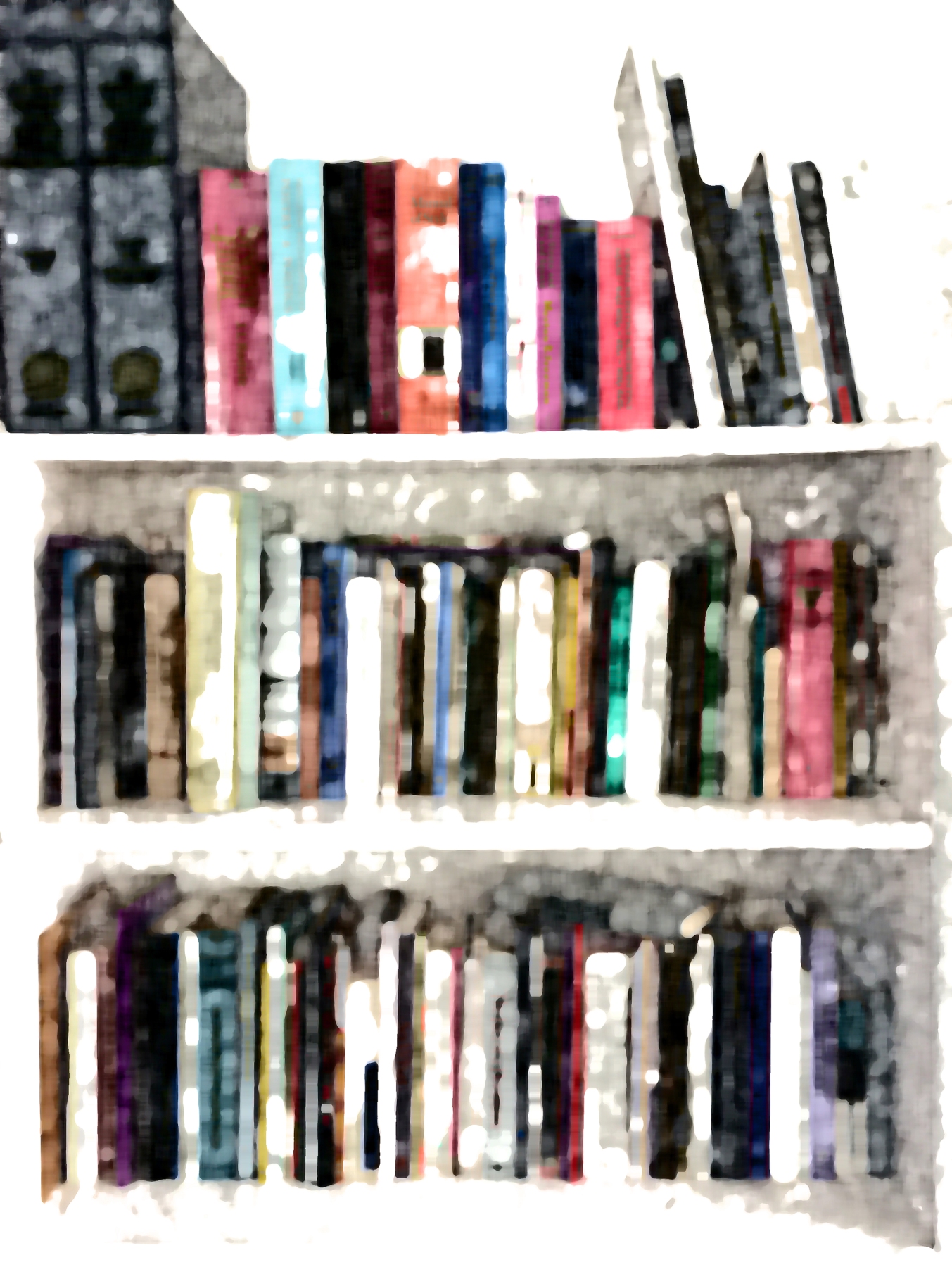
Books, a lot of books
Digital landscape from photo ©2023 Michael Dickel
To waste time on books while you have a lot of other tasks to do,
To read, incessantly to read, in order to gain knowledge and finally see
That time is gone, lost among the writings of the dead
Who never invented the art of being happy!

I stand in front of the shelves with hundreds of books by well-known authors
 who dealt with the portraits of controversial people,
 people with vices, and various bad habits! 
Was it worthwhile to immortalize these figures
who gave examples and examples from human relationships
and made us take life served according to their imaginative way?

Books, a lot of books.
So many books and so little time to read them. (I do not remember who said that!)

I look at the bookshelf, 
It catches my eye and I read the titles:
The Financier,
Red and Black, 
Father Goriot, 
The Blind, 
The Grass,
Tips for Life,
The Diary of the Year of the Plague, 
The Devils,
The Divine Comedy,
Night,
Farewell to Arms,
Praise of Madness, 
Love in the Time of Cholera, 
Don Quixote of La Mancha,
The most beautiful of the worlds, etc., etc.
So much time lost in writing, so little time wasted in reading!

Wow, how many written books are on the shelves, covered by the dust of time?
How many manuscripts are waiting to come to light and be published?
Will they all survive time?

It has become a trend to publish books,
If there is nothing left to do write your autobiography,
because others then will read it
and will learn from you
how life is lived the way you lived it!

What, do you need knowledge? 
When you learn it from experience 
and copy-paste to others
without knowing that the meaning of all knowledge
lies in the books!

I stand in front of bookshelves and am filled with bitterness,
I knock them all down, I throw them away from the apartment,
I gather them up and spray them with gasoline,
Then I burn them.
I warm myself in the fire coming out of the books;
Eternal fire, the fire of the gods, Universal fire that disperses ether.
I think of the library of Alexandria, The Name of the Rose, Fahrenheit 451,
The fire with which burned at the stake Giordano Bruno,
the fire in which whole cities burned, 
the fire that burned and burned whole mountains, fire, fire, fire.

P.S.
I went through a spiritual crisis one more time!
I look at the books that stand on the shelves and
I’m glad they are still there!
I look at them one by one, reading the titles gradually 
until my eyes stop on one of them
as I read, letter by letter: T – H – E   J – O – K – E
Confused, I say to myself: Hey, this writer is still alive!

©2023 Faruk Buzhala
All rights reserved

Faruk Buzhala…

…is a well-known poet from Ferizaj, Kosovo, writing in his mother-tongue, Albanian. He was born in 9 March 1968 in Pristina. He is the former manager and leader of “De Rada,” a literary association, from 2012 until 2018, and also the representative of Kosovo to the 100 TPC organization. In addition to poems, he also writes short stories, essays, literary reviews, traveltales, etc. Faruk Buzhala is an organizer and manager of many events in Ferizaj. His poems have been translated to English, Italian, Spanish, French, German, Croatian and Chinese, and are published in anthologies. .


The 2023 (Inter)National Poetry Month BeZine Blog Bash

Pastel of European Robin perched on a small branch by Tom Higgins ©2021
Art: European Robin, pastels, ©2021 Tom Higgins

Posted in General Interest, interNational Poetry Month, Poems/Poetry, poetry, Poets/Writers, Writing

Whispering Vibrations | Waqas Khwaja

what is left

on a kite string you fly me
then cut me adrift
with your own hand
to float on air
in the passage of seasons
the flight of geese

carried by the breeze
spinning and sailing
ever further and away
keeling when it sags
to sink among trees

snagged by a runner
as spoils of conquest
claimed by strange hands
by right of possession
used willfully then
harnessed and tied
to unfamiliar strings

raised once more to fly
and ripple in the wind
its dance and the surge
could still entrance
but severed in a duel
swept away by the draft
i am seized yet again as bounty
straight out of a fickle sky

so captured and surrendered
in casual repetition
riding ever degraded strings
in the hands of fortune-hunters
my colors fast declining
my garments wearing thin
patched up for tears
dispirited now and dull
flickering but damply

spent and shabby
i fall at last
to a gaggle of street boys 
who brawl and bicker
over a patched-up thing
and tear it to pieces
in rivalry and spite

the one most irate
snaps the spine in two
cracks the bow
shreds and crumples what is left
tosses it on the roadside 
kicks dust over it
looks about for other game

all broken and torn
i am but scraps
of the paper kite I was
fooled by the fable
of a momentary release

it was just sport for you
but a worn piece of thread
still locked in a knot
you tied with your hand
binding spine and bow
to equip me to fly
remains as a relic
in the wreckage that is left

furnace of galaxies

	virtual in cyberspace
			a cypher and 
		a dot
				digital breath

waves of sound
			no flesh 
		no bones 
cyphers and dots 

		meeting 
cyphers and dots 
			across riven continents
	littered oceans

		a wilderness of black ice
phyllium forests abuzz
				stir and fuss
	of cybernetic insects 

hammer and din 
		over deserts
	of white hot sand
				over wastelands of burnt rock
  
	whispered vibrations
in virtual ears 
			cuddles
in virtual arms

		qalandar condor
wings thrashing 
			storms spectral lips
	strokes and scours

			and shreds
	with ghostly talons
			tears into phantom
		belly and entrails

			plop
		plop 
			astral stones bubble
	molten in flaming lakes	

furnace of galaxies
	fizzing endlessly
			jets of heat
		seethe singing

	galactic light 
burbling
		spilling over
			babbling in concentric ripples

	scattering 
		clumsy wares
				a cosmic potter’s wheel
churning swirls of stars

				crude
	suns and moons
			comets
and planets fired

		glazed and burnished
celestial dregs
			candescent debris of eternity
		immeasurable space

			nothing
	purgatory in perpetual dissolution
		mutation
					trance

		trans 
				cyphers and 
dots meeting
			cyphers 

	and dots 
splatter in a virtual eye	
				arsenic
		on a virtual tongue

a virtual palm
			salted for prayer
	a virtual heart
pumping plasma

			through cyber thoroughfares
 	cyphers 		dots
burning slag
		flooding galactic highways


Puck’s Glen, Scotland
Photograph ©2023 jsburl

tryst

holding back I refuse
that gift of life
toward which I have traveled
all these long years
without knowing 
where I was headed
till ready to slip away
without regret or rancor
seeking even fondly
that state of not being
existing without 
awareness of existence
without self 
or sense of self

and this forbearance
launches us
into orbits 
far from each other
where we shall not 
cross paths
in dimensions of time 
we know
yearning incomplete lost
pulled into another world
into other worlds
until the collapse of time
in the collapse of space

that instant 
which allows us
to tear through curtains
of separating life screens
crash through spun glass
of gossamer fancies
hurtling towards a tryst
that is written into our lives
certain beyond doubt
and possible only then
at the very end
when hours are dust
and dust a flash of light

we dream the impossible
long for something 
that cannot be
and what is imagined
is rendered probable

all that has ever occurred
all that is happening
all that will transpire
converge and come together 
held all at once
in this moment 
that must be ours 
an instant that unites
and so reunites us
in a transitory gleam
in the glassworks of the imaginary 
that seizes the real
and preserves it forever
in the moment
of its obliteration

©2023 Waqas Khwaja
All rights reserved

Waqas Khwaja…

…has published four collections of poetry,a literary travelogue about his experiences as a fellow of the International Writing Program, University of Iowa, and a couple of edited anthologies of Pakistani literature. He served as translation editor and contributor for Modern Poetry from Pakistan, a Pakistan Academy of Letters project supported by a grant from the National Endowment of the Arts, and is the Ellen Douglass Leyburn Professor of English at Agnes Scott College, where he teaches courses in literature and creative writing.

Website


The 2023 (Inter)National Poetry Month BeZine Blog Bash

Pastel of European Robin perched on a small branch by Tom Higgins ©2021
Art: European Robin, pastels, ©2021 Tom Higgins

Posted in General Interest, interNational Poetry Month, Poems/Poetry, poetry, Poets/Writers, Writing

Spring Throat | Mykyta Ryzhykh

***

lump in spring throat
can't hear the singing of the nightingale
vacuum of nature

***

absolute evil
when he stepped into the woods
on the rustle of leaves
color of ripe amber

***

While Judas is still killed—
Evil triumphs.

©2023 Mykyta Ryzhykh
All rights reserved

Mykyta Ryzhykh…

…is a Ukrainian poet and the winner of the international competition Art Against Drugs and Ukrainian contests Vytoky, Shoduarivska Altanka, Khortytsky dzvony; laureate of the literary competition named after Tyutyunnik, Lyceum, Twelve, named after Dragomoshchenko. Finalist of the Crimean ginger competition. Nominated for Pushcart Prize. Ryzhkykh has been published in the journals: Tipton Poetry Journal, Stone Poetry Journal, Divot Journal, dyst journal, Superpresent Magazine, Allegro Poetry Magazine, Alternate Route, Better Than Starbucks Poetry & Fiction Journal, Littoral Press, Book of Matches, TheNewVerse News, Acorn Haiku Journal, The Wise Owl, Verse-Virtual, Scud, Fevers of the Mind, LiteraryYard, Plum Tree Tavern, Iterant, Fleas on the Dog, The Tiger Moth Review, Lothlorien Poetry Journal, Angel Rust, Neologism Poetry Journal, Shot Glass Journal, QLRS, The Crank, Chronogram, The Antonym, the6ress zine, Monterey Poetry Review, and PPP Ezine.


The 2023 (Inter)National Poetry Month BeZine Blog Bash

Pastel of European Robin perched on a small branch by Tom Higgins ©2021
Art: European Robin, pastels, ©2021 Tom Higgins

Posted in General Interest, interNational Poetry Month, Poems/Poetry, Poets/Writers, Writing

Departure, Arrival | Julia Knobloch

Pico-Robertson, Before Departure

A back alley glows in apricot and pink
seven trumpets praise the early sun
Crows sit on wires like purple sparks
palm trees worship the wind, their fronds clatter
like plastic blinds in a sparsely furnished bedroom
 
June gloom stretches into July
A skateboard stumbles over rotten dates
Marine layer is just another term for fog
but the beaches in the west are always open
 
The hot months I love to greet will arrive
after I have traveled to a summer in decline
My peach garden will be gone when I return
others will harvest what they plant
sit on dunes and squint their eyes
watch the sun set behind mid-century balconies
contemplate desert colors from the snow
 
Now that the silent neighborhoods light up 
again, I must leave
although I still don’t know what happened
to the silver hoops I forgot
pool-side on Shenandoah
next to a pile of cherry pits, another layer of my soul

The Beautiful Cityscape
©2023 Binod Dawadi

Arrival

In the first week, sleep comes any hour, hunger early
when the pillar of dawn climbs up the stone wall
in gray and blue, and the neighbors have sex, again
 
In the space between jet-lag and transition
exhilaration and exhaustion
water from the shower engulfs my skin
an orange glow
It seems easy to wash away age and memories 
longing to emerge
to exhale, to play a wind instrument
 
With gusto, I eat olives and labneh, warm pita
with za’atar from the Bukharian baker
I can’t write a line but walk far and beyond
in somnambulant serenity
through alleys that smell of fresh detergent
moth powder and worn ceramic tiles
 
I nod and smile and some smile back
I am not deaf but mute
I see but I don’t know how I am seen
I log my journey of discount and preparation

©2023 Julia Knobloch
All rights reserved

Julia Knobloch…

…is a poet and literary event organizer studying to be a rabbi. As part of her studies, she is living this year in Jerusalem.


The 2023 (Inter)National Poetry Month BeZine Blog Bash

Pastel of European Robin perched on a small branch by Tom Higgins ©2021
Art: European Robin, pastels, ©2021 Tom Higgins

Posted in General Interest, interNational Poetry Month, Poems/Poetry, poetry, Poets/Writers

Eternal Memories Souls | Dessy Tsvetkova

Eternal painted melody

Carry on
the rhythm
of bubbling air.
Sing with the ocean wind.
Step on jiggling sand
of the magic dunes.
The moments are there
to breath as twinned
with birds,
to fill the eyes with sand
and twisting tunes.
Embrace the streets
full of beats of hearts,
make a wish,
send your ivy thoughts
to the chronicles of the eternal time.
Each glossy belief
will enrich the shine of stars,
the paradigm of life
is to add your miniature
to the giant canvas of space,
if you can, with chime.

Memories

The memories are sailing birds with us.
They make us travelling in time.
The cruise is sometimes sad ash in dust,
but often bright they really shine.
They float as feathers in the lake,
as autumn leaves they dance.
The memories are time for break.
We see ourselves in a glance.
The memories, the bridges of the moments,
I swim with you like surfer grabs the waves,
I travel back if I need some adornments.
Through you I grow and go on to behave.
My orange shining memories,
come when I need you, please!

The souls

Wherever I go,
the birds are right nearby.
Whatever was done,
It's always a moment to fly.
Whoever I meet,
I leave there a smile.
Wherever was taken,
It gives back Devine.
Some people are birds,
they are blessed by the sky.
Some others are shadows
and use other's shine.
Some persons are fishes,
They float into plasma
and reach deep to arteries,
Some others are stones,
They don't make a sign.
But they can build mountains
if needed as high as the Everest,
And back to the species,
I prefer to fly...

To S.

He had a light shadow.
His figure was holding on
to a straight shovel.
When he was walking,
among the beds the weeds disappeared.
The wind was always his way.
Birds ate from his palms ...
As soon as he smiled
to someone
they stopped to look at him ...
A real miracle,
every time,
when
its direction
led to my door.

©2023 Dessy Tsvetkova
All rights reserved


Dessy Tsvetkova…

…is a Bulgarian who writes poems in Bulgarian and in English. She lived in Luxembourg and currently she lives and works in Belgium. Dessy has publications in many Bulgarian magazines and newspapers, also in Romania, Belgium, USA, India, Peru,Philippines.She has 4 books in Bulgarian, 1 in English, and she has also compiled a book as translator from Bulgarian into English, an anthology of Bulgarian top authors.She writes about nature, love and God,and her accent is the positive message at the final.Member of Flemish Party for Poetry.Editor in Homagi international Web literature magazine.


The 2023 (Inter)National Poetry Month BeZine Blog Bash

Pastel of European Robin perched on a small branch by Tom Higgins ©2021
Art: European Robin, pastels, ©2021 Tom Higgins

Posted in General Interest, interNational Poetry Month, Poems/Poetry, poetry, Writing

Sonnet Hues Profaned | Kushal Poddar

Sonnet to the White

One, two, three leaves sink in the sun.
The bituminous pitch turns liquid.
The path undone runs towards the school 
I hear the Miss Teacher translating
English to Northern East, to the city
seeking a leeway in the narrow shadow
beneath the parking cars and licking
its rear before stretching and curling up. 

Quite feverish, I feel time peddle heat
through the veins, hear the children
croon in the manner they are tutored.
"This is the summer of everything."
I remember you used to say in the end.
I hold onto my shivering blurred to bleach.

Hues We See Not

We did not name these colours.
They exist between the shades 
When my uncle don madness
he can scoop those in his fist
and cast on the face of this race of the names. 

"We are not blind enough to see." 
He says. Whatever it may mean. 
I have to drag him inside. Sometimes
people are so hostile!
And my skin feels the sheen and grain.
I see no granules of hues. I rub my hands
again and again.

The Profaned Coparceners

I tell my cousin brother profaning,
"Defile anything; not a gentleman,
I am a poet. I can call my mother a whore
and still give her respect.”

This spring morning sky bursts into crows.
Their flight pattern looks like spokes
from a shouting mouth. 
I shake my head and head out for
the downstairs where I live.
He has the upstairs. It is landing of the stairs
where a big window makes us silhouette.

The Constant

Two men at work talks about iron
with gust and credulity unknown
to me. Last night's rain rusts away.

The flowers of summer leave a trail 
to the stream, to the West of the city. 
The residue of the clouds pass by
the delta of the labour hard hands.

The river gurgles, "There is a tectonic
shift nearby.”
Yet we build. Iron. Hands. Sun. Sweat beads.

©2023 Kushal Poddar
All rights reserved


The 2023 (Inter)National Poetry Month BeZine Blog Bash

Pastel of European Robin perched on a small branch by Tom Higgins ©2021
Art: European Robin, pastels, ©2021 Tom Higgins

Posted in General Interest, interNational Poetry Month, Poems/Poetry, poetry, Writing

Vashti’s Name Corona | Alison Stone

Vashti

I’ll obey your order –
shake my booty,
sway my naked hips 
until the drunk guests moan.
I know what a woman’s body’s for.

But not alone.
Husband, drop your robe
and join me, your lined skin
and paunch becoming handsome
as we move together in love’s light.
Take my hand and start to shimmy.
Then I’ll dance.
from Caught in the Myth (NYQ Books, 2016)

But Not His Name

Spring was lost to lockdown. Now it’s summer,
the air thick with humidity and fear.

Returned to work, we sweat into our masks.
The scientists are taken off the air.

I AM NOT A RACIST, the racist yells
while bodies pile up like bags of gold.

Cars honk for protestors carrying signs.
The ground trembles when stone generals fall.

It’s always about who has the power.
Years ago, at Ellis Island,

my grandfather, but not his name, allowed
to enter. Boats of Jews turned back to die.

What does it mean
to be American?

Official fireworks banned, my neighbor
provides a noisy, low-budget display.

Zimmerman autographs bags of Skittles.
Fake stallions watch through moss-covered eyes.
from To See What Rises (CW Books, 2023)

April, with Corona

Spring sticks to the lesson plan –
blossoms, brash light, gaudy shades of red.
So much new life multiplying,
but the virus has its own math.
Subtraction, division, bodies
in freezer cars waiting for graves.
Close to a school, I used to hear
the children’s recess cries, but now there’s only birdsong
and sounds of this sudden storm – an odd flipping
between hail and sun-streaked rain –
that drives me inside to screams
from the TV and yowls from the cat.
I want to howl my own prayer 
or recrimination, but to whom?
The men in charge are deaf
to voices pitched like mine, and the wind
that shakes my windows isn’t God.
from To See What Rises (CW Books, 2023)

©2023 Alison Stone
All rights reserved


Alison Stone…

…has published seven full-length collections, Zombies at the Disco (Jacar Press, 2020), Caught in the Myth (NYQ Books, 2019), Dazzle (Jacar Press, 2017), Masterplan, collaborative poems with Eric Greinke (Presa Press, 2018), Ordinary Magic, (NYQ Books, 2016), Dangerous Enough (Presa Press 2014), and They Sing at Midnight, which won the 2003 Many Mountains Moving Poetry Award; as well as three chapbooks. She has been awarded Poetry’s Frederick Bock Prize and New York Quarterly’s Madeline Sadin Award.


©2023 Alison Stone
All rights reserved


The 2023 (Inter)National Poetry Month BeZine Blog Bash

Pastel of European Robin perched on a small branch by Tom Higgins ©2021
Art: European Robin, pastels, ©2021 Tom Higgins

Posted in interNational Poetry Month, poem, poetry, Poets/Writers, Video

The Book of Lumenations — Interview with Adeena Karasick

Introduction to Eicha—Adeena Karasick

Particularly speaking to this “Covid moment,” Eicha (איכה) comprises 5 videopoems which takes as its jumping off point, the Biblical Eicha, The Book of Lamentations, which laments the destruction of Jerusalem and through reflection, deflection, refraction and the fracturing of language, homophonically re-situates the original text to the horrors and hope of the present moment. Tracking through “the city” as a desolate weeping widow overcome with misery, and moving through desolation, ruin, prayer, and recovery, it explores ways that in rupture, there is rapture.

As transpoesis it acts not only (in General Semanticist terms) as a “time binder” but through a luminous, voluminous threading of light, it highlights how darkness is a form of light, how text itself is, in essence, black light on white light, and thus opens up new ways of seeing and the cyclic nature of meaning and being.

Text written and performed by Karasick and comprises the first section of her forthcoming book, Ærotomania: The Book of Lumenations. The music is composed and performed by world renowned Grammy Award winning composer, trumpet player and Klezmer giant, Frank London. Eicha I includes Vispo by Jim Andrews and Daniel f. Bradley with Titles by Italian filmmaker Igor Imhoff. Eicha II and III, music by Frank London and video by Igor Imhoff. Eicha IV and V are still under construction and will be launched for Tisha B’Av.


Eicha I–III

Text written and performed by Adeena Karasick
Music Composed and performed by Frank London
Eicha I: The Book of Lumenations
Adeena Karasick ©2021
Music composed and performed by Frank London
Vispo by Jim Andrews and Daniel f. Bradley
Titles by Italian filmmaker Igor Imhoff

Eicha II: The Book of Lumenations
Adeena Karasick ©2021
Music Composed and Performed by Frank London
Video by Igor Imhoff

Eicha II: The Book of Lumenations
Adeena Karasick ©2021
Music Composed and Performed by Frank London
Video by Igor Imhoff

Adeena Karasick—Interview

Michael Dickel: Your theoretical frame for this work takes us from The Book of Lamentations to General Semantics developed in the 20th C. to the present moment of pandemic. What intrigues me about this is something I have thought about for some time. Before I heard of Alfred Korzybski, I had begun to think that cultural products—specifically but not only visual arts, music / dance, and writing—formed a sort of socio-cultural DNA. The “stories” or “meanings” they convey shape socio-cultural formations much as DNA shapes life forms, but outside of the body of course. And as such, they are apparently uniquely human. This is how I understand Korzybski’s “time-binding.”

In this framework-metaphor-analogy, would you agree that “reflection, deflection, refraction and the fracturing of language” could resemble RNA / DNA dividing and recombining? Perhaps I’m asking if your work introduces and “recombines” the DNA of light (luminosity, lumen) into the sorrow of loss and darkness (lamentation)? Or is the case completely different?

Adeena Karasick: So many interesting questions, Michael. First, if we think about “time binding as a kind of recognizing of pattern recognition—how cycles emerge in conjunction with the zeitgeist, aesthetic and political and social orders of the day and bound by semantic environments and spacetime contingencies to a past which is ever  re-articulated in an ever contemporaneous present; as Korzybski might say, by abstracting nutrients, growing subsystems, which over time re-orient the narrative, language, “meaning” —  in this way it is in a sense a recombination (or in Abulafian terms, a permutation and recombination), restaged into something new.

So, yes between the layering, the looming of the lament and the lumen i’m interested in illuminating the way the present re-presented through an ever-shifting past pinned to a future that is ever-fracturing; how darkness and light are always already embedded in one another – and we see this through our very rituals. For example, on Tish B’Av, when we read the Book of Lamentations which mourns the destruction of Jerusalem, it’s followed by the kinnot, the liturgical dirges that lament the loss of the 1st Temple, the 2nd Temple, reminded of all the other major calamities, the murder of the Ten Martyrs, medieval massacres, the Holocaust. Everything gets bound in these cycles of language of time of repetition and reproduction a simulacric spiraling that bleeds into the prescience of this very moment. A moment that itself (due in part to the weight of cultural memory) fractured and re-reflected, deflected, where limerence lamentation and lumenation emanate: When life gives you laments make limnade ; )

MD:  A liminal moment. Your discussion of darkness being a form of light, or the light in the dark, reminds me of Carl Jüng and also of Robert Bly’s A Little Book of the Human Shadow. Both of course metaphorically could be seen as responses to the concept of yetzer hara (יצר הרע). However, the quantum optician Arthur Zajonc perhaps more literally addresses this light in the dark idea in his book, Catching the Light: The Entwined History of Light and Mind.

Zajonc points out that the night on Earth is not an absence of light. The sun’s light is still in the sky, as can be seen by its reflection from the moon. He describes a demonstration he uses to show this of a box that has a vacuum inside—no dust, nothing. The inside is all painted flat black that is totally non-reflecting. There is an eyehole on one side to look into. There is also a light that shines from a side 90-degrees to that. And a mirror or flat object inside that is black on the back but can be rotated. The box looks “dark,” that is pitch-black, until the object is revolved and reflects the light. Then it is clear there was light in the box all along.

It seems that what you are doing is showing us that the dark / night / shadow always contains light. That darkness or shadow provide the contrast and form to reflected light. And that the light we see, as Zajonc points out, is only the reflected light. Even the sky reflects dust to become blue.

With this other, different framework-metaphor-analogy, does this seem a reasonable way to understand your hybrid title, “Lumenations”, which of course plays homophonically with illuminations…?

AK: So important particularly in these troubled times to shift the perspective, change the channel, shift the diorama, “peepholes, eyestreams” and recognize the light in the darkness; to revel in the white space, between the letters, the long silences, the emptiness, the shudders / shutters, suspensions and remember that as in the Zohar, the darkness contains the light.  Or the absence contains the presence – thinking about maybe Heidegger’s translation of Heraclitus preserved by Hippolytus (which i quote in another section of The Book of Lumenations), that even in the presencing of all things present, itself remains concealed from being present, “not as presence presently absent or an absence absently present but as the absent present that continually withdraws in the spectacle of its present absence”[i] Acknowledging how it’s so important to complicate these dichotomies, uncover its fabrication, and analyze the violence this initiates and sustains.

And like the flash of primordial letters clothed in the nothingness of being enshrouded in the disquiet of dissembling – letters, like desire itself, embodies all that is to come; comes and keeps coming in an ever-arriving future. So yes, it’s both a reflection defection, deflection, confection ; ) playing with ways all is simulacric and thereby produces a kind of co-sanguinity mirroring how like in the 2nd C. Sefer Yetzirah (Book of Creation), primordial creation is ever re-created through the articulation of each letter – which contains all the future within it[ii]

MD:  Now, how does all of this fit in your thinking with the Time of Coronavirus / “Covid moment” we find ourselves living in?

AK: Well, we’re living in dark times. And in many ways like the word COVID itself which homophonically can be transliterated in Hebrew as Kavod כבוד, which (as you know), means glory, honor and respect; ie when we congratulate someone we say Kol HaKavod, ‘all the honour’ (Good job!), or close a letter with the word V’Kavod (‘with respect’) Yet — ironically, COVID kaved is also “heavy. And throughout Exodus, the presence of God in the tabernacle is symbolised by the word ‘Kavod’ ((which is also represented by a cloud!)) So, like The Book of Lamentations itself which is mired in darkness, heaviness and cloudiness – a masking of the light, like you mentioned earlier, with reference to Zajonc, it’s so important especially now to recalibrate how we see, what we see; displace our usual systems of spectrality. Through this homophonic translation, this transpoeisis, it displaces a sense of language belonging to a particular moment but marked by chasms, folds,  paradoxes, turbulence and desire, highlights the Other in language, coveting and foregrounding its caveats.


[i]. Elliot R. Wolfson, Heidegger and Kabbalah: Hidden Gnosis and the Path of Poiesis, Indiana University Press, 2019, p.5.

[ii]. See Sefer Yetzirah, 2:2. Wesier Edition, Trans. Aryeh Kaplan, San Francisco, 1997.


©2021 Adeena Karasick and The BeZine
All rights reserved


The BeZine Spring

Posted in Illness/life-threatening illness, Poems/Poetry

Antibiotic Blues

Courtesy of Anton Darius, Unsplash

I’m bulbling, bumbling like a dumb blond(e) from the Golden Age of Hollywood
without the figure
or the yellow locks,
a himbo who isn’t very beau.
How can a petite podwery, poerdy, poderwy-
POWDERY damn it
wite, white pill-or is it the pinkish-bluish capsule with the cryptic digits-
besiege a brain and morph it
into mash, or is it mush, to match
the collywobbles in the gut during
eight days of frustrating pharma fog thicker
than a full-frat, full-fat Frappuccino?
Science squashes my IQ as I misplace my cell phone, followed by the TV remote, keys and
bank card and my, um…I forget.
As if hijacked by the shakiness of a heat haze, I stumble to the ice machine but
come back with nothing.
Dates and deadlines become meaningingless in a malfunctioning memory bank, and
I fix and refix phrases like “extra much” that sounded Shakespearean when I typed them.
Mercurial emotions mock me like the menacing Space Invaders of my childhood as
innocuously constructive criticism rips up any remnants of calm.
Someone’s profiting from my prescriptions while I’m vantiqued, vanquished by the salvos of adverse effects.

© 2020, Adrian Stonaker

Originally publish in U-Rights Magazine, December 2019.

Crisscrossing North America as a language professional, Pushcart Prize and Best of the Net nominee Adrian Slonaker is fond of opals, owls and fire noodles. Adrian’s work has been published in WINK: Writers in the Know, Ariel Chart, The Pangolin Review and others.

Posted in General Interest

Moshe’s House in Space, flash fiction and photography by Michael Dickel, artwork by Moshe Dickel

Author’s note: Sometimes, our children tell us things that they see or know, and we don’t have faith in our children’s senses. This is speculative fiction about climate change that suggests the children might yet show us a way, even if it is too late for us. This flash fiction appeared in The BeZine July 15, 2016. A somewhat different version of it originally appeared on Fragments of Michael Dickel (now called Meta/ Phor(e) /Play).
Ark-2 Digital Art from photos and sidewalk chalk Ark-2
Digital Art from photos and sidewalk chalk (photographed)
©2014 Michael Dickel

Moshe’s House in Space

Before, no sand swept through, no water splashed—a beach at driving distance, yes, but a long, long walk away. Before the three-year old’s stories, which I only half listened to: he was born in clouds before dinosaurs were alive; he died; “But now,” he said, “I’m becoming alive again.”

I thought a story he told me one morning came from his dreams.

He knew a dinosaur, he told me, with bright blue feathers in the day. At night it turned wooly and gray, to keep warm. The dinosaur had a name, Pollaydowen.

I thought, what an amazing imagination my three-year old son has, what colorful dreams.

He had other stories, about his house in space and all of the animals that lived there with him, a farm he had at this house. He went on and on with details—listing every animal we saw at the zoo, on farm visits, in books, on videos, on the internet; listing all of the plants and flowers he had heard of; listing creatures great and small in his lakes and seas.

How did he know all of them?

He insisted we should visit his house in space.

Then changes came suddenly, not slowly, as even the most pessimistic predictions had held. One day, news report said the sea covered beaches even at the lowest tides. The next week, waves washed across roads. Houses washed away. Whole neighborhoods of people could barely evacuate before the surf swallowed the land and their belongings.

The water washed sand over everything. The ozone layer shredded. Paint bubbled and peeled on cars, houses, government buildings. Everything and everyone aged.

Soon, sand dunes blew across the road in front of our house. The house looked like fifty years of neglect had settled in on it over the past few weeks.

That last day, my wife and I heard my son speaking in his room. And we heard another voice.

We went in. A bright blue flash turned toward us.

“We have to go,” my three-year old calmly explained, “now.”

“These sands end time here, the last to flow through the hour-glass,” the blue lizard-creature, Pollaydowen, added.

As we left the house, we trekked through hills of sand.

We returned once, to see what had happened.

I left this note for you who might find it, scratched in the walls, just in case anyone remains. We have an ark.

Photo ©2014 Michael Dickel


Posted in General Interest

The Poet as Witness: “War Surrounds Us,” an interview with Contributing Editor, Michael Dickel

5182N5cYeEL._SX355_BO1,204,203,200_“That some of those labelled as enemies
have crossed the lines to offer condolences
at the mourning tents; that the mourning
families spoke to each other as parents
and cried on each others’ shoulders;
that we cried for the children who died
on both sides of the divide; that the
war began anyway; that hope must
still remain with those who cross
borders, ignore false lines and divisions;
that children should be allowed to live;
that we must cry for all children who die”

– Michael Dickel, (Mosquitos) War Surrounds Us

Note: We did this interview some years ago. I’m posting it today so that readers who don’t know Michael may learn a bit about him. At some point tomorrow, we’ll hit the publish button for the April issue of The BeZine, dedicated to poetry.  Michael is the lead editor for this issue.  / J.D.

Jerusalem, Summer 2014: Michael Dickel and his family including Moshe (3 years when the interview was conducted, now 6) and Naomi (1 year at the time of the interview, now 4) hear the air raid sirens, find safety in shelters, and don’t find relief during vacation travels.  In a country smaller than New Jersey, there is no escaping the grumbling wars that encircle. So Michael did what writers and poets do. He bore witness. He picked up his pen and recorded thoughts, feelings, sounds, fears, colors, events and concerns in poetry. The result is his third collection of poems, a chapbook, War Surrounds Us.

While some use poetry to galvanize war, Michael’s poetry is a cry for peace. He watched the provocations between Israel and Hamas that resulted in war in 2014 and he illustrates the insanity.

            And the retaliation
Continues, reptilian and cold,
retaliation the perpetrator
of all massacres.

Though the poems change their pacing and structure, they present a cohesive logical and emotional flow, one that takes you blood and bone into the heart of Michael’s experience as a human being, a poet, a Jew, a father and husband. He touches the humanity in all of us with his record of the tension between summer outings and death tolls, life as usual and the omnipresence of war.  Both thumbs up on this one. Bravo, Michael.

– Jamie Dedes

813UAJBTpUL._UX250_

MY INTERVIEW WITH MICHAEL DICKEL:

Jamie: Putting together a poetry collection and ordering the work in a way that enhances the meaning and clarity of poems included is not easy. One of the first things to strike me about the collection as a whole is how it flows, so well in fact that it reads almost like one long poem. I found that quality contributed to the work’s readability. How did you work out the order? Was it consciously ordered or did it arise organically out of the experience of the war?

Michael: I’m very gratified that you noticed this about my book. I hadn’t thought of it quite in that sense, of being one poem, but I like that it reads that way. The sense of a book holding together, a collection of poems having some coherence, is important to me. I don’t think my first book achieved this very well, although it has some flow poem to poem. The whole is not focused, though. My second book has a sense of motion and narrative, from the Midwest where I grew up to arriving and living in Israel, and now being part of the Mid-East. However, War Surrounds Us, my third book, finally has a sense of focus that the other two did not.

Unfortunately, I probably can’t take too much credit for that coherence. Even more unfortunate, a real war raged in Gaza, with rockets also hitting the Jerusalem area, not that far from where I live. As we know now, thousands died, most apparently civilians, many children. Just across the border to the Northeast, diagonally opposite of Gaza, a much larger scale conflict burned and still burns through Syria—with even larger death tolls and even more atrocities over a longer time. These wars had, and still have, a huge impact on me and my family.

During last summer, the summer of 2014, this reality of war surrounding us had all of my attention. And it came out in my writing as obsession with the war, my family, the dissonance between living everyday life and the reality of death and destruction a missile’s throw away. So the topic filled my poems those months, as it did my thoughts. And the poems emerged as events unfolded over time, so a sort of narrative wove into them—not a plot, mind you, not exactly, anyway.

This gives a chronological structure to the book. However, not all of the poems appear in the order I wrote them. I did move some around, seeing connections in a theme or image—if it did not jar the sense of the underlying chronology of the war. Some of the events in our life could move around, and I did move some poems to places where I thought they fit better. I also revised the poems, reading from beginning to end several times, trying to smooth out the flow. A few of the poems I actually wrote or started before this phase of the ongoing conflict broke out—but where they also fit into a pattern, I included them. In the end, I moved and revised intuitively, following my own sense of flow and connection. I’m glad that it seems to have worked for you, as a reader, too.

Jamie: What is the place of the poet and poetry in war? Can poetry, art and literature move us to peace? How and why?

Michael: This is a difficult question. Historically, one place of poets was to call the soldiers to war, to rile them up and denounce the enemy. There is a famous poem from the Hebrew Scriptures. Balaam is called by Balak to curse Jacob and his army. The story sets a talking donkey who sees an angel with a sword and other obstacles in his way, but long story short, he arrives and raises his voice. He is the poet who is supposed to curse the enemy. Instead, he begins, “How beautiful your tents, O Jacob…” and recites a poem that is now part of the Jewish liturgy. This is not necessarily a peace poem, but it shows words and their power to curse of bless. I think the place of the poet is to bless and, rather than curse, to witness with clear sight.

There is a long history of poet as witness and observer. Czeslaw Milosz in The Witness of Poetry and Carolyn Forché, following him, in her books Against Forgetting: Twentieth Century Poetry of Witness and Poetry of Witness, which goes back to the 16th Century, argue that the poet’s role is to observe and bear witness to the world—to the darkness, the atrocities, genocide, war… Forché quotes Bertolt Brecht: “In these dark times, will there also be singing? / Yes, there will be singing. / About the dark times.” I think that is what we do as poets. That’s what I hope that War Surrounds Us does at its best, albeit as much a witnessing of my own family and context as of the Other. Then, as feminist theory has taught me, the personal is political, the political personal.
A1oKsOxRrJL._UY200_Can art and literature move us to peace? I don’t know. I hope it can move us to see more clearly, to feel more acutely, and to embrace our humanity and the humanity of others. Perhaps that will move us toward peace. There is so much to do, and it is as the rabbinic wisdom says about healing creation: it may not be ours to see the work completed, but that does not free us from the responsibility to do the work. As poets, we make a contribution. I hope the songs about the dark times will also be blessings for us all.

Jamie: Tell us about your life as a poet. When did you start and how did you pursue the path? How do you carve out time for it in a life that includes work, children and community responsibilities. You live on a kibbutz, I think.

Michael: Well, starting at the end, no, I don’t live on a kibbutz, I live in Jerusalem (the pre-1967 side of the Green Line). I do teach English at a college that was started by the Kibbutz Movement as a teacher’s college in the 1960s, now Kibbutzim College of Education, Arts and Technology. That appears in my email signature and confuses some people outside of Israel, who think I teach as part of living at a kibbutz. I’m actually more like adjunct faculty, but no one at the college works directly for a kibbutz as far as I know, and the college is open to anybody who qualifies.

While I only have a short day, from when the kids of my current family go to pre-school until I pick them up, I also usually only teach part-time. Some semesters I teach full-time or even more, but usually not. And, many of my courses in the past couple of years have been online, meeting only a few times during the semester. This helps.

My wife works full-time in high tech, which allows us to survive on my irregular, adjunct pay. She also has some flexibility, which allows her to usually be free to pick up the kids as needed around my teaching schedule, and we have on occasion hired someone to help with the kids so I could teach, not so much for my writing. But that has allowed writing time on other days.

Mostly, I write during those few hours when the kids are at pre-school, after the kids have gone to bed, or even later, after my wife has also gone to bed. If I’m working on a deadline or a large project, such as some of the freelance work I do for film production companies, I write after my wife gets home from work even if the kids are still awake. Usually, though, I write when I find time, and I find time when I don’t have other obligations.

Perhaps of relevance to this book, the writing took over. I was late in getting papers back to students and delayed other obligations and deadlines, even canceling a couple of other projects—although it was not just the writing, but the whole experience of the war, dealing with it and wanting to be very present with my children. As the poems relate, we went to the Galilee, in the North, for a month, a vacation we have taken before. Last summer, though, it had extra urgency because of the war. Unfortunately, during an outing picking apples in the Golan Heights, we heard artillery across the border in Syria, and that’s when I wrote the title poem of the book, “War Surrounds Us.”

The summer before, on that same month-long getaway, I wrote a lot of flash fiction, which makes up most of my next book, which should come out by the end of the year (The Palm Reading after The Toad’s Garden came out December 2016, rather than 2015). I wrote during both summers when the kids were napping or after their bedtime, mostly. The place we stay in, a friend’s house (he travels every summer), has a lovely courtyard, and after the children went to bed, Aviva and I would sit out in it, usually with a glass of wine. She would read or work online and I would write on my laptop into the night. It was lovely and romantic.

I have to say that I almost don’t remember a time when I didn’t write poetry or stories. I recall trying to stop on a few occasions, either to work in some other aspect of my life, or when I did a different kind of writing, such as for my dissertation (which devolved into creative writing for more than half of it). But really, going back into my early years, I wrote stories or poems of some sort—influenced I suppose by A. A. Milne, Sol Silverstein, Kenneth Grahame and, later, Mark Twain and even Shakespeare. I had books of Roman and Greek myths, the Lambs’ bowdlerized Shakespeare for children, and some Arthurian tales as a child, not to mention shelves of Golden Books. Later, I read Madeleine L’Engle and a lot of science fiction. And everything I read made me also want to write.

I owe the earliest of my poems that I can remember to exercises from grade school teachers, one in 3rd grade, maybe 4th, the other in 6th grade. However, I’m sure that I wrote stories and possibly “poems” earlier. My first sense that I could become a poet arrived via a junior high school teacher, who encouraged me to submit some poetry to a school contest. I tied for first place.

So, I started writing forever ago. By the time of the junior high contest, I had read e e cummings, Emily Dickinson, some Whitman. By 9th grade, I discovered the Beats through a recording of Ginsberg reading “Kaddish” and other poems. Hearing him read the poems, then reading them myself, changed everything.

Alongside this development, one of my brothers brought Dylan records home that I listened to. All three of my brothers, with my parents’ tacit approval, played folk music and protest music in the form of songs of Woody Guthrie; The Weavers; Joan Baez; Peter, Paul and Mary; in addition to Dylan. These influenced both my writing and my world view. The same year that I came across Ginsberg’s work, I was involved in anti-war activity in my high school. That spring, four students were shot at Kent State. In another way, that changed everything, too.

Writing, activism, and politics, for me have always been interwoven. I also heard that year about “The Woman’s Movement,” which today we call Feminism. Later, much later, I would read and take to heart the idea of the personal being political, the body being political. I think my poems, even the most personal, always have a political and theoretical lens. And the most philosophical or political or theoretical, also have a personal lens. I don’t think that we can help but do that, but I try to be aware of the various lenses, of using their different foci deliberately as part of my craft. I’m not sure that is the current trend, and much of my work doesn’t fit well in spoken word or slam settings (some of it fits). However, this is my poetry and poetics—and they arise from a specific cultural context, the complexity of which I could not begin to convey in less than a lifetime of writing.

My development from those awakening moments looked like this: I read. I wrote. I shared my work with other people who wrote. Sometimes I talked with others about writing. My first degree in college was in psychology, not English, because I naively thought that psych would help me understand the human condition and that English would “ruin” – suppress – my writing voice. However, I took a lot of literature courses and my study abroad term focused entirely on literature.

After college, I had a career as a counselor working with runaways, with street teens, with children undergoing in-patient psych evaluations, and in a crisis intervention and suicide prevention center—a career that taught me a lot about politics, gender, race, and justice. I continued to write, often about some of the most disturbing realities that I encountered, but not well.

I had been out of college nearly a decade when I took some courses in creative writing at the University of Minnesota, at the suggestion of some friends in a writing group who had also taken some. One of the professors encouraged me to apply to the Creative Writing Program, where I was accepted. The acceptance was a poignant moment—I was out of state at my father’s burial. My now ex-wife remained back with our then 2 year-old daughter. She saw the letter in the mail, so called and read it to me. It was also my 32nd birthday. So many emotions all at the same time. Mostly, I remember wishing I could have told my father—from when he first heard that I’d applied, every phone call we had included his asking if I had heard yet if I had been accepted. It was the most direct way he had of saying he was proud.
IMG_1250

Jamie: Tell us a little about 100,000 Poets for Change (100TPC) in Israel and how people can get in touch with you if they want to participate this year. Are you able to manage a mix of Arabs and Jews?

Michael: The thing about 100TPC is that it’s pretty loose, as an organization, and very anarchic in governance. Which is to say, I’m not sure there is something I could call 100TPC in Israel. There’s a wonderful poet in Haifa who does some events, I don’t think every year. She is very active in peace activism and poetry. There’s an Israeli mentor of mine, Karen Alkalay-Gut, who has organized 100TPC events in Tel Aviv since the first year. For the past two years, I organized a poetry reading in Jerusalem. The first one was small, a few people I knew and cajoled into reading. The second one was much larger, over 25 poets. We had one Arab writer, who writes in English, at the second reading. Her poetry is powerful and personal, written as an Arab woman, a mother, and an Israeli. An Arab musician was going to join us, but he had a conflict arise with a paying gig. It is difficult to manage the practical, political, and social barriers, but people do it here. I am just learning a bit how to do this now.

For this year (2015), I am working with two other organizations—the Lindberg Peace Foundation, which has held annual Poetry for Peace events. This year will be the 40th anniversary (yartzheit, in Hebrew) of Miriam Lindberg’s tragic death at the age of 18. She wrote poetry, was a peace activist, and also an environmental activist. Her mother was a poet and professor, and passed away a few years ago. Joining us in planning the Jerusalem event will be the Interfaith Center for Sustainable Development. Their mission as I understand it is to develop interfaith leadership for common goals related to eco-justice that would also provide a model for solving the Middle East conflicts. (In the end, the collaborations did not work as planned in 2015, but there were three poetry events with some connection to 100TPC.)

The Jerusalem events won’t be the same date as the national event (26 September)—our dates will be 15–16 October, to honor the 40th anniversary of Miriam Lindberg’s death. Dorit Weissman, a Hebrew-language poet and playwright, also has become part of 100TPC this year, and she and I are having a smaller reading on 8 October with other poets.

We are just setting up a Facebook page for organizing with the three groups, 100TPC, the foundation, and the center. People could look for me on FB and send me a chat message there to be in touch. I hope that we will have the events posted on FB in the next few weeks, but we are still working on the details. The devil is always in the details, as the saying goes.

Michael will host The BeZine‘s virtual 100TPC this 26 September 2015.

Poems from War Surrounds Us:
Again
Musical Meditations
The Roses

TLV1 Interview and Poetry Reading on YouTube

Be the peace.

© 2015, book review, Jamie Dedes (The Poet by Day), All rights reserved; words, poetry, photographs of Michael, Michael Dickel, All rights reserved; cover illustration, The Evolution of Music, by Jerry Ingeman, All rights reserved

Posted in Bardo News, General Interest, The B Zine, The BeZine Table of Contents

The BeZine, June 2015, Vol.1, Issue 8 – Table of Contents with Links

June 15, 2015

 DIVERSITY/INCLUSION

The evolution will be poemed, painted, photographed, documented, blogged, set to music and told in story.

The evolution will be delivered by a rainbow of human beings, everyday sort of folk ….  

The evolution will not be televised.

There are people for whom the arts exists almost exclusively as an aid to social change, to political discourse– not as some sort of didacticism – but as a discussion, a wake up call, a way of approaching some truth, finding some meaning, encouraging resolution. Many of us here number among them. All of us hope for kind, just and rational social change.

We write and dream about an inclusive appreciation of diversity that will promote a world without war, a world that respects all sentient life, all humans no matter their race or national origin, religion or lack thereof, economic or social status, mental or physical disability, age or sex, or sexual preference or gender orientation. We dream of a humanity that recognizes itself as an element of the natural environment not something apart from and over it.

We may be inspired by personal experience like Colin Stewart – our youngest ever contributor – who bravely articulates his experience of being bullied and marginalized in school in No Child Is Safe. Michael Watson, a therapist, a Native American shaman and a polio victim brings us  Still Here: Meditations on Disabilism and Lara/Trace Writes About Residential Schools, those schools established ” to save the person by removing the Indian.”

For some people the impetus is the direct experience of war, which is the ultimate expression of hate and exclusion. Silva Merjanian gifts us with an essay this month, As with any war …  Silva grew up in a war-torn Beirut. And, new to us is Michael Dickel, an American-Israeli who offers three poems from his new book War Surrounds Us.

Priscilla Galasso, whose appreciation for nature has birthed so many wonderful essays here, askes us to consider the diversity in nature, worthy of nurture and celebration not for ourselves but for its very isness in her essay Diversity and Car(ry)ing Capacity — Spiritual Lessons from Nature. 

The love of our children is a sure motivation to write about and work for respect and inclusion. We see this in Naomi Baltuck’s touching Mine (yours, ours), the second of our two lead features.

The muse is inspired by empathy and ideals, observation and proximity. Terri Stewart gives us one of our lead pieces this month, a moving poem, Created to Be Included. Sharon Frye shows a tender understanding of a Vietnamese refugee in her poem At Model Nails. This is the first time Sharon’s work is included here, but her poetry has found a home in many other publications including The Galway Review, The Portuguese journal, “O Equador das Coisas,” Mad Swirl, and The Blue Max Review (Ireland).

Sometimes the lives and work of  people who lived at other times and/or other places resonates for us. Roses and Their Homilies is an homage to Sor Juana Inez de la Cruz, the stellar poet of 17th Century New Spain. The clerical authority of her day simply could not put  her intellect together with her womanhood. Tragically for her and for us, this caused her to give up her writing five years before her death.

Each month the core team picks a theme.  We don’t dictate the slant.  We give everyone free rein. It’s always a surprise to see how the theme is addressed, who will hammer the theme dead on and who will address it obliquely. This month, when all the work was read, sorted and organized, most of us chose to “celebrate” diversity by illustrating just how slow and insufficient are the reforms and just how resistant humanity can be to inclusion. There is some deeply passionate work here.

I can’t help but think that the justice so many of us seek is rooted in transforming values. Hence, it is more evolutionary than revolutionary. Perhaps it is most evident in our blogosphere and social networking, in the heart-born prose and poems of simple folk like you and me with nary a politician or corporatist among us.

Perhaps the true evolution – the one that will foster permanent transformation – is a bottom-up thing, more likely to be blogged than broadcast, rising from homespun poetry and outsider art – sometimes rudimentary and awkward, but always quiet and true and slow like a secret whispered from one person to the next. It is something stewing even as we write, paint, make music, read and encourage one another. There is bone and muscle in what we do. Individually we have small “audiences.” Collectively we speak to enormous and geographically diverse populations.

I think I hear keyboards clicking and bare feet marching. Or perhaps poetic fancy has caught my spirit tonight and all is dream …I hope not. Write on … Read on … and be the peace …

So let some impact from my words echo resonance 
lend impulse to the bright looming dawn

Dennis Brutus (1924-2009), South African poet, journalist, activist and educator

In the spirit of peace, love and community,
Jamie Dedes

TABLE OF CONTENTS WITH LINKS

Diversity/Inclusion

Lead Features

Created To Be Included, Terri Stewart
Mine (yours, ours), Naomi Baltuck

LGBT

Darkness,  Colin Jon david Stewart
No Child Is Safe, Terri Stewart and Colin Jon david Stewart

Nature

Diversity and Car(ry)ing Capacity, Priscilla Galasso
Putting the “Action” in Activism, Corina Ravenscraft
The Clearest Way to the Universe, James Cowles

Native American

Lara/Trace Writes About Residential Schools, Michael Watson

Disabled

Still Here: Writing Against Disablism, Michael Watson

Refugee

At Model Nails, Sharon Frye

War/Conflict

Again, Michael Dickel
Musical Meditations, Michael Dickel
The Roses, Michael Dickel
As with any war …, Silva Merjanian
Borrowed Sugar, Silva Merjanian

Women

Roses and Their Homilies, Jamie Dedes

General Interest

Essay

British Bulldogs, Great Speeches … and poetry, John Anstie

Poetry

Rooftop Icarus, Joeseph Hesch
Prelude, Voice Aquiver, Sharon Frye
Growth Ring, Sharon Frye
Time Lapse, Liliana Negoi
for us, Liliana Negoi
dancing toward infinity, Jamie Dedes

Photo Stories

An Open Book, Naomi Baltuck
If Not for His Wife, Naomi Baltuck

OUR FABULOUS HEADER PHOTOGRAPH THIS MONTH IS THE WORK OF TERRI STEWART UNDER CC (BY-NC) LICENSE.

BIOS WITH LINKS TO OTHER WORKS BY OUR CORE TEAM AND GUEST WRITERS

FOR UPDATES AND INSPIRATION “LIKE” OUR FACEBOOK PAGE, THE BARDO GROUP/BEGUINE AGAIN

MISSION STATEMENT

Back Issues Archive
October/November 2014, First Issue
December 2014, Preparation
January 2015, The Divine Feminine
February 2015, Abundance/Lack of Abundance
March 2015, Renewal
April 2015, interNational Poetry Month
May 2015, Storytelling