The BeZine Blog

Posted in Essay, Guest Writer, Poems/Poetry, Poets/Writers

The Burden of a Shared Name

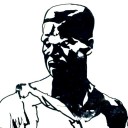
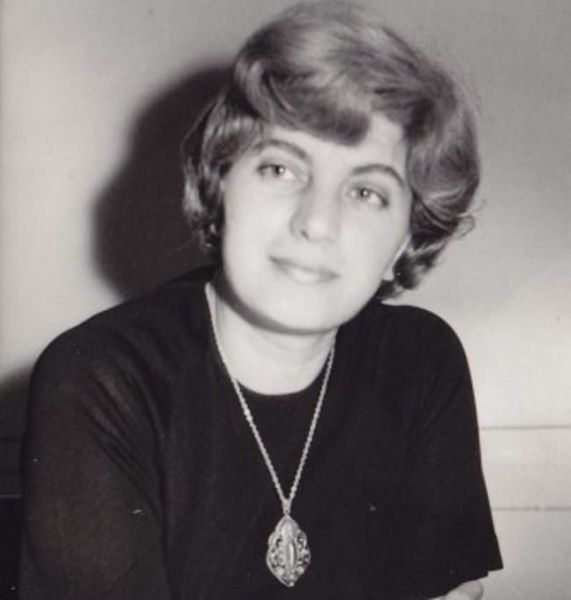
571px-Blaga_Dimitrova_YounI used to hate her, foolish, a teenager’s hate that can only be explained in a parallel universe where logic doesn’t exist. I was a sixteen-year-old girl in a class with additional studies of mathematics. I was supposed to have the sharp brain, the emotion-free behavior required for someone who was a shining star in solving mathematical problems. Then suddenly there it was: the literature lesson about her and one of her poems I don’t even remember. The teacher decided that I was the one who should talk about her that day because of the first name we shared. 41GHNKWJ10L._SY344_BO1,204,203,200_

It was a disaster! I hadn’t read a word from what was written in the school books about her and her poetry. When I was asked the question ‘What do you think Blaga Dimitrova’s poem symbolizes?’ all I could think about to answer was, “The only person who really knows what the words in a poem meant is the author herself. We, as readers, can interpret as we feel right and only hope we’ve reached close enough the thoughts of the writer.’ Wrong answer! A bunch of literature critics that wrote the school book of literature, had already decided what her poetry signified, just like they had decided what every other writer we had studied represents with their work.

I got a bad mark that day and I had come to a conclusion that no one should want to be a poet in a country where we are told what to think. The bad mark wasn’t the worst. After the lesson everyone started calling me Dimitrova. I didn’t like it, I could feel it was meant to be a joke with my personality; to label me with the weakness of feelings only poetry could carry because this is what I used to think about poetry and poets – weak people spilling their weaknesses… Ridiculous, isn’t it? And who knew that I would become one of those weak people. Who knew that one day I would learn  to squander my emotions elegantly on a piece of paper and love doing it too?

At the same time Blaga Dimitrova was vice president of my country, Bulgaria. That was another reason to dislike her. I didn’t dislike her because she was in politics. Who was I to judge someone I have seen only on tv? I disliked Dimitrova because I couldn’t understand why a sane person would stand to support the President we had at that time, and I just couldn’t understand why he was elected. I didn’t know him either. I was way too naïve and young to have the maturity to understand the political situation, but on his face was written all over “I’m capable of nothing.”

When a year later Blaga Dimitrova resigned from her post as a Vice-President due to a disagreement with the President she gained my respect and with that come the urge to re-evaluate her poetry. It was a shock to find that I actually loved her style, her words. The first poem I read and understood from her was:

Tag

I keep forgetting my clock
to escape the time.
But it catches up with me and I whirl
with the whopping, falling leaves.

I enter the sea with the clock on my wrist
to drown the time.
But it slaps me in the face
with the bells of the foam.

I’m not counting the beats of the pendulum;
I want to put the time away.
But it lands right on my nose
with the first snow.

At night I don’t set the alarm
with the hope the time will stop.
But it’s waiting for me in the cold bed
with love already gone.

– Blaga Dimitrova

Then I read her novel Journey Toward Myself.  It’s a book about a girl who tries to escape her past, which is not an easy task in the years of communism, especially if you were born in the wrong family. The message is rather strong and easy to apply to anyone of us. No matter how much we travel and how much we search for the person we are supposed to be, sometimes what we are meant to be is right there where we started our journey.

My favorite quote from Blaga Dimitrova’s book is: “I blessed him with a smile. It dissolved him completely. There was no need for words. I should have tried with a smile at first. I tend to forget that this is my most faithful weapon. I have never thought what impact a smile can have. Only here in the land of rocks and coarse people I found the strength of my smile. It’s worth to travel so far for such a discovery of your own possibilities.”

It’s somewhat hard to explain Blaga Dimitrova’s work and to try to extract a short conclusion that could fit into one review. There is always that special feeling left in the heart after you read her. Maybe that’s why I grew very fond of her poems and stories over the years and maybe that’s why it’s really difficult to fit everything I want to say about her in one blog post.

I can tell you that she comes from a family with professional parents. Her mother was a teacher and her father was a lawyer. She attended a roster of prestigious schools and gained an education that supported her talent. She was honored with many literature awards.

One of her books, Avalanche, was made into an acclaimed movie,  one of the best Bulgarian movies ever in my opinion. Some of Blaga Dimitrova’s work was forbidden in the 80s, because of the strong anti- communism touch. I could tell you that some people liked her and some not. Be it for her political views, be it for her writing, it doesn’t matter to me. On the 2nd of May in 2003 after a long battle with cancer, Blaga Dimitrova died. She was eight-one years old.

I believe on that day Bulgaria lost a great talent. Many years have passed. I am no longer the sixteen-year-old girl who didn’t know how to appreciate the good things in life. I have left Bulgaria for my own reasons and maybe I am still traveling towards myself to find who I really am. It hurts sometimes when I go back home to see that nothing from great people like Blaga Dimitrova was passed on to the new generation. Sometimes I still feel the burden of the shared name with the poetess, not because I am embarrassed to be connected to the weakness of poetry, but because I am afraid I will not be able to stand up worthy of the name Blaga like Ms. Dimitrova did with her talent. I love so many of Blaga Dimitrova’s poems, it’s hard to choose the best, but this one I had written on my wall in the room where I was living during my years at University. It is the one I cherish most.

Lyrical

In the sunset of every love
occurs pain and sadness.
After sunset every night
comes darkness and silence.

When somebody leaves you,
you don’t have the strength to stop him.
When you see that love dies
you can’t die along with it.

You understand that the dreams have never been real
that you have loved, but there wasn’t love,
that the memories are a pain that has fled already,
that you were happy, but you didn’t notice it.

– Blaga Dimitrova

For everything I have translated in this post, there probably could be a better translation. I’ve said it many times, some poems are best to be read in the language they have been written, but I did the best I could. My thanks to The Bardo Group for the opportunity to share the story and poems of a great Bulgarian poetess with readers here in honor of interNational Poetry Month.

© 2014, essay, Blaga Todorova, All rights reserved
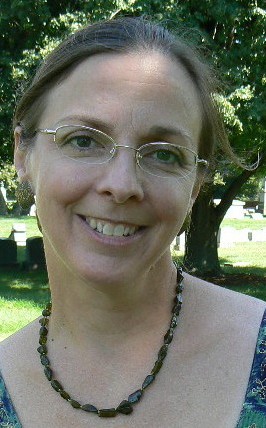
Photo credit ~ Merolina under CCA-SA 3.0 Unported license via Wikimedia Commons
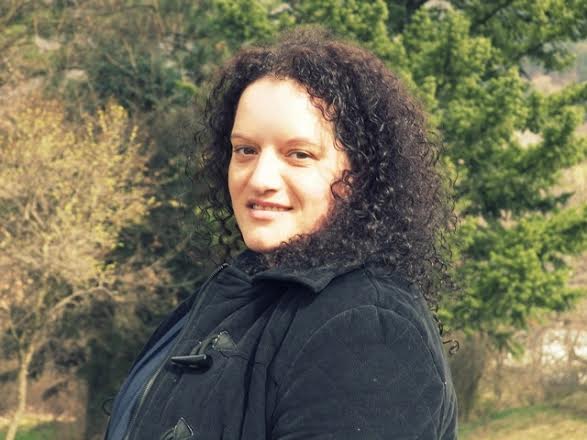
unnamed-6BLAGA TODOROVA (Between the Shadows and the Soul) ~ was born in Bulgaria, lives in Greece and doesn’t stop dreaming about finding new country for herself. She doesn’t consider herself a writer, but just someone who sometimes is lucky enough to be at the right place, with the right person, with the background of the right music that will bring the right words. Blaga has been blogging for many years now and has won the friendship and following of other poets and writers for her insights, humor and sense of romance and of justice. English is not her first language, but she uses it well and it is her favorite language for her favorite artistic pursuit, writing. She has a novel in progress. She is also a rather accomplished photographer.
Posted in Disability, Essay, First Peoples, General Interest, grief, Michael Watson

PTSD and the Healing Journey

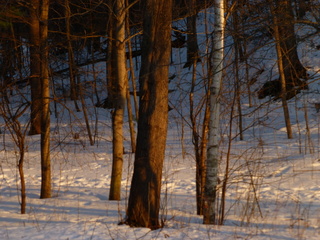
Evening-WoodsThe other night I had dinner with friends. After a traditional ceremonial meal, we watched Skins. I have read about the film, heard others talk about, and planned to watch it, for a long while. The film follows a few months in the life of a tribal police officer on a fictional reservation much like Pine Ridge, and weaves together myth and contemporary experience, violence and healing. Early in the story we are reminded that although humans like to think they are in charge, the spirits shape everything.

Earlier that day I had sat in a local bakery with a couple of medicine women, discussing a Medicine Wheel ceremony we are to hold next month as part of a conference honoring aging. As we come from different traditions and teachings it seemed important to all get on the same page. It turned out we were already in agreement, so the planning went smoothly.

Later, as I thought about the film and my delightful hour at the bakery I decided PTSD (Post Traumatic Stress Disorder) might well live in the North, the place of night and winter. Fortunately, the North is the home of the Ancestors and the place we seek vision; in winter there is little haze and one can see clearly for a long way. The North is often a place where the spirits seem more immediate and accessible.

As the police officer in Skins discovers, healing from PTSD takes patience and courage, and may involve the workings of mythic beings. When we seek a healing for PTSD, we can request guidance from both our unconscious and the spirit world, asking them to give us manageable amounts of information regarding our traumatic experiences, and to aid us find new, more life nurturing, meaning in those experiences. Healing PTSD may become a vision quest, very like going alone to ask the ancestors and spirits to aid us and our communities, to bring us a vision we may live by.

Of course, we are not truly alone. Whether we are challenging the domination of PTSD in our lives, or praying for a vision, there are others, human and spirit, supporting us. We are blessed by the knowledge and caring of those who walk with, and pray for, us, and we benefit from their experience and companionship. Still, they cannot  make the journey for us; we must each walk the healing road for ourselves.

As we walk sun-wise around the Medicine Wheel we discover that when we stand in the North the path before us faces East. East  is the place of birth and rebirth, the home of insight and understanding. It is also the place, in the view of many Indigenous cultures of the Northeastern U.S., where we pass into the spirit world. Sometimes facing long-held trauma brings us an intense fear of death; indeed, the  journey from the North to the East is fraught with both danger and promise.

When we go alone to seek  a vision, or begin the journey of healing from PTSD, we benefit from telling our families and friends, asking them to pray for us, help us prepare, and honor our return. For many, requesting support when healing from PTSD seems shaming; often asking for aid requires as much courage as does confronting PTSD itself. Yet healing seldom happens in a vacuum; we each need the support of others in our lives and on our healing journeys. Let us honor the courage of those who ask for our aid.

Healing PTSD, like any vision quest, is not for the faint of heart.  On the journey we need courage, perseverance, and compassion for ourselves and others. It is a good journey, holding the promise of healing, renewal, and vision, for Self, family, friends, and community.

– Michael Watson, Ph.D.

© 2013, essay and photographs (includes the one below), Michael Watson, All rights reserved

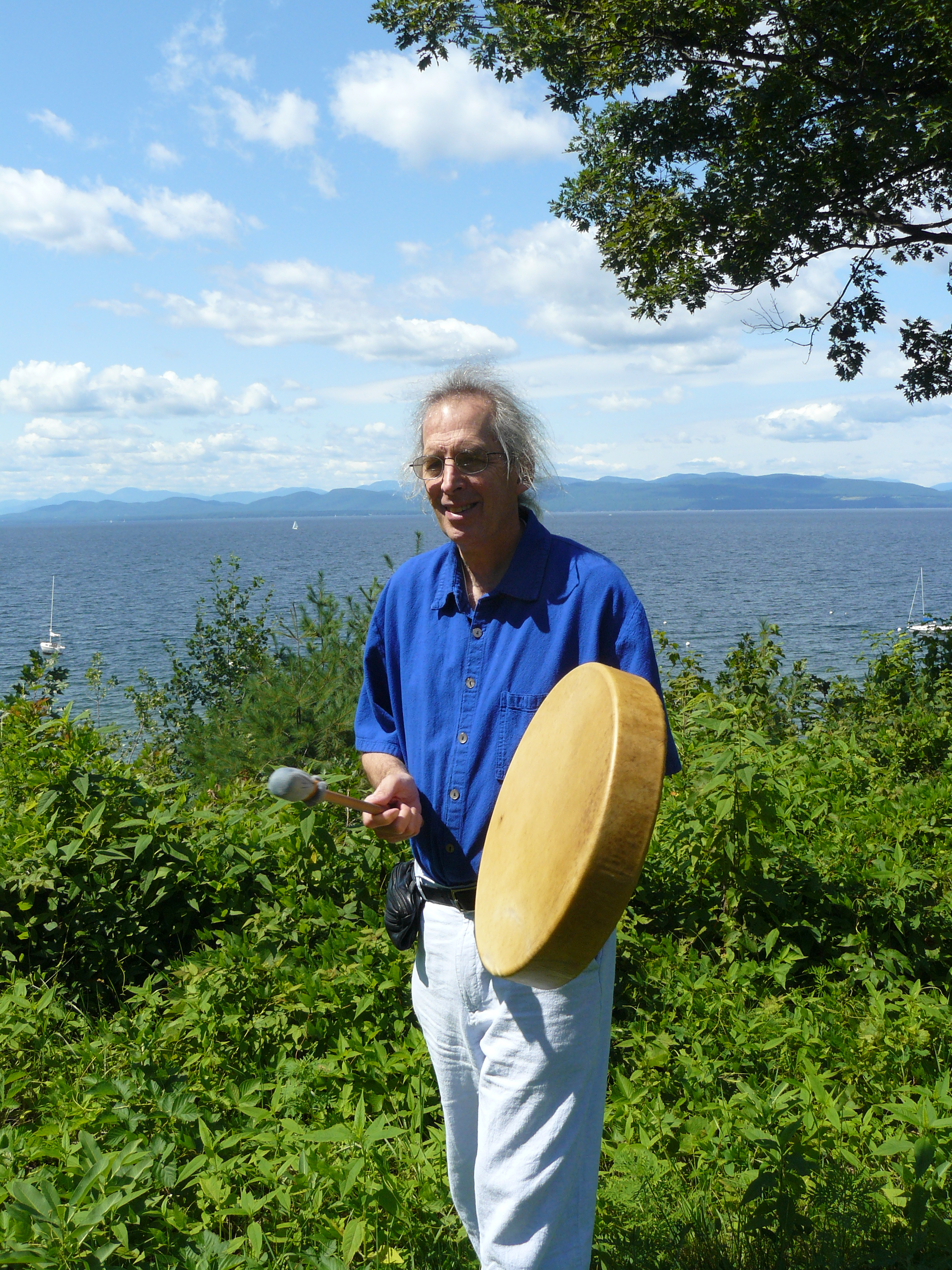
michael drumMICHAEL WATSON, M.A., Ph.D., LCMHC (Dreaming the World) ~ is a contributing editor to Into the Bardo, an essayist and a practitioner of the Shamanic arts, psychotherapist, educator and artist of Native American and European descent. He lives and works in Burlington, Vermont, where he teaches in undergraduate and graduate programs at Burlington College,. He was once Dean of Students there. Recently Michael has been teaching in India and Hong Kong. His experiences are documented on his blog. In childhood he had polio, an event that taught him much about challenge, struggle, isolation, and healing.

Posted in Essay, Spiritual Practice, Terri Stewart

Sacred Space in a Phrase

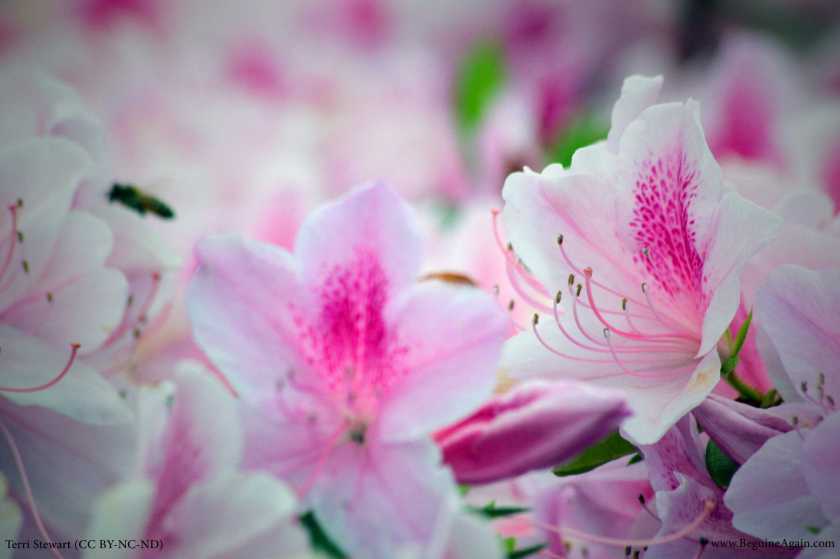
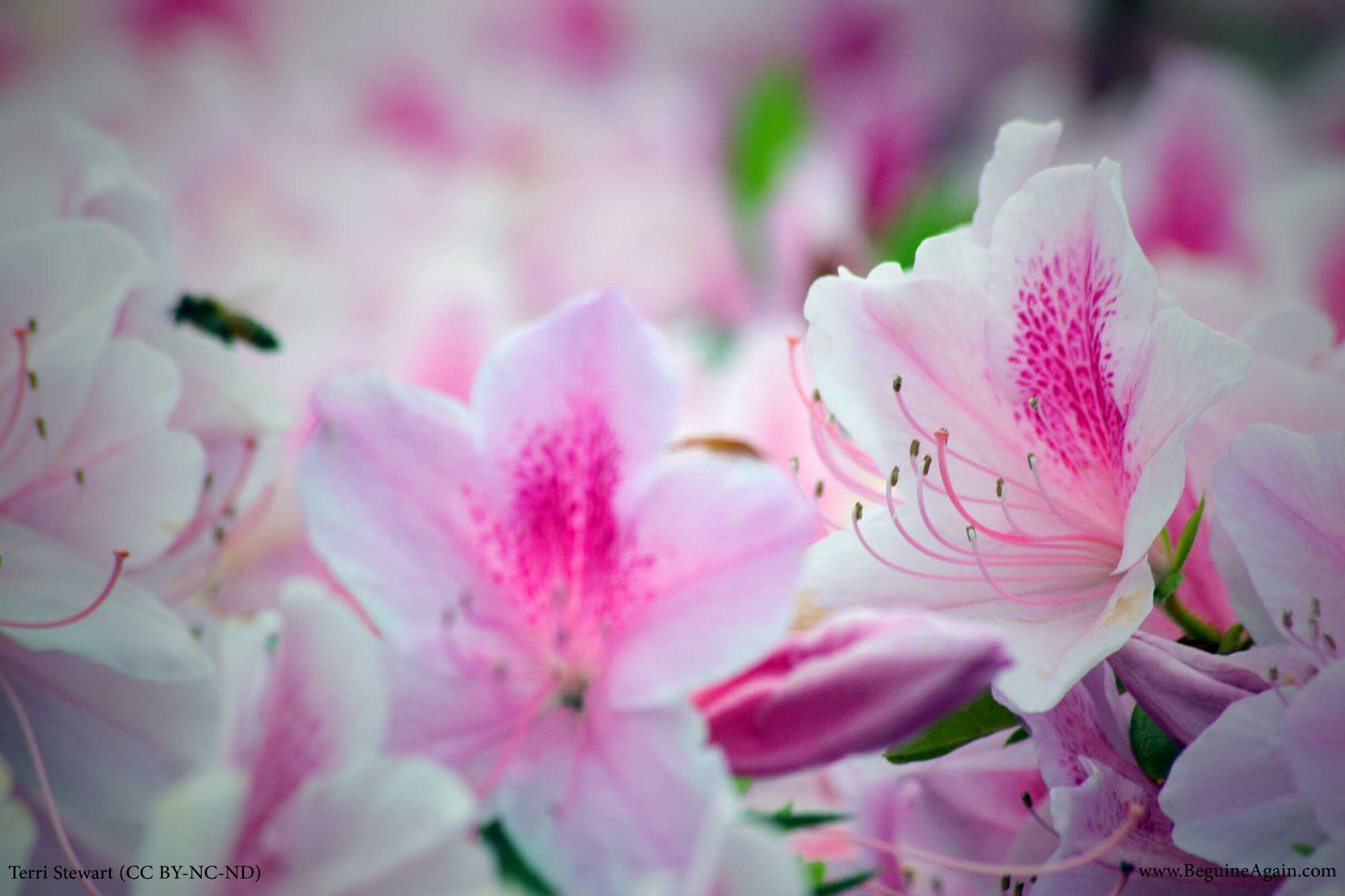
I think it is fair to say that most of us here are word people. I appreciate hearing fun words, seeing a well-turned phrase, being sucked into a surplus of meaning…and wonder. Today, I heard a phrase that has captured my imagination and has launched a poetic exploration along with finding an image that I thought expressed the spirit of the phrase. What is it?

The soul is such a shy creature.

That is utterly delicious to me. I hope you enjoy the following haiku and perhaps, you will offer a poetic exploration of your own in the comments! I’d love to hear your thoughts.

the soul

peeking ’round corners

stretching frail tendrils upward

such a shy creature

flower
by Terri Stewart (CC BY-NC-ND)

Post, poem, and photo, Terri Stewart (c) 2014

terriTerri Stewart ~ a member of our Core Team,  comes from an eclectic background and considers herself to be grounded in contemplation and justice. She is the Director and Founder of the Youth Chaplaincy Coalition that serves youth affected by the justice system. As a graduate of Seattle University’s School of Theology and Ministry, she earned her Master’s of Divinity and a Post-Master’s Certificate in Spiritual Direction with honors and is a rare United Methodist student in the Jesuit Honor Society, Alpha Sigma Nu. She is a contributing author to the Abingdon Worship Annual.

Her online presence is “CloakedMonk.” This speaks to her grounding in contemplative arts (photography, mandala, poetry) and the need to live it out in the world. The cloak is the disguise of normalcy as she advocates for justice and peace. You can find her at www.cloakedmonk.com,www.twitter.com/cloakedmonk, and www.facebook.com/cloakedmonk.  To reach her for conversation, send a note to cloakedmonk@outlook.com.
Posted in General Interest, Naomi Baltuck, Nature, Photo Essay, Photography/Photographer, story, Story Telling, Photo Story

Dandelions and Other Foreigners

A friend said to Hodja Nasruddin, “Look at all these dandelions!  I’ve tried pulling them, poisoning them, starving them, digging them out by the root.  Nothing works.  I am at my wit’s end!”

“That’s a shame,” said the Hodja. “They are not a problem for me.”

“Really?  Please tell me your secret, my friend!”

“It is very simple,” said Nasruddin.  “I have learned to love them.”

Dandelions are native to Eurasia, but have traveled all over this world.   In France they were called “Dent de Lion,” or “Lion’s Tooth,” because of their toothed leaves. In England they were, “Piss-a-Beds,” for their diuretic properties.  In Germany, Russia, and Italy they are “blowing flowers.”  In Catalan, Poland, Denmark, and Lithuania they are  “milk flowers,”  “milkpots,” and “sow’s milk,” after the flower stem’s milky sap.  In Finland, Estonia, and Croatia, they are “butter flowers.”  In China, they are “flower that grows in public spaces by the riverside,”  while in Portugal, they are called, “your dad is bald,” after a game the children play with them.

A weed is only a weed if it is unwanted.  These immigrants have been used by humans for food, winemaking, herbs, and medicine for all of our recorded history.  Their roots are roasted for a chicory-like hot drink.  They are brimming with vitamins, and they enrich the soil.

They were only introduced to North America by the first European settlers.  Foreign? Yes. But think of all the good things they have brought with them.  Think of summertime without their cheerful faces.  Most of all, think of all the wishes that have come true since they have found a home here.

All words and images copyright Naomi Baltuck

NaomiPHOTO1-300ppi51kAqFGEesL._SY300_NAOMI BALTUCK ~ is a Contributing Editor and Resident Storyteller here410xuqmD74L._SY300_ at Bardo. She is a world-traveler and an award-winning writer, photographer, and story-teller whose works of fiction and nonfiction are available through Amazon HERE. Naomi presents her wonderful photo-stories – always interesting and rich with meaning and humor – at Writing Between the Lines, Life from the Writer’s POV. She also conducts workshops such as Peace Porridge (multicultural stories to promote cooperation, goodwill, and peaceful coexistence), Whispers in the Graveyard (a spellbinding array of haunting and mysterious stories), Tandem Tales, Traveling Light Around the World, and others. For more on her programs visit Naomi Baltuck.com

Posted in General Interest

Academy of American Poets, expanding the reach of poetry

Quite wonderful news from the American Academy of Poets …

Jamie Dedes's avatarJamie Dedes' THE POET BY DAY Webzine

The 2014 National Poetry Month poster The 2014 National Poetry Month poster

……It is difficult
to get the news from poems
…..yet men die miserably every day
……….for lack
of what is found there.

William Carlos Williams (1883-1963), Latino-American Poet

If you are of an age, you remember a time when newspapers and magazines, local and regional, regularly served up poetry and fiction, which was then read and enjoyed by masses of people. Many of the old iconic poets and writers you enjoy today began publishing that way. Now the Academy of American Poets is partnering with news syndicate King Features to bring its Poem a Day program (currently distributed by email subscription) to newspapers, websites and magazines.

In her announcement yesterday Academy of American Poets Executive Director, Jennifer Benka, said:

“It’s been a generation since new poems have been available to daily news readers. We’re thrilled to help renew this tradition, which will bring greater…

View original post 62 more words

Posted in Charles W Martin, Photography/Photographer, poem, Poems/Poetry

my mother’s love…

copyright cwmartin 2012

sometimes
when a fever
runs high
and
i
am alone
in my bed
all my fears
swirling in my head
creating such
dread
i
would swear
i feel your gentle hands
wiping my brow
and
speaking softly
that all
will be well
and
that i
am
not
alone

Poem inspired by Soul Dipper (http://souldipper.wordpress.com/2012/01/31/love-embedded-a-mothers/)

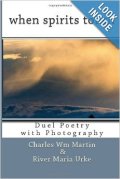
678ad505453d5a3ff2fcb744f13dedc7-1product_thumbnail.php41V9d9sj5nL._SY344_PJlook-inside-v2,TopRight,1,0_SH20_BO1,204,203,200_CHARLES W. MARTIN (Reading Between the Minds) — earned his Ph.D. in Speech and Language Pathology with an emphasis in statistics. Throughout Charlie’s career, he maintained a devotion to the arts (literature/poetry, the theater, music and photography). Since his retirement in 2010, he has turned his full attention to poetry and photography. He publishes a poem and a photographic art piece each day at Read Between the Minds, Poetry, Photograph and Random Thoughts of Life. He is noted as a poet of social conscience. Charlie has been blogging since January 31, 2010. He has self-published a book of poetry entitled The Hawk Chronicles and will soon publish another book called A Bea in Your Bonnet: First Sting, featuring the renown Aunt Bea. In The Hawk Chronicles, Charlie provides a personification of his resident hawk with poems and photos taken over a two-year period. Charlie’s lastest book, When Spirits Touch, Dual Poetry, a collaboration with River Urke, is available through Amazon now.

Posted in Culture/History, General Interest, grief, Liz Rice-Sosne, memoir, poem, Poems/Poetry, poetry, Poets/Writers

November 22, 1963, Lives in Memory

Haibun

I had been to lunch in Third House.  It was a warm spring day, just the sort of day to leave lunch early and walk in the sunshine.  I ambled over to Second House and plopped down in front of the TV.  I had spent my sophomore year here and I had always loved it – it felt like home more than any other dorm.  However, that day I was a senior, an upperclassman of 17 years of age.  While at Dobbs’ I had lived in each of these Queen Anne houses.  Today I lived in First House.  They were rickety and old, painted a dull boarding school gray.  None the less I was quite comfortable for they represented home for me for three of my four years at school.  I comfortably seated myself on a couch in front of the television.  It might no longer be my dorm, but it still felt cozy and I felt confident, that day so long ago.  That confidence must have come from some of that upperclassman swagger that one acquires as they move though their grades (although, to be honest, I didn’t have much swagger).  It felt strange as I did not have many confident days in my youth.

wild grey geese above

flew in perfect formation

chaos left behind


Haibun

I flipped on the black and white TV, there was no color in those days. “Oh My God. What was happening?” I was in an instant state of shock. President Kennedy had been shot right in from of my eyes – in his limo in Dallas, Texas. “Was this true?” There was growing chaos everywhere on the television, then this horrific  event seemed to ebb out of the television and blanket me. It was thick and dark. I knew that I must get away. I had to get up, go back to the lunchroom and tell of the shooting. I thought of our beautiful first lady and what her sadness must be like. It was so hard to move. I made myself leave.

woodpecker knocking

high above in the maple

a chick all grown up


Haibun

I ran back to the lunchroom and shouted out the news. I do not remember another thing that afternoon. I do remember crying myself to sleep that night filled with such emptiness, dread and a sense of loneliness. Of late, I have been reading a good deal about the Kennedys. I will never believe that this assassination evolved out of the crazy thoughts of one lone Soviet sympathizer. I also suspect that the full truth of those moments in Dallas that November 22nd of 1963 will not be known by the public within my lifetime.

shells upon a beach

dry cool windy autumn day

creation of sand

unnamed-2LIZ RICE-SOSNE a.k.a. Raven Spirit (noh where), perhaps the oldest friend to Bardo, is the newest member of The Bardo Group Core Team. She is also our new Voices for Peace project outreach coordinator and our go-to person for all things related to haiku.  She says she “writes for no reason at all. It is simply a pleasure.” Blogging, mostly poetry, has produced numerous friends for whom she has a great appreciation. Liz is an experienced blogger, photographer and a trained shaman. We think her middle name should be “adventure.”

Posted in Niamh Clune, Writing

Why not write a poem about your mother?

img118April has been declared International poetry month and The Bardo Group* are celebrating with all things poetry. Plum Tree Books will participate in interNational Poetry Month by publishing a new anthology of poetry.

Because we love all things children and all things poetry, I would like to bring together two marvellous themes: International poetry month with the recent celebration of Mother’s Day. Our anthology will celebrate all things MOTHER! Would you like to write a poem for your mother? Are you a mother who would love to encapsulate the experience of mothering? Would you love to write a poem for your child that will live forever? Or maybe, you are a child who would love to send in a poem about your mother?

This anthology will celebrate the essence of mothering. Send in an image to accompany your work, if possible…(details below)

I am also calling on artists and illustrators who would like to participate by helping us to illustrate this anthology with original work. All copyright and acknowledgement will, of course, be accredited to all contributors. Submission automatically licences Plum Tree Books to publish your work for the sole purpose of this publication only, but you always own your copyright.

We will also promote you!

Please submit your contributions to: niamhclune@plumtreebooks.co.uk

This anthology will be published as an e-book first. Proceeds of sales will go towards seeing your work in print. This will make a wonderful coffee table gift, or to use for self-promotion.

Encourage your children to participate and send in their drawings too!I will also be looking for the perfect image for the book cover.

All submitted images should have full copyright permission and be in high resolution (At least 300 dpi’s). Images should be scanned.

Submissions by June 5th

Publication as e-book by July 5th

Help us make this a thing of beauty and a joy forever!

Best, Niamh Clune

* Editor’s Note: Link HERE for The Bardo Group mission statement. The Bardo Group – an informal noncommercial collective – and Niamh Clune/Plum Tree Books have a casual nonfinancial friendship based on a shared love of poetry and the humanities and a desire to encourage peace and understanding, individual creativity and appreciation for the arts.

430564_3240554249063_1337353112_n-1orange-petals-cover_page_001DR. NIAMH CLUNE (Plum Tree Books Blog) ~ is the author of the Skyla McFee series: Orange Petals in a Storm, and Exaltation of a Rose. She is also the author of The Coming of the Feminine Christ: a ground-breaking spiritual psychology. Niamh received her Ph.D. from Surrey University on Acquiring Wisdom Through The Imagination and specialises in The Imaginal Mind and how the inborn, innate wisdom hidden in the soul informs our daily lives and stories. Niamh’s books are available in paperback (children’s books) and Kindle version (The Coming of the Feminine Christ). Dr. Clune is the CEO of Plum Tree Books and Art. Its online store is HERE.  Niamh’s Amazon page is HERE.

Posted in Art, Niamh Clune, poem, Poems/Poetry, Writing

The Artist

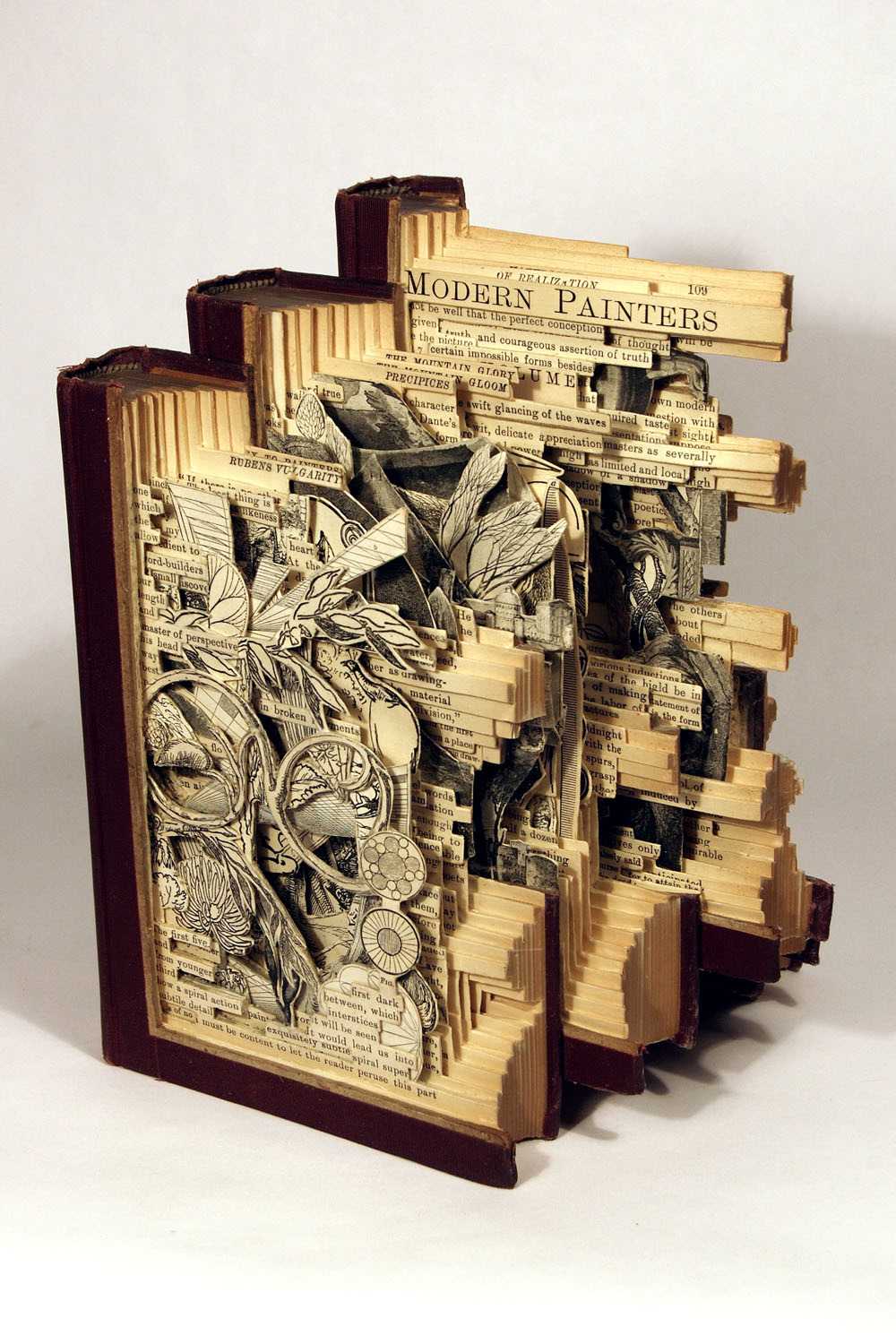
Book Art by Brian Dettmer

The Artist

You are the poem and the rhyme,
The reason for created time;
The song, the sung, the singer too;
The truth that is the deepest you.
So ask not why you paint the rose,
Or write of love’s heart-wrenching prose ~
And steal the light from Heaven’s hand,
To write a poem in the sand.


© Niamh Clune 2013

430564_3240554249063_1337353112_n-1orange-petals-cover_page_001DR. NIAMH CLUNE (Plum Tree Books Blog) ~ is the author of the Skyla McFee series: Orange Petals in a Storm, and Exaltation of a Rose. She is also the author of The Coming of the Feminine Christ: a ground-breaking spiritual psychology. Niamh received her Ph.D. from Surrey University on Acquiring Wisdom Through The Imagination and specialises in The Imaginal Mind and how the inborn, innate wisdom hidden in the soul informs our daily lives and stories. Niamh’s books are available in paperback (children’s books) and Kindle version (The Coming of the Feminine Christ). Dr. Clune is the CEO of Plum Tree Books and Art. Its online store is HERE.  Niamh’s Amazon page is HERE.

Posted in Liliana Negoi, poem, Poems/Poetry, poetry

lost

 – for a crippled angel –

green grows the light
through the old church’s
stained glass windows –
and red and golden and a weird shade of blue,
but mostly green,
trying to decompose into
rudimentary terms of human perception
the flawless logic of the sun

from beneath kisses of dust,
the icons stare at the bronze chandelier
hanging unlit
with an air of wise boredom
right in the middle of the ceiling –
people have forgotten
the names of those
who once alchemically turned their hearts
into each of the objects here…
people always forget,
everything

he looks around,
weighing with patience
the grains of silence filling the space,
aware of how,
should a single one of them be dislocated,
meanings would be gained
and meanings would be lost.
he then takes each of the bones of memories
and gently wipes it with his thoughts,
treasuring them
as if in those mystique relics
flew the very marrow of time.
he did that yesterday,
and the day before…
ever since he first came here

the wood is slowly rotting,
hosting tribes of insects
and wormholes,
and there’s no memory in its aura
of the first hands that joined on it
in prayer,
and even the prayers’ ghosts
have been exorcised by sand

nobody sees him.
people come and go,
failing with brilliance the test of faith –
but once in a while
some baby fixes his round eyes on him
and smiles,
acknowledging his existence.
that makes the infirmity easier to bear…

and light continues to flow
through the old glass,
like a fluid limb of the original word,
willingly fracturing itself
inside the blunt gaze,
just like his wings broke eons ago…


IMG_7667LILIANA NEGOI  (Endless Journey and in Romanian curcubee în alb şi negru) ~ is a member of our core team on Into the Bardo. She is the author of three published volumes of poetry in English, which is not her mother tongue but one that she came to love especially because of writing: Sands and Shadows, Footsteps on the San – tanka collection and The Hidden Well.  The last one can also be heard in audio version, read by the author herself on her SoundCloud site HERE.  Many of her creations, both poetry and prose, have been published in various literary magazines.


Posted in Essay, Spiritual Practice, Terri Stewart

Sacred Space in Opposition

I have been at a conference all week where we have been discussing how to organize ourselves to create social change. One of the most fun exercises what a Bible study linking the Book of Esther from Hebrew scripture with organizing for social change.

In the story of Esther, there is no mention of the Divine Name or any prayers offered, instead, it is a primer for racism and overcoming broken political systems.

Plot summary:

King Ahasuerus wants his wife, Queen Vashti, to come and show off her beauty to a bunch of drunk men (including the King). She says, “No.” She is then banished because she is a bad example for all women and all women must “know their place.”

Then the King is on a hunt for another wife. Mordecai pimps out Esther and Esther is brought into the royal harem. Why? She is beautiful, but primarily because she found favor with the eunuchs and maid servants. And they taught her how to find favor with the king.

Haman, one of the king’s guys, gets all pissy about Mordecai not bowing to him and asks to write a law that would destroy the Jews. The King is then able to rubber stamp the law (he gives away his ring) while never getting his own hands dirty.

When the new law passes, the Jews and Mordecai where sack cloth and mourn. Esther hears about the situation from the Eunuchs and encourages Mordecai to wear normal clothing. Mordecai then has the Eunuchs relay to her the situation (she was definitely isolated).

Esther convinces the King that this is a bad situation and the injustice that would have wiped out the Jews is fixed.

Yay! Injustice is fixed!

So, we all face injustice in our context. It may be threats to peace, the justice system, economics, poverty, etc. But we all face it! And some are actively working to correct injustice–creating sacred, healing, wholly, holy, space. In organizing ourselves, the question becomes, can we name:

  • Who are the Kings?
  • Who is the Queen who will lay down their power in order to maintain a just world?
  • Who are the Mordecais? Those who would be persecuted?
  • Who are the Esthers? The ones who know the King and can be educated as to a new way of living justly?
  • And who are the maids and Eunuchs? The ones who are also persecuted and underprivileged? Who may have sympathy for the justice issue?

What is wonderful about this is that it allows us to think creatively rather than to think that those with power are the only ones who can cause change. In this story, everyone becomes a change agent! Change for a more just world is another way of creating sacred space.

So mote it be!

And now for some inspiration from slam poetry, “Addressing Food Inequality.”

Post, Terri Stewart (c) 2014

terriTerri Stewart ~ a member of our Core Team,  comes from an eclectic background and considers herself to be grounded in contemplation and justice. She is the Director and Founder of the Youth Chaplaincy Coalition that serves youth affected by the justice system. As a graduate of Seattle University’s School of Theology and Ministry, she earned her Master’s of Divinity and a Post-Master’s Certificate in Spiritual Direction with honors and is a rare United Methodist student in the Jesuit Honor Society, Alpha Sigma Nu. She is a contributing author to the Abingdon Worship Annual.

Her online presence is “CloakedMonk.” This speaks to her grounding in contemplative arts (photography, mandala, poetry) and the need to live it out in the world. The cloak is the disguise of normalcy as she advocates for justice and peace. You can find her at www.cloakedmonk.com,www.twitter.com/cloakedmonk, and www.facebook.com/cloakedmonk.  To reach her for conversation, send a note to cloakedmonk@outlook.com.


Posted in Culture/History, Essay, General Interest, Priscilla Galasso

Good Gawd, Y’all!

Another school shooting hit the news yesterday. The impact seems dull. Repetition has begun to numb my response. The predictable media storm continues, but just as raindrops seem less penetrating after your clothes are soaked, I simply can’t absorb this horror. And that is rather shocking.

 I Googled “List of school shootings in the U.S.” The Wikipedia article’s chronology goes by decade, starting with the 1760s. There is one entry there. The next listing is 9 decades later. Two items there. The narration continues to list shootings for every decade. When we get to this millennium, the bullet points are replaced by a chart. From 2000 – 2010, there are 46 different shooting events chronicled. From 2010 – 2014 (n.b. Not even half a decade!) there are 65, including yesterday’s. And I may have lost count of one while scrolling down through the list.

Obviously, this storm is escalating. This is a flood. Our country is awash in violence being perpetrated against school children. School children! What can that be about? What madness has overtaken our culture that young people at their studies have become targets? I’m pretty sure it’s not so much about the targets as it is about target practice.

 Our culture has target practice deeply embedded in its psyche and readily available in its entertainment, military and politics. Angry? Take aim. Proud? Take aim. Patriotic? Take aim. Need security? Take aim. Impoverished? Needy? Insulted? Invisible? Defiant? Miffed? Whatever the uncomfortable feeling you have, you can get relief by pulling out a weapon and taking aim at some target. Children in school apparently make a pretty easy gallery.

 This approach is like using the same tool for every situation, no matter what it is. Would you use a hammer to wind your watch or play your piano or punch down your bread dough or crochet a sweater? No. And how did you learn to lay your hands on the appropriate tool for each of these situations? Most likely, at a very young age, you watched someone do it. A role model. Perhaps a parent or grandparent. Someone you trusted, who spent time with you, doing everyday kinds of things.

P1040287

 Let’s look around. Where are the role models that are pulling out weapons for every crisis? Where are the role models who are negotiating, discussing, creatively engaging, brainstorming and experimenting with different non-violent approaches? Who are the role models who have multiple tools in their belts and use the appropriate ones for the situation? And violence, what is it good for? Is it ever the best tool for the job?

 And, c’mon, let’s be creative. Why does our entertainment have to follow this unimaginative formula of violence? There are a million other options. There are a million other roles to play. Playing something different will make us smarter, wiser, more flexible, more open, more like children. School children….our vanishing resource.

© 2014, essay and photograph, Priscilla Galasso, All rights reserved

004PRISCILLA GALASSO ~ started her blog at scillagrace.com to mark the beginning of her fiftieth year. Born to summer and given a name that means ‘ancient’, her travel through seasons of time and landscape has inspired her to create visual and verbal souvenirs of her journey.

Currently living in Wisconsin, she considers herself a lifelong learner and educator. She gives private voice lessons, is employed by two different museums and runs a business (Scholar & Poet Books, via eBay and ABE Books) with her partner, Steve.

Posted in find yourself, Liliana Negoi, Meditation, meditative, Mental Health, Nature, Spiritual Practice

On gardening tools

gardening toolsI was doing some spring gardening a few days ago.  At some point I saw my mother-in-law (who was visiting at the time) grabbing the scissors in order to remove some withered branches from a bush. I heard her murmuring “that’s it, you waste the roots for nothing anyway”. I knew why she was doing this, and I also know she was right to do it, it was a simple gesture but I couldn’t help thinking about it in the days to come.

You see, when we look at a plant or a tree and we see a dead leaf or branch still attached to the body, we cut it down, because “it pointlessly consumes energy”. And it’s a good thing to do that, because the plant or tree, thus freed of a dry limb, can grow a new one instead. What it’s more difficult to understand is, since we’ve learned to do this to plants, why can’t we do this to ourselves? What prevents us to cut the sterile, dry, energy consuming parts of our lives, and grow new ones? I think we do (or better said, don’t do) that because we’re afraid of the pain. We’re afraid that it hurts to do that self-trimming, and we’re scared to death of what we may discover if we do that.

It’s easier to linger in that perpetual state of presumed wildness, slowly turning into a messy bush, suffocating the flowers with the ever growing thorns and blocking the light from reaching to our core. I know that, because, as the saying goes, it takes one to know one. You don’t need much to garden yourself and arrange your inner landscape; it’s only a few tools. Honesty first of all – raw, painful, cutting honesty. You look at yourself and see exactly what’s the pointlessly energy consuming part. Then there’s the willingness to fix things. You will also need patience with yourself, because nothing happens over night (oh well, sometimes it does, but those are exceptions), and last, but not least, love. You cannot do anything without love. This list of “gardening” tools can always adapt to the each person’s circumstances, the point is not just having them, but also using them. Yes, it will hurt. You may even bleed. But you are allowed to ask for help, and you are allowed to cry. You’d be amazed what marvels can a little self-gardening do :). And for heaven’s sake, if, for some untold reasons, you decide however to be a wild bush, then be a burning one, like the one from the story of Moses ;).

© 2014, essay, Liliana Negoi, All rights reserved The image was taken from http://www.finegardening.com/item/31544/the-basic-gardening-tools-guide-pick-up-your-weapon IMG_7667

LILIANA NEGOI  (Endless Journey and in Romanian curcubee în alb şi negru) ~ is a member of our core team on Into the Bardo. She is the author of three published volumes of poetry in English, which is not her mother tongue but one that she came to love especially because of writing: Sands and Shadows, Footsteps on the San – tanka collection and The Hidden Well.  The last one can also be heard in audio version, read by the author herself on her SoundCloud site HERE.  Many of her creations, both poetry and prose, have been published in various literary magazines.

Posted in Naomi Baltuck, Photo Essay, Photography/Photographer

Who Turned On the Lights?

People find the light in their life in so many ways and places.  It can be as easy as turning on a switch.


Some find all the light they need in a sunset…

…or a moonrise.

Others find illumination in a church…

…a synagogue…


…a mosque…

…or a library.

Sacred is a place that lights up your heart.

It isn’t always easy to find…

Some look for it in food…


…at the bottom of a wine glass…

…or through yoga…

Some light up with the joy and anticipation of adventure.

And what constitutes an adventure is very personal.

Sometimes light comes in the form of a bright idea, a flash of inspiration…

The joy of creation in all of its many forms…

Everyone’s light shines through differently.  To each his own.

For me, love shines brightest of all.

It’s our life’s work and pleasure to follow the light…

…or to make our own.

It is there.

It is there.

It is there.

All words and images copyright Naomi Baltuck

NaomiPHOTO1-300ppi51kAqFGEesL._SY300_NAOMI BALTUCK ~ is a Contributing Editor and Resident Storyteller here410xuqmD74L._SY300_ at Bardo. She is a world-traveler and an award-winning writer, photographer, and story-teller whose works of fiction and nonfiction are available through Amazon HERE. Naomi presents her wonderful photo-stories – always interesting and rich with meaning and humor – at Writing Between the Lines, Life from the Writer’s POV. She also conducts workshops such as Peace Porridge (multicultural stories to promote cooperation, goodwill, and peaceful coexistence), Whispers in the Graveyard (a spellbinding array of haunting and mysterious stories), Tandem Tales, Traveling Light Around the World, and others. For more on her programs visit Naomi Baltuck.com

Posted in General Interest, Jamie Dedes, poem, Poems/Poetry, poetry, Poets/Writers

because a poem is everything you can be …

Chirlane McCray by Kelly Weill, NYU Local.com

CHIRLANE McCRAY is a writer and poet, a speechwriter and wife of New York City’s new (as of January 2014) mayor, Bill de Blasio. She is also the mother of two children, Chiara and Dante.

According to her bio on de Blasio’s website, “Chirlane began writing at a young age. In high school she discovered ways to use writing as a tool for activism. While studying at Wellesley College and the famed Radcliffe Publishing Course, Chirlane became a member of the Combahee River Collective, a pioneering black feminist collective, which inspired her to write groundbreaking prose and poetry.”

I’ve triend to find poems by Chirlane other than the one below, which is being featured by just about everyone in the New York blogosphere. No luck. The poems are probably out in the world somewhere, but try to bring one up in a search and you get bombarded by the overriding political effluvia and razzmatazz. Nonetheless, this is extraordinatry poem and the one – according to the man himself – that made de Blasio fall in love with her. It is from Home Girls: A Black Feminist Anthology. I happen to have a copy of Home Girls, so I know it’s the only poem of hers in that collection. I was unable to find Chirlane McCray’s poems in the other anthologies I own.

NEW YORK, NY - SEPTEMBER 10: Public Advocate and mayoral candidate Bill de Blasio kisses his wife Chirlane McCray after voting in the New York City mayoral primary on September 10, 2013 (Photo by Spencer Platt/Getty Images)
NEW YORK CITY: Public Advocate and then mayoral candidate Bill de Blasio kisses his wife, Chirlane, after voting in the mayoral primary on September 10, 2013 (photograph by Spencer Platt via Getty Images)

I Used To Think

I used to think
I can’t be a poet
because a poem is being everything you can be
in one moment,
speaking with lightning protest
unveiling a fiery intellect
or letting the words drift feather-soft
into the ears of strangers
who will suddenly understand
my beautiful and tortured soul.
But, I’ve spent my life as a Black girl
a nappy-headed, no-haired,
fat-lipped,
big-bottomed Black girl
and the poem will surely come out wrong
like me.

And, I don’t want everyone looking at me.

If I could be a cream-colored lovely
with gypsy curls,
someone’s pecan dream and sweet sensation,
I’d be

poetry in motion
without saying a word
and wouldn’t have to make sense if I did.
If I were beautiful, I could be angry and cute
instead of an evil, pouting mammy bitch
a nigger woman, passed over
conquested and passed over,
a nigger woman
to do it to in the bushes.

My mother tells me
I used to run home crying
that I wanted to be light like my sisters.
She shook her head and told me
there was nothing wrong with my color.
She didn’t tell me I was pretty
(so my head wouldn’t swell up).

Black girls cannot afford to
have illusions of grandeur,
not ass-kicking, too-loud-laughing,
mean and loose Black girls.

And even though in Afrika
I was mistaken for someone’s fine sister or cousin
or neighbor down the way,
even though I swore
never again to walk with my head down,
ashamed,
never to care
that those people who celebrate
the popular brand of beauty
don’t see me,
it still matters.

Looking for a job, it matters.
Standing next to my lover
when someone light gets that
“she ain’t nothin come home with me” expression
it matters.

But it’s not so bad now.
I can laugh about it,
trade stories and write poems
about all those put-downs,
my rage and hiding.
I’m through waiting for minds to change,
the 60’s didn’t put me on a throne
and as many years as I’ve been
Black like ebony
Black like the night
I have seen in the mirror
and the eyes of my sisters
that pretty is the woman in darkness
who flowers with loving

– Chirlane McCray

Photo on 2014-03-31 at 17.16 #3JAMIE DEDES (The Poet by Day)~ I am a medically retired (disabled) elder and the mother of a married son. The graces of poetry, art, music, writing and reading continue to evolve as a sources of wonder and solace, as creative outlets, and as a part of my spiritual practice. My Facebook pages are: Jamie Dedes (Arts and Humanities) and Simply Living, Living Simply.

Posted in Corina L. Ravenscraft, Essay, poem, Poems/Poetry, poetry, Poets/Writers, Writing

April is Poetry Month!

Since 1996 in the United States and 1998 in Canada, April has been deemed by poets, librarians, booksellers and teachers as the best month to celebrate poetry, as it has been recorded as the time of year when it can garner the most participation. Although the celebration of poetry in April started as national events in US and Canada, the Bardo Group is celebrating the month as International Poetry Month, since we are a multi-country, multicultural collaborative. Here is some history on how and why poetry month started and some ideas for ways in which you might celebrate with your friends and family.

image borrowed from http://thelivepoetsociety.wordpress.com

It was started by the Academy of American Poets as “an ultimate effort to encourage poetry readership year-round.”Source HERE is a great page and resource for what it’s all about. You can even receive daily poems by e-mail, if you like! THIS page has a list of thirty ways to celebrate. My three favorites among these suggestions are: * Put poetry in an unexpected place. I love this idea because the surprise element adds something extra – the very fact of it being unexpected may make more of an impact upon the person who sees/reads the poem, and perhaps will leave more of a lasting impression. 🙂 I’m already scouting out unexpected places to leave a poem or two! Post-it * Play the Exquisite Corpse game. (Rules can be found here) Simply put, it’s a game where the participants agree beforehand on what sentence structure to use, then provide one word and pass it along to the next person who has no idea what the word before is…and then that person passes along their word, and so on. It could be just a simple line of poetry or an entire poem, depending on how many people participate and/or how many times each person submits a word. What a fantastic idea to get people to have fun and collaborate, creating a unique poem in the process. I need to find some people willing to play, and if it turns out to be a success, I’ll post the results. 😀

Image borrowed from http://diaryofasmartchick.com

* Take a poem out to lunch. My “lunch-time” normally falls between 9:30 p.m. and 10:30 p.m. because I work the night shift, so I don’t often have company with me. However, this is the perfect excuse to take someone to lunch with me on one of my days off and bring a poem! Maybe the person I take can bring one, too, for twice the enjoyment and twice the discussion. 🙂

Image borrowed from http://blogs.thenews.com.pk

However you decide to celebrate, I hope you DO decide to at least read or write one new poem and help spread the appreciation to others. One of my favorite ways to enjoy poetry is by searching and finding the perfect picture for a poetic verse or quote. It can be a lot more challenging than you might think, and the image/poetry combination is often times far more striking and memorable to the reader/viewer than a simple line of type. Of course, always be sure to give proper credit for both picture and poem.

Though on The Bardo Group blog we won’t exclusively post poems everyday this month, we’ll certainly celebrate with many poems and poets from different times and many places. Along with the Academy of American Poets, we’ll celebrate A Poem in Your Pocket on Thursday, April 24, when everyone is invited to share a poem here and/or a piece about a favorite poet no matter the poet’s time or place. Mister Linky will go up and you can link in your own work or share a URL to work you admire. Or, if you prefer, you can share a poem or comment on a poet in the comment section of that day’s post. Mister Linky will open at 12:01 a.m. on the 24th. We look forward to seeing what you have to share then.

Image borrowed from http://rationallyspeaking.blogspot.com

In closing, here are a few of my favorite quotes about poetry from some of my favorite poets. How about you? Any celebration ideas? Favorite poems or poets to share?

“Poetry is a deal of joy and pain and wonder, with a dash of the dictionary.”Khalil Gibran

“Poetry is when an emotion has found its thought and the thought has found words.”Robert Frost

“Poetry is an echo, asking a shadow to dance.” Carl Sandburg

“Genuine poetry can communicate before it is understood.” T.S. Eliot

© 2014, essay, Corina Ravenscraft All rights reserved

effecd1bf289d498b5944e37d8f4ee6fAbout dragonkatet Regarding the blog name, Dragon’s Dreams ~ The name comes from my love-affairs with both Dragons and Dreams (capital Ds). It’s another extension of who I am, a facet for expression; a place and way to reach other like-minded, creative individuals. I post a lot of poetry and images that fascinate or move me, because that’s my favorite way to view the world. I post about things important to me and the world in which we live, try to champion extra important political, societal and environmental issues, etc. Sometimes I wax philosophical, because it’s also a place where I always seem to learn about myself, too, by interacting with some of the brightest minds, souls and hearts out there. It’s all about ‘connection(s)’ and I don’t mean “net-working” with people for personal gain, but rather, the expansion of the 4 L’s: Light, Love, Laughter, Learning.

Posted in Niamh Clune, poem, Poems/Poetry, poetry

For My Mother

For My Mother
Found_10764992_153120

I want to reach across the sky
to mists beyond the blue
to where you are imagined still
and I remember you

Your face was soft, your lilting tongue
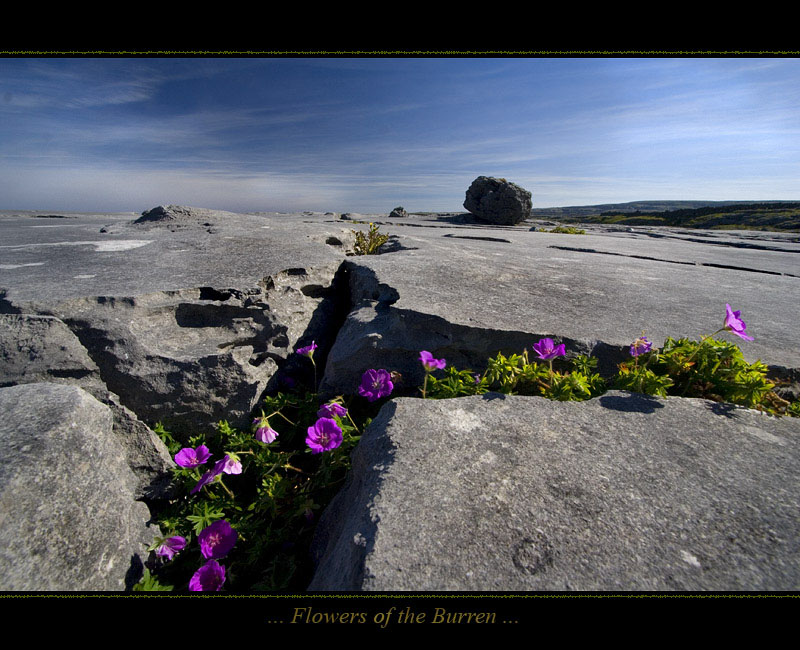
a brogue of Burren’s air,
a flute that danced upon the wind
from Erin’s County Clare.

You danced a Hornpipe, kicked your heels,
smiled with not a care ~
With rocking ankle, turn of calf,
And ribbons in your hair.

Wild and exiled, mother mine
you beat the flaggy ground
with rhythm of the rebel coast
battering the sound.

I do miss your bluest eyes
and long for when you were
an orchid in a field of tare ~
the girl from County Clare.

Copyright, poem, Niamh Clune 2013, All rights reserved

Editor’s Note: Yesterday, May 30, was Mothering Sunday in the UK and Niamh’s lovely poem is posted in honor of the day. Best wishes and gratitude to moms in the UK and everywhere from The Bardo Group and thanks to Niamh for sharing this lovely homage to her own mom with us in celebration of this special day.

430564_3240554249063_1337353112_n-1orange-petals-cover_page_001DR. NIAMH CLUNE (Plum Tree Books Blog) ~ is the author of the Skyla McFee series: Orange Petals in a Storm, and Exaltation of a Rose. She is also the author of The Coming of the Feminine Christ: a ground-breaking spiritual psychology. Niamh received her Ph.D. from Surrey University on Acquiring Wisdom Through The Imagination and specialises in The Imaginal Mind and how the inborn, innate wisdom hidden in the soul informs our daily lives and stories. Niamh’s books are available in paperback (children’s books) and Kindle version (The Coming of the Feminine Christ). Dr. Clune is the CEO of Plum Tree Books and Art. Its online store is HERE.  Niamh’s Amazon page is HERE.

Posted in Bardo News, poem, Poems/Poetry, poetry, Poets/Writers

BARDO NEWS: April celebrations of poetry and poets, a shared heritage that knows no borders

Quatrain on Heavenly Mtn.
Quatrain on Heavenly Mountain

Both Canada and the United States celebrate April as national poetry month. Since Bardo is an international effort, we will celebrate the month as an international event. Poetry is a shared heritage that knows no borders.

Among the blog posts we’ll publish during this month is a piece by Blaga Todorova (Between the Shadows and the Soul) on the Bulgarian poet and former Bulgarian Vice President, Blaga Dimitrova. Included in our line-up is a memorable poem by New York’s first lady, wife of Mayor Bill De Blasio, Chirlane McCray. There will be a piece on writing poetry by English poet, Myra Schneider (Myra Schneider’s Poetry Website), and an article on the Lebanese poet, Khalil Gibran. Corina Ravenscraft (Dragon’s Dreams) will start us off on April 1 with some ideas for celebrating with family and friends.

While we don’t plan to post poems and/or essays on poetry every day, we’ll do so quite a bit. Also, along with the Academy of American Poets, we’ll celebrate A Poem in Your Pocket on Thursday, April 24, when everyone is invited to share a poem and/or a piece about a favored poet no matter the poet’s time or place. Mister Linky will go up and you can link in your own work or share a URL to work you admire. Or, if you prefer, you can share a poem or comment on a poet in the comment section of that day’s post. Mister Linky will open at 12:01 a.m. on the 24th.

This evening we kick-off poetry month – a day-and-a-half early, yes! – with award-winning Canadian slam poet and writer, Shane Koyczan, who first came to the wider world’s attention with his poem We Ae More at the 2010 Olympics opening ceremony in Vancouver. This video begins with Death Be Not Proud by British poet John Donne (1572-1631) and moves into Shane’s performance of one of his early poems, Move Pen Move.

CELEBRATE INTERNATIONAL POETRY MONTH WITH US

“Poets are the unacknowled legislators of the world.” Percy B. Shelley (1792-1822), English Romantic poet, In Defense of Poetry

HAPPY MOTHERING SUNDAY TO OUR FRIENDS IN THE UK

from The Bardo Group

tomorrow’s post by Niamh Clune (Plum Tree Books) will honor the day

and don’t forget to join us on Wednesday, April 23, for Victoria Slotto’s (Victoria C. Slotto, Author/Fiction, Poetry and Writing PromptsWriters’ Fourth Wednesday prompt. Mister Linky will go up for sharing your work at 12:01 a.m. P.S.T. on the 23rd.

Join us on our Facebook page, THE BARDO GROUP

Illustration ~ Fan with quatrain poem attributed to Emperor Gaozong of Song (1107-1187), the tenth Chinese emperor of the Song Dynasty, part of the John B. Elliott Collection at the Metropolitan Museum of Art, New York City. The photograph is by Neutrality and generously released into the public domain.

– The Bardo Group