Category: Poems/Poetry
100,000 Poets (and other artisits and friends) for Change, 2015: over 500 events scheduled around the globe

These are busy days for Michael Rothenberg and Terri Carrion who founded 100,000 Poets for Change. Michael announced yesterday that 500 events are now scheduled for September 26, 2015, the fifth anniversary of this global initiative for change; that is, for peace and sustainability.
For those who are just catching up with us, 100 Thousand Poets for Change, or 100TPC, is an international grassroots educational organization focusing on the arts, especially poetry, music, and the literary arts. It was founded in 2011 by Michael Rothenberg and Terri Carrion and is centered on a world-wide event each September. This past June the first World Conference on 100TPC was held in Salerno, Italy.
There are also several offshoots cropping up: 100,000 Photographers for Change, 100,000 Drummers for Change … and so on. A little searching on Facebook and you’ll find them, though the umbrella for all, 100TPC, does include a range of artistic specialties and friends of the arts and is not limited to poets and poetry.
We – that is The Bardo Group and Beguine Again, publishers of The BeZine are hosting a virtual event and you are all invited to attend and add links to your own relevent work. The links will be collected and published in a Page on The BeZine site and also archived at 100TPC. Michael Dickel (Fragments of Michael Dickel) of The Bardo Group is the lead for this event. Michael is also the organizer of an event scheduled in Israel this October. You can contact him via his blog or message him on Facebook if you have an interest in participating there.
Meanwhile, here is an introduction to the visionary founders of 100TPC, Michael Rothenberg and Terri Carrion:
MICHAEL ROTHENBERG was born in Miami Beach, Florida in 1951, and has been living in the San Francisco Bay Area for the past 37 years. Currently Michael is living and creating among the redwoods.
Michael is co-founder of Shelldance Orchid Gardens in Pacifica, which is dedicated to the cultivation of orchids and bromeliads. He is a poet, painter, songwriter, and editor of Big Bridge Press and Big Bridge, a webzine of poetry and everything else.
In 2011 he and Terri Carrion co-founded the global poetry movement 100 Thousand Poets for Change. His songs have appeared in Hollywood Pictures’ Shadowhunter and Black Day, Blue Night, and most recently, TriStar Pictures’ Outside Ozona. Other songs have been recorded on CDs including: Bob Malone’s The Darkest Part of The Night (Caught Up in Christmas) and Bob Malone (Raydaddy’s Blues), Difficult Woman by Renee Geyer, Global Blues Deficit by Cody Palance, The Woodys by The Woodys, and Schell Game by Johnny Lee Schell.
Michael’s poetry books and broadsides are archived at the University of Francisco, and are held in the Special Collection libraries of Brown University, Claremont Colleges, University of Kansas, the New York Public Library, UC-Berkeley, UC-Davis, and UC-Santa Cruz.
His most recent collection of poems is Indefinite Detention: A Dog Story (Ekstasis Editions 2013) and Murder (Paper Press, 2013) My Youth As A Train published by Foothills Publishing in September 2010.
TERRI CARRION was conceived in Venezuela and born in New York to a Galician mother and Cuban father. She grew up in Los Angeles where she spent her youth skateboarding and slam-dancing.
Terri Carrion earned her MFA at Florida International University in Miami, where she taught Freshman English and Creative Writing, edited and designed the graduate literary magazine Gulfstream, taught poetry to High School docents at the Museum of Contemporary Art in North Miami and started a reading series at the local Luna Star Café. In her final semester at FIU, she was Program Director for the Study Abroad Program, Creative Writing in Dublin, Ireland.
Her poetry, fiction, non-fiction and photography has been published in many print magazines as well as online, including The Cream City Review, Hanging Loose, Pearl, Penumbra, Exquisite Corpse, Mangrove, Kick Ass Review, Jack, Mipoesia, Dead Drunk Dublin, and Physik Garden among others.
Her collaborative poem with Michael Rothenberg, Cartographic Anomaly was published in the anthology, Saints of Hysteria, A Half-Century of Collaborative American Poetry and her chapbook Lazy Tongue was published by D Press in the summer of 2007.
Terri’s most recent projects includes collaborating on a trilingual Galician Anthology, (from Galician to Spanish to English) and co-editing an online selection of the bi-lingual anthology of Venezuelan women writers, Profiles of Night, both to appear in late August, on BigBridge.org., for which she is assistant editor and art designer. Currently, she is learning how to play the accordion. Terri Carrion lives under the redwoods and above the Russian River in Guerneville, Ca. with her partner in crime Michael Rothenberg, and her dogs Chiqui and Ziggy.
The Poet as Witness: “War Surrounds Us,” an interview with American-Israeli Poet, Michael Dickel
Editors note: The theme for our September issue is poverty. It is part of our 100,000 Poets (and other artists and friends) for Change event (change being peace and sustainability) to be held here as a virtual event on 26 September 2015. Michael Dickel takes the lead on this project and the September issue. Here’s an opportunity to get to know him better. Michael’s vision: “… hope must/ still remain with those who cross/ borders, ignore false lines and divisions/” is consistent with the mission of Bequine Again and The Bardo Group, publishers of The BeZine. The September issue will post on the 15th. J.D.
 “That some of those labelled as enemies
have crossed the lines to offer condolences
at the mourning tents; that the mourning
families spoke to each other as parents
and cried on each others’ shoulders;
that we cried for the children who died
on both sides of the divide; that the
war began anyway; that hope must
still remain with those who cross
borders, ignore false lines and divisions;
that children should be allowed to live;
that we must cry for all children who die”
– Michael Dickel, (Mosquitos) War Surrounds Us
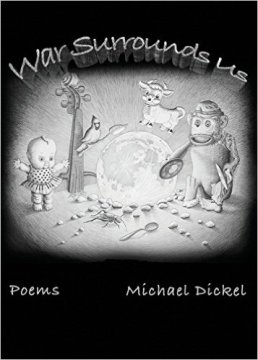
Jerusalem, Summer 2014: Michael Dickel and his family including Moshe (3 years) and Naomi (1 year) hear the air raid sirens, find safety in shelters, and don’t find relief during vacation travels. In a country smaller than New Jersey, there is no escaping the grumbling wars that encircle. So Michael did what writers and poets do. He bore witness. He picked up his pen and recorded thoughts, feelings, sounds, fears, colors, events and concerns in poetry. The result is his third collection of poems, a chapbook, War Surrounds Us.
While some use poetry to galvanize war, Michael’s poetry is a cry for peace. He watched the provocations between Israel and Hamas that resulted in war in 2014 and he illustrates the insanity.
And the retaliation
Continues, reptilian and cold,
retaliation the perpetrator
of all massacres.
Though the poems change their pacing and structure, they present a cohesive logical and emotional flow, one that takes you blood and bone into the heart of Michael’s experience as a human being, a poet, a Jew, a father and husband. He touches the humanity in all of us with his record of the tension between summer outings and death tolls, life as usual and the omnipresence of war. Both thumbs up on this one. Bravo, Michael.
– Jamie Dedes
Poems from War Surrounds Us:
Again
Musical Meditations
The Roses
TLV1 Interview and Poetry Reading

MY INTERVIEW WITH MICHAEL DICKEL:
Jamie: Putting together a poetry collection and ordering the work in a way that enhances the meaning and clarity of poems included is not easy. One of the first things to strike me about the collection as a whole is how it flows, so well in fact that it reads almost like one long poem. I found that quality contributed to the work’s readability. How did you work out the order? Was it consciously ordered or did it arise organically out of the experience of the war?
Michael: I’m very gratified that you noticed this about my book. I hadn’t thought of it quite in that sense, of being one poem, but I like that it reads that way. The sense of a book holding together, a collection of poems having some coherence, is important to me. I don’t think my first book achieved this very well, although it has some flow poem to poem. The whole is not focused, though. My second book has a sense of motion and narrative, from the Midwest where I grew up to arriving and living in Israel, and now being part of the Mid-East. However, War Surrounds Us, my third book, finally has a sense of focus that the other two did not.
Unfortunately, I probably can’t take too much credit for that coherence. Even more unfortunate, a real war raged in Gaza, with rockets also hitting the Jerusalem area, not that far from where I live. As we know now, thousands died, most apparently civilians, many children. Just across the border to the Northeast, diagonally opposite of Gaza, a much larger scale conflict burned and still burns through Syria—with even larger death tolls and even more atrocities over a longer time. These wars had, and still have, a huge impact on me and my family.
During last summer, the summer of 2014, this reality of war surrounding us had all of my attention. And it came out in my writing as obsession with the war, my family, the dissonance between living everyday life and the reality of death and destruction a missile’s throw away. So the topic filled my poems those months, as it did my thoughts. And the poems emerged as events unfolded over time, so a sort of narrative wove into them—not a plot, mind you, not exactly, anyway.
This gives a chronological structure to the book. However, not all of the poems appear in the order I wrote them. I did move some around, seeing connections in a theme or image—if it did not jar the sense of the underlying chronology of the war. Some of the events in our life could move around, and I did move some poems to places where I thought they fit better. I also revised the poems, reading from beginning to end several times, trying to smooth out the flow. A few of the poems I actually wrote or started before this phase of the ongoing conflict broke out—but where they also fit into a pattern, I included them. In the end, I moved and revised intuitively, following my own sense of flow and connection. I’m glad that it seems to have worked for you, as a reader, too.
Jamie: What is the place of the poet and poetry in war? Can poetry, art and literature move us to peace? How and why?
Michael: This is a difficult question. Historically, one place of poets was to call the soldiers to war, to rile them up and denounce the enemy. There is a famous poem from the Hebrew Scriptures. Balaam is called by Balak to curse Jacob and his army. The story sets a talking donkey who sees an angel with a sword and other obstacles in his way, but long story short, he arrives and raises his voice. He is the poet who is supposed to curse the enemy. Instead, he begins, “How beautiful your tents, O Jacob…” and recites a poem that is now part of the Jewish liturgy. This is not necessarily a peace poem, but it shows words and their power to curse of bless. I think the place of the poet is to bless and, rather than curse, to witness with clear sight.
There is a long history of poet as witness and observer. Czeslaw Milosz in The Witness of Poetry and Carolyn Forché, following him, in her books Against Forgetting: Twentieth Century Poetry of Witness and Poetry of Witness, which goes back to the 16th Century, argue that the poet’s role is to observe and bear witness to the world—to the darkness, the atrocities, genocide, war… Forché quotes Bertolt Brecht: “In these dark times, will there also be singing? / Yes, there will be singing. / About the dark times.” I think that is what we do as poets. That’s what I hope that War Surrounds Us does at its best, albeit as much a witnessing of my own family and context as of the Other. Then, as feminist theory has taught me, the personal is political, the political personal.
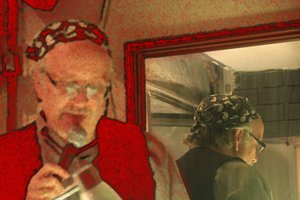 Can art and literature move us to peace? I don’t know. I hope it can move us to see more clearly, to feel more acutely, and to embrace our humanity and the humanity of others. Perhaps that will move us toward peace. There is so much to do, and it is as the rabbinic wisdom says about healing creation: it may not be ours to see the work completed, but that does not free us from the responsibility to do the work. As poets, we make a contribution. I hope the songs about the dark times will also be blessings for us all.
Jamie: Tell us about your life as a poet. When did you start and how did you pursue the path? How do you carve out time for it in a life that includes work, children and community responsibilities. You live on a kibbutz, I think.
Michael: Well, starting at the end, no, I don’t live on a kibbutz, I live in Jerusalem (the pre-1967 side of the Green Line). I do teach English at a college that was started by the Kibbutz Movement as a teacher’s college in the 1960s, now Kibbutzim College of Education, Arts and Technology. That appears in my email signature and confuses some people outside of Israel, who think I teach as part of living at a kibbutz. I’m actually more like adjunct faculty, but no one at the college works directly for a kibbutz as far as I know, and the college is open to anybody who qualifies.
While I only have a short day, from when the kids of my current family go to pre-school until I pick them up, I also usually only teach part-time. Some semesters I teach full-time or even more, but usually not. And, many of my courses in the past couple of years have been online, meeting only a few times during the semester. This helps.
My wife works full-time in high tech, which allows us to survive on my irregular, adjunct pay. She also has some flexibility, which allows her to usually be free to pick up the kids as needed around my teaching schedule, and we have on occasion hired someone to help with the kids so I could teach, not so much for my writing. But that has allowed writing time on other days.
Mostly, I write during those few hours when the kids are at pre-school, after the kids have gone to bed, or even later, after my wife has also gone to bed. If I’m working on a deadline or a large project, such as some of the freelance work I do for film production companies, I write after my wife gets home from work even if the kids are still awake. Usually, though, I write when I find time, and I find time when I don’t have other obligations.
Perhaps of relevance to this book, the writing took over. I was late in getting papers back to students and delayed other obligations and deadlines, even canceling a couple of other projects—although it was not just the writing, but the whole experience of the war, dealing with it and wanting to be very present with my children. As the poems relate, we went to the Galilee, in the North, for a month, a vacation we have taken before. Last summer, though, it had extra urgency because of the war. Unfortunately, during an outing picking apples in the Golan Heights, we heard artillery across the border in Syria, and that’s when I wrote the title poem of the book, “War Surrounds Us.”
The summer before, on that same month-long getaway, I wrote a lot of flash fiction, which makes up most of my next book, which should come out by the end of the year. I wrote during both summers when the kids were napping or after their bedtime, mostly. The place we stay in, a friend’s house (he travels every summer), has a lovely courtyard, and after the children went to bed, Aviva and I would sit out in it, usually with a glass of wine. She would read or work online and I would write on my laptop into the night. It was lovely and romantic.
I have to say that I almost don’t remember a time when I didn’t write poetry or stories. I recall trying to stop on a few occasions, either to work in some other aspect of my life, or when I did a different kind of writing, such as for my dissertation (which devolved into creative writing for more than half of it). But really, going back into my early years, I wrote stories or poems of some sort—influenced I suppose by A. A. Milne, Sol Silverstein, Kenneth Grahame and, later, Mark Twain and even Shakespeare. I had books of Roman and Greek myths, the Lambs’ bowdlerized Shakespeare for children, and some Arthurian tales as a child, not to mention shelves of Golden Books. Later, I read Madeleine L’Engle and a lot of science fiction. And everything I read made me also want to write.
I owe the earliest of my poems that I can remember to exercises from grade school teachers, one in 3rd grade, maybe 4th, the other in 6th grade. However, I’m sure that I wrote stories and possibly “poems” earlier. My first sense that I could become a poet arrived via a junior high school teacher, who encouraged me to submit some poetry to a school contest. I tied for first place.
So, I started writing forever ago. By the time of the junior high contest, I had read e e cummings, Emily Dickinson, some Whitman. By 9th grade, I discovered the Beats through a recording of Ginsberg reading “Kaddish” and other poems. Hearing him read the poems, then reading them myself, changed everything.
Alongside this development, one of my brothers brought Dylan records home that I listened to. All three of my brothers, with my parents’ tacit approval, played folk music and protest music in the form of songs of Woody Guthrie; The Weavers; Joan Baez; Peter, Paul and Mary; in addition to Dylan. These influenced both my writing and my world view. The same year that I came across Ginsberg’s work, I was involved in anti-war activity in my high school. That spring, four students were shot at Kent State. In another way, that changed everything, too.
Writing, activism, and politics, for me have always been interwoven. I also heard that year about “The Woman’s Movement,” which today we call Feminism. Later, much later, I would read and take to heart the idea of the personal being political, the body being political. I think my poems, even the most personal, always have a political and theoretical lens. And the most philosophical or political or theoretical, also have a personal lens. I don’t think that we can help but do that, but I try to be aware of the various lenses, of using their different foci deliberately as part of my craft. I’m not sure that is the current trend, and much of my work doesn’t fit well in spoken word or slam settings (some of it fits). However, this is my poetry and poetics—and they arise from a specific cultural context, the complexity of which I could not begin to convey in less than a lifetime of writing.
My development from those awakening moments looked like this: I read. I wrote. I shared my work with other people who wrote. Sometimes I talked with others about writing. My first degree in college was in psychology, not English, because I naively thought that psych would help me understand the human condition and that English would “ruin” – suppress – my writing voice. However, I took a lot of literature courses and my study abroad term focused entirely on literature.
After college, I had a career as a counselor working with runaways, with street teens, with children undergoing in-patient psych evaluations, and in a crisis intervention and suicide prevention center—a career that taught me a lot about politics, gender, race, and justice. I continued to write, often about some of the most disturbing realities that I encountered, but not well.
I had been out of college nearly a decade when I took some courses in creative writing at the University of Minnesota, at the suggestion of some friends in a writing group who had also taken some. One of the professors encouraged me to apply to the Creative Writing Program, where I was accepted. The acceptance was a poignant moment—I was out of state at my father’s burial. My now ex-wife remained back with our then 2 year-old daughter. She saw the letter in the mail, so called and read it to me. It was also my 32nd birthday. So many emotions all at the same time. Mostly, I remember wishing I could have told my father—from when he first heard that I’d applied, every phone call we had included his asking if I had heard yet if I had been accepted. It was the most direct way he had of saying he was proud.
Jamie: Tell us a little about 100,000 Poets for Change (100TPC) in Israel and how people can get in touch with you if they want to participate this year. Are you able to manage a mix of Arabs and Jews?
Michael: The thing about 100TPC is that it’s pretty loose, as an organization, and very anarchic in governance. Which is to say, I’m not sure there is something I could call 100TPC in Israel. There’s a wonderful poet in Haifa who does some events, I don’t think every year. She is very active in peace activism and poetry. There’s an Israeli mentor of mine, Karen Alkalay-Gut, who has organized 100TPC events in Tel Aviv since the first year. For the past two years, I organized a poetry reading in Jerusalem. The first one was small, a few people I knew and cajoled into reading. The second one was much larger, over 25 poets. We had one Arab writer, who writes in English, at the second reading. Her poetry is powerful and personal, written as an Arab woman, a mother, and an Israeli. An Arab musician was going to join us, but he had a conflict arise with a paying gig. It is difficult to manage the practical, political, and social barriers, but people do it here. I am just learning a bit how to do this now.
For this year, I am working with two other organizations—the Lindberg Peace Foundation, which has held annual Poetry for Peace events. This year will be the 40th anniversary (yartzheit, in Hebrew) of Miriam Lindberg’s tragic death at the age of 18. She wrote poetry, was a peace activist, and also an environmental activist. Her mother was a poet and professor, and passed away a few years ago. Joining us in planning the Jerusalem event will be the Interfaith Center for Sustainable Development. Their mission as I understand it is to develop interfaith leadership for common goals related to eco-justice that would also provide a model for solving the Middle East conflicts.
The Jerusalem events won’t be the same date as the national event (26 September)—our dates will be 15–16 October, to honor the 40th anniversary of Miriam Lindberg’s death. Dorit Weissman, a Hebrew-language poet and playwright, also has become part of 100TPC this year, and she and I are having a smaller reading on 8 October with other poets.
We are just setting up a Facebook page for organizing with the three groups, 100TPC, the foundation, and the center. People could look for me on FB and send me a chat message there to be in touch. I hope that we will have the events posted on FB in the next few weeks, but we are still working on the details. The devil is always in the details, as the saying goes.
Michael will host The BeZine‘s virtual 100TPC this 26 September 2015.
Be the peace.
© 2015, book review, Jamie Dedes, All rights reserved; words, poetry, photographs of Michael, Michael Dickel, All rights reserved; cover illustration, The Evolution of Music, by Jerry Ingeman, All rights reserved
The BeZine, April 2015, Volume 1, Issue 6 – Table of Contents with links
OUR THEME THIS MONTH:
POETRY in honor of
interNATIONAL POETRY MONTH
Mid-wife
A poem is as new as beginnings,
as fresh as the first day at school.
A poem is as bright as our admiration
for courage, our respect for freedom.
A poem is as early as the first leaf,
as white as the most swan-white cloud.
A poem is a drop of rain, a little
convex mirror with the prime of day in it.
A poem is so raw, so young that it has grown
no first, second or third skin.
– Dilys Wood, All rights reserved
April 15, 2015
Poetry is that particular way of organizing our thoughts and imagination into music, emotion, image and story. Through poetry we live hugely, with more beauty, and we seek to break the limitations of our minds, to understand the powers that are living us (to borrow from Auden) and connect with the rest of humankind and that ineffable something that is greater than ourselves. It is both art and meditative practice. Ultimately it becomes a collaboration between writer and reader.
Celebrating poetry in April for interNational Poetry Month has been a Bardo Group tradition since 2011. This year, together with our partner, Second Light Network, our core team and our guest poets we bring you – as poets and poetry lovers – a rich collection of poems, resources and inspiration.
We are pleased to partner with Second Light Network of Women Poets and to bring to your attention the work of 100,000 Poets for Change and Stephen F. Austin State University Press, which recently published a new biography of Sylvia Plath by Julia Gordon-Bramer. Ms. Gordon-Bramer explores Plath’s work through her well known interest in Tarot and Qabalah.
It occurred to me as I was putting the final touches on this month’s The BeZine that there is a sub theme: the way poets reach out not only with words – but with actions – to help make the world a better place. Second Light Network reaches out to support women poets in their later years. 100,000 Poets for Change is a global effort to raise awareness of environmental issues, climate change and human rights issues. Poet Silva Zanoyan Merjanian, a Lebanese-American of Armenian decent, is donating the sales of her second book, Rumor (Cold River Press), to the Syrian Armenian Relief Fund.
Second Light Network (SLN) of Women Poets
Founded by English poet Dilys Wood, SLN is all about encouraging and promoting the work of women in their third act, especially those who are coming to poetry for the first time late in life. Full membership is open to women over forty years and affiliate membership is open to those under forty. Visit Second Life Live for details. Membership is not limited to residents of the U.K.
SLN sponsors classes (including remote classes), is often able to make special arrangements for disabled, and publishes anthologies of women’s work and ARTEMISpoetry magazine (May and November). While the network is for women only, the poetry is for everyone.
– Jamie Dedes
The HEADER this month is the work of our AmeriQuebeckian poet Annie Wyndham, who publishes Salamander Cove. It has an irregular schedule. There’s a fine archive of poems from some of the world’s finest poets.
TABLE OF CONTENTS
BOOK EXCERPT
Fixed Stars Govern A Life: Decoding Sylvia Plath by Julia Gordon-Bramer.
SECOND LIGHT NETWORK (SLN) OF WOMEN POETS
About SLN
Second Light Welcomes Women Poets
Comments on Second Light: organization, publications and remote workshops
Enthusiastic Supporters of Second Light
Features from ARTEMISpoetry
Three Young Poets on Plath’s Influence by Kim Moore, Lavinia Singer and Sarah Westcott
We As Human Beings Must Not Forget, An Interview with Argentinian Poet Ana Becciú by Maria Jastrzębska
My Life in Poetry by Ann Stevenson
Petronella Checks Submission Guidelines by Kate Foley
100,000 POETS FOR CHANGE
Poets and Artists Raise Awareness, Work to Inspire Positive Change
Poems
Past Master by John Anstie
The Dream of a Poet by John Anstie
Le Fée Verte, Absinthe by Jamie Dedes
Blue Echo by Jamie Dedes
Wabi Sabi by Jamie Dedes
Father Sky by Priscilla Galasso
Morning Dove by Priscilla Galasso
How to Write a Poem by Joseph Hesch
The Saints in My Rain by Silva Zanoyan Merjanian; artwork by Steve McCabe
Converge by Silva Zanoyan Merjanian
race by Lilianna Negoi
The Will of the Quill by Corina Ravenscraft
Survival by Myra Schneider
Reel to Reel by Anne Stewart
Double Dutch by Terri Stewart
Reasons by Blaga Todorova
After Neruda by Blaga Todorova
Our Stories by Annie Wyndham
The BeZine, Issue 5
The BeZine, Issue 4
The BeZine, Issue 3
The BeZine, Issue 2
The BeZine, Issue 1
The Bardo Group/Beguine Again on Facebook
The BeZine is a publication of BequineAgain and The Bardo Group.
Free, Female, Of Motley Race, Sixty-five
 I’ve been known to chat with birds in public places
To rescue lost worms sizzling on the pavement in summer
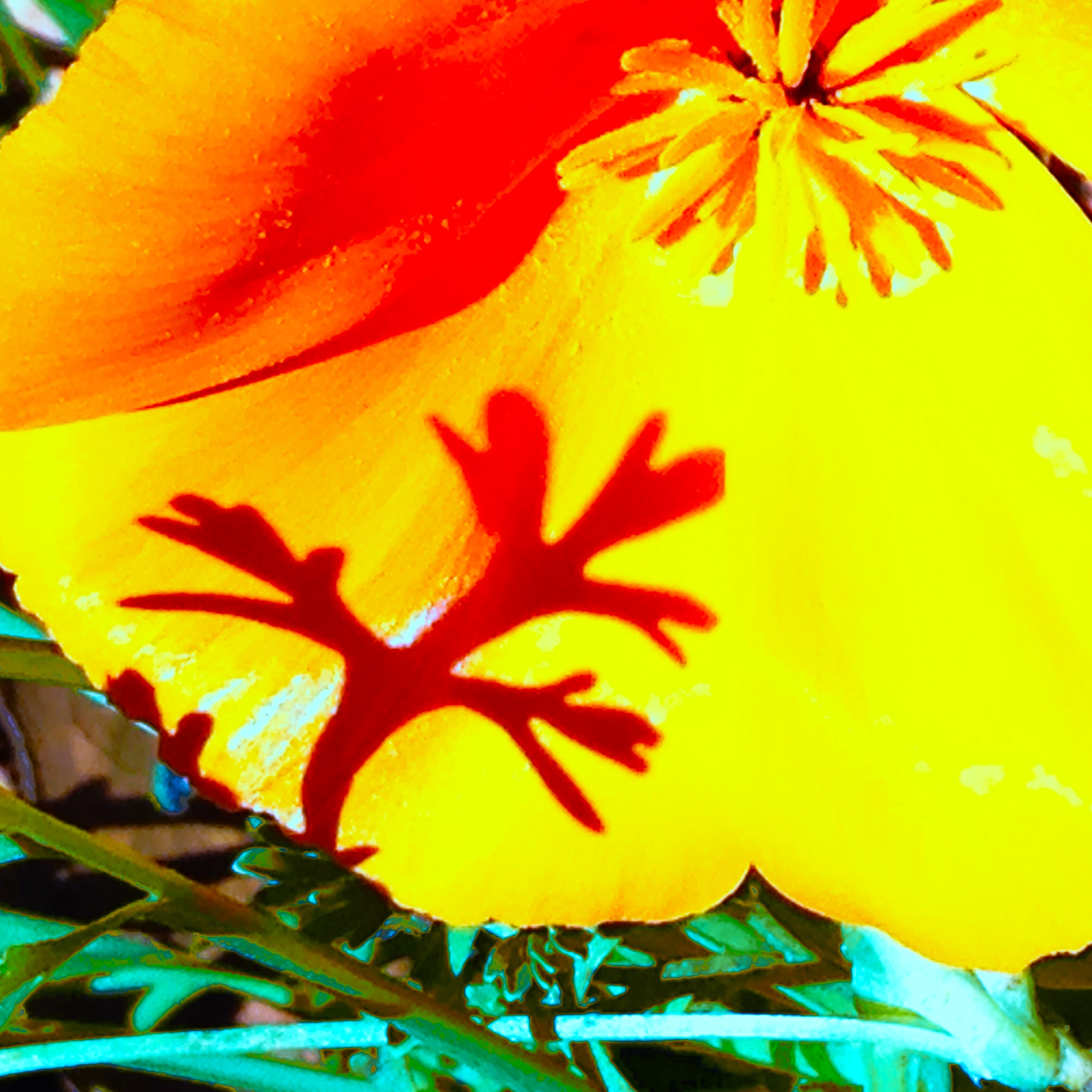
To photograph the irrepressable in every garden
To weave music, emotion and story into poetry
I’m known to be free, female, of motley race and sixty-five
© 2015, poem and photograph, Jamie Dedes (The Poet by Day), All rights reserved
The April issue of The BeZine will publish here this Wednesday, the 15th.
We’re celebrating interNational Poetry Month
in concert with Second Light Network of Women Poets (SLN).*
The BeZine is a publication of Bequine Again and The Bardo Group.
* Second Light Nework of Women Poets is open world-wide to women poets over forty. Affiliate membership is available for those under 40. Details on SLN’s website.
~ The Other Refugees ~

- Soldier and Kitten by JustUs09 @ Photobucket.com
~ The Other Refugees ~
He huddled under the wreckage and rubble,
That used to be his home.
His people had fled.
Still others, were dead.
So he waited, shaking, alone.
*
She searched the dust-filled, ruined lots,
For food for her newborn young.
They needed to eat.
So she scoured every street.
But of sustenance, there was none.
*
Both were pitiful victims of war,
Forgotten, while the dropped bombs fell.
Their families were gone.
Yet, they still struggled on.
In the burning, abandoned hell.
*
It wasn’t their fault they had nowhere to go.
They’d been born with fur, not skin.
No more soft voices, or gentle pats,
Both wondered,
If they’d ever be happy again.
*
Then came the strangers with kind, loving care.
They brought food and they sheltered lost pets.
They didn’t have much,
But they shared what they had,
While the rest of society forgets…
*
There are more than people who suffer in war.
Animals can be refugees, too.
Let us stop and remember
Each four-legged family member.
There’s still plenty of helping to do.
~ C.L.R. ~ © 2014

- Image borrowed from takepart.com

I came across this article the other day, as I was trying to decide what my offering would be for The Bardo 100,000 Poets For Change topic “Peace and Justice”. It struck me that there are so many animals who get forgotten in the chaos of war, and I knew that I had found my subject.
Of course it’s the people who get the attention and aid when they escape war-zones, and it’s important that we continue to help those human victims who need it. But. But there is a large segment of the population of refugees who get forgotten in the shuffle. In our haste to help the humans, the poor animals who are hurt or left behind are often overlooked. It’s sad, as is most everything about war, but it is an unfortunate truth.
The good news is that there ARE organizations who focus on helping displaced and injured animals affected by the ravages of war. The selfless people who run many of these shelters risk their own lives to help the animals left behind. If you are so inclined, the next time that you think about donating time or money to the victims of war, please consider one of these efforts. The cause is noble and just as worthy, and you will be helping someone who needs you, maybe more than you can imagine.
Animals Without Limits
Harmony Fund
Animals Lebanon
Nowzad
SPCA International
– Corina Ravenscraft
This post is a part of our participation in 100,000 Poets – and Musicians, Artists and Activists – for Change. Details HERE. Our theme is Peace and Justice.We invite you to participate in this global event by linking in your work with ours. We’ll be collecting all the links in a commemorative page shortly after we close this project on October 3. You may use Mister Linky below or include your link in the comments section. Thank you!

 dragonkatet (Dragon’s Dreams) ~ Regarding the blog name, Dragon’s Dreams ~ The name comes from my love-affairs with both Dragons and Dreams (capital Ds). It’s another extension of who I am, a facet for expression; a place and way to reach other like-minded, creative individuals. I post a lot of poetry and images that fascinate or move me, because that’s my favorite way to view the world. I post about things important to me and the world in which we live, try to champion extra important political, societal and environmental issues, etc. Sometimes I wax philosophical, because it’s also a place where I always seem to learn about myself, too, by interacting with some of the brightest minds, souls and hearts out there. It’s all about ‘connection(s)’ and I don’t mean “net-working” with people for personal gain, but rather, the expansion of the 4 L’s: Light, Love, Laughter, Learning.
Politics, Treachery and… a Rose – Part 2
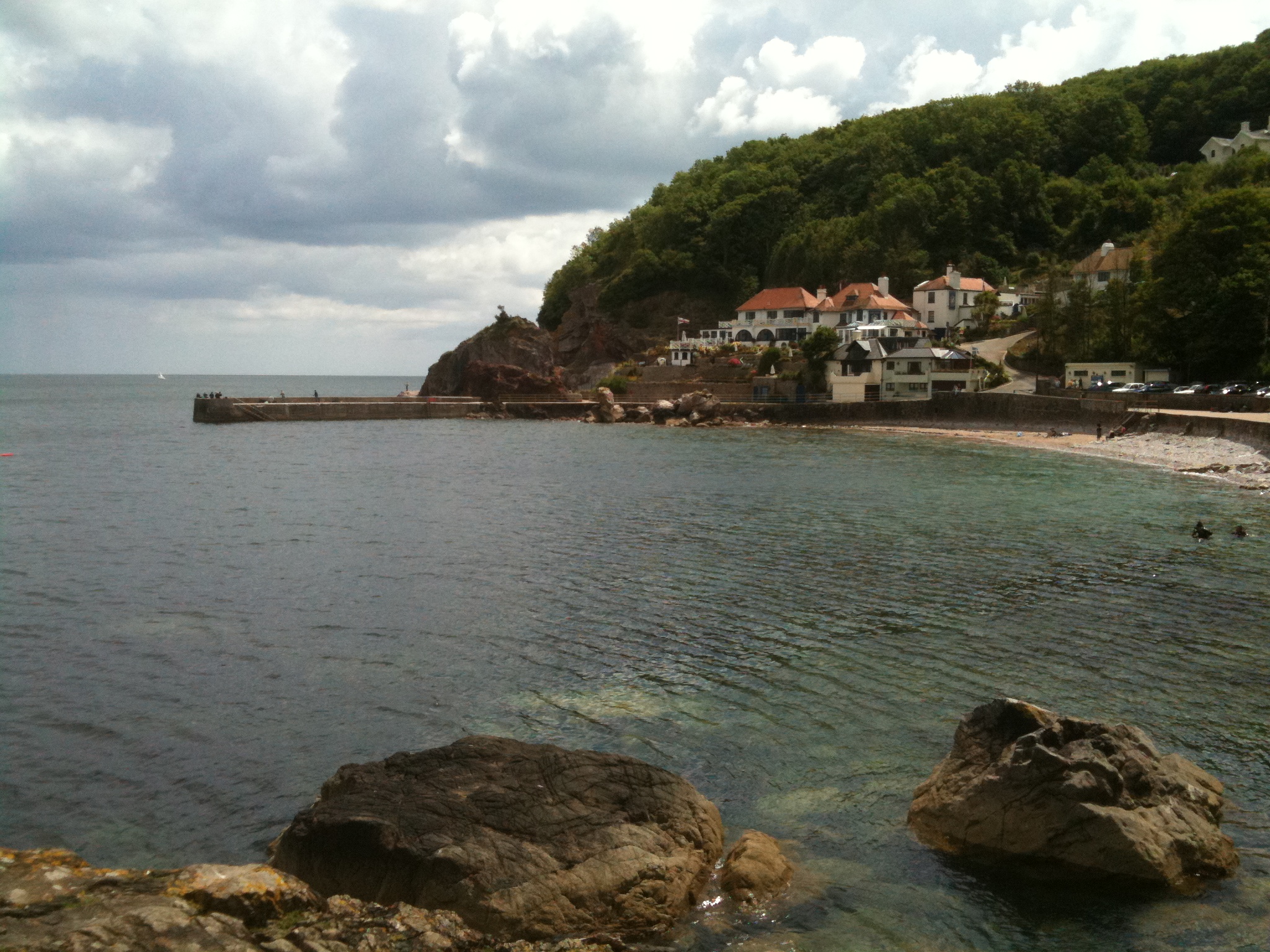
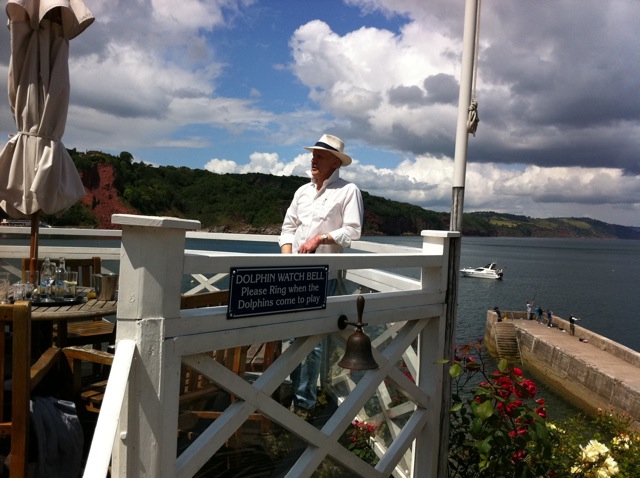
If you read part 1, then you will have become aware of certain things: my sometimes rather glum outlook on life and (more particularly) the photographs, which don’t seem to fit the subject. Here is another, hopefully more palatable side of me as well as an explanation of the photographs …
|
|
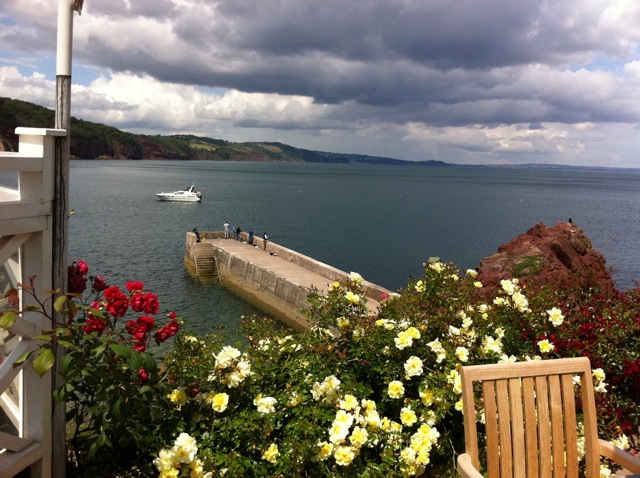
My wife and I had taken a holiday break in Torquay and, during an overcast, but warm summer’s day, we included a very special Birthday lunch for my wife – gifted and arranged by our daughter and her husband – on the ‘Captain’s Table at The Cary Arms, (‘Inn on The Beach’) at Babbacombe in Devon. In a moment, as we sat relaxing digesting our meal, the simplest, most natural thing happened, which most, including myself, would normally have brushed off, quite literally, and forgotten within seconds. However, on this occasion for some reason, it sowed a seed, which, along with several subsequent prompts, including from other blogs that I read, germinated a series of thoughts that resulted in this blog post … and a poem.

It was a small petal – a deep vermilion rose petal – that arrived from somewhere and landed on the left hand sleeve of my folded arms. For a moment, I just looked at it, admired it for what it really was and allowed my thoughts to focus, for some reason known only to my right brain, on what had happened in the human world during the short life of the rose from which it had come. What war, human misery and treachery had occurred in that short time; but also what good had been done; what valiant efforts to keep the peace in war-torn countries of the world; what individual moments of heroism and courage had been demonstrated by a soldier, activist, newshound, medic or aid worker somewhere out there in this dangerous world.
The terraced borders at The Cary Arms are very well tended, including plenty of roses, all of which were in full bloom that warm June day. My thoughts on this event incubated for a short period, after which, early one Saturday morning, they evolved into this poem – a Shakespearean sonnet – entitled … well what else could I call it, but “Rose Petal“..?
This poem is invested with so much that is significant to me; I hope also to you.
Rose Petal
You came to me from rose vermilion red;
so rude and flushed with health you seemed to be.
I was surprised when I discerned instead
your disposition was no longer free;
that, whilst you were so moist and soft, I then
with sadness realised your life was spent;
that you had chosen me for your amen
between your zenith and your final rent.
What price for love you had to pay, and stain
upon your beauteous journey through short life,
so full of human tragedy and pain;
so savaged by our ugliness and strife.
And yet, you gift us your perfume unkempt
and beauty, which our hideousness preempts.
(This was one of seven of John’s poems, which were published by Aquillrelle in the anthology “Petrichor Rising” in August 2013)
Essay and poem © 2011 John Anstie
Photographs © 2011 John Anstie
~~~~~~~~~~~~~~~~~~
This post is a part of our participation in 100,000 Poets – and Musicians, Artists and Activists – for Change. Details HERE. Our theme is Peace and Justice.We invite you to participate in this global event by linking in your work with ours. We’ll be collecting all the links in a commemorative page shortly after we close this project on October 3. You may use Mister Linky below or include your link in the comments section. Thank you! 
JOHN ANSTIE (My Poetry Library and 42) ~ is a British writer and poet, a contributing editor here at Bardo, and multi-talented gentleman self-described as a “Family man, Grandfather, Occasional Musician, Singer, Amateur photographer and Film-maker, Apple-MAC user, Implementation Manager, and Engineer”. He has participated in d’Verse Poet’s Pub and is a player in New World Creative Union as well as a being a ‘spoken-voice’ participant in Roger Allen Baut’s excellent ‘Blue Sky Highway‘ radio broadcasts. He’s been blogging since the beginning of 2011. He is also a member of The Poetry Society (UK).
*****
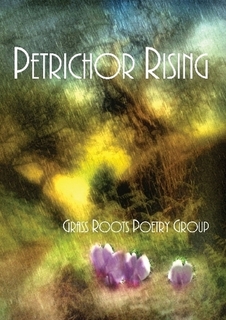
 John has also been involved in the recent publication of two anthologies that are the result of online collaborations among two international groups of amateur and professional poets. One of these is The Grass Roots Poetry Group, for which he produced and edited their anthology, “Petrichor* Rising” in 2013. The other group is d’Verse Poet Pub, in which John’s poetry also appears The d’Verse Anthology: Voices of Contemporary World Poetry, produced and edited by Frank Watson.
* Petrichor – from the Greek pɛtrɨkər, the scent of rain on the dry earth.
Politics, Treachery and… a Rose – Part 1
[Current world events have conspired to remind me recently about a post that I wrote over three years ago. My experience to date, at that time, had demonstrated to me that I don’t have complete control over the processes that steer me through life. Nobody does, however much we would like to think we do. It is also apposite that the worrying and sinister developments in talks between the European Union and the USA about what is called the TTIP (Transatlantic Trade and Investment Partnership) have rather vindicated the concerns that I expressed three years ago. It may also be appropriate to mention that the theme of this essay just happens to align, I think quite well, with Corina’s last piece – “Wilful Ignorance and Some Food for Thought” as well as Jamie’s “Earthlings, Making The Compassionate Connection” ].
Since my retirement, I’ve had more time not only to reflect but also review, research and interrogate life’s processes and relate them to what’s going on ‘out there’. I’ve woken up and opened my eyes. I admit, from time to time, that I’ve allowed my mind to become infected by pessimistic thoughts, which have conspired to worsen my mood, with a concomitant fear for the futures of my children and grandchildren in a world with an increasing population, increasing greed for its limited resources, self-interest, political and corporate corruption, treachery and tyranny!
In my less cynical moments, I like to call this ‘life’s rich tapestry’ and all the more interesting for it. So not all is bad; there is still hope.
We are all self-interested, to a greater or lesser degree; we are all selfish and greedy from time to time; and, given the opportunity, I dare say there are many of us, who would be tempted to take advantage of privilege and power, if we had it in sufficient measure! I hope that I would not be one of these, but how can I say so with certainty? It is only the truly arrogant, who are unable to see how fragile and vulnerable we all are! But it takes a certain type of personality to be capable of merciless and ruthless exploitation and treachery; to be bereft of conscience – I am reminded of the ‘Morlocks’ in H G Wells’ chilling vision of the world in “The Time Machine“, published late in the 19th Century.
These personalities display all the characteristics of damaged minds that can exploit beyond a simple local selfish motive; even beyond a desire to build and run a large, successful organisation – be it commercial, charitable or social one. I’m talking here of international, corporate power mongering; a desire to exploit and control whole populations, with the end game being investment solely in the interests of a minority elite. It has happened throughout the history of the human race. It continues today, but that doesn’t make it right.
In the face of all this, it is sometimes encouraging to know that there are still some very courageous, inspiring as well as philosophically and intellectually ennobled people in the world, people with huge integrity as well as faith, who are capable of giving us great strength as well as hope for the future of humanity. They come in all shapes and sizes and you find them in the most unexpected places, not least amongst some of the free spirits that are to be found here in ‘Blogosphere’. They can be anybody, from wealthy philanthropists like the social thinker and reformer, John Ruskin, on the one hand, to the totally charitable, nay saintly, who dedicate their lives to the cause of the underprivileged, to help the truly needy of the world, whose selfish human motive seems to have been subordinated and whose spiritual conscience transcends all that is material; here I think of Mother Teresa of Calcutta.
|
|
Whilst we each fight our own battles to survive and thrive, to overcome whatever obstacles there may be in our competition for the world’s resources, as well as our own sanity, I am constantly reminded that there is also a vast array, a rich vein of powerful and beautiful natural phenomena that have the unquenchable capacity to ennoble our own minds, to elevate our spirits. I am speaking of the natural world; the flora, fauna and insectoids, some of which existed long before homo sapiens marched onto the scene with our unique set of biological characteristics that have enabled us to rule, dominate and change all that we see. But – and I say this with some trepidation, because I know it is controversial in some quarters – we are still animals; animals with an extraordinary ability for creative and innovative endeavour, but animals nonetheless. Look what happens, as we turn on our television screens almost every day, when law and order breaks down or when people get hungry or angry [evidence the London Riots in 2011], and tell me human beings are only capable of civilised behaviour… the fact that we are, well, hopefully a vast majority of us, capable of civilised behaviour, listening to your conscience and, above all, giving air to our compassion, is a cause for optimism; a cause for us never, and I mean never to give up the fight to maintain democracy and intelligently to vanquish those who represent the worst side of human nature (ibid) and the greatest threat to our freedoms.
Although the natural world cannot help us directly in this quest, it is in this vein that I come to the crux. Something occurred to me that I would not normally have expected, not even given my ability for creative thought. This … happening … somehow focussed my attention and led me, in that moment, to become intensely mindful.
This experience will be revealed in Part 2:
https://thebezine.com/2014/09/30/politics-treachery-and-a-rose-part-2/.
Essay (© 2014) and photographs (© 2011) John Anstie
~~~~~~~~~~~~~~~~~~
This post is a part of our participation in 100,000 Poets – and Musicians, Artists and Activists – for Change. Details HERE. Our theme is Peace and Justice.We invite you to participate in this global event by linking in your work with ours. We’ll be collecting all the links in a commemorative page shortly after we close this project on October 3. You may use Mister Linky below or include your link in the comments section. Thank you!
JOHN ANSTIE (My Poetry Library and 42) ~ is a British writer and poet, a contributing editor here at Bardo, and multi-talented gentleman self-described as a “Family man, Grandfather, Occasional Musician, Singer, Amateur photographer and Film-maker, Apple-MAC user, Implementation Manager, and Engineer”. He has participated in d’Verse Poet’s Pub and is a player in New World Creative Union as well as a being a ‘spoken-voice’ participant in Roger Allen Baut’s excellent ‘Blue Sky Highway‘ radio broadcasts. He’s been blogging since the beginning of 2011. He is also a member of The Poetry Society (UK).
*****
John has also been involved in the recent publication of two anthologies that are the result of online collaborations among two international groups of amateur and professional poets. One of these is The Grass Roots Poetry Group, for which he produced and edited their anthology, “Petrichor* Rising“. The other group is d’Verse Poet Pub, in which John’s poetry also appears The d’Verse Anthology: Voices of Contemporary World Poetry, produced and edited by Frank Watson.
* Petrichor – from the Greek pɛtrɨkər, the scent of rain on the dry earth.
on the ground of battle

FOR 100,000 Poets for Change; please link in your own work. The info on this is below the poem. Thank you!
it’s just your old soul and mine and
this intuition we share on the ground
of battle, witnessing the foment of hate,
anger feeding disenchantment in the street,
the acquisitive tendencies of the elite,
cowardly saber-rattling, cut off from authority,
from that innate expressively honest power
of our erotic selves, our instinctive selves,
the non-rational knowing that embodies
strength, nothing weak or pornographic
in its expression, a profound antithesis
to the pornography of war and hate that,
in the end, is about impotence, about an
emboli of narrow minds, grasping politicians
stirring tribal dissents for their own ends
or dropping bombs like a child bangs pots –
to overwhelm the fear of thunder, a game
of chicken, of a hawk-hawk play toward
a mutually assured destruction, just a
matter of time . . .
as we stand the ground of one another’s
battles where peace would be radical and
the unholy alliances of conflict might
burn themselves out, find their way into
calm, but here we are, once again, in thrall
the sociopaths have us bloodied and bound ~
their eyes in the aging face of a clockwork orange,
numb to the obscenities of maim and murder …
time now for change, for new ways to be in this world
“. . . and they shall beat their swords into plowshares, and their spears into pruning hooks: nation shall not lift up sword against nation, neither shall they learn war any more.” Isaiah 2:4
“I dream of giving birth to a child who will ask, ‘Mother, what was war?‘”Eve Merriam (1916-1992), American poet
© 2013, poem, Jamie Dedes, All rights reserved; illustration “Schwerter zu Pflugscharen (Swords Into Plowshares) bronze sculpture by Jewgeni Wutschetitsch, photograph by Neptuul under CC BY-SA 3.0
PEACE AND JUSTICE
is our theme for the next seven days as we participate in a global event:
100,000 Poets for Change
Please link in your own work here by using Mister Linky (just click on it) or by leaving your link in the comments section below. One of us will visit you then and we also plan to collect all the links shared with us to create a special commemorative page on this blog. You are welcome to share your work by linking in on any day or days during this event. Thank you! Let’s reimagine the world together. Our art has power …

RE: The Bardo Group
I have passed the administration of The Bardo Group blog to Terri Stewart (Beguine Again), effective October 4. The Beguine Again collaborative and The Bardo Group are coordinating a consolidation. The shared core value is nonviolence.
I remain as poetry liaison and member of the Core Team and with this post extend my appreciation to Terri Stewart for agreeing to take this effort on and to the rest of the Bardo Core Team and to the Beguine Again team and our many guest bloggers, contributing writers and our readers, followers and commenters for their heartfelt contributions to this effort since February 2011. You are a fabulous community of heros and saints.
Let’s continue our worthy traditions. Practice your artfullnes, live from your heart and never lose your ideals. They are real and I hope you will continue to share them here for a long time to come.
In spirit,
The Poet by Day.
Do Not Judge Me, As My Sin Deserves
 This poem was written by Noris Roberts, a Venezuelan poet educated in Commercial Law at the Universidad Santa Maria in Caracas. Her collection The Mirror of the Soul was published in limited edition with proceeds going to a healthcare foundation for at-risk children. You will find her complete bio HERE.
The work is read by Victor David Santiago, poet, writer, musician and founder/editor of Subprimal Poetry Art.
© 2014 portrait, poem and video, Noris Roberts, All rights reserved
In Other Words, Love
 “call me if you need anything,” you say ~
then the sweet swift chatter of the keyboard
birthing words into evergreen poet-trees,
my thoughts and your face, sometimes the
word is love, other times the word is love,
ubiquitous, omnipotent, found in the heart,
in the dictionary, in the mind of the child,
in the child’s mind that lives in the adult,
love everywhere, i see it written on your lips
as we talk of everyday things, i hear the word
with my heart when you say “good bye , Mom~
next week, we’ll go out for lunch…and a drive ~
along the scenic route,” … that says love too
© 2012, poem and photograph, Jamie Dedes, All rights reserved
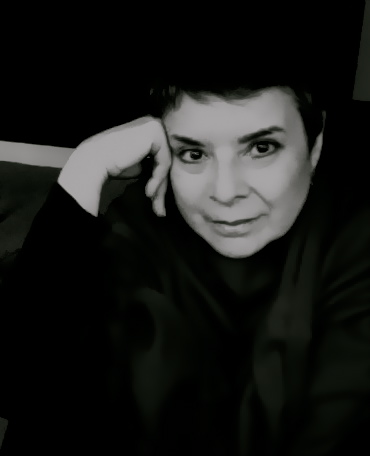
 JAMIE DEDES (The Poet by Day)~ I started blogging shortly after I retired as a way to maintain my sanity and to stay connected to the arts and the artful despite being mostly homebound. My Facebook pages are: Jamie Dedes (Arts and Humanities) and Simply Living, Living Simply.
With the help and support of talented bloggers and readers, I founded The Bardo Group because I feel that blogging offers a means to see one another in our simple humanity, as brothers and sisters and not as “other.” I am the poetry liaison and a member of the Core Team. Terri Stewart (Beguine Again) is in the lead position and the Beguine Again collaborative and The Bardo Group are coordinating a consolidation of the two groups.
“Good work, like good talk or any other form of worthwhile human relationship, depends upon being able to assume an extended shared world.” Stefan Collini (b. 1947), English Literary Critic and Professor of English Literature at Cambridge
super lotto…

with hesitating steps
i entered
aunt bea’s home
after weeks
of speculation
and
unwarranted certainty
i had to admit
to her
that i had failed
in my endeavor
but
she smiled
and
said
a dream
isn’t
a lottery ticket
to be drawn
on some
certain date
to declare
the winner
a dream
is a promise
that one makes
to self
to be sought
and
kept
.
 CHARLES W. MARTIN (Reading Between the Minds) — earned his Ph.D. in Speech and Language Pathology with an emphasis in statistics. Throughout Charlie’s career, he maintained a devotion to the arts (literature/poetry, the theater, music and photography). Since his retirement in 2010, he has turned his full attention to poetry and photography. He publishes a poem and a photographic art piece each day at Read Between the Minds, Poetry, Photograph and Random Thoughts of Life. He is noted as a poet of social conscience. Charlie has been blogging since January 31, 2010. He has self-
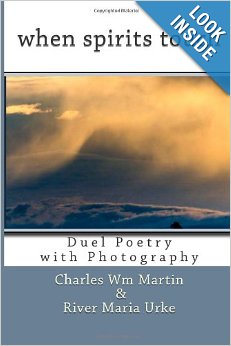 published a book of poetry entitled The Hawk Chronicles and will soon publish another book called A Bea in Your Bonnet: First Sting, featuring the renown Aunt Bea. In The Hawk Chronicles, Charlie provides a personification of his resident hawk with poems and photos taken over a two-year period. The newly published When Spirits Touch recently became available on Amazon.
Flight Off of Half Dome

Flight Off of Half Dome
An etheree
Walk
alone
in autumn
below the blue
canopy of sky.
Leaves crunch beneath your feet.
Where do crickets go on cold
fall days wrapped up in brilliant hues?
Why do the horses romp in sunlit
fields of green with wind whipping through their manes?
Where do crickets go on chilled winter days?
Yosemite-place of the gaping
mouth-belonged to the Miwok
until the white man came.
“Manifest Destiny”
they called it—God’s will.
The valley was
theirs to romp
in sun-
light.
Mi-
wok fled
in autumn
under the black
night sky in silent
flight off Half-Dome or through
wet leaves that could not crunch. Their
tears fell into the dark chasm
drowning the crickets who hid beneath
scarlet shrouds of all that came before death.
The Miwok Indians, guardians of Yosemite and Tuolome Meadows were driven from their homeland under the guise of “Manifest Destiny.” There was an etching at the Nevada Museum of Art when we had a Yosemite exhibit titled “Flight Off of Half Dome” depicting their “eviction” as falling from the rock.
“Etheree” is a form in which the poet increases from one to ten syllables per line and then in reverse for as many stanzas as desired.
– Victoria Slotto
© 2014, poem and photograph, Victoria C. Slotto, All rights reserved
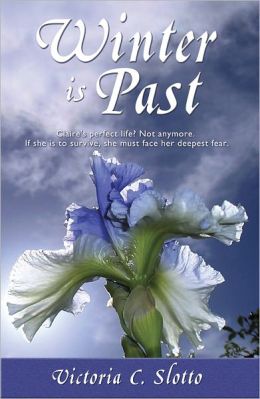
 VICTORIA C. SLOTTO (Victoria C. Slotto, Author: Fiction, Poetry and Writing Prompts) ~ is an accomplished writer and poet. Winter is Past, published by Lucky Bat Books in 2012, is Victoria’s first novel. A second novel is in process. On Amazon and hot-off-the-press nonfiction is Beating the Odds: Support for Persons with Early Stage Dementia. Victoria’s ebooks (poetry and nonfiction) are free to Amazon Prime Members. Link HERE for Victoria’s Amazon page. Victoria’s poetry collection is Jacaranda Rain, Collected Poems, 2012.
The Wild
 White foam rides the churning
river and a Red-Shouldered Hawk
cries out as he drifts overhead;
a meadow vole takes cover.
In an ancient, towering pine,
lies an enormous aerie, home
to a Bald Eagle couple and their
two fledglings who take turns
flapping wildly, strengthening
their wings before take-off.
A feeding herd of White-Tailed
deer wander calm through the
open forest, several fawns
leap and kick in play and sometimes
bleat for their mothers when they
wander too far.
The armor-plated armadillo can be seen
snuffling through low brush and dirt
searching for grubs, worms and beetles.
Berries, nuts and seeds are the choice
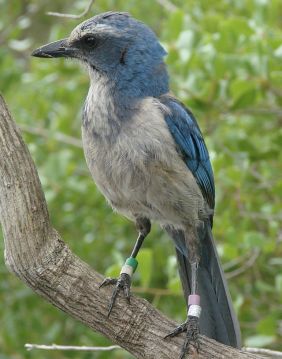
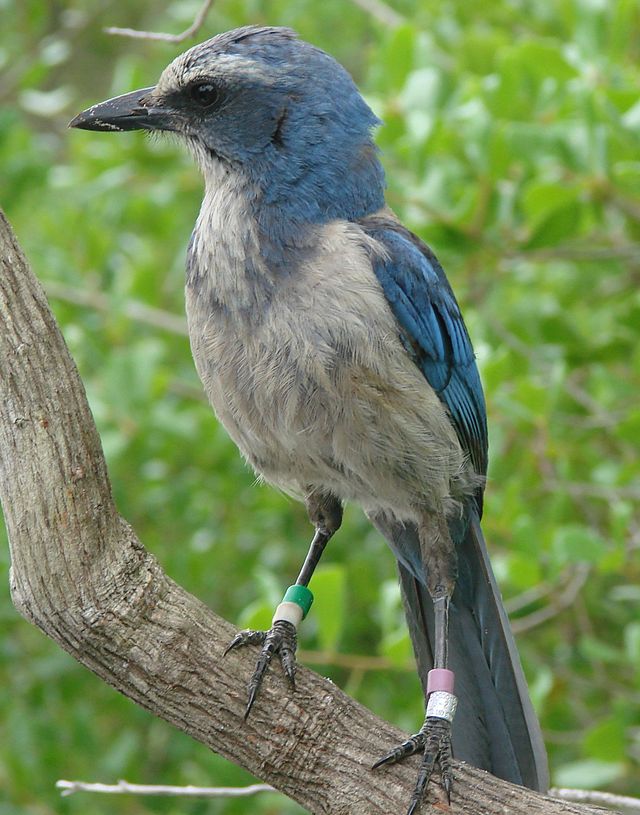
of food for the Florida Scrub Jay seen
flitting through the low, spindly oaks,
and hiding in the scrub when feeling shy.
Their lives lived in extended-family colonies
helps assure them survival even while
their habitat is being threatened.
A dirt colored and plain patterned
garter snakes through the underbrush
before coming to rest in a sunny patch
on the forest’s floor…taking time to
absorb some warmth before moving on;
a gopher turtle stirs from his day’s nap.
All the animals hear when the humans
approach and they watch with
curiosity and then fear as monstrous
machines can be heard revving their
engines preparing once again for
their encroaching.
– Gayle Walters Rose
© 2014, poem, Gayle Walters Rose, All rights reserved; photo credit ~ Florida Scrub Jay by VvAndromedavV under CC BY-SA 3.0
 GAYLE WALTERS ROSE (Bodhirose’s Blog) ~ has contributed to The Bardo Group blog several times since its founding in 2011. Gayle has actively blogged since 2010, writing about family life, things of the spirit, and her ashram-life experiences. In this relatively short time, her sincerity and authenticity has earned her quite a large and loyal following. Gayle is a regular participant in d’Verse Poets Pub. This poem was written in response to Victoria’s Wilderness Week writing prompt posted on Wednesday.
Your Wild and Precious Life
Tell me, what is it you plan to do
with your one wild and precious life? Mary Oliver
A flock of starlings startled me this morning
flying randomly between city sky scrapers
before settling into formation
and heading toward the mountains.
Tell me, what is it you plan to do
with your one wild and precious life?
A perfect fence, white pickets,
with perfect shadows.
Is it there to hold in or keep out?
Or is it just there?
Tell me, what is it you plan to do
with your one wild and precious life?
In May, along the river walk,
an abundance of pink wild roses, snarly branches,
rival our well-planned gardens
with their playfulness.
Tell me, what is it you plan to do
with your one wild and precious life?
My sister’s husband deferred retirement
so they would have more money.
She died the month before their trip to the Amazon.
He cancelled their plans and never went back to work.
Tell me, what is it you plan to do
with your one wild and precious life?
–Victoria C. Slotto
Note: I think this is a good example of how the wilderness can inspire poetry. Can you share something you’ve written that was inspired by a trek into the wilderness. You can link your own work to this post via Mister Linky below. Victoria C. Slotto
VICTORIA C. SLOTTO (Victoria C. Slotto, Author: Fiction, Poetry and Writing Prompts) ~ is an accomplished writer and poet. Winter is Past, published by Lucky Bat Books in 2012, is Victoria’s first novel. A second novel is in process. On Amazon and hot-off-the-press nonfiction is Beating the Odds: Support for Persons with Early Stage Dementia. Victoria’s ebooks (poetry and nonfiction) are free to Amazon Prime Members. Link HERE for Victoria’s Amazon page. Victoria’s poetry collection is Jacaranda Rain, Collected Poems, 2012, Beautifully done.
younger brother’s blindness…

dry grass burns
like a funeral pyre
in the river bed
the river
is dead
cattle kneel
as if in prayer
bowing a parched head
the river
is dead
it flows not
nor holds any life
older brother said
the river
is dead
mother earth
will shed no more tears
filling river beds
the river
is dead
man hears not
wealth’s his only thought
a thirst for silver
but death’s
the river
 CHARLES W. MARTIN (Reading Between the Minds) — earned his Ph.D. in Speech and Language Pathology with an emphasis in statistics. Throughout Charlie’s career, he maintained a devotion to the arts (literature/poetry, the theater, music and photography). Since his retirement in 2010, he has turned his full attention to poetry and photography. He publishes a poem and a photographic art piece each day at Read Between the Minds, Poetry, Photograph and Random Thoughts of Life. He is noted as a poet of social conscience. Charlie has been blogging since January 31, 2010. He has self-published a book of poetry entitled The Hawk Chronicles and will soon publish another book called A Bea in Your Bonnet: First Sting, featuring the renown Aunt Bea. In The Hawk Chronicles, Charlie provides a personification of his resident hawk with poems and photos taken over a two-year period. Charlie’s lastest book, When Spirits Touch, Dual Poetry, a collaboration with River Urke, is available through Amazon now.
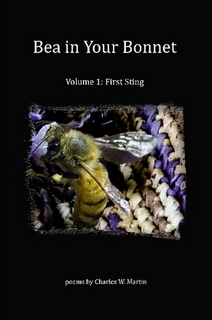 Charlie’s long awaited Aunt Bea Collection is out. He says, “Bea In Your Bonnet: First Sting is a collection of germinal poems featuring Aunt Bea. Aunt Bea’s voice is one I’ve heard almost every day of my life. Family observations, lessons, and advice given to me and every other family member who had the good sense to listen. Her homespun philosophy most likely will not be found in any collegiate textbooks or for that matter in any local town crier newspaper catering to city dwellers. Indeed, she has a different way of viewing the world; a bit old fashion, sassy, and steely at times but a viewpoint which has engaged my imagination and heart. I sincerely hope you too will find some morsel of wisdom in her personal observations and interpretations of life’s events, but do watch out for her stingers.”
… Chalice
Dear Earth, you are a sacred aqueous Isle
in a dark and endless sea of universe.
You may never reveal your strategy.
We may be bound by genetic code
to the presupposing chemical destiny
of one great astrophysical master plan
for all living things. We, who represent
your malaise, your chronic infestation;
we, like a fleeting itch in your long life,
will never comprehend it. But, in truth
you know too well that we can never
understand more than one percent
of all there is to know. You contain
the knowledge that is beyond us.
We are like a rash on your skin.
One day, we know you will
raze all of our delusions,
prepare us for the day
when a blinding light
will inoculate you
and inform us of
a moment when
extant humans
will, at last be
prepared to
distinguish
the l i e s
f r o m
truth
and
if so
are
w e
m e r e
a t o m i c
p a r t i c l e s
inside a temporal chalice?
© 2014 John Anstie
[ The chalice comes in many iconic forms, none more so than the Holy Chalice, or Holy Grail, said to have been used to dispense its sacred content at the Last Supper. Whether the above title prompts this as your first thought or whether it is the ‘poisoned’ variety, it is for you to decide how you interpret its meaning. You can then preface the title, ‘Chalice’, with the missing word. It has to be said that the above shape represents a chalice with proportions that are rather slim compared to the traditionally chubby looking vessel, which better defines the name. Perhaps this is a good thing, making it as easier to read, like the narrow columns of a newspaper, perhaps ..? ]
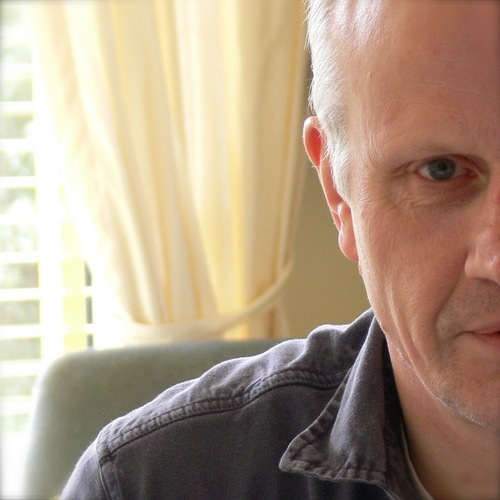
JOHN ANSTIE (My Poetry Library and 42) ~ is a British writer and poet, a contributing editor here at Bardo, and multi-talented gentleman self-described as a “Family man, Grandfather, Occasional Musician, Singer, Amateur photographer and Film-maker, Apple-MAC user, Implementation Manager, and Engineer”. He has participated in d’Verse Poet’s Pub and is a player in New World Creative Union as well as a being a ‘spoken-voice’ participant in Roger Allen Baut’s excellent ‘Blue Sky Highway‘ radio broadcasts. John has been blogging since the beginning of 2011. He is also a member of The Poetry Society (UK).
*****
John has also been involved in the recent publication of two anthologies that are the result of online collaborations among two international groups of amateur and professional poets. One of these is The Grass Roots Poetry Group, for which he produced and edited their anthology, “Petrichor* Rising“. The other group is d’Verse Poet Pub, in which John’s poetry also appears The d’Verse Anthology: Voices of Contemporary World Poetry, produced and edited by Frank Watson.
* Petrichor – from the Greek pɛtrɨkər, the scent of rain on the dry earth.
In the Room
Here in the room the breaths come
maybe every ten seconds apart,
snoring sounds from a mouth agape,
now voiceless, beneath eyes mostly closed,
but probably unseeing.
She doesn’t hear the talk in the room.
We think. We hope.
Above the bed, a little plastic bag
of morphine perches like blessed fruit
from a swirly silver branch atop
the six-wheeled tree they’ll roll
out of the room whenever her spirit does.
Here in the room we watch, we wait,
hearing only the sounds of the family,
of the bubbling O2 humidifier,
the beeps of monitors and machines,
the murmurs and shoe-squeaks from staff
in the hallway on the fifth floor
as the hospital awakens this morning.
And punctuating it all come
the snorting gasps of a life dwindling away
every ten–no, fifteen–seconds.
We think. God help her, we hope.
– Joseph Hesch
© 2014, All rights reserved
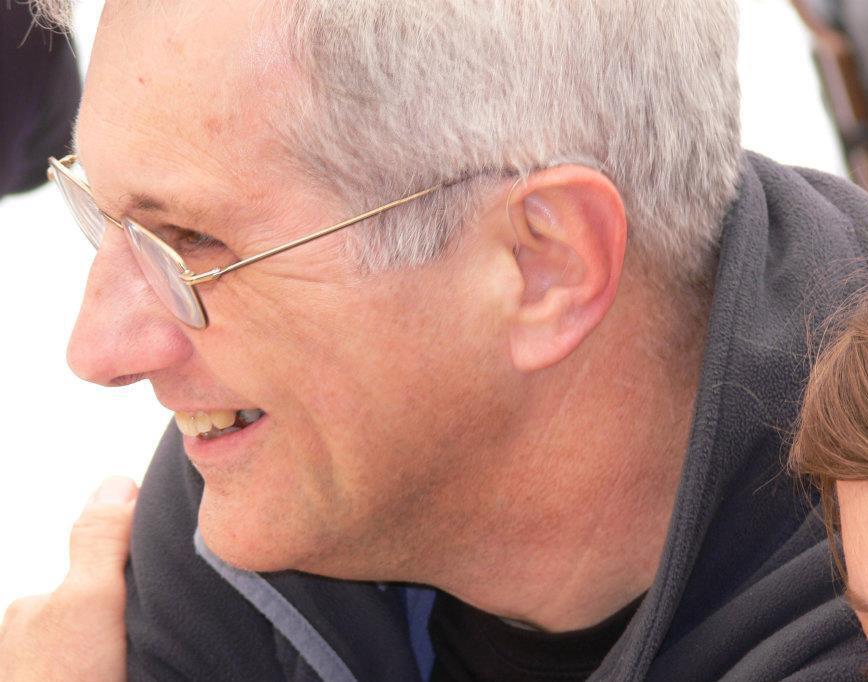 JOSEPH HESCH (A Thing for Words) is a writer and poet from Albany, New York , an old friend of Bardo and a new core team member. Joe’s work is published in journals and anthologies coast-to-coast and worldwide. He posts poems and stories-in-progress on his blog, A Thing for Words. An original staff member at dVerse Poets Pub website, Joe was named one of Writers Digest Editor Robert Lee Brewer’s “2011 Best Tweeps for Writers to Follow.” He is also a member of the Grass Roots Poetry Group and featured in their 2013 poetry anthology Petrichor Rising.
 The BeZine