The BeZine Blog

Posted in 000 Poets, Artists and Activists for Change, Essay, General Interest, John Anstie, justice, Meditation, Mortality, Musicians, Peace & Justice, poem, Poems/Poetry, poetry

Politics, Treachery and… a Rose – Part 1

[Current world events have conspired to remind me recently about a post that I wrote over three years ago. My experience to date, at that time, had demonstrated to me that I don’t have complete control over the processes that steer me through life. Nobody does, however much we would like to think we do. It is also apposite that the worrying and sinister developments in talks between the European Union and the USA about what is called the TTIP (Transatlantic Trade and Investment Partnership) have rather vindicated the concerns that I expressed three years ago. It may also be appropriate to mention that the theme of this essay just happens to align, I think quite well, with Corina’s last piece – “Wilful Ignorance and Some Food for Thought” as well as Jamie’s “Earthlings, Making The Compassionate Connection” ].

Since my retirement, I’ve had more time not only to reflect but also review, research and interrogate life’s processes and relate them to what’s going on ‘out there’. I’ve woken up and opened my eyes. I admit, from time to time, that I’ve allowed my mind to become infected by pessimistic thoughts, which have conspired to worsen my mood, with a concomitant fear for the futures of my children and grandchildren in a world with an increasing population, increasing greed for its limited resources, self-interest, political and corporate corruption, treachery and tyranny!

In my less cynical moments, I like to call this ‘life’s rich tapestry’ and all the more interesting for it. So not all is bad; there is still hope.
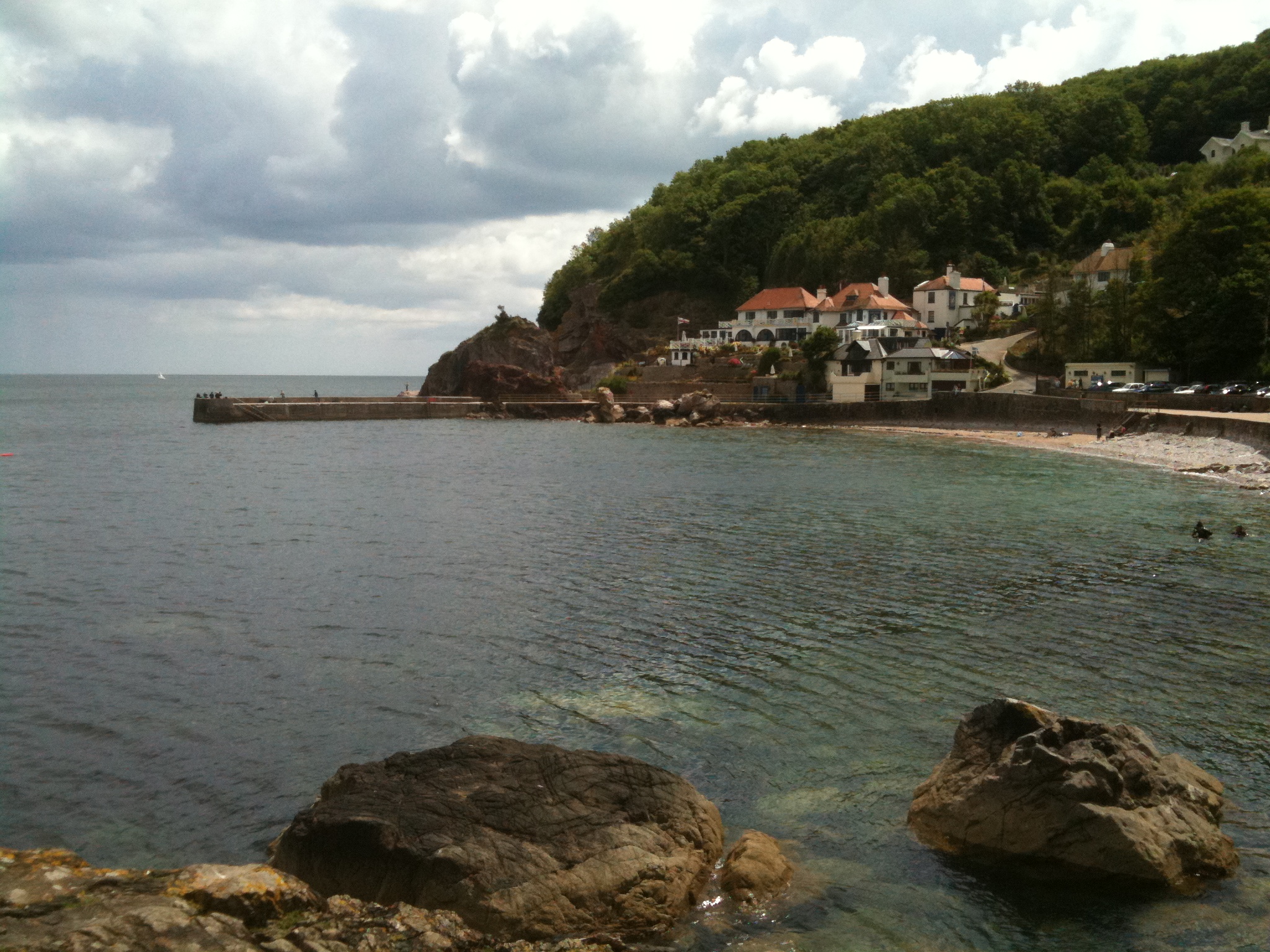
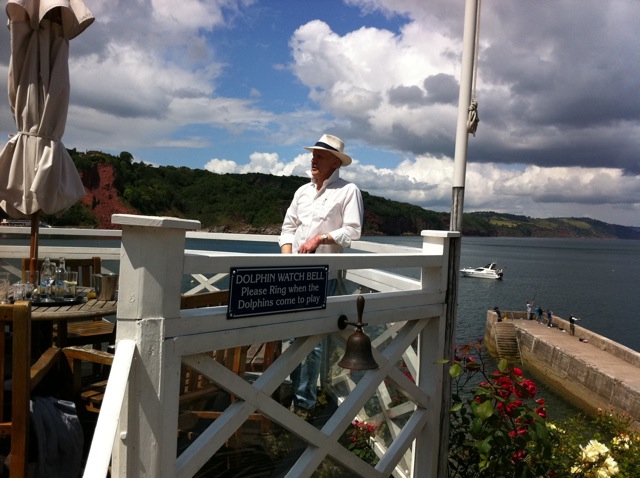
Babbacombe and the Carey Arms from Oddicombe (© 2011 John Anstie)

We are all self-interested, to a greater or lesser degree; we are all selfish and greedy from time to time; and, given the opportunity, I dare say there are many of us, who would be tempted to take advantage of privilege and power, if we had it in sufficient measure! I hope that I would not be one of these, but how can I say so with certainty? It is only the truly arrogant, who are unable to see how fragile and vulnerable we all are! But it takes a certain type of personality to be capable of merciless and ruthless exploitation and treachery; to be bereft of conscience – I am reminded of the ‘Morlocks’ in H G Wells’ chilling vision of the world in “The Time Machine“, published late in the 19th Century.

These personalities display all the characteristics of damaged minds that can exploit beyond a simple local selfish motive; even beyond a desire to build and run a large, successful organisation – be it commercial, charitable or social one. I’m talking here of international, corporate power mongering; a desire to exploit and control whole populations, with the end game being investment solely in the interests of a minority elite. It has happened throughout the history of the human race. It continues today, but that doesn’t make it right.

In the face of all this, it is sometimes encouraging to know that there are still some very courageous, inspiring as well as philosophically and intellectually ennobled people in the world, people with huge integrity as well as faith, who are capable of giving us great strength as well as hope for the future of humanity. They come in all shapes and sizes and you find them in the most unexpected places, not least amongst some of the free spirits that are to be found here in ‘Blogosphere’. They can be anybody, from wealthy philanthropists like the social thinker and reformer, John Ruskin, on the one hand, to the totally charitable, nay saintly, who dedicate their lives to the cause of the underprivileged, to help the truly needy of the world, whose selfish human motive seems to have been subordinated and whose spiritual conscience transcends all that is material; here I think of Mother Teresa of Calcutta.

The Captain's Table nearby poetic inspiration...
The Captain’s Table nearby poetic inspiration…

Whilst we each fight our own battles to survive and thrive, to overcome whatever obstacles there may be in our competition for the world’s resources, as well as our own sanity, I am constantly reminded that there is also a vast array, a rich vein of powerful and beautiful natural phenomena that have the unquenchable capacity to ennoble our own minds, to elevate our spirits. I am speaking of the natural world; the flora, fauna and insectoids, some of which existed long before homo sapiens marched onto the scene with our unique set of biological characteristics that have enabled us to rule, dominate and change all that we see. But – and I say this with some trepidation, because I know it is controversial in some quarters – we are still animals; animals with an extraordinary ability for creative and innovative endeavour, but animals nonetheless. Look what happens, as we turn on our television screens almost every day, when law and order breaks down or when people get hungry or angry [evidence the London Riots in 2011], and tell me human beings are only capable of civilised behaviour… the fact that we are, well, hopefully a vast majority of us, capable of civilised behaviour, listening to your conscience and, above all, giving air to our compassion, is a cause for optimism; a cause for us never, and I mean never to give up the fight to maintain democracy and intelligently to vanquish those who represent the worst side of human nature (ibid) and the greatest threat to our freedoms.

Although the natural world cannot help us directly in this quest, it is in this vein that I come to the crux. Something occurred to me that I would not normally have expected, not even given my ability for creative thought. This … happening … somehow focussed my attention and led me, in that moment, to become intensely mindful.

This experience will be revealed in Part 2:

https://thebezine.com/2014/09/30/politics-treachery-and-a-rose-part-2/.

Essay (© 2014) and photographs (© 2011) John Anstie

~~~~~~~~~~~~~~~~~~

This post is a part of our participation in 100,000 Poets – and Musicians, Artists and Activists –  for Change. Details HERE. Our theme is Peace and Justice.We invite you to participate in this global event by linking in your work with ours. We’ll be collecting all the links in a commemorative page shortly after we close this project on October 3. You may use Mister Linky below or include your link in the comments section. Thank you!

John_in_Pose_Half_Face3

JOHN ANSTIE (My Poetry Library and 42) ~ is a British writer and poet, a contributing editor here at Bardo, and multi-talented gentleman self-described as a “Family man, Grandfather, Occasional Musician, Singer, Amateur photographer and Film-maker, Apple-MAC user, Implementation Manager, and Engineer”. He has participated in d’Verse Poet’s Pub and is a player in New World Creative Union as well as a being a ‘spoken-voice’ participant in Roger Allen Baut’s excellent ‘Blue Sky Highway‘ radio broadcasts. He’s been blogging since the beginning of 2011. He is also a member of The Poetry Society (UK).

*****
product_thumbnail-3.php

51w-rH34dTL._BO2,204,203,200_PIsitb-sticker-arrow-click,TopRight,35,-76_AA300_SH20_OU01_John has also been involved in the recent publication of two anthologies that are the result of online collaborations among two international groups of amateur and professional poets. One of these is The Grass Roots Poetry Group, for which he produced and edited their anthology, “Petrichor* Rising. The other group is d’Verse Poet Pub, in which John’s poetry also appears The d’Verse Anthology: Voices of Contemporary World Poetry, produced and edited by Frank Watson.

Petrichor – from the Greek pɛtrɨkər, the scent of rain on the dry earth.
 

Posted in Essay, Photography/Photographer, Terri Stewart

Entering the Sacred Space of Peacefulness

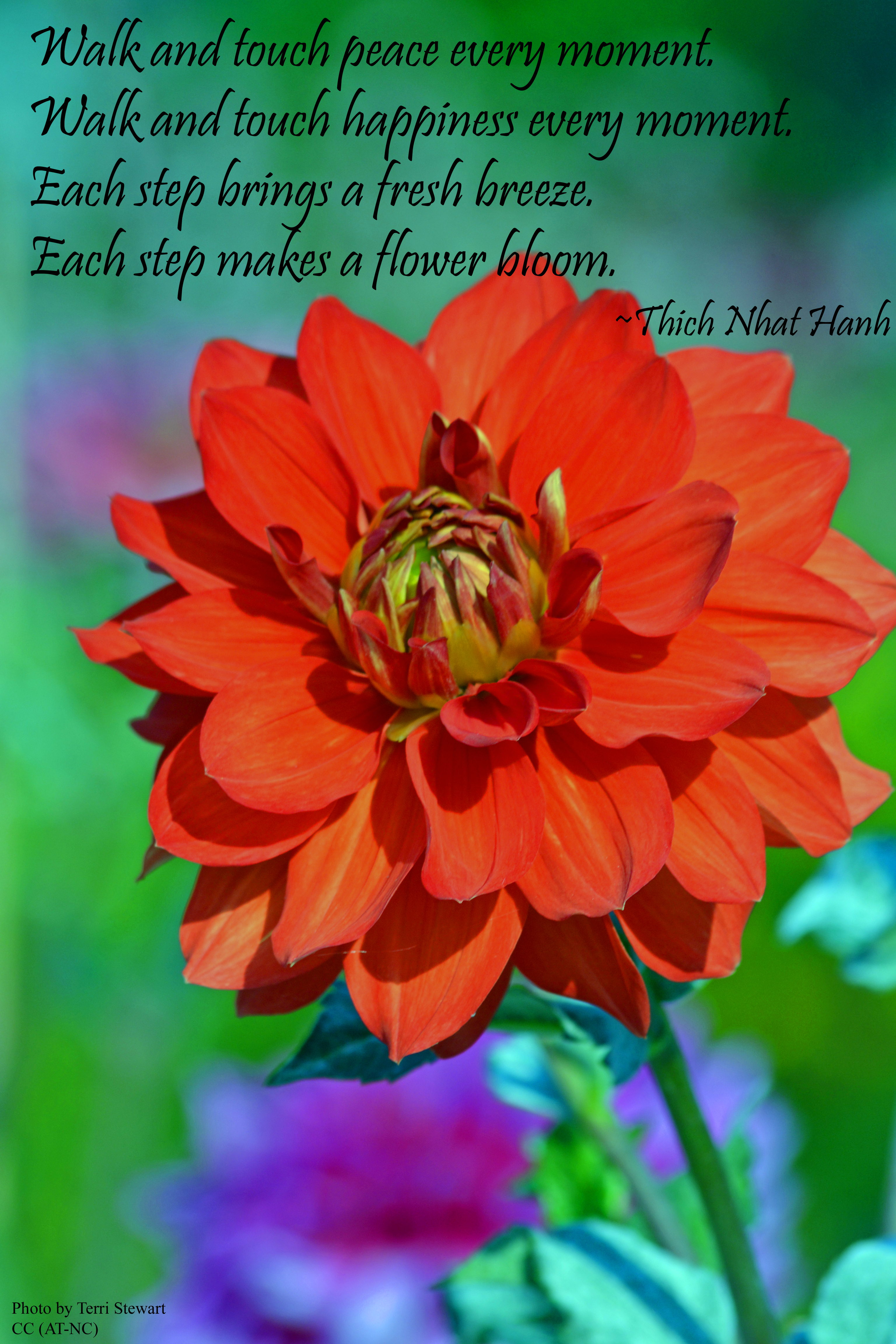
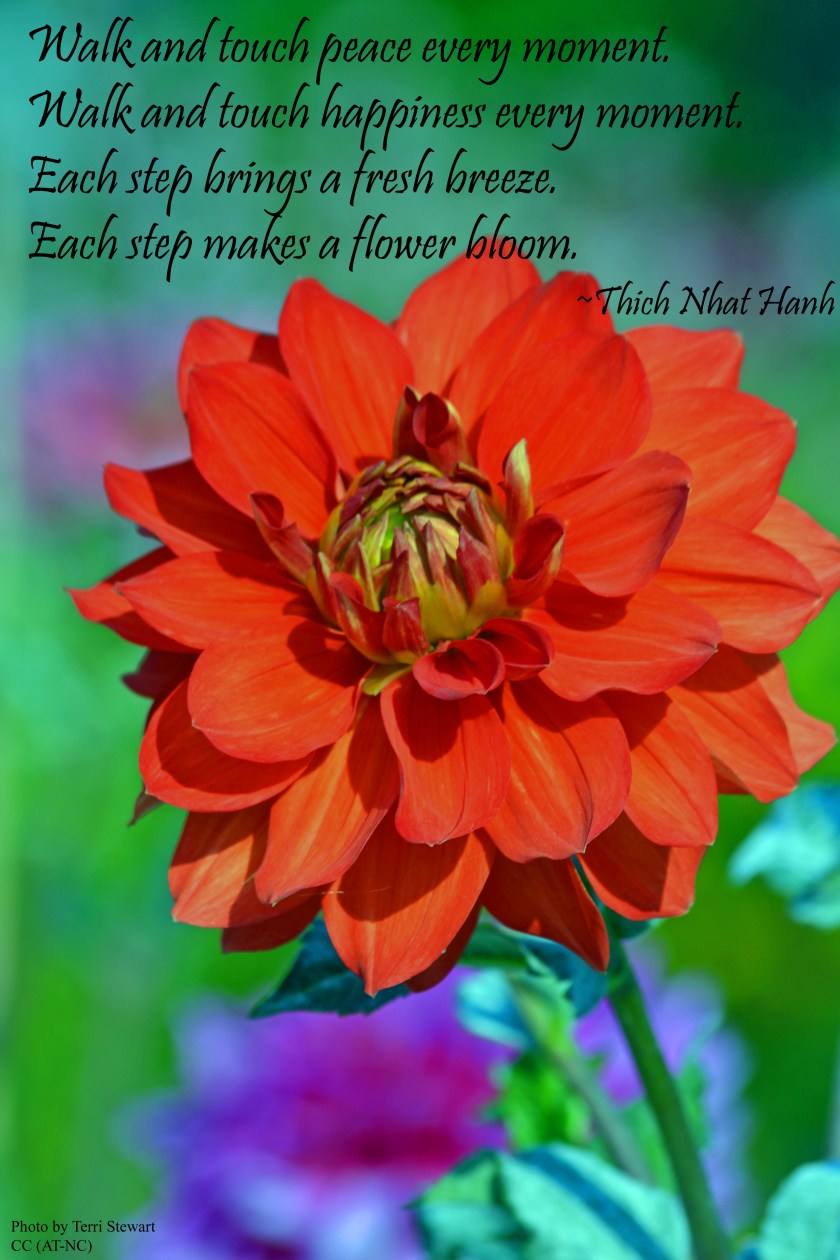
For 100,000 Poets for Change: A Movement for Peace and Sustainability. Please link in your own work! The info on this is below the photo/quote. Thank you!

Entering into a peaceful world requires one thing – a peaceful person. Me, to be exact. Or you. But each of us individually must travel the Via de Paz, the Way of Peace. I would like to invite you to literally walk the Via de Paz (or roll or stroll or whatever works for you).

Set your intention by saying, “I am here. I am present. I am going to walk the way of peace.” Breathe deeply, a few sustainable breaths, until your body is ready to go forward.

Now move and notice. As you begin to move, notice how your body feels. What are your senses telling you about your immediate experience of the world?

Now notice things outside yourself. Connect your senses to all that is outside of yourself. Notice what you are hearing, smelling, seeing, feeling. With each step, become aware of all that you can take in. Simply experience it. Leave judgment outside of the Via de Paz.

Experience unity by acknowledging life in its many forms.

Close your experience by returning to yourself and offering, “I am here. I am present. I am the way of peace.” Breathe deep, sustaining breaths, until you are settled and still. Offer respect and peace to the world in whatever way suits you. Perhaps Shalom, Salaam, Peace, Namaste, or Aloha!

peaceflower2


PEACE AND JUSTICE is our theme for the next seven days as we participate in a global event 100,000 Poets for Change

Please link in your own work here by using Mister Linky (just click on it) or by leaving your link in the comments section below. One of us will visit you then and we also plan to collect all the links shared with us to create a special commemorative page on this blog. You are welcome to share your work by linking in on any day or days during this event. Thank you! Let’s reimagine the world together. Our art has power …

Shalom,

territerrisignoffblog


Posted in Artists and Activists for Change, Culture/History, General Interest, Music, Peace & Justice

The Eve of Distruction

The facts are dated but the sentiment is true. Thanks to Charlie Martin for this.

This is an anti-war song written by P.F. Sloan in 1965.  Barry McGuire sings it here though for many years he had refused to sing it due to his religious convictions. While others recorded the song, Mc Guire’s seems to be the most popular version. In recent years, McGuire has updated it to match more current events when he sings it during live performances.

References might be obscure to some:

  • old enough to kill but not for voting ~ at the time in the United States men could be drafted at eighteen years but the legal voting age in most states was twenty-one

  • Jordan River has bodies floating ~ refers to Battle Over Waters between Israel and its Arab neighbors, 1964 – 1967

  • the reference to Selma ~ Bloody Sunday and the marches in Alabama from Selma to Montgomery, 1965; these marches were a part of the American Civil Rights Movement (1954-1968); they helped lead the United States to the Voting Rights Act, 1965

  • four days in space ~ the Gemini space flight took four days, 1965

  • pounding of drums, the pride and the disgrace ~ President John F. Kennedy (the pride) was assassinated (the disgrace) and there were drums gently beaten as his funeral cortége made its way to Arlington Cemetery, 1963

I did this from memory, which these days leaves something to be desired. If anyone has corrections or thoughts to add, feel free. Also feel free to link in your own art, music, videos, essays and poetry to this post, which is part of our seven day solidarity with 100,000 Poets for Change … You may use Mister Linky to link in or you may leave your link in the comments section. One of the members of the Core Team will visit and ultimately we’ll also collect all posts submitted into one commemorative Page. The theme of this effort is Peace and Justice.

Thank you for your participation.

– Jamie Dedes

Posted in 000 Poets, Artists and Activists for Change, General Interest, Musicians, poem, Poems/Poetry, poetry

on the ground of battle

Swords Into Plowshares

FOR 100,000 Poets for Change; please link in your own work. The info on this is below the poem. Thank you!

it’s just your old soul and mine and
this intuition we share on the ground
of battle, witnessing the foment of hate,
anger feeding disenchantment in the street,
the acquisitive tendencies of the elite,
cowardly saber-rattling, cut off from authority,
from that innate expressively honest power
of our erotic selves, our instinctive selves,
the non-rational knowing that embodies
strength, nothing weak or pornographic
in its expression, a profound antithesis
to the pornography of war and hate that,
in the end, is about impotence, about an
emboli of narrow minds, grasping politicians
stirring tribal dissents for their own ends
or dropping bombs like a child bangs pots –
to overwhelm the fear of thunder, a game
of chicken, of a hawk-hawk play toward
a mutually assured destruction, just a
matter of time . . .

as we stand the ground of one another’s
battles where peace would be radical and
the unholy alliances of conflict might
burn themselves out, find their way into
calm, but here we are, once again, in thrall
the sociopaths have us bloodied and bound ~
their eyes in the aging face of a clockwork orange,
numb to the obscenities of maim and murder …
time now for change, for new ways to be in this world

“. . .  and they shall beat their swords into plowshares, and their spears into pruning hooks: nation shall not lift up sword against nation, neither shall they learn war any more.” Isaiah 2:4

I dream of giving birth to a child who will ask, ‘Mother, what was war?‘”Eve Merriam (1916-1992), American poet

© 2013, poem, Jamie Dedes, All rights reserved; illustration “Schwerter zu Pflugscharen (Swords Into Plowshares) bronze sculpture by Jewgeni Wutschetitsch, photograph by Neptuul under CC BY-SA 3.0

PEACE AND JUSTICE

is our theme for the next seven days as we participate in a global event:

100,000 Poets for Change

Please link in your own work here by using Mister Linky (just click on it) or by leaving your link in the comments section below. One of us will visit you then and we also plan to collect all the links shared with us to create a special commemorative page on this blog. You are welcome to share your work by linking in on any day or days during this event. Thank you! Let’s reimagine the world together. Our art has power …

photo-on-2012-09-19-at-19-541

RE: The Bardo Group

I have passed the administration of The Bardo Group blog to Terri Stewart (Beguine Again), effective October 4. The Beguine Again collaborative and The Bardo Group are coordinating a consolidation. The shared core value is nonviolence.

I remain as poetry liaison and member of the Core Team and with this post extend my appreciation to Terri Stewart for agreeing to take this effort on and to the rest of the Bardo Core Team and to the Beguine Again team and our many guest bloggers, contributing writers and our readers, followers and commenters for their heartfelt contributions to this effort since February 2011. You are a fabulous community of heros and saints.

Let’s continue our worthy traditions. Practice your artfullnes, live from your heart and never lose your ideals. They are real and I hope you will continue to share them here for a long time to come.

In spirit,

0991c643c4dd052a5d6609dcdbcc0086

The Poet by Day.

Posted in 100,000 Poets, Musicians, Artists and Activists for Change, General Interest, Video

READY, SET, GO … The backstory on 100,000 Poets for Change …

100_Thousand_Poets_for_Change_logoThe Bardo Group “100,000 Poets for Change” event page is HERE. Beginning 27 September (tomorrow), we’ll post work on Peace and Justice for one week as our participation. We invite others to link their own work to ours and, although the title is “poets” everyone (artists, activists, writers, musicians, bloggers) is welcome. Shortly after the event, we’ll collect your links into a page to create a commemorative collection like we did last year for Poets Against War.

More details are on The Bardo Group event page. Instruction on how to add your link will be provided on this blog within the text of each day’s post. We have designed our participation as a virtual event to accommodate bloggers and those who are homebound or otherwise unable to take to the streets. At least one core team member will visit your site if you link in and we hope that you will visit others as well.

Meanwhile, many of the wide variety of activities this event inspires will be livestreamed by event coordinators and participants. Please continue to check out 100 Thousand Poets for Change for videos and photographs from the world over and The Bardo Group blog for posts from our own collective.

An 2012 (year two) interview with founders Michael Rothberg and Terri Carrion.

The backstory on 100,000 Poets for Change brought to you courtesy of Wikipedia:

100 Thousand Poets for Change, or 100TPC, is an international grassroots educational organization focusing on the arts, especially poetry, music, and the literary arts. It was founded in 2011 by Michael Rothenberg and Terri Carrion, and focuses on a world-wide event each September.

HISTORY: 100 Thousand Poets for Change was initially conceived by Michael Rothenberg and Terri Carrion in March, 2011, as a worldwide set of events to take place simultaneously on September 24, 2011. Literary event organizers volunteered to host associated events in their own cities or schools. On September 13, 2011, the city of Santa Rosa, California, declared September 24, 2011, to be “100 Thousand Poets for Change Day” and Stanford University offered to archive all documentation and audiovisual records of the event posted on the 100TPC web site.

Ultimately, 700 events in 550 cities in 95 countries took place on September 24 in conjunction with 100TPC, and the event was described as the largest poetry event in history. Considering the series of events to be a success, Rothenberg and co-founder Terri Carrion decided to pursue non-profit status for 100 Thousand Poets for Change and establish an annual event in September of each year.

STRUCTURE: 100TPC was founded in Guerneville, California, but most organizational tasks are done by individual organizers of local events. Event organizers in individual cities volunteer to create an event in association with 100TPC. The organization’s central office then publicizes the event through its web site, social media outlets, and conventional press releases. The relationship between most local organizers and the 100TPC headquarters remains informal, conducted primarily through e-mail. Organizers do not become officers or employees of 100TPC. Organizers can communicate with each other through the 100 TPC Organization & Communication Hub, a Facebook group available to 100TPC event organizers, where they are encouraged, but not required, to work together and to learn about each other’s events to help develop event ideas. Local organizers, then, have full control over the style and structure of their events—their only obligation is to register their event with the main 100TPC web site. Some events are free; others charge an entry fee and donate proceeds to charity.

Most 100TPC events take place in September. Each year, the central organizers pick a Saturday in September as “100 Thousand Poets for Change Day” and focus their publicity on that date. Some organizers choose to create 100TPC events at different points throughout the year.

The concept of “Change” in the name 100 Thousand Poets for Change refers to social change, but is otherwise broadly defined and dependent on the definitions of individual organizers or poets. 100TPC events do not necessarily share political or philosophical orientation. The 100TPC web site describes the “change” as having only to fall “within the guidelines of peace and sustainability.

– Wikipedia 

.

Photo on 2014-03-31 at 17.16 #3unnamed-18JAMIE DEDES (The Poet by Day)~ I started blogging shortly after I retired as a way to maintain my sanity and to stay connected to the arts and the artful despite being mostly homebound. My Facebook pages are: Jamie Dedes (Arts and Humanities) and Simply Living, Living Simply.

With the help and support of talented bloggers and readers, I founded The Bardo Group because I feel that blogging offers a means to see one another in our simple humanity, as brothers and sisters and not as “other.” Effective October 4, 2014, I pass the administration of the blog to Terri Stewart (Beguine Again).  Tthe Beguine Again collaborative and The Bardo Group are coordinating a consolidation of the two groups. I remain as poetry liaison and a member of the Core Team.

“Good work, like good talk or any other form of worthwhile human relationship, depends upon being able to assume an extended shared world.” Stefan Collini (b. 1947), English Literary Critic and Professor of English Literature at Cambridge

Posted in Art, Naomi Baltuck, Photo Essay, Photo Story, Photography/Photographer

The Art of Work


Imagine a world without art and artists.

They help us see the world through different eyes.

And artisans infuse our everyday lives with beauty.


Works of art come in many disciplines.


And on many scales…

…some more grand than others.


My artist sister Constance’s painting, “The Poet”, celebrates the literary art of poetry through her visual art.

But I have great appreciation for people who would never consider themselves artists, and yet they make an art of work.

Some apply exceptional creativity to their work, like this fellow who rigged a bicycle to power a sugar cane juicer, to crank out a little work of art one cup at a time.

Some turn an ordinary business into something with a very personal touch.

In Ireland, I was moved by the gravestone of a man lovingly remembered for his gift of turning his work into an art.

Be it traditional…

…entrepreneurial…

…fleeting…

…or a treasured heirloom…


…art is all around us, and everyone is an artist in his or her own way, whether practicing with a paintbrush, chisel, camera, wooden spoon, plow, or scissors.

Art is in the eye of the beholder.

Also on the tongue…

…in the ear…

…the nose…

…the heart…

and the mind.

Whatever you do, wherever you go, party arty!

All images and words c2014Naomi Baltuck.

 ” alt=”” />

NaomiPHOTO1-300ppi51kAqFGEesL._SY300_NAOMI BALTUCK ~ is a Contributing Editor and Resident Storyteller here410xuqmD74L._SY300_ at Bardo. She is a world-traveler and an award-winning writer, photographer, and story-teller whose works of fiction and nonfiction are available through Amazon HERE. Naomi presents her wonderful photo-stories – always interesting and rich with meaning and humor – at Writing Between the Lines, Life from the Writer’s POV. She also conducts workshops such as Peace Porridge (multicultural stories to promote cooperation, goodwill, and peaceful coexistence), Whispers in the Graveyard (a spellbinding array of haunting and mysterious stories), Tandem Tales, Traveling Light Around the World, and others. For more on her programs visit Naomi Baltuck.com.

Posted in General Interest

WRITERS’ FOURTH WEDNESDAY: “Got Change?”

Image: UConn/Pinterest

While eating lunch today, I took in a few minutes of news—probably not the best option for one’s digestive system, heh?

Reports of serious world-wide conflicts, domestic abuse wrought by sports icons, the rampant spread of Ebola in third world countries, the ambush and murder of police officers, increased racial violence…on and on it went. My reactions? Fear, a sense of hopelessness and two all-pervading question: what has happened to cause such discord and what am I supposed to do to make a difference? Clearly, diplomatic relations haven’t produced much effect, nor have sanctions or war.

I think of Gandhi–a man of peaceful, non-violent resistance. I think of Francis, the saint and the pope—men of prayer. I think of Martin Luther and Mother Teresa—persons of action. And I think of Matthew Arnold, Maya Angelou, Rudyard Kipling, Langston Hughes and hundreds, if not thousands of other poets, famous and little known, whose work has influenced us as societies and individuals to make changes for the better.

On September 27th, The Bardo Group will join forces with poets world-wide in celebration of 100 Thousand Poets for Change. Here is a snippet/an invitation from their website that explains this movement:

Do you want to join other poets, musicians, and artists around the USA
and across the planet in a demonstration/celebration to promote peace and sustainability and to call for serious social, environmental and political change?

Image: julieflyglare.com

In preparation for Saturday’s kick-off, we would like to invite you to bring a poem or reflection of your own which gives your readers, each other, pause for reflection and the courage to support change. If we can touch but one person, it is worth the effort.

Here are a few suggestions we might draw upon:

• Plead a cause that is most important to you;
• Choose a poet or artist whose work invites change and write of them;
• Evaluate what changes you wish to make on a personal level.

I think of the popularity of “random acts of kindness” and the difference that a simple moment of thoughtfulness can make in another’s day and how that multiplies. Though our personal influence seems so limited, we do have the power to create change.

Someone once asked Mother Teresa how she could really expect to save everyone who was in a state of desperation. Her simple response: “One person at a time.” May our efforts effect that spark of positive change in our troubled world, or in one troubled life.

If you would like to share your work, please access Mister Linky, below, and copy and paste the direct URL to your post into the spaces provided.

Image: wellspiritconsulting.com

Thank youl

– Victoria Slotto

© 2014, poem and photograph, Victoria C. Slotto, All rights reserved

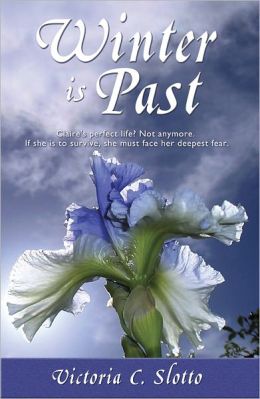
2940013445222_p0_v1_s260x42034ff816cd604d91d26b52d7daf7e8417VICTORIA C. SLOTTO (Victoria C. Slotto, Author: Fiction, Poetry and Writing Prompts) ~ is an accomplished writer and poet. Winter is Past, published by Lucky Bat Books in 2012, is Victoria’s first novel. A second novel is in process. On Amazon and hot-off-the-press nonfiction is Beating the Odds: Support for Persons with Early Stage Dementia. Victoria’s ebooks (poetry and nonfiction) are free to Amazon Prime Members. Link HERE for Victoria’s Amazon page. Victoria’s poetry collection is  Jacaranda Rain, Collected Poems, 2012

Editorial note: With this post, we put closure on Writers’ Fourth Wednesday until further notice. Thank you for joining us and much appreciation for Victoria’s leadership with this event over the past several years.

Posted in 100,000 Poets, Musicians, Artists and Activists for Change, General Interest, Writers' Fourth Wednesday, Writing

THE MIGHTY PEN: poets and writers as change agents

The Patchwork Scribble Factory back in the early '80s when we still used typewriters, printed manuscripts and sent them by snail mail.
The Patchwork Scribble Factory back in the ’70s when we still used typewriters, typed manuscripts and submitted them by snail mail after making photocopies.

Writers, poets and other artists are often the change agents in a world that seeks the balance of reason to counter violence, injustice or stagnation.

On Saturday, 27 September, 100,000 Poets (and Writers, Musicians, Artists and Activists) will join in cities and towns around the world to explore and inspire positive changes for issues of human rights, poverty, hunger, climate, and peace-making. You can learn more about that effort and see what’s happening in your area by linking HERE.

The Bardo Group is hosting a virtual event as a vehicle to facilitate blogger participation and also for those who may not live near an off-line event or who may be homebound. Tomorrow, we are jump-starting our participation with our traditional Writers’ First Wednesday prompt. Novelist, poet and writing coach, Victoria C. Slotto will host Got Change? and you are invited to share your thoughts and work by linking in through Mister Linky or by leaving comments or links in the comment section.

Please join us on The Bardo Group blog tomorrow for Victoria’s Writers’ Fourth Wednesday.

Details on our virtual participation with 100,000 Poets for Change event are HERE.

© 2014, photograph, Jamie Dedes, All rights reserved

.

Photo on 2014-03-31 at 17.16 #3unnamed-18JAMIE DEDES (The Poet by Day)~ I started blogging shortly after I retired as a way to maintain my sanity and to stay connected to the arts and the artful despite being mostly homebound. My Facebook pages are: Jamie Dedes (Arts and Humanities) and Simply Living, Living Simply.

With the help and support of talented bloggers and readers, I founded The Bardo Group because I feel that blogging offers a means to see one another in our simple humanity, as brothers and sisters and not as “other.” I am the poetry liaison and a member of the Core Team. Terri Stewart (Beguine Again) is in the lead position and the Beguine Again collaborative and The Bardo Group are coordinating a consolidation of the two groups.

“Good work, like good talk or any other form of worthwhile human relationship, depends upon being able to assume an extended shared world.” Stefan Collini (b. 1947), English Literary Critic and Professor of English Literature at Cambridge

Posted in Environment/Deep Ecology/Climate Change, General Interest

“Disruption” ~ the backstory on the People’s Climate March …

This is the trailer. You can watch the full movie HERE.

Posted in Environment/Deep Ecology/Climate Change, Essay, General Interest, Michael Watson

Dreaming

Autumn_BerriesPosted this evening in solidarity with The People’s Climate Mobilization, Sept. 20/21 a Global Day of Action

This week folks around the world will gather to call for real and pervasive action to address climate change. This post honors all who hold the vision of a just, kind, and healed world.

The weather has turned damp and chilly, with the temperature only in the mid-fifties. A couple of days ago the first Titmouse of the season landed on the garden fence and looked into our window with that classic  “Why is the feeder empty?” look. Fall has certainly arrived!

A few nights ago I dreamt about prophesy. In my dreams I longed to heal the world, to stop our country’s headlong dash towards Darkness. Then, near the time I awoke, my vision turned inward and I saw my own inner suffering and turmoil. In the dream I was shown that I have limited influence on the larger world, but I might have great influence in my inner domain.

The Dream world spoke of prophesy, the ancient teachings that speak of the fall of the colonial world. The power of those who favor wealth over kindness, self over community, is rising, a great Darkness that threatens to engulf the world. With their ascent, we witness sharp increases in poverty, racism, and misogyny, and a growing disdain for the young, old, and those with disabilities. Many of the young people I meet speak of a profound sense of desperation and a deep fear for the their future.

These things arise because we have failed to address the wrongs of the past and the challenges of the present. As a result, the violence of our country’s past haunts our collective consciousness and shapes our social world. The European project in the Americas and the South Pacific was one of slavery and genocide as avenues to wealth, and the oppression of the many for the economic gain of a few continues to be the centerpiece of our social order.

I grew up in evangelical churches, places where prophesy was alive. These were not wealthy mega-congregations. Rather they were the refuges of working class men and women, often new immigrants from farm to city. Their faith was immediate, as was their walk with the Creator as they understood Her/Him. In those small churches prophesy was lived experience.

Native American history, the great expanse of it, cutting across many hundreds of tribes and languages, and thousands of years, speaks to the power and truth of prophesy. The great seers were given visions of that which was to come, from the everyday to the earth shattering. Visions still come to The People. Often these visions are shared by our Medicine people and elders, although all to frequently the larger culture refuses to listen.

Still, the Creator speaks to all who will hear, encouraging us to be kind to ourselves and one another, to strengthen our communities, and work with Pachamama to heal our world. This healing is as much about the suffering in or hearts and spirits as that of the natural and social worlds. The tugging or breaking of our hearts in the presence of pain, ours and that of others, is the voice of the Creator, and the call of prophesy.

Prophetic vision may be vast or intimate, and addresses the condition of our internal or external worlds; in the end, perhaps there is no difference. Our realms of individual influence may be small, yet we can do our best to care for those whose lives we touch, including ourselves. We may keep in mind the awareness that vision that lacks compassion leads to tyranny while true kindness heals self and other, and we can allow that knowledge to guide our actions. Is that not the purpose of prophesy, to change and guide? May we each grow more kind, and more skillful at listening to the prophetic voice within us.

Post Script: This morning I attended service at our local UU church, in part because Jennie was singing in the choir, and because the congregation was gathering to bless the 100 or so members who are going to the Climate March in NYC next weekend. (The congregation is only 500 strong!) The minister reminded us that prophesy is action in the face of great odds, and that action takes courage and a soft heart. She then reflected on the place of joy in Dark times, on the necessity of a glad heart. It was good to gather with others who care deeply for the world, and  who put that caring into action.

May those who travel to NYC for The March, and all who do their best to heal the deep wounds of our world, find joy, companionship, and renewed hope.

– Michael Watson

© 2014, essay and photographs, Michael Watson, All rights reserved

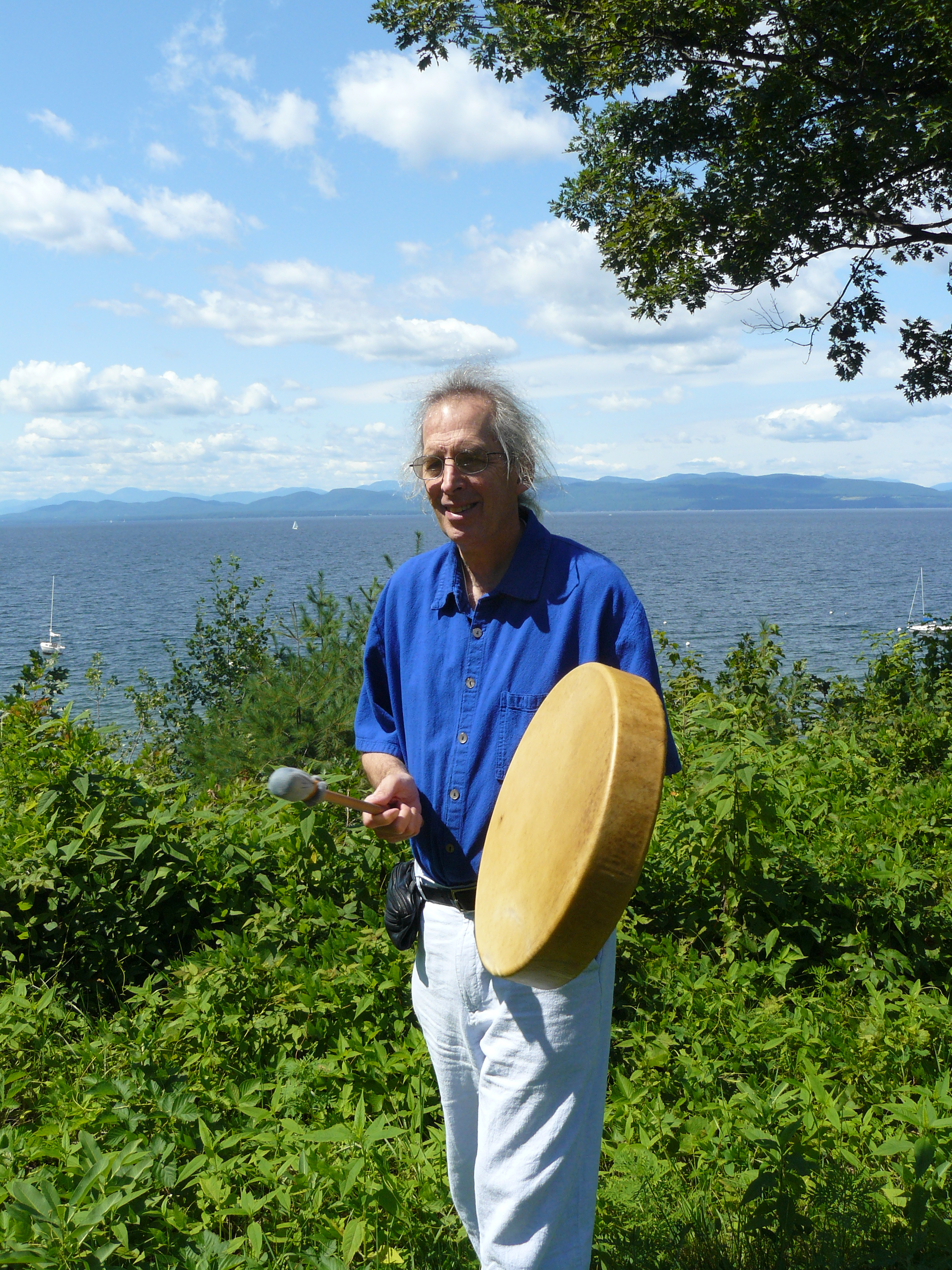
michael drumMICHAEL WATSON, M.A., Ph.D., LCMHC (Dreaming the World) ~ is a contributing editor to Into the Bardo, an essayist and a practitioner of the Shamanic arts, psychotherapist, educator and artist of Native American and European descent. He lives and works in Burlington, Vermont, where he teaches in undergraduate and graduate programs at Burlington College,. He was once Dean of Students there. Recently Michael has been teaching in India and Hong Kong. His experiences are documented on his blog. In childhood he had polio, an event that taught him much about challenge, struggle, isolation, and healing.

Posted in General Interest

Creating Sacred Space by Honoring the Earth

Today is the People’s Climate March. All across the globe, people are gathering, praying, chanting, and yes! marching! in the hopes that the world’s leaders will hear the call to create safe and sane policies that will ensure the future of the earth. Protecting the earth/cosmos through concern about the changing climate is sacred. It is my contention that to enter sacred space is to enter healing space

Sacred: late 14c., past participle adjective from obsolete verb sacrento make holy” (c.1200)

Holy: Old English halig “holy, consecrated, sacred, godly,” from Proto-Germanic *hailaga- (cognates: Old Norse heilagr, Old Frisian helich “holy,” Old Saxon helag, Middle Dutch helich, Old High German heilag, German heilig, Gothic hailags “holy”). Adopted at conversion for Latin sanctus.  Primary (pre-Christian) meaning is not possible to determine, but probably it was “that must be preserved whole or intact, that cannot be transgressed or violated,” and connected with Old English hal (see health) and Old High German heilhealth, happiness, good luck

I would like to share a reading from John Cobb, a Process Theologian:

from Is It Too Late?  by John B. Cobb, Jr.
It is the belief in this Spirit, the giver of life and love, that is the basis of hope. In spite of all the destructive forces we let loose against life on this planet, the Spirit of Life is at work in ever new and unforeseeable ways, countering and circumventing the obstacles we put in its path. In spite of my strong tendencies to complacency and despair, I experience the Spirit in myself as calling forth the realistic hope apart from which there is no hope, and I am confident that what I find in myself is occurring in others also.

Since what makes for life and love and hope is not simply the decision of one individual or another, but a Spirit that moves us all, I do not have to suppose that my own efforts are of great consequence in order to believe them to be worthwhile. I can recognize that they may even be futile or misdirected and still persist in them as long as no clearer light is given, for I see what I do as part of something much greater, something in which all persons participate to whatever extent they sensitively respond to the insights and opportunities that come their way. Belief in the Spirit is belief that I am not alone, that in working for life and love in hope, I am working with something much greater than myself, that there are possibilities for the future that cannot be simply projected out of the past, that even my mistakes and failures may be woven into a healing pattern of which I am not now aware.

Belief in the Spirit is no ground for complacency. There is no guarantee that people will respond to the Spirit’s prompting in sufficient numbers and with sufficient sensitivity to begin the healing of the planet. But there is the possibility. The future can be different from the past. Therefore there is hope. Where there is life, there is hope.

Today, my hope for you is that you will have hope. Hope in a sacred, healing space that encompasses not just you. Not just your neighbor. But the entire planet and planets! All beings and non-beings. All life and even non-life — even rocks. And with that thought, I will share this photo of church signs (it is an urban myth thanks to the online church sign maker, but it makes me smile every time!)

This slideshow requires JavaScript.

Shalom,

terri

terrisignoffblog

Posted in Environment/Deep Ecology/Climate Change

The People’s Climate March

Tomorrow, in solidarity with this movement, we’ll present two posts: 1.) in the morning, Terri Stewart’s Creating Sacred Space by Honoring the Earth; and in the early evening, Michael Watson’s Dreaming. Please join us and add your energy to this Global Mobilization.

Posted in Essay, find yourself, General Interest, grief, Guest Writer, memoir, Mental Health

The Black Book

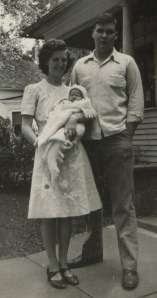
These were my mother’s words, written by her hand, words describing her loneliness, her longing for her new husband. What I was reading felt so private, so sacred, but it was also about me, my story, mine. I closed it quickly, feeling shame, and put it back in the box of photos my mother had handed me – the photos of my great-grandparents and grandparents and parents as children that she was going to throw away if I didn’t want them. She had incurable cancer and was cleaning out closets, or maybe her life. When I left a few days later, the box of photos was in the back of the car sans the small black journal.

fs_717690-e1407185075778Cecilia and Radney grew up in the same southeast corner of town, if we consider 17 and 18 grown up. She lived a block from the railroad where her father worked as a boiler maker’s helper in the roundhouse. This was the Polish neighborhood where she attended St. Stanislaus Catholic church with masses in Latin and Polish, and went to the Catholic school. He lived on the outskirts of town, on the few acres his father farmed, along with being an inspection supervisor at Motor Shaft. Radney played football at the public high school he attended. His family didn’t go to church, until this incident led his mother to religion at the Baptist church.

They met at the soda fountain at Johnson’s Drug Store. Cecilia worked there after she graduated from 8th grade, as high as Catholic education went for girls of her station in their town in 1940. She scooped ice cream behind the counter and Radney would stop there to have a soda on his long walk home from high school. It seems she (being a normal 17 year old girl) wanted love, and he (being a normal 16 year old boy) wanted sex. She fell in love and he got lucky. Sometime in adulthood I realized that they got married in February and I was born in August. He dropped out of high school so he could support his new family but was drafted into the army soon after I was born. We moved into to her parent’s home, then his parent’s home.

fs_717682-e1407185429741I don’t know anything about their wedding. When I would ask about her growing up years, my mother would get a strange look on her face, as if to ask why I would expect her to think about things that happened so long ago. Maybe her mind wouldn’t let her reach back into those years, maybe she thought it irrelevant. I knitted together a piece of detail from here and a piece of detail from there; not from stories they could have told, but public facts, printed on things like birth certificates and marriage licenses. Maybe that is why I longed to read what was written in that black book, to examine the personal side and analyze how it happened to me.

The family never talked about that year but it must have been a tough one. In 1943 a 17 year old Catholic girl didn’t date a 16 year old non-Catholic boy. Everyone knew Catholics were to marry Catholics. And to get pregnant and have to get married was unthinkable. Neighbors whispered and counted on their fingers. Oh, the shame that was heaped upon them. My chest tightens when I think about the conversations that took place when my grandparents were told, and when siblings found out. Did the Polish speaking parents and the English speaking parents meet to discuss options? Who planned the wedding and what was it like? Did they really love each other; did either feel trapped?

============

At some point I learned shame. They didn’t sit me down and teach it to me; I learned it through osmosis. Shame was so much a part of my being that I couldn’t name it until some thirty years later. People said I was a shy child, but shame can look like shyness when worn by a child. Those who know shame understand the hung head and the hiding behind trees instead of joining in the play. They didn’t know they were teaching me shame. My grandmas and aunts and cousins taught me their love as I lived among them, and my parents taught me their shame. For the first half of my life, the shame was stronger than the love.

They were good enough parents, they worked hard to provide for us and we had fun times as I was growing up. But early on when I was four and my father returned from the army and my mother became pregnant again, it tore open some wound in him. He took it out on us. If she wouldn’t have gotten pregnant, if I wouldn’t have been born, he wouldn’t have been trapped. I heard the screaming and hateful words; I felt the bruised and bloody body. He did unspeakable things and it was my fault. I learned to hang my head and hide, so no one would see my shame.

===============

Have you noticed when we carry something, like shame, for a long time, it becomes how we think about ourselves? We are what it is. I remember when I realized my name didn’t have to be Shame. It wasn’t a light bulb going off, but a gradual reprogramming in how my neurons fire. I began to realize that I wasn’t responsible for my own conception. Everyone else knew it and I knew other people weren’t able to conceive themselves, but I had to realize it about myself. It wasn’t my fault I was conceived. It wasn’t my shame so I could come out of hiding.

My place in the world became brighter and lighter, but my relationship with my parents is still murky. I gave up the anger at being hurt and not being protected, and I had a relationship with both until they died. But something is still missing. We couldn’t talk about it so I never heard their remorse or told them I forgave them. When I was leaving after my last two visits with my dying mother, when we both knew it could be the last visit, my mother stared deep within my eyes for several minutes. I waited for her to ask what she needed to know; I wanted to tell her I forgave her for what happened. I was stuck between wanting resolution, but also fearful that the memories of the incidents were so deeply buried in her that I would be opening a Pandora’s box when she was dying and I was leaving. I hugged her and told her she had been a good mother. She said she hoped so.

===================

fs_1111456How complex our minds are, that balance adult concerns on top of childhood memories and decisions. When I thought like a child, I believed my parents loved me because they told me so. But I also learned to fear love. I remember being at Grandma’s Baptist Sunday School when I was maybe 5. We were lined up in two rows and were led in singing “Jesus loves me, this I know. For the Bible tells me so. I am weak and he is strong…” I couldn’t sing it; I was mute. If my parent could love me and hurt me, I didn’t want any part of accepting the love of the even stronger Jesus.

After my mother’s death, I asked her husband if he knew where the black diary would be. He looked hard and wasn’t able to find it. She must have burned her words. I was heartbroken because I was hoping to know her better and maybe learn that she really did want me and love me. I was hoping her words would help me in my mental exercises of sorting out childhood decisions using my adult reasoning.

I was on my own to figure it out, but that is okay. I don’t feel bitterness toward my parents because I believe they loved me as best they could. But I have also decided I don’t need to let them define if I am loveable. I know who I am and know I belong at the table.

© 2014, text and all photographs, Patricia Bailey, All rights reserved

Sun Road 287PATRICIA BAILEY (A New Day: Living Life Almost Gracefully) ~ I retired from doing things I loved; teaching university students, directing a university major that was growing and meeting the learning needs of both traditional age and returning students, and helping people heal as a mental health therapist. In retirement I have found new and renewed activities that I love; photography, blogging, traveling, and quilting. It is important for me to have a purpose for my living, and my photography and blogging fulfill my need to touch and enrich the lives of others in a way that is healing and to help people grow and develop. Along the way I am drawing on the knowledge gained from getting a Masters in Social Work and a Ph.D. in Clinical Psychology. I am also continuing to learn about myself as I am writing and about the world as I view it through my lens. You can visit my blog at http://imissmetoo.me/

Posted in General Interest

Step by Step

Taking life as it comes: One Step at A Time with award-winning National Geographic photographer, Steve McCurry.

Posted in Film/Documentaries/Reviews, General Interest, Guest Writer, Video

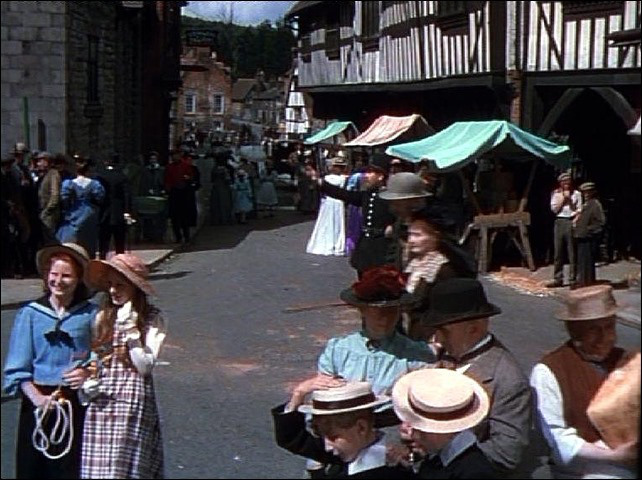
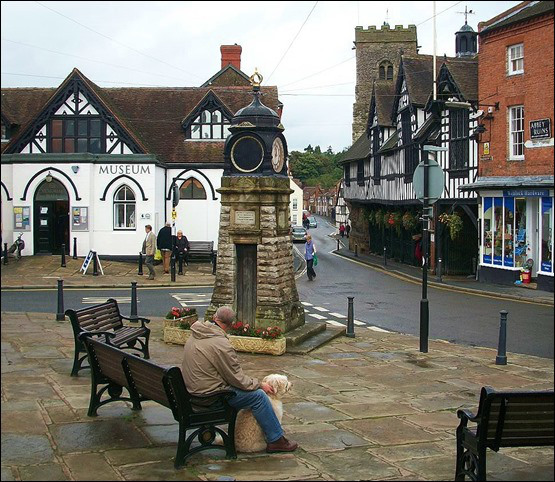
The making of a 1949 Hollywood film in the little town of Much Wenlock (Shropshire, England)

51cm9ejq5ql1_thumb
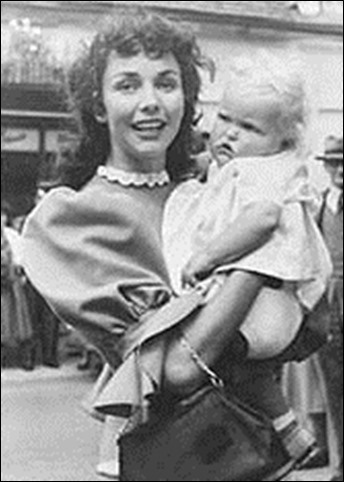
It’s hard to imagine, but in 1949 Hollywood descended on my little home town of Much Wenlock. Both its locations and inhabitants featured in David O. Selznick’s screen version of Mary Webb’s 1917 novel, Gone to Earth. The film’s star, Oscar-winner Jennifer Jones, certainly looks the part, and in this respect she well conjures the book’s central character, the untamed but doomed spirit that is Shropshire lass, Hazel Woodus.

As an American, Jones of course had to receive specialist drilling in the Shropshire dialect, a form of speech which these days is scarcely heard, but would have been the norm during Webb’s childhood. She writes it very clearly in the book’s dialogue, and Jones makes a good stab at it, but it perhaps sounds overdone to modern ears. People in England do not speak like this any more.
gonetoearth171_thumb

Mary Webb herself spent her adolescence in Much Wenlock, and for the rest of her too-short life lived in various parts of rural Shropshire. She knew country ways intimately. Her writing is rooted always in the landscapes of her own growing up – the upland wilds and rugged long-gone lead-mining and peasant farming communities, the small market towns. But although she observes the hardship and poverty with a keen eye, she has tended to be dismissed as a writer of the romantic and rustic, her work parodied in Stella Gibbons’ Cold Comfort Farm.

In her day, though, she had some very well known literary admirers including Rebecca West and John Buchan (Thirty-Nine Steps). I think her novels deserve a rediscovery. Her themes are still relevant today: male attitudes to women being one of them; human cruelty and wilful destructiveness for another.

In Gone to Earth, the central character, Hazel Woodus, is eighteen, motherless, and living in an isolated cottage with her coffin-making, bee-keeping father, Abel. Her only companion is a tame fox, Foxy, and her only guidance in life is dubiously received from her dead mother’s book of gypsy spells.

Two men want her: the Baptist Minister who marries her and tries to protect what he sees as her innocent spirit, and the fox-hunting landowner who wants only bodily possession. Hazel herself is torn between respectable conformity and her growing sexual awareness. And if I tell you that the term ‘gone to earth’ is the huntsman’s cry when a fox goes underground to escape the hounds, you will know that the story does not end well.

In other senses the book’s plot may be purely allegorical. Above all, it is about the pointless destruction of natural beauty and freedom. Webb was writing it at a time when three of her younger brothers were fighting in the World War 1 trenches.

muchwenlock051_thumb

muchwenlock101_thumb

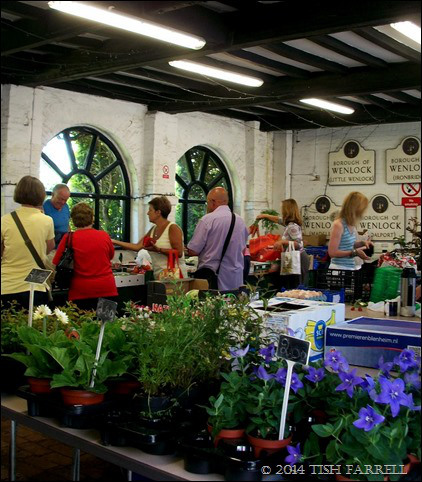
Much Wenlock 1949 in outside and inside the medieval Guildhall: scenes from Gone to Earth, director Michael Powell

100_6020_thumbThe making of the film did not run altogether smoothly, and there are perhaps some parallels between Hazel as an object of male possession and control , and the position of the film’s star, Jennifer Jones. She had had an affair with the executive producer, David O. Selznik, and by 1949 they were married. He wanted Gone to Earth to be solely a showcase for her, and he did not think the film’s makers, the fabulous storytelling team of director Michael Powell, and screenwriter, Emeric Pressburger, (The Red Shoes, The Life and Death of Colonel Blimp) had done her justice. He even took them to court for not producing what was in the script. He lost the case, but he still had the right to make an alternative version.

feat11_thumb

100_4926_thumb

The upshot was that for the 1952 American release, renamed The Wild Heart , he chopped all the scenes that did not make the most of Jones, had new scenes shot, and to make sense of the makeover added a commentary by Joseph Cotton. The film was not well received, and so did not serve his purpose. Only recently has the original Powell and Pressburger version been fully restored.

feat41_thumb


Hazel goes to the Devil’s Chair

For more on Mary Webb:
images-31_thumb

“This year’s discovery has been Mary Webb, author of Gone to Earth. She is a genius, and I shouldn’t mind wagering that she is going to be the most distinguished writer of our generation.” — Rebecca West, review of Gone to Earth in the Times Literary Supplement, August 30, 1917

Mary Webb: neglected genius for the synopsis of Gone to Earth and also for details of her other works.

– Tish Farrell

© 2014, Tish Farrell, All rights reserved; photographs either as indicated above or in public domain

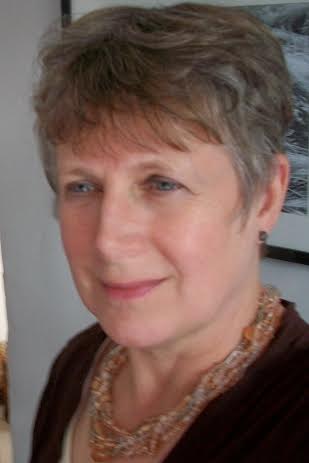
unnamed-6Unknown-951ts8NDtDUL._BO2,204,203,200_PIsitb-sticker-v3-big,TopRight,0,-55_SX278_SY278_PIkin4,BottomRight,1,22_AA300_SH20_OU01_TISH FARRELL (Writer on the Edge) ~  is an award-winning English writer of fiction and non-fiction for young adults. In the 1990s, after a career in Museum Education, she went to live in Kenya, East Africa. It was here that she began writing for the African Children’s Literature market. An anthropologist by training, she was dismayed at the lack of contemporary fiction that reflected young Africans’ lives in their increasingly urbanised world.

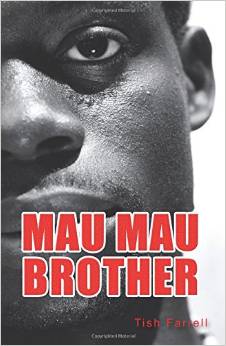
Her first short novel, Jessicah the Mountain Slayer, about a Nairobi street girl, and a picture book Flame Tree Market were published by Zimbabwe Publishing House, Zimbabwe and Phoenix Publishing, Kenya. Both books won awards at the 1996 Zimbabwe International Book Fair and have remained in print in both countries ever since.  In the United States her short fiction has appeared in the multi-award winning Cricket and Cicada Magazines. Now living back in England, she writes novelised short stories for reluctant teen readers for Ransom Publishing. The most recent title, Mau Mau Brother, tells the story of the 1950s Kenya uprising from the viewpoint of a Kikuyu boy. She has also just published a Kindle novella e-book, Losing Kui. This new edition was originally published by Cicada Magazine and is suitable for adults and young adults alike. Go here for more about her Books

Tish blogs about Africa, the ancient Shropshire town of Much Wenlock where she lives, writing, and much else besides at: http://tishfarrell.wordpress.com/   

Posted in Uncategorized

Testing One’s Mettle

“What are you afraid of?” author Bob Mayer asked at a writing conference, “because that’s what’s holding you back as writers.”

At the time, it was social media–mastering new technology, committing to cranking out a weekly post. But I started a blog, and am glad I did.  Since my first blogpost I’ve made new friends, discovered photographic storytelling, which I love, and crossed a whopper off this writer’s to-do list.

Marriage was another commitment that terrified me, but I faced that fear too.

It took seven years before Thom and I felt brave enough to assume the awesome responsibility of parenthood.  It’s the most joyful, most difficult, most rewarding, and most important undertaking we’d ever signed on for, or ever will.

Whether we choose them ourselves or take what fate throws our way, the most daunting experiences are often the most edifying.

The most challenging ones tend to be the most rewarding.

With the toughest climbs come the best views.

After the kids were old enough to change their own diapers, we thought could rest on our laurels, but there was an unexpected twist to the parent/child relationship.

We raised kids who challenge themselves.  Bea watched her big brother do his math homework, and designed her own “Really Hard Math Problem.”

As they tested their own mettle, and created their own challenges…

…we were forced out of our comfort zones just to keep up.

Thom and I would never have chosen to go to the Amazon jungle if the kids hadn’t been keen to go.

It was hard to watch my kids twist and turn like little spiders on a web as they climbed 200 feet up into the canopy to zipline.  And for the first (and probably last) time in my life, I went ziplining too.  You never know when someone might need a bandaid or some bug repellant.

Only for my kid would I board a hot air balloon in Cappadocia, another thing I swore I’d never do. But it’s good to feel a fire in your belly and rise above your fears.

We are not extreme travelers.  I’ve said it before and I’ll say it again: most of the adventures I have are in my own mind.  But for the sake of my kids, I’ve put on my big girl panties and donned a hard hat once or twice.

Sometimes you have to throw caution to the wind.

 I appreciate people who can lure me out of my comfort zone.

Sometimes it’s good to commit to a path with unexpected twists and bends.

I’m sure I’m a better person for it. And if nothing else, Life Outside The Comfort Zone provides great material for a writer.

All images and words copyright 2014 Naomi Baltuck.

NaomiPHOTO1-300ppi51kAqFGEesL._SY300_NAOMI BALTUCK ~ is a Contributing Editor and Resident Storyteller here410xuqmD74L._SY300_ at Bardo. She is a world-traveler and an award-winning writer, photographer, and story-teller whose works of fiction and nonfiction are available through Amazon HERE. Naomi presents her wonderful photo-stories – always interesting and rich with meaning and humor – at Writing Between the Lines, Life from the Writer’s POV. She also conducts workshops such as Peace Porridge (multicultural stories to promote cooperation, goodwill, and peaceful coexistence), Whispers in the Graveyard (a spellbinding array of haunting and mysterious stories), Tandem Tales, Traveling Light Around the World, and others. For more on her programs visit Naomi Baltuck.com.

Posted in General Interest

Mindful Monday: Interbeing with the Earth

Both Beguine Again (all week) and The Bardo Group blog ( Terri’s Sunday post 9/15 and Michael Watson’s post on 9/20) will feature related topics leading up to the largest global demonstration for climate change in history. This demonstration is scheduled for Sept 21. We’ve provided details on it in our last Bardo News (http://wp.me/p1gLT0-3i3) and today we share a post from Beguine Again.

Posted in Essay, Spiritual Practice, Terri Stewart

Climate Care as a Spiritual Practice

Caring for all that is can be an overwhelming job! If I think of the things within my control and trying to do the best I can, maybe I can do it in bite-size chunks. After all, I will never be able to invent some magical thing that converts pollution to life-giving energy. But I can compost!

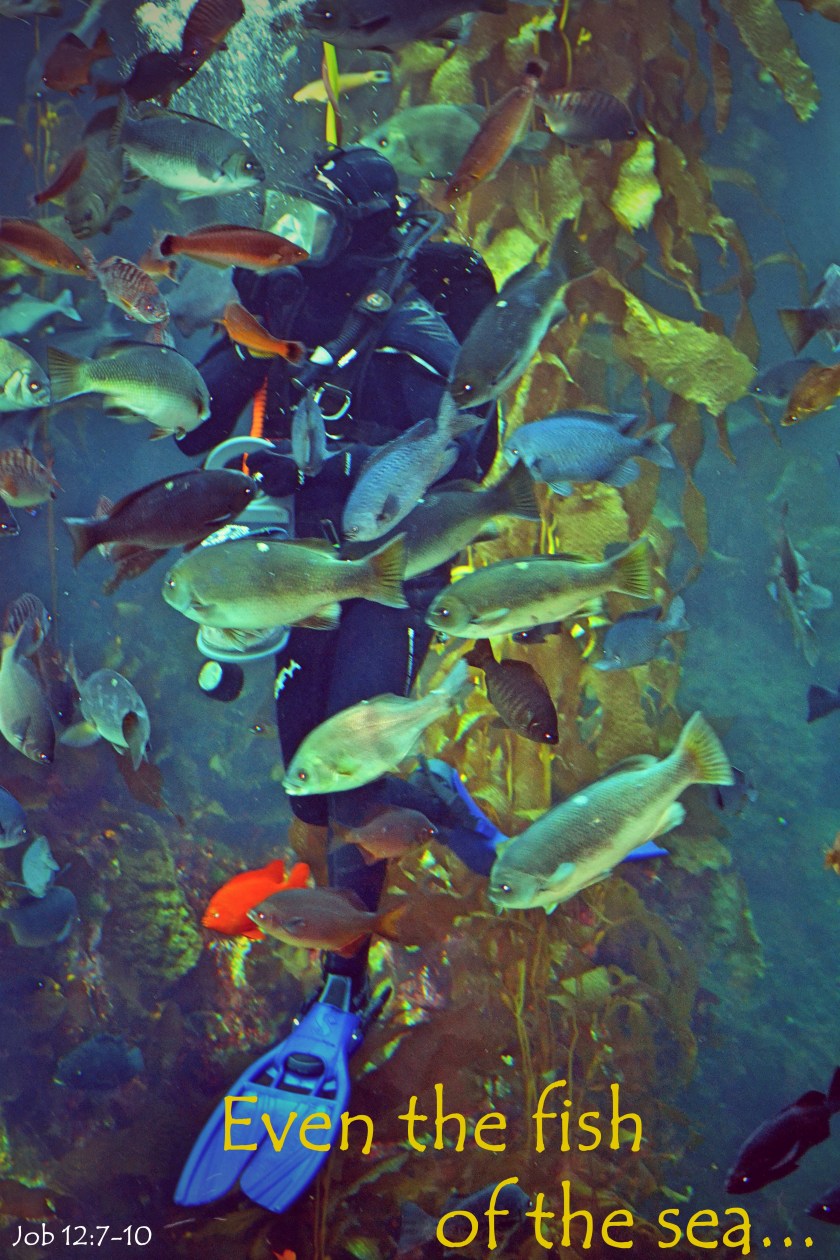
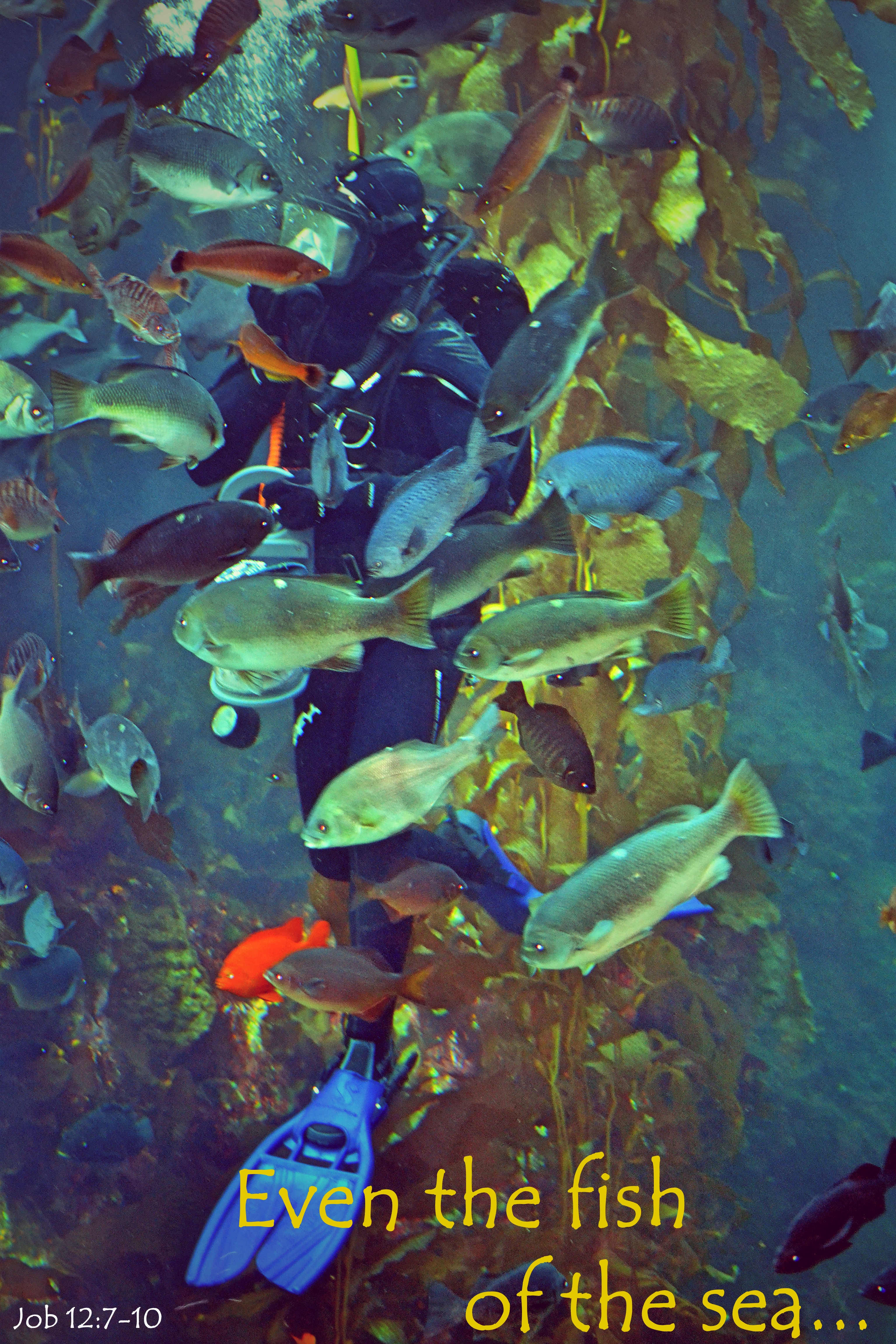
Call on the animals to teach you; the birds that sail through the air are not afraid to tell you the truth. Engage the earth in conversation; it’s happy to share what it knows. Even the fish of the sea are wise enough to explain it to you. In fact, which part of creation isn’t aware, which doesn’t know the Eternal’s hand has done this? His hand cradles the life of every creature on the face of the earth; His breath fills the nostrils of humans everywhere. Job 12:7-10, The Voice-A Storyteller’s Bible
Climate-care, earth-care, creation-care, creature-care, caring is a deeply spiritual practice. How we approach the other starts with our interior orientation. If we practice expansive spirituality, we will be filled with gratitude, mindfulness, and joy. If not, we will be led to a diminished experience.

I wonder how we could reconnect, simply, through ritual, to creation? Perhaps a mini-ritual?

1. Set your sacred space

What are you trying to connect to? Earth? Cosmos? Stars? Bunnies? Create an easy environment where you can let your gaze gently rest on a photo, object, or even the real thing!

2. Set your intention

What do you need at this moment? For example, “I am here to connect to the earth in a way that honors the createdness of us all.”

3. The body of the ritual

Combining your intention with a ritualized act. For example, if you were sitting outside on a lawn chair, offering honor to the cosmos during the day, you could gradually look around honoring each creation you see. “Blades of grass, I honor you. Cedar trees, I honor you. Beloved cat, I honor you!”

4. Closing ritual

A signifier that it is finished. Perhaps, if you were outside in the grass, you could bring a handful of grass seeds to add to the growth. Then you could sprinkle the grass seeds in all directions, offering life. 

Be creative! This framework for ritual was created by my friend, Deborah Globus. Her avatar is LaPadre. She’s awesome!

This week is leading up to the People’s Climate March which occurs on Saturday. Perhaps those who cannot join in a march, can do a simple ritual offering healing and love to creation.

Shalom and Amen!

by Terri Stewart
by Terri Stewart

terrisignoffblog