Jamie Dedes is a Lebanese-American poet and free-lance writer. She is the founder and curator of The Poet by Day, info hub for poets and writers, and the founder of The Bardo Group, publishers of The BeZine, of which she was the founding editor and currently a co-manager editor with Michael Dickel. Ms. Dedes is the Poet Laureate of Womawords Press 2020 and U.S associate to that press as well. Her debut collection, "The Damask Garden," is due out fall 2020 from Blue Dolphin Press.
“Having the right priorities in a wrong world will humble you with a journey that only love can sustain.” Bryant McGill, Simple Reminders: Inspiration for Living Your Best Life
As I sorted through the sustainability submissions for this issue, I was struck by two things: a preponderance of both love and sadness. The love with which so many of us – I’d like to think most of us – have for this planet, its natural beauties, and its voluptuous generosities and a sadness for the issues we largely lay at the feet of unenlightened, irresponsible corporate and government policies. The former combined with our willingness to speak up and speak out gives me hope that we will overcome the profound challenges of our day. We have after all the power to unite our voices, vote with our dollars, and refuse to play the games.
You’ll find here this quarter a collection of works on nature and the environment that encourages and admonishes, that makes love to the earth and its natural beauties, that shares frustrations and anger, and that heartens us with its very breath of awareness.
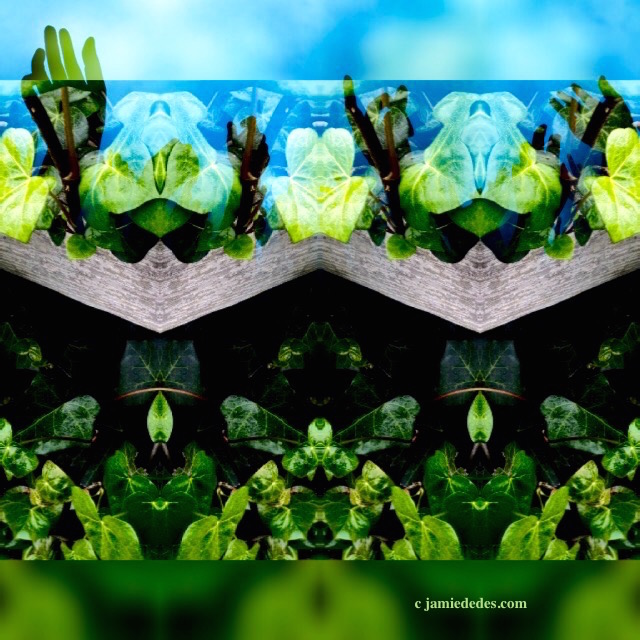
Special thanks to team member, Priscilla Galasso, for our lovely cover photo this quarter.
We’ve also included a profoundly moving collection of work on abuse, mainly domestic. This section is published in response to reader requests, and together the collection affirms courage and provides confirmation, insight and information. We are honored to have England’s Emergency Poet, Deborah Alma, introduce this section. Deborah is the editor of #MeToo, rallying against sexual assault and harassment, a women’s poetry anthology.
We welcome contributions from all over the world and know that you will appreciate the work of our new guest contributors (writers, photographers, and artists) this month as well as old friends and our core team members. Please support them with your “likes” and comments. This year in October we plan to nominate writers (guests, not team members) for Pushcart, so do please leave notes to let us know your faves. Thank you!
In closing, once again I share this quotation (as I did in the last edition of The BeZine) from L.R. Knots. It seems to encapsulate the best rallying cry for our times.
“Do not be dismayed by the brokenness of the world.
All things break. And all things can be mended.
Not with time, as they say, but with intention.
So go. Love intentionally, extravagantly, unconditionally.
The broken world waits in darkness for the light that is you.”
—Author and counselor, L.R. Knost
In the spirit of peace, love (respect), and community
and on behalf of The Bardo Group Bequines, Jamie Dedes
Founding and Managing Editor, The BeZine
TABLE OF CONTENTS
How to read this issue of THE BeZINE:You can read each piece individually by clicking the links in the Table of Contents.
To learn more about our guests contributors, please link HERE.
To learn more about our core team members, please link HERE.
We all know the wisdom around why it is so important to speak up about any form of abuse; the reasons are many and various. But often our abusers are close to us, members of our own family or community, and so speaking out is a great act of bravery. It may be difficult because we may also carry feelings of guilt, responsibility or shame. But if we can overcome such strong reasons to be silent, we are hugely empowered; we are made stronger by facing our fears.
It can also help to turn the abuse into a narrative that distances us from the pain in each retelling; an act that helps us to understand, to process and then to move beyond it; and in an act of alchemy to turn it into the piece of art that is the poem; that gives us gold out of the dirt. We ourselves as writer are transformed by it, and for those who come after as readers, the work can hold out its hand from those who have been there before, who have worked something out for us.
To read the stories and poetry of those who have been abused can also act as a warning or a flag that says ‘Yes this IS abuse. Take care! This is how I made myself safe or sane again.’
The BeZine is published quarterly on the fifteenth of March, June, September and December. Please read our Intro and Mission Statement and at least one back issue of The BeZine before submitting work for consideration. Each issue is theme based.
Please be mindful that our core team (The Bardo Group Beguines), guest contributors and readers represent the world’s diversity. Nonviolence, respect and inclusion are core values.
All work must be submitted in English and properly edited for publication. Submissions in other languages are fine but only if they are accompanied by an English translation.
Please send submissions to bardogroup@gmail.com and put “submission” in the subject line. If you were referred by one of our core team, please put their name in the subject line along with “submission.” Please include a brief bio not a curriculum vitae. If you have published the work submitted on your own website, blog, YouTube channel or other online venue you may send a link.
PLEASE NOTE: We apply the same standards with regard to content, quality, submission guidelines and reading policy that all high-caliber literary magazines do with the exception that we will consider work that is already published. The copyright, however, must be yours.
DEADLINE: The 10th of the month prior to the publication date, but for the June issue it is extended through May 20th. You still have some time.
Themes each year are consistent with the concerns of the global movement cofounded by Michael Rosenberg and Terri Carrion, 100,000 Poets (and others) for Change:
March, Peace;
June, Sustainability;
September, Social Justice
… and for December the shared value of The Bardo Group Beguines:
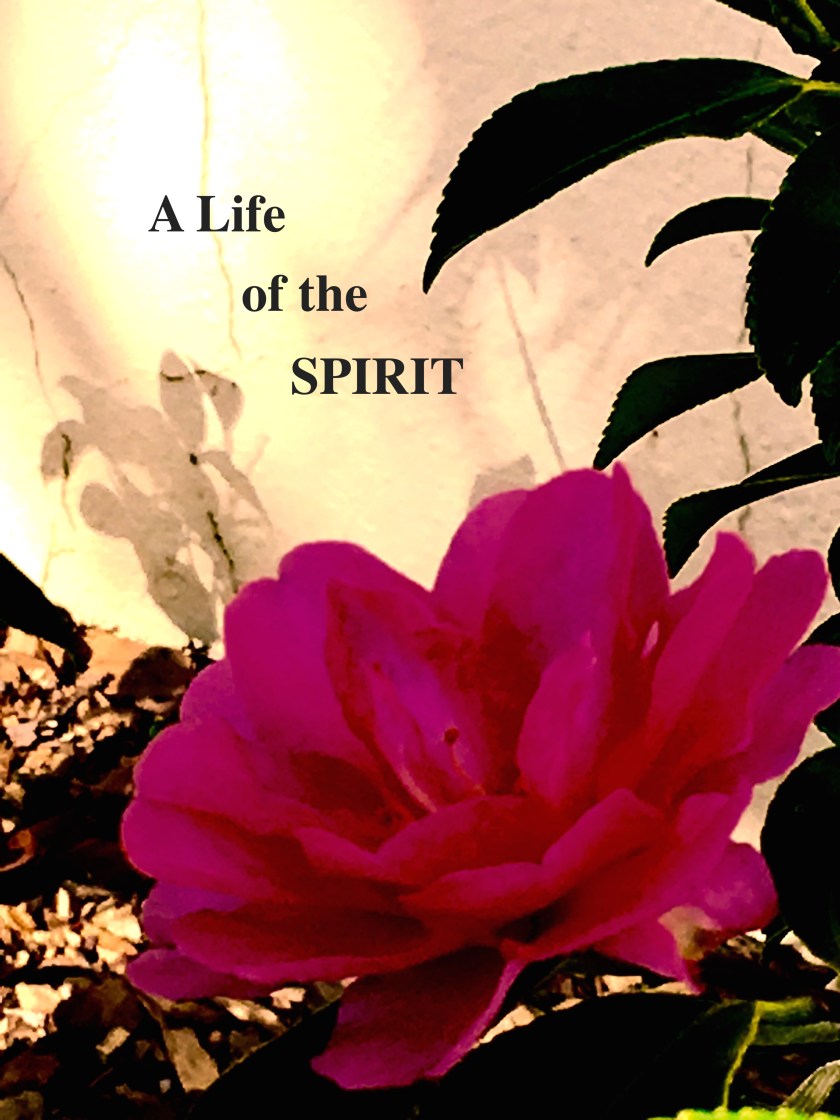
a life of the spirit.
.
On the fourth Saturday in September , we’ll hold our traditional 100,000 Poets (and other artists and friends) virtual event. Michael Dickel will be our master of ceremonies. Details in future announcements.
.
COPYRIGHT: You retain your copyright for work published in The BeZine. If you are doing multiple submissions, please let us know that you have submitted the work to other publications and advise us when and if the work is accepted elsewhere. From our perspective this does not preclude publication in The BeZine but we need to know if another publisher has contracted for first-time or exclusive rights.
We regret that we are unable to offer payment or editorial feedback. However, while we don’t offer payment we also don’t charge submission or reading fees or subscription fees. This effort is entirely volunteer run, a gift of love.
Some issues will include a subtheme and for June it is Domestic and Gendered abuse. As of today (May 15, 2018) I have sufficient materal from women and would be interested in reviewing the work of other genders.)
All creative arts that lend themselves to online publication are acceptable for consideration: visual arts, literature and poetry, and music and film (video).
FICTION/NONFICTION/ESSAY: Should you have anything to submit for consideration that is over 1,000 words, please forward a brief one-paragraph summary description for preliminary evaluation.
POETRY: If you are submitting poetry, please don’t bomb us with work. Restrict your submissions to three at a time every three months. Be selective. Send your best.
VIDEO: One video at a time.
PHOTOGRAPHS and ILLUSTRATIONS: If you include these with your poems and features, then you must include the source with url and licensing information. We do not accept work that is not properly – respectfully – credited.
READING SCHEDULE: At the time of this writing, the reading schedule is variable but a regular schedule is forthcoming and will be announced.
Send your work for the zine to us at the bardogroup@gmail.com.
NEW THIS YEAR: We’ll submit nominations for The Pushcart Prize, probably in October. The BeZine welcomes – encourages – work from the world community, but The Pushcart Prize is only open to citizens of the United States.
We look forward to hearing from you. Thank you!
Be the peace.
Jamie Dedes, Founding and Managing Editor
2018 NEWS & GUIDELINES FOR POSTING ON THE DISCUSSION PAGE: We’re especially interested in filling a gap by collecting info on practical initiatives – ideas for taking action – from anywhere in the world, “best practices” so to speak that foster peace, sustainability and social justice, especially those that might be picked up and implemented elsewhere. Examples from the past include the churches that open their parking lots at night to the homeless, the barber who uses his days off to give homeless people haircuts, or the group that put out clothing for people to take if needed.
Other information:
FOR WRITE-UPS ON SPIRITUAL PRACTICE for Beguine Again beguineagain.com Facebook message Terri Stewart. We also have a FB page – The Bardo Group Beguines -where we provide Zine info, inspiration, notice of spiritual events of interest to seekers and links to work posted on beguineagain.com founded and managed by Terri.
PLEASE DO NOT POST POETRY ON THE DISCUSSION PAGE. There are plenty of poetry groups on FB. We’re unique, doing something different but we do offer other opportunities to share your poetry and creative work:
SUBMISSIONS of poetry, essays, short stories, creative nonfiction, music videos, and artwork for The BeZine – journal or blog – are considered via email only: thebardogroup@gmail.com.
The BeZine is on a quarterly schedule in 2018 and for the foreseeable future. Here are the schedule, themes, submission deadlines and publication dates for the remainder of this year:
June 2018 issue, Deadline May 20th. (The deadline is extended this month and would normally be on the 10th of the month prior to the publication month.) Theme: Sustainability
September 2018 issue, Deadline August 10th, Theme: Human Rights/Social Justice
December 2018 issue, Deadline November 10th, Theme: A Life of the Spirit
OTHER OPPORTUNITIES: Email me – thepoetbyday@gmail.com – if you have poetry news or essays on poetry to be considered for The Poet by Day jamiededes.com For submissions (poetry and short fiction or creative nonfiction) for consideration by Michael Dickel for Meta/Phor(e)/Play Facebook message Michael or connect with him HERE.
The Bardo Group Begines is a twelve-member core team of poets and writers, artists and musicians, philosophers and clerics providing comfort, inspiration and information via thebezine.com and beguineagain.com. The BeZine is an entirely volunteer effort, a mission. It is not a paying market but neither does it charge submission or subscription fees. Instead of charging you, if you enjoy and benefit from The BeZine and Beguine Again, we encourage you to make a donation to one of your local charities and, especially if you are in the Seattle area, to Terri Stewart’s Youth Chaplaincy and Peacemaking Coordinating Team.
Regular Sunday Announcements are in process and will post later today, but yesterday was International Holocaust Rememberence Day. I share the poem of a child imprisoned and murdered at Theresienstadt Concentration Camp. We remember it with the hope that there will never be another genocide and that children of every race, country and creed will be allowed to fulfill their promise, to grow up, to grow old and to die in God’s time. Even as we do, there are genocides currently happening around the world, ten of which are full-blown. Ironically, “prominent scholars of the international law crime of genocide and human rights authorities take the position that Israel’s policies toward the Palestinian people could constitute a form of genocide.” Details HERE. May all sentient beings peace.
“The spiritual life . . . is not achieved by denying one part of life for the sake of another. The spiritual life is achieved only by listening to all of life and learning to respond to each of its dimensions wholly and with integrity.”SisterJoan D. Chittister, Wisdom Distilled from the Daily: Living the Rule of St. Benedict Today
The theme this month is “Spiritual Paradigms, Awakenings, Miracles.” I expected to get submissions that spanned the distance from atheism and agnosticism to firmly entrenched faith, which I did. I did not expect to get several notes from writers and poets who admitted that though they wanted to contribute, they found themselves seriously blocked. Despair.Depression. Those two do confound our creativity and both are rife in a world where 1.6 million people lack access to adequate housing (Habitat.org), where forced displacement is “an unpresidented 65.6 million people” (UNHCR, The UN Refugee Agency) and where, while hunger in general is on the decline, 3.1 million children still die of malnutrition each year (Independent).
For people in kinder circumstances it’s often near impossible to reconcile with the realities of physical illness, disability and mortality, poverty and food “insecurity”, decreased opportunity/upward mobility, and difficulty finding employment and/or getting an education. These circumstances create anger and make it understadable that some doubt a compassionate God or simply find it impossible to believe in a God at all. My own thought is that perhaps God, like Creation, is evolving. That thought is not new with me.
Having said all that, what for me came through in reading submissions is that atheist or agnostic, religionist or independent spiritual being, all have a Life of the Spirit. The spark of Light is clear from the writing desk to the neighborhood bar. Sometimes the Light goes by other names: Hope, Compassion, Wisdom, Generosity. To paraphrase Rabbi Meachem Mendel Morgenszter of Kotak, Poland, God (however you might define that Being) is found wherever you let the Light in.
This month we are proud to introduce a wealth of new-to-us writers: Julie Henderson (U.S.), Eithne Lannon (Ireland), Imelda Santore (Philippines), Mike Stone (Israel), Anthony Vano (U.S.), and Ali Znaidi (Tunisia). We welcome back: bogpan (Bozhidar Pangelov, Bulgaria), Paul Brookes (England), Kakali DasGhosh (India), Mark Heathcote (England), Juli [Juxtaposed] (England), Michele Riedel (U.S.), and Sonja Benskin Mesher (England).
My warm thanks to all twelve members of our core team, some of whom have contributed poems or feature material to this issue: John Anstie (England), Naomi Baltuck (U.S.), James R. Cowles (U.S.), Michael Dickel (Israel), Joe Hesch (U.S.), Charlie Martin (U.S.), and Corina Ravenscraft (U.S.).
On behalf of our entire core team, The Bardo Group Beguines, I wish everyone wonderful year-end celebrations and a peaceful 2018.
In the spirit of peace, love (respect) and community, Jamie Dedes,
Founding and Managing Editor, The BeZine
A LIFE OF THE SPIRIT
How to read this issue of THE BeZINE:
Click HERE to read the entire magazine by scrolling, or
You can read each piece individually by clicking the links in the Table of Contents.
To learn more about our guests contributors, please link HERE.
To learn more about our core team members, please link HERE.
Look to the light, the light in the window, The simple lit candles that shimmer and shine. The message is clear as simple lit candles, The passion for freedom is yours and is mine. – Rabbi Dan Grossman
December is a month rich in the holy days of the Abrahamic traditions. Jews celebrate Hanukkah, a commemoration of the Jewish reclamation of The Temple of Jerusalem in 164 B.C.E. Christians celebrate Advent – a period of waiting for the birth of Christ – followed by His birth, Christmas. Muslims celebrate the birth of the Prophet in November or December depending on the lunar calendar. We do not need faith to appreciate the beautiful poems, music and artwork inspired by our religions, Abrahamic or others.
Look to the Light
Menorah
In 164 B.C.E., the Syrians who ruled Israel took away the Jews’ right to practice their religion. Led by Judah Maccabee the Jews rebelled and succeeded in reclaiming their sovereignty and they rededicated The Temple of Jerusalem. The history of the celebration of Hanukkah has had some interesting turns in more recent times.
There’s a story of a young Polish soldier in then General George Washington’s army who held a solitary Hanukkah celebration on a cold night in Valley Forge, Pennsylvania. The soldier gently placed his family’s menorah in the snow and lighted the first of eight candles for the first night of Hanukkah. The man was perhaps a bit homesick and missing his family. He must have thought about how much they’d suffered over time from religious persecution. There were tears in his eyes when General Washington found him. Washington wondered what the young man was doing and why he was crying. The soldier told his general the story of Maccabee and the other Jews. It is said that Washington was heartened by the telling and moved on to battle and victory. The menorah is on now on display at the Smithsonian Museum.
Yet another story surfaces in 1993 Billings, Montana where a family was lighting their menorah one night. As is custom, they placed the lighted menorah in the front window of their home where it was stoned by anti-Semites, as were the homes of other Jewish families that same evening. The town newspaper printed dozens of menorahs. Rev. Keith Torney, a minister of the First Congregational Church, United Church of Christ, distributed them to all the Christians and the paper menorahs were placed in windows all over Billings as a sign of solidarity and of respect for the freedom to practice religion as one’s conscience dictates.
Look to the Light is a commemorative poem written by Rabbi Daniel Grossman and set to music by Meira Warshauer. Enjoy! … but if you are viewing this from an email subscription, you’ll have to link through to the web/zine to view and hear it.
The Magnificat
The Ode of Theotokos (Song of the God Bearer)
It is only in the Gospel of Luke that we read of Mary’s recitation of this poem that harkens back to Jewish prophecy and is constructed in the traditional verse style of the times with mirroring and synonymous parallelism.
From the Book of Common Prayer
My soul doth magnify the Lord : and my spirit hath rejoiced in God my Saviour.
For he hath regarded : the lowliness of his handmaiden.
For behold, from henceforth : all generations shall call me blessed.
For he that is mighty hath magnified me : and holy is his Name.
And his mercy is on them that fear him : throughout all generations.
He hath shewed strength with his arm : he hath scattered the proud in the imagination of their hearts.
He hath put down the mighty from their seat : and hath exalted the humble and meek.
He hath filled the hungry with good things : and the rich he hath sent empty away.
He remembering his mercy hath holden his servant Israel : as he promised to our forefathers, Abraham and his seed for ever.
The Prophet’s Nativity
A book explaining the meaning of the phrase Jashan e Eid Milad un Nabi
One poem that celebrates Mawlid, the birth of the Prophet, is exceptionally sweet. It was written by the Turkish Süleyman Çelebi (also known as Süleyman Of Bursa) who died in 1429. You’ll note that in addition to honoring the Prophet Mohammad, it honors three mothers: Asiya the mother of Moses, Mary the mother of Jesus and Amina the mother of the Prophet.
Mevlûd-i Peygamberi, Hymn of the Prophet’s Nativity
Some have said that of these charming three
One was Asiya of moonlike face,
One was Lady Mary without doubt,
And the third a houri beautiful.
Then these moonfaced three drew gently near
And they greeted me with kindness here;
Then they sat around me, and they gave
The good tidings of Muhammad’s birth;
Said to me: “A son like this your son
Has not come since God has made this world,
And the Mighty One did never grant
Such a lovely son as will be yours.
You have found great happiness,
O dear, For from you that virtuous one is born!
He that comes is King of Knowledge high,
Is the mine of gnosis and tawhid*
For the love of him the sky revolves,
Men and jinn are longing for his face.
This night is the night that he, so pure
Will suffuse the worlds with radiant light!
This night, earth becomes a Paradise,
This night God shows mercy to the world.
This night those with heart are filled with joy,
This night gives the lovers a new life.
Mercy for the worlds is Mustafa,
Sinners’ intercessors: Mustafa!
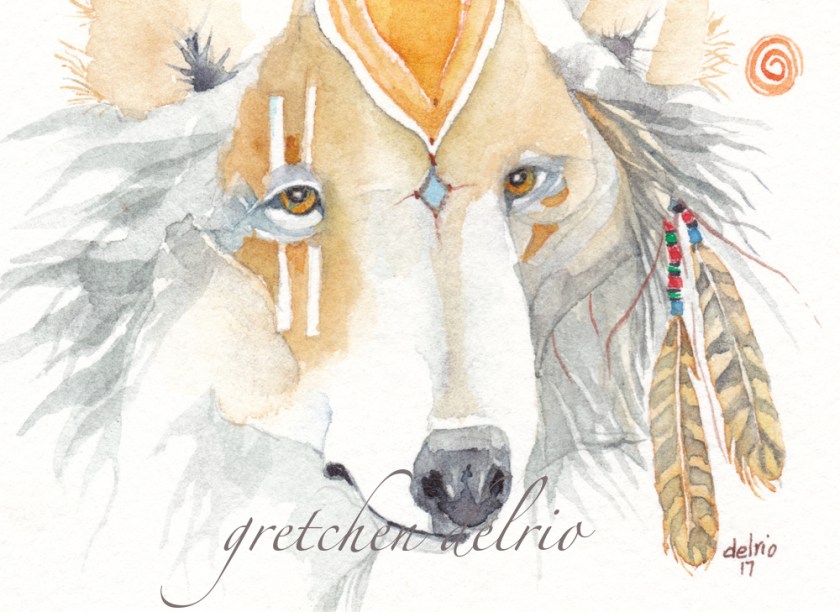
Wolf Spirit guide is a shape-shifter. He adapts to the energies of the forest and is a pathfinder by nature led by his intuition. When you are feeling lost and do not know where to go….he guides you. He will be your protector as you make your journey. And, very importantly, you must be willing to face your own deepest fears in order to evolve.
In the four-year history of TheBeZine, this is the most significant edition.All of our concerns – peace, environmental sustainability, human rights, freedom of expression – depend on a more equal distribution of wealth, on making sure no one goes hungry and on breaking-down barriers to employment, healthcare, education and racial and gender equity.
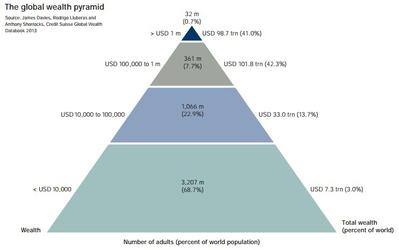
This pyramid (courtesy of Wikipedia) reveals that:
half of the world’s wealth belongs to the top 1%,
top 10% of adults hold 85%, while the bottom 90% hold the remaining 15% of the world’s total wealth,
top 30% of adults hold 97% of the total wealth.
We’re all cognizant of that profile, but if you feel you’re sitting pretty and you’re not at risk, you’re employed, educated and middle class after all, you’d be well-advised to reconsider. The middle class is now – and has been for some time – dramatically challenged to find work, to acquire jobs that are fairly paid, offer stability and reasonable hours, and in the U.S., enable them to send their children to college.
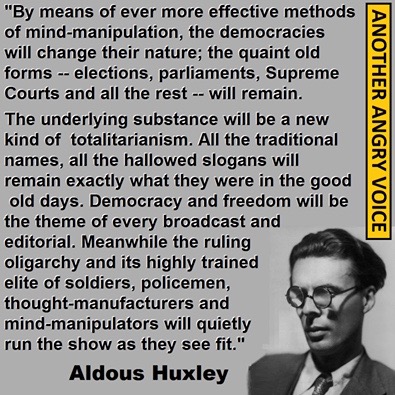
The implications of a concentration of wealth in the hands of the few, the oligarchs and mega-corporations, are horrendous. Not the least is the undermining of democracy. Those who vote for and support the oligarchs because they think that’s where their security lies are victims of propaganda and bound for disappointment. The shadow of catastrophe (not too strong a word) that hangs over us is not due to the poor or the “other” who doesn’t look like us, worship the same God, or speak the same language, but to the 1%. Huxley was disconcertingly prescient.
This month our core team and guest contributors create a picture that beckons and behoves us to abandon stereotypes and propaganda about the poor, to recognize slave labor in its most absolute terms (human trafficking and prison labor) and more subtly in the conditions faced by workers at almost all levels of the corporate pyramid. We are called to ethically source the products we buy, to study our history, to bravely speak out against injustice and stupidity and, by implication, to shine a light on best-practices, those programs, services and unofficial efforts in your city/town, region or country that are helping and that can easily be implemented anywhere in the world. (You can share these with everyone via our Facebook discussion group.)
Beginning with Juli’s impassioned editorial, The Exponential Demise of Our Well-being, and moving to our BeAttitudes: John Anstie’s powerful Dictators and Desperadoes … Delegation and Democracy; Corina Ravenscraft’s and Trace Lara Hentz’ thoughtful invitations to awareness; Phillip T. Stephens on prison injustice; Sue Dreamwalker’s encouragement to see the homeless as fully human (and she connects us with homeless poets and artists in England); and Joe Hesch’s honest exploration of self, we are called to responsibly participate in history.
We present a memoir from Renee Espriu and a short story from Joe Hesch this month. These are followed by yet another stellar poetry collection from poets around the world, including work by core-team members: Charles W. Martin and John Anstie.
New to our pages, a warm welcome to: Juli [Juxtaposed], Sue Dreamwalker, Michael Odiah, Evelyn Augusto, Michele Riedele, Irene Emmanuel and bogpan. We welcome work from among our previous and regular contributors: Paul Brookes, Trace Lara Hentz, Renee Espriu, Sonja Benskin Mescher, Denise Fletcher, Phillip T. Stephens, R.S. Chappell, Rob Cullen and Mark Heathcote.
In the spirit of peace, love (respect) and community
and on behalf of The Bardo Group Beguines, Jamie Dedes, Founding and Managing Editor, The BeZine
HUNGER, POVERTY and THE WORKING CLASS AS SLAVE LABOR
How to read this issue of THE BeZINE:
Click HERE to read the entire magazine by scrolling, or
You can read each piece individually by clicking the links in the Table of Contents.
To learn more about our guests contributors, please link HERE.
To learn more about our core team members, please link HERE.
Among Native American tribes, especially the Plains Indians, the bison is considered a sacred animal and regarded with reverence. Native Americans consider that all given to them by Nature was to be treated with great respect and the bison was used down to every last part to ensure survival of the tribes. How devastating the disappearance of the bison by the hand of the white man. That act itself alone could have destroyed the tribal nations on the plains because they depended upon the bison for their well being. How insulting to their beliefs. How could the senseless killing of almost all of these sacred animals be understood by the Native Americans…….or by we who look back at the senseless devastation.
LUKE PRATER‘s poetry is ever fascinating to me. He will tackle – as he has here – the same subject in more than one poetic form. Dedication, keen intellect and a singular irreverance are the hallmarks of this thirty-five year old English poet who took a degree in English lit with creative writing and performance and subsequently went to SOAS, London to study ethnomusicology at the master’s level. At twenty-seven he took up poetry, which he says saved his life – a thing it has done for many of us. More recently Luke added “iPhoneography” to his formidable list of accomplishments, shooting pictures and “editing the hell out of them.” Jamie Dedes
“They say a picture paints a thousand words; I’d argue the opposite.” Luke Prater
Fat Neverland (I’m Loathin’ It) – villanelle
Factory-farm ‘em on rainforest land,
jab ‘em with jittery antibiotics, in
serving a hoodwinked world’s worst burger-stand.
Nutrient nadir damn should have you banned,
even when just drunken teens in your night-kitchen
sucking down scared meat from rainforest land.
Wretched obese bloat and roll at your hand;
farmers on statutory antidepressants been
plying, supplying world’s worst burger-stand.
Consciences slip through ringed fingers like sand.
Wallets are plump; I’m still wondering why? (you grin)
greenlighting greenfelling greenforest land.
Golden the arches, but ain’t worth a grand;
Ronald’s grave future sees past catching up with him –
homeless – McCuster’s last fastburger-stand.
Clown let the kids party Fat Neverland,
Tinkerbell grounded by chow she’s demolishing.
Cattle confused grazing rainforest land,
passed off as food at world’s worst burger-stand.
Fat Neverland (I’m Loathin’ It) – Pushkin Sonnet
The cattle farmed where once was leafage,
force-fed with drugs unfit for us,
supplying world’s worst burger beefage
by farmers in disguised disgust.
Nutrition nadir should be outlawed,
to spare the trees the rasping chainsaw;
to spare the cattle cheap mince fate;
to close the flooding fast-food gate.
In wilful ignorance we swallow,
in sucking down scared meat with Coke.
Obese, they bloat in oily soak,
in lack of self-esteem they wallow.
Let kids carouse Fat Neverland,
at Ronald’s clowning, cloying hand.
Fat Neverland (I’m Loathin’ It) – free verse
Factory-farmed on rainforest land;
force-fed with antibiotics to serve a
hoodwinked world’s worst burger-stand.
A nutrient nadir that should have
them banned, even when just drunken
teens in their night-kitchen, sucking
down scared meat with cardboard and Coke.
Wretched obese bloat oily soak, in
triple chins of self-loathing they wallow;
farmers swallow disgust and
statutory antidepressants
supplying mass substandard beef.
Consciences slip through
ringed fingers like sand.
LUKE PRATER is a seriously talented English poet and musician. Many of you may be familiar with his work. (And I believe his dad was a fairly well know and highly regarded musician in England.) Luke founded Facial Expression Poetry and Critique and WordSalad blog, both of which are gone now. He shared the piece above with readers several years ago. I present it as an example of his work for those of you who haven’t read him. He’s a very worthy man. If you are able to help a bit I hope you’ll consider doing so. / Jamie Dedes
I’ve been seriously unwell for a very, very long time. Fourteen years, in fact. Some of you know this, others don’t. For Facebook friends, and old friends I haven’t seen since school or my early/mid twenties, the truth is I have often made it seem like nothing is wrong. Which is possible on the internet, and with the crutch of a lot of medication. It almost feels like I’ve been living a lie for years, (when not completely absent), because I just wanted to snatch a few minutes of normal. To pretend everything’s okay. The point I’ve reached is this: I cannot continue — the years slipping away, existing rather than living, the continual pain, dis-ease and discomfort. Therefore my family (including sisters Susie Ro Prater and Joy Prater) are fundraising so I can go for treatment at a private clinic in Germany that specialises in chronic and degenerative diseases using stem-cell therapy and other protocols. We’re two thirds of the way there! Here is the link to the fundraising campaign –
Worthy projects that deserve attention … Featured: Evelyn Augusto’s “Guns Don’t Save Live, Poets Do,Dueling with Words to Stop Gun Violence;” Jazz singer Candice Hawley’s “Let’s Talk About it,” a free and open discussion of Anxiety and Depression; and, Rev. Terri Stewart’s Peacemaking Circles for Seattle’s incarcerated youth. Terri is the founder of The BeZine’s sister site, Beguine Again, and a member of the zine’s core team.
When I started The Bardo Group, now The Bardo Group Beguines (publishers of The BeZine), back in February 2011, I had in mind the human union in sacred space (common ground) as it is expressed through the arts and the sharing of work that is representative of universal human values however differently they might bloom in our varied religions and cultures. I feel that our art and our Internet-facilitated social connection offer a means to see one another in our simple humanity, as brothers and sisters, and not as “other.” They also offer a means to get some other good things done.
I have written about:
English poet and musician, John Anstie and the Grass Roots Poetry Group, that was founded through Twitter friendships and that published a collection to raise funds for UNICEF;
Dorothy Yamamoto, a poet and editor who brought a group of A-list English poets together…
” After silence, that which comes nearest to expressing the inexpressible is music ”
~ Aldous Huxley
From: ‘Notable Quotes’ hand carved code
Reading Michael Dickel’s introduction to last month’s edition of The BeZine, sowing the seeds of the mindset at the roots of the ethos of this publication – promoting peace, sustainability and social justice – but in particular, overcoming anger and harnessing it for good, he quotes a good deal of Audre Lorde’s laudable speech and essay The Uses of Anger: Women Responding to Racism, perhaps a reflection on what divides the world, what creates so much anxiety, political division, protective greed and selfishness.
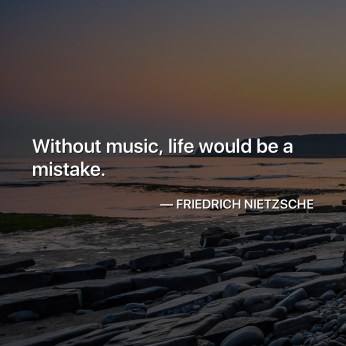
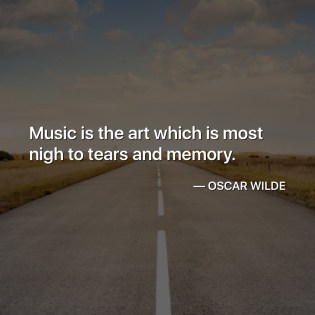
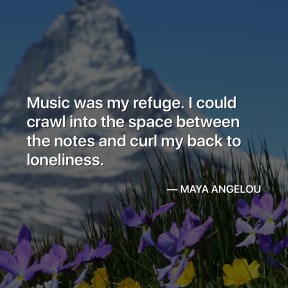
So, we have music.
I don’t know about you, but there are few times in my life when music has done anything other than have a life enhancing and positive effect on me – with the possible exception of a Moody Blues concert I went to in 1969, in my university days, when I was left with a ringing in my ears for several days. This was, along with competitive shooting of Lee-Enfield .303 bore rifles at school, without ear defenders, probably the root of my tinnitus! Subsequently, I carry ear plugs and try to avoid over amplified performances by groups of musicians, who employ sound engineers, who may be – shall we say – aurally challenged!
Music, particularly live and acoustic music has played and still does play an increasingly major part in most of my life; it provides a therapy against the rigours and stresses of everyday living. But it does more than this.
My personal perspective on the value of poetry has some relevance here. It is a belief that poetry should always be one step removed from the obvious, the logical and rational, in order for it to awaken the right brain, the creative side of our amazing abilities as humans; to stimulate the visceral (as opposed to the purely intellectual, rational, ‘logical’) response. In turn, this has the potential to stimulate a fresh approach to solving our challenges, be they personal or global. This hits on the core mission of The BeZine in a big way.
From: ‘Notable Quotes’ hand carved code
But if poetry has this potential power to stimulate a new way of thinking outside the framework imposed by a culture of consumerism, greed and material comfort, as opposed to our social well being, then music does so with a vengeance. It is truly visceral without the constraints of language. Of course, when the poetry of lyrics is introduced to create song, then there is the opportunity to create something that is greater than the sum of its parts; synergy. It can provide something that dwells in the conscious and even subconscious for a lifetime – whoever forgets the words and melody of a song that they heard at a very poignant moment in their lives, which continues to inhabit a special place in memory, resonate and invoke the most emotional response every time it is heard. There are a few who would argue this is ‘just an over-emotional response’, but it may well be the last resort to aid the development of a greater understanding and a clearer insight into the human need for compassion as well as passion in their lives.
“If music be the food of love, play on;” said Duke Orsino “give me excess of it”. The opening lines of Shakespeare’s “Twelfth Night” speaks much for music, even though he goes on, cynically “that, surfeiting, the appetite may sicken, and so die”. Can you get too much of a good thing, I ask?
From: ‘Notable Quotes’ hand carved code
Music is so often a catalyst for romance. We could not even begin to count the number of songs that have ever been written over the ages on the subject of romantic or divine and spiritual love … and its consequences. However, I wonder how often we may contemplate how many instrumental or orchestral compositions there are, which, without words, in a different way, on a very different level, are capable of promoting a feeling of love and, equally, a sense of calm, peace, remorse, sadness, melancholy, a whole gamut of emotional responses that can and very often do bring about a state of mind that is elevated above the daily grind of our lives, the trauma, the tragedies, the disasters and injustices we witness every day in the news, and above all, the ability it has to help us cry. In this way, music can act as a protest against injustice and, in a sense, be ‘angry’, but still it can act as a relief for that anger, just as poets can find simply by writing a ‘political’ poem, which can relieve the frustration and anxiety brought about by political injustice. It is this value that I attach to music that I hold highest in my personal esteem for this art of arts.
It is, in fact, an art that can, like no other, combine the poetry of good lyrics, the rhythms of our roots, the vast array of instrumental sounds and voices, and the spine tingling harmonies they can create, into one; that can team itself with other art forms, particularly in photography, film and dance, but also notably in storytelling. What broadcast programme, be it documentary, drama, comedy, film (movie) is made without serious thought for the addition of music, a song, an orchestral piece, which so often includes a main theme along with incidental ‘tracks’ throughout its production, which then, of course, naturally leads to the merchandising of a soundtrack album.
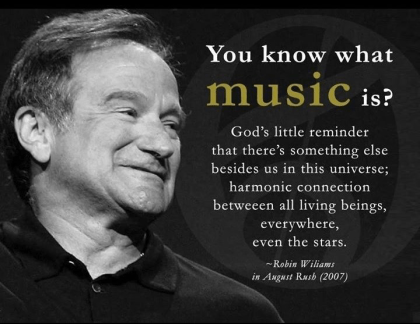
Even the latest generation of advertisers have realised the visceral value of music, sometimes combined with poetry (look at Apple’s poetic narration by the inimitable and dearly missed Robin Williams, who significantly quoted from Walt Whitman’s poem O Me, O Life to evoke the kind of emotional responses that are known to drive most human decisions … in this case, to buy!
As a test of how important a part music plays in teasing our wallets from our pockets, next time such an advert hits your screen, try turning off the sound. What are you left with … not a lot that is meaningful. Now here, I hope the photographers and cinematographers amongst us (Naomi Baltuck) will not take exception to this notion that still and moving pictures cannot move us, which of course they can and a similar thesis to this could be written for the visceral value of great pictures, but I know you will trust that my meaning, in this context, is well intended!
This month, as lead editor for the anniversary edition of The BeZine, the first of its fifth year, we feel quite frankly blessed with the quantity and quality of contributions we have received from our regular core contributors, and I take my hat off to our new guest contributors, including some very talented young writers and musicians. The sizeable response of quality submissions makes this, I believe, our largest issue yet; like a big fat magazine, but without any adverts, in itself, says something about the importance we attach to music.
We have poems galore, almost all of which touch the music theme or contain subtle references to it. Two fellow Brits are amongst the new contributors to The BeZine. From musician and composer, Joseph Alen Shaw, a piece that addresses the core of the Bardo Group Bequines mission, Music Beyond Belief, on the subject of faith and musical composition in the 20th Century. Joseph has also contributed another account of one of his recent compositions, the Wentworth Cantata. British newcomer, historian and musician, Emily Needle, has written an account of her research on her travels through Eastern USA in 2015, into the achievements of a remarkable and little known Charleston man, who had a surprisingly big influence on Jazz music in the early 20th Century.
Beside Joseph and Emily, other new contributors have all embraced the music theme in such creative ways, mostly poetry but also some lyrical prose, with very interesting results. Stephanie Williams’ Singing Man is a charming prose piece that evokes a child’s certain view of what they like. S.R. Chappell has written a couple of poems in praise of music. Kakali Das Ghosh, in her poem, presents us with some very mystical feelings. Andrew Scott gives us a story of a gritty performer with all the emotional baggage that can accompany that way of life, and JB Mulligan writes three deeply insightful and thought provoking poems.
All of our regular contributors have also given us a wealth of musical delight and I thank them all for their excellence that has made this a very special issue.
Further Acknowledgments
Thanks are due to Glen Armstrong (his deeply nostalgic plea for vinyl records that ‘once had purpose’), Naomi Baltuck (for your photo essay with a family musical conclusion), Sonja Benskin Mesher (her beautiful reflective on ageing, remembering, companionship ends with music), Paul Brookes (fine poems, particularly clever is his onomatopoeic on a Bodhrán), Miki Byrne (whose poems about performance are both clever and revealing), Bill Cushing (and his handful of poems with oh so subtle musical references), Jamie Dedes (whose Orchestra of Impossible Beauty relates the moving story of the British ‘ParaOrchestra’ comprised of people with a variety of disabled conditions), Renee Espriu (and who can resist the image of how a child can hear the recording in a seashell of the sound of the sea or how they can bring home from school a musical instrument that’s bigger than themselves!), Denise Fletcher (on a trip to a Country Music Festival or the intrusive quality of loud music), Priscilla Galasso (for her usual insightful qualities), Mike Gallagher (for his remarkable, lyrical prose piece), Mark Heathcote (and his Whispering Muse), Charles Martin (and his ekphrastic haiku / senryu triplet), Liliana Negoi (for super imaginative variety of expression), Phillip Stephens (with a further challenging ekphrastic poem), John Sullivan (whose poems include a conversation with his radio, deeply embedded with the blues and a call to the Tripitaka of Buddhism), Lynn White (for not allowing us to forget the importance in our lives of birdsong), and the artful collaboration of photograph Amy Bassin and poet Mark Blickley in Screaming Mime.
So much delight from each and every one of our writers, I can’t tell you what a pleasure this has been, to write about one of my favourite pastimes.
Enjoy.
John Anstie
THANK YOU!
It seems somehow right that we dance into our fifth year on a musical note and John’s perceptive and passionate introduction to this month’s The BeZine. It is no exaggeration to say that the longevity of this 100% volunteer effort is the outgrowth of the stalwart support of readers and contributors and the work, creativity, vision and perspicacity of our core team: John Anstie, Naomi Baltuck, James R. Cowles, Michael Dickel, Priscilla Galasso, Chrysty Hendrick, Joseph Hesch, Ruth Jewel, Charlie Martin, Liliana Negoi, Lana Phillips, Corina Ravenscraft ,Terri Stewart (founder of Beguine Again, our sister site), and Michael Watson.
There are so many other ways readers, contributors and team could choose to spend valuable time, but you have all chosen to invest a portion in this small effort to build a community of others.
This site was founded in 2011 with three American Buddhist friends. Two have passed on. Since that time as both blog and zine we have published the works of like-minded representing all races, at least six religions, agnosticism and atheism and, I believe, nearly thirty countries. We have stood in solidarity for kindness and joy and raised our voices for peace, environmental sustainability and social justice.
HAPPY ANNIVERSARY to all of us. Thank you everyone and may peace and friendship prevail.
On behalf of the Bardo Group Beguines
and in the spirit of peace, love (respect) and community, Jamie Dedes
Managing Editor
MUSIC TO THE EYES
How to read this issue of THE BeZINE:
Click HERE to read the entire magazine by scrolling, or
You can read each piece individually by clicking the links in the Table of Contents.
To learn more about our guests contributors, please link HERE.
To learn more about our core team members, please link HERE.
This is our (The BeZine) new poster for 100TPC 2018. It was designed by Corina Ravenscraft (Dragon’s Dreams)
One hundred thousand
Poets for change,
so many voices and
carefully chosen words,
at times decay into a void
of the anechoic chamber.
Earthly Fathers praying
for the Establishment,
that sets our stage,
and casts our values
in concrete, steel,
plastic … and carbon.
Leaders of the World,
whose balance sheets and
logical, numerate intellect
measure only a notion
of success. What is that?
Temper your ambition.
For aren’t we just that,
a wealth of rich and
creative intelligence,
maybe the only hope
for our universe
to understand itself?
Heavenly Mothers ask us
why digitise and monetise
and worship at the alter
of the great god, Thworg,
when we are in the face of
richness beyond measure.
Escape to the stars, if you will,
but answers will be found not
in the vanity of space-time travel,
but here, with this unaided vision
they lie in the green and blue,
right before your disbelieving eyes.
Permit your heart to rule
even if only one day a week, when
the visceral, and the common sense
will sit above logic and intellect, and
that subliminal noise in our head
will slowly rise to the conscious.
Maybe, one day we’ll be
Seven Thousand Million
Poets for Change!
Our time will come. Atonement beckons.
It’s in the wind, this beating heart,
a movement beyond the gaze of mortals …
Well, the Zine’s virtual “live” 100TPC Master of Ceremonies, Michael Dickel (Meta/ Phor(e) /Play), is doing the event from the Midwestern U.S. this year, not Israel, and I’m here in Northern California as back-up.
We have just a few hours to go before we begin The BeZine 100,000 Poets (and friends) for Change, 2017 (100TPC), our biggest event of The BeZine year. Do join us and bring your reading glasses and your work suggestive of peace, sustainability and social justice. Michael will get us started and I’ll be on hand to help put a wrap on things. We’ll run at least 24 hours to make it convenient for you to participate no matter where in the world you live.
You may have missed some of these posts that will clarify what we’re doing, how we’re doing it, and how you can participate. Here are two posts that you’ll find helpful:
” Musick has charms to soothe a savage breast “ ~ Playwright and Poet, William Congreve (1670-1729), in his 1697 play, ‘The Mourning Bride’.
A letter from John:
In asking for submissions of writing, poetry, art and even music itself for the Music themed October issue of The BeZine, I am conscious that the very subject of music leaves us with a huge scope. But if I am to offer any guidelines as to what you could think about in submitting work, it might be as follows.
My personal perspective on the value of poetry has some relevance here. It is a belief that poetry should always be one step removed from the obvious, the logical and rational, in order for it to awaken the right brain, the creative side of our amazing abilities as humans; to stimulate the visceral (as opposed to the purely intellectual, rational…
100,000 Poets for Change (100TPC) founders, Michael Rothenberg and Terri Carrion, have “built” a Resistance Poetry Wall in response to calls from all over the world for a place to post poetry and art in reaction to January’s election here in the U.S.
You do not have to limit your poetry to the situation in the States. You can share work that is relative to your country or your specific concerns. As Michael and Terri state:
“The poetry and art posted on the WALL are not limited to the USA elections. There are many issues that concern us all and we welcome your contribution to this page.”
These efforts do have their place and power. So far 190 people have shared work on The Poetry Resistance Wall. I hope to see you there too.
We invite you to share your most passionate works expressing kindness and human connection and the ways that together we might heal the degradation and devastation of wars and genocides; the heartbreak of refugees living in limbo; the desolation of hunger and famine and environmental catastrophes; the insanity of extrajudicial murders; and the disappointing growth in the West of racial and religious tensions and efforts by various administrations to chill dissent.
Please take this opportunity to join hands and hearts in peace and love: TEAM WITH US for The BeZine100TPC online “live” event this September 30th (our 6th year) to address peace, sustainability, and social justice through poetry, music (videos), art and anything artistic that can be posted online and accessed through a url link or by responding in the comments section of the event post. The BeZine 100TPC is one of hundreds of events that will be held around the world on September 30 under the rubric of Global 100TPC founded by poets Michael Rothenberg and Terri Carrion.
WE ACKNOWLEDGE that there are enormous theological differences and historical resentments that carve wedges among and within the traditions and ethnic or national groups, but we believe that ultimately self-preservation, common sense, and human solidarity will empower connections and collaboration and overcome division and disorder.
100TPC is just one effort that illustrates the higher possibilities of the human heart.
Let us ply our art, meditations, and prayer toward that tipping point when compromise – an admittedly imperfect peace – will overcome war and respect for life will topple resentments and greed. That may not happen in our time, but it has to start somewhere and sometime. Together let this be our modest contribution toward an end for which diverse people the world over are working and praying.
HOW THE BeZINE “VIRTUAL” 100TPC WORKS … It’s easy and will be intuitively obvious, though we will provide instruction. A blog post will go up at The BeZine blog on September 30 with some introductory material and directions. As with any other blog post, you can respond by putting your poem or other work in the comments section. There will also be “Mister Linky” … a way to put in a link to relevant work on your site. It’s easy to use but if you don’t like it, you can just put your link in the comments section. That works!
American-Isreali Poet, Michael Dickel
American-Israeli poet,Michael Dickel (Meta/ Phore(e)/ Play), is an extraordinary – and at this point very experienced – Master of Ceremonies. He’ll maintain a rolling commentary in the comments section. I’ll be online to fill in for Michael when he takes a break and also to extend the length of the event.We’re in different time zones, though this year not half-a-day apart since he will be in the States. The idea is convenience and inclusively.
All types of artists and friends can participate no matter where they live in the world even if there is no event going on in their neighborhood and even if like me they are pretty much or completely home bound (which was the inspiration for the virtual event). You can participate in our virtual event even if you are at an off-line event. You can do both. We hope that you will not only share your artistry but also enjoy the artistry of others, which is what makes it like a live event. See you then … 🙂 We also hope that you’ll visit The BeZine to read our September edition, a prequel to the 100TPC event.
On behalf of The Bardo Group Beguines (publishers of The BeZine) and in the spirit of love (respect) and community, Jamie Dedes
Founding and Managing Editor The BeZine






 watercolour 9/2017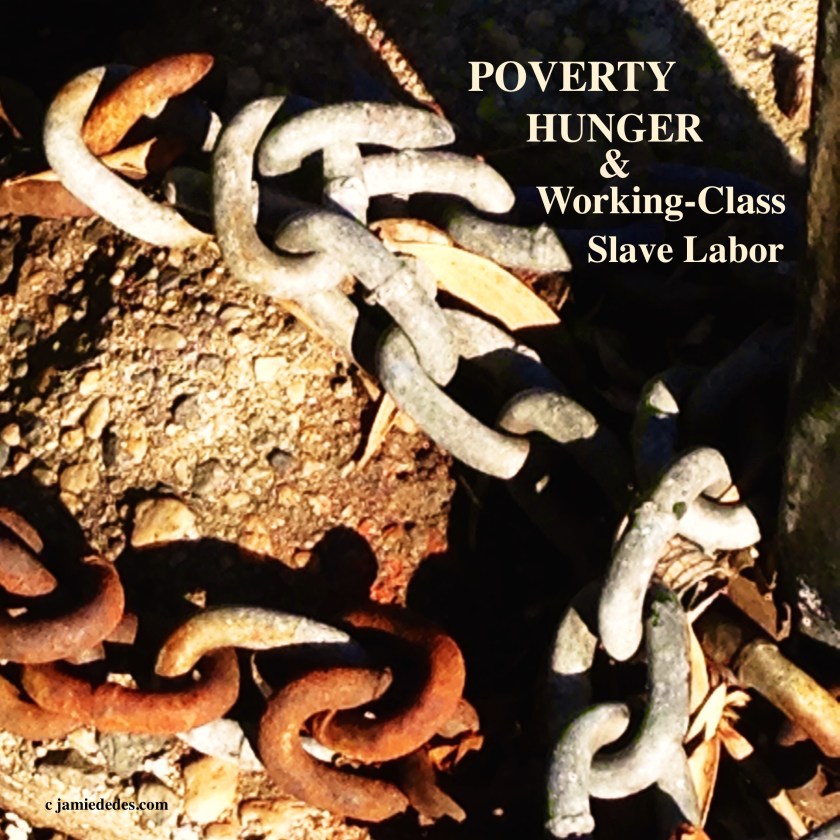
 watercolor 2017


 references to it. Two fellow Brits are amongst the new contributors to The BeZine. From musician and composer, Joseph Alen Shaw, a piece that addresses the core of the
  It seems somehow right that we dance into our fifth year on a musical note and John’s perceptive and passionate introduction to this month’s The BeZine. It is no exaggeration to say that the longevity of this 100% volunteer effort is the outgrowth of the stalwart support of readers and contributors and the work, creativity, vision and perspicacity of our core team: John Anstie, Naomi Baltuck, James R. Cowles, Michael Dickel, Priscilla Galasso, Chrysty Hendrick, Joseph Hesch, Ruth Jewel, Charlie Martin, Liliana Negoi, Lana Phillips, Corina Ravenscraft ,Terri Stewart (founder of

 watercolor 10/2017


 The BeZine