Posted in The BeZine, The BeZine Table of Contents, theatre/spoken word

The BeZine, August 2017, Vol. 3, Issue 11, Theatre

August 15, 2017

In the introduction to his translation of Beowulf, Seamus Haney comments that “as a work of art it lives in its own continuous present.” For me, theatre (whether in its broadest or narrowest sense) is very much the same. Theatre always encourages us to be in that continuous present. As an over-arching art form it can integrate every other form of human (and even animal) expression. It usually rewards our engagement and disdains our detachment. Even when a show runs for a thousand performances, it can never be quite as canned, as mass produced as many of our other entertainments. Human variability is on display every night.

More broadly, theatre tends to mean any place in which we think there is a scripted or specialized drama occurring. In that sense it often indicates that we’re seeing a performance driven by an agenda and perhaps designed to deceive. We criticize this as hypocrisy. In ancient Greece, a hypocrite was merely an actor, i.e. one who had made a judgment or assessment of a script when preparing to perform that script for others. At that time, it was also thought unworthy for actors to become politicians since actors were skilled at impersonation. We could not know their true selves.

In the context of our art, we would probably judge this as unfair. We’ve all had the experience of “donning the mask” or crafting a persona as a way of freeing ourselves. In expressing the lie, we hope to tell the truth.

I’m delighted to be Guest Editor this month. It coincides with a production that I’m currently in. This is an experimental production staged as immersive experience. We’re telling the story of a family in crisis (the passing of parents, dealing with aging and the end of life, and the break-up of relationships). We tell this story in a residence where small audience groups (a dozen to two dozen at a time) sit in the “living rooms” of the characters. This intimacy connects us with our audience. They do not participate in the sense of interacting with the actors. But, they are side-by-side with us as we make the journey, watching us, crying with us, laughing with us and even eating with us. Detachment is not an option. We join together in the continuous present.

This month’s pieces remind  us of these connections and touch on so many of the stages on which we act.

Priscilla Galasso speaks of her experience with theatre and its broad impact in her life. “Playing the muck of human behavior” as she says.

Charles W. Martin’s poetry talks passionately of life’s stage, reminding us that, yes, detachment is not an option.

Corina Ravenscraft gets to the root of why we should all spend time in “the seeing place.” It’s a broadside worth taking around when it comes time to fund arts in schools and communities.

Michael Watson recounts an early experience where his personal humiliation also reflected larger and deeper ones around him. He shows us how Playback Theatre is another powerful way to connect.

John Anstie recounts the life of his mother. In reading her story, I think on the many roles we are often forced to play and how we adopt certain personas to help us survive.

I feel that basic joy of theatre in Renee Espriu’s contribution. “The hills are alive…” means a little more to me now than it did before.

Jamie Dedes points us to theatrical entertainment with its golden moments and the theatre of life with it’s chaos and absurdity. [And, seriously, check out Fanny Brice’s physical comedy.]

John Sullivan’s four poems this month are, for me, intriguing and searching meditations on the self. They speak to who we are, the personas we have, the masks we wear, the music we sing. And, he’s allowed us to publish an excerpt from his new play, Hey Fritz, Looks Like You Lost It All Again in the Ghosting.

Naomi Baltuck’s discussion of Come From Away focuses right in on an essential aspect of our experiences both in life and in theatre. Specifically, I’m thinking about what it means to literally commune with strangers, whether it’s the characters in Come From Away or the audience who watches it.

Karen Fayeth shows how, no matter what size or shape the spectacle, there is something profound in the simplest of relationships. Say, between a boy and his horse. Because, whether we’re seeing animals at play or a play about animals we are moved.

In bringing together both her visual art and her poetry, Sonja Benskin Mesher has each explain the other. And, yet, each also enlarges the other and perhaps we see our own actions a little differently, too.

Of course, plays and poetics go hand-in-hand. Michael Dickel thoughtfully discusses how one arises from the other and the personal origins of both.

Paul Brookes’ poems read as very modern, but also touching on things quite old, such as shared rituals and the hypocrisy of actors (in the classical sense).

And, finally, there’s a last word from Denise Fletcher. I hope we’ve achieved a kind of success along the lines of what she describes.

Thank you to all who contributed this month and for letting me join the show. I’m having a wonderful time! I look forward to seeing where the story goes from here. And, to the last one who leaves the theatre, please turn on the ghost light.

Richard Lingua
Guest Editor

THEATRE

How to read this issue of THE BEZINE:

  • Click HERE to read the entire magazine by scrolling, or
  • You can read each piece individually by clicking the links below.
  • To learn more about our guests contributors, please link HERE.
  • To learn more about our core team members, please link HERE.

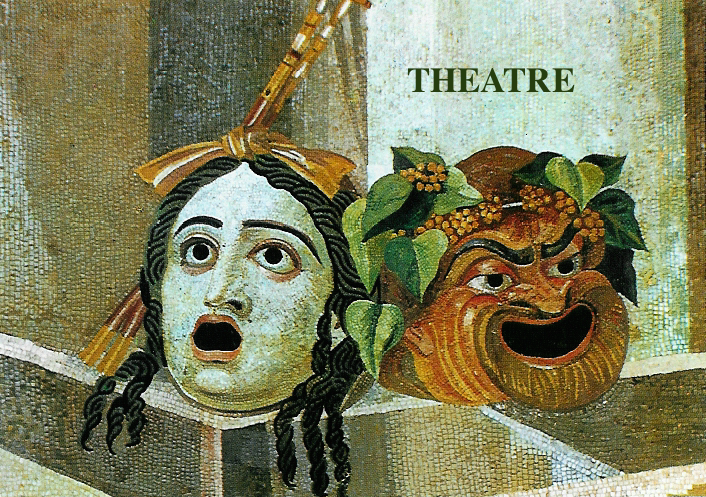
Photograph: Gargoyles as theatrical masks above a water basin. Mosaic, Roman artwork, 2nd century CE. The piece can be found at the Capitoline Museum in Rome, Palazzo dei Conservatori, first floor, hall of the Horti of Mæcenas. From the Baths of Decius on the Aventine Hill, Rome.

TABLE OF CONTENTS

Priscilla Galasso

Charles W. Martin

Corina Ravenscraft

Michael Watson

John Anstie

Renee Espriu

Jamie Dedes

John Sullivan

Naomi Baltuck

Karen Fayeth

Sonja Benskin Mesher

Michael Dickel

Paul Brookes

Denise Fletcher


Except where otherwise noted,
ALL works in The BeZine ©2017 by the author / creator

CONNECT WITH US

The BeZine: Be Inspired, Be Creative, Be Peace, Be (the subscription feature is below and to your left.)

Daily Spiritual Practice: Beguine Again, a community of Like-Minded People

Facebook, The Bardo Group Beguines

Twitter, The Bardo Group Beguines
Posted in The BeZine, The BeZine Table of Contents

The BeZine, July 2017, Vol 3, Issue 10, Prison Culture, Restorative Justice

July 15, 2017

This month’s publication focuses on Restorative Justice. This is a topic that is dear to me. I am the Director of the Youth Chaplaincy Coalition. I have been working with incarcerated folks and those touched by incarceration since 2003. I have seen the ripples of harm that have come. There is harm to the victim, of course. But there is also harm to the person who committed the harmful act, harm to their families, and harm to the communities that encircle all of these people.

Restorative Justice is an en vogue term. Everyone wants it but we don’t know much about how to do it. Most of us look backwards at the ancient ways of first peoples such as the Māori people of New Zealand or the Tagish and Tlingit First Nation people of the Yukon. We lift their practices and bring it forward into a defined court case.

This somewhat misses the point.

The circling process that the first peoples used far pre-dates the term restorative justice. At the same time, restorative justice has become a term to be used by the justice system. And so we create another circling process that is set aside for the courts, jails, and prisons to use.

Circling or Peacemaking Circles, the process given to us by the ancients, is to be used everywhere and with anything: healing, sentencing, discernment. And it involves the entire community. The entire circle of ripples affected by an act. It is a big process. And that’s why we relegate it to the justice system.

Because if we don’t relegate it to the work of the justice system, that means we will have to change and do better. The first principle of the circle: You can only change yourself. As long as we make restorative justice the property of the courts, we don’t have to change. We don’t have to be more welcoming, giving, or inclusive. We don’t have to mentor, feed the hungry, clothe the naked. But I have news! Great news of good tidings! Restorative justice, Peacemaking Circles, is, as the ancients say, the wisdom of the universe. It belongs to no one person and is there for all for the healing and transformation—not of the world, but of each one of us.

This issue about Restorative Justice and new forays into restoration is explored by our core team and guest writers. Each brings their own wisdom to the topic.

Writing on aspects of justice and restorative justice are: Myself, James Cowles, and Chris Hoke. Justice oriented creative writers are Lisa Ashley, Carolyn O’Connell, Paul Brookes, Rob Cullen, Charles W. Martin, Marieta Maglas, Sonja Benskin Mesher, Paul Brookes, Jamie Dedes and a short stories by Joseph Hesch, Lisa Ashley and Rachel Barton. Gail Stone offers a video that speaks to her faith and hope in restorative justice. I have also offered a moderated discussion that I led regarding zero incarceration for youth. Denise Fletcher teaches us how to put together Comfort Kit Baskets for the incarcerated.

We hope this issue will give you pleasure even as it provokes you. Leave your likes and comments behind. As readers you are as import to the The BeZine project, values and goals as are our contributors. Your commentary is welcome and encourages our writers. As always, we offer the work of emerging, mid-career and polished pros, all talented and all with ideas and ideals worth reading and thinking about.

In the spirit of peace, love (respect) and community and on behalf of The Bardo Group Beguines,

Terri Stewart, Guest Editor

TABLE OF CONTENTS

How to read this issue of THE BEZINE:

  • Click HERE to read the entire magazine by scrolling, or
  • You can read each piece individually by clicking the links below.
  • To learn more about our guests contributors, please link HERE.

BeAttitudes

Do You Hear What I Hear?, Terri Stewart
Justice the New Old Way, Terri Stewart
Hearing Voice Underground, Chris Hoke
Refuge, Reconciliation, Recidivism, James R. Cowles
Of Pirates and Emperors, Jamie Dedes
Comfort Kits, Denise Fletcher

Videos

Hope and Faith in Restorative Justice, Gail Stone
Zero Incarceration for Youth, Terri Stewart

Music

Room at the Table, Terri Stewart

Short Stories

I Can Trust You, A True Story, Lisa Ashley
Walking Along the Edge, Rachel Barton
Comin’, Joseph Hesch

Poetry

A Child’s Touch, Lisa Ashley
Full Buck Moon, Lisa Ashley

(ANGERONA) Sunstead, Paul Brookes
Prisoner, Paul Brookes

The Boy in the Park, Rob Cullen

Oscar Wilde in Prison, Marieta Maglas

Restorative Justice for Sale, Charles W. Martin
before it began … , Charles W. Martin
teach a man to fish …, Charles W. Martin

#what more do you expect, Sonja Benskin Mesher
.verdict., Sonja Benskin Mesher

Confrontation, Carolyn O’Conner
Sacrificial Lambs, Carolyn O’Conner


Except where otherwise noted,
ALL works in The BeZine ©2017 by the author / creator


CONNECT WITH US


Daily Spiritual Practice: Beguine Again, a community of Like-Minded People

Facebook, The Bardo Group Beguines

Twitter, The Bardo Group Beguines

Posted in The BeZine, The BeZine Table of Contents

The BeZine, June 2017, Vol. 3, Issue 9


June 15, 2017

The environmental  challenges are complex, an understatement I know.

  • Big Ag pollutes our waterways and groundwater, air and soil. Some wetlands, rivers and their tributaries can no longer sustain life. Much pastureland is befouled with pesticides, animal waste, phosphates and nitrates and other toxic residue from unsustainable farming practices.
  • Sudan Relief Fund, World Food Program, Oxfam, Catholic Relief Fund, Buddhist Global Relief, the World Food Program and many other organizations are working to mitigate widespread  hunger, which is a problem of economic injustice as well as environmental degradation and environmental injustice.
  • Drought and resulting famine are devastating the Sudan, the West Upper Nile and Yemen.
  • In many areas of the world, access to potable water is sorely lacking.
  • Lack of access to clean water is exacerbated by a want of toilets for some 4.2 billion people, which has a  huge impact on public health.  The result of poor hygiene and sanitation is Dysentery, Typhoid, Cholera, Hepatitis A and death-dealing Diarrhea. More people die of diarrhea in Third World counties than of AIDs.

Our problems are pressing and complex and are made the more difficult as we struggle under a cloud of skepticism and division and the discouraging weight of a Doomsday Clock that was moved forward in January to two-and-a-half minutes to midnight in response to Trump’s election.  That’s the closest we’ve been to midnight since 1953.

Access to potable water may be the most pressing of our challenges.

“The world runs on water. Clean, reliable water supplies are vital for industry, agriculture, and energy production. Every community and ecosystem on Earth depends on water for sanitation, hygiene, and daily survival.

“Yet the world’s water systems face formidable threats. More than a billion people currently live in water-scarce regions, and as many as 3.5 billion could experience water scarcity by 2025. Increasing pollution degrades freshwater and coastal aquatic ecosystems. And climate change is poised to shift precipitation patterns and speed glacial melt, altering water supplies and intensifying floods and drought.”  World Resources Institute

The good news is that there are many working conscientiously to raise awareness and funds. Some of our readers and contributors are among them. There are good people offering time and expertise, sometimes putting their own lives and livelihoods  in danger.

This month our core team and guest writers have chosen to focus largely on water, but they also address the need to respect science (Naomi Baltuck) and the need to acknowledge that war is a danger to the environment in general as well as a cause of human hunger. (Michael Dickel). If the Syrian Civil War were to stop right this second, one wonders how long – how many years, perhaps decades – it would take to make that country’s land farmable again.

Michael Watson, Carolyn O’Connell and Joe Hesch touch their experiences of farms before industrial farming.  Priscilla Galasso, John Anstie, Paul Brooks, Marieta Maglas and Rob Cullen speak to us of water.  Corina Ravenscraft and Sonja Benskin Mesher remind us of the element of greed – as does John – and Sonja points to gratitude.  Enough is truly enough.  Charlie Martin’s poems are poignant, making us think about how sad it would be if we lost it all.  Liliana Negoi brings a quiet and practical appreciation of nature.  Phillip Stevens paints the earth in all her delicacy and need for tender husbandry.

Thanks to our core team members for stellar, thoughtful work as always: John Anstie, Michael Watson and Michael Dickel, Priscilla Galasso and Corina Ravenscraft, Charles Martin, Liliana Negoi, Naomi Baltuck and Joe Hesch.

Welcome back to Paul Brooks, Phillip Stephens and Sonja Benskin Mesher and a warm welcome to Marieta Maglas and Rob Cullen, new to our pages.

We hope this issue will give you pleasure even as it provokes you. Leave your likes and comments behind. As readers you are as import to the The BeZine project, values and goals as are our contributors. Your commentary is welcome and encourages our writers. As always, we offer the work of emerging, mid-career and polished pros, all talented and all with ideas and ideals worth reading and thinking about.

In the spirit of peace, love (respect) and community
and on behalf of The Bardo Group Beguines,
Jamie Dedes, Founding and Managing Editor

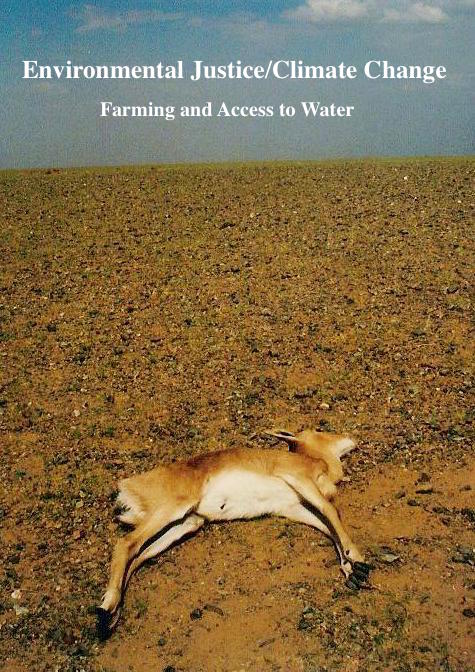
Photo credit: A Mongolian Gazelle, victim of drought, Gobi Desert 2009 courtesy of Mark Heard under CC BY 2.0


TABLE OF CONTENTS

How to read this issue of THE BEZINE:

  • Click HERE to read the entire magazine by scrolling (now includes this Intro), or
  • You can read each piece individually by clicking the links below.
  • To learn more about our guests contributors, please link HERE.

SPECIAL

Children call on world leaders to save the ocean, World Oceans Day

BeATTITUDES

Walking With Water, Rob Cullen
Water Wishes, Priscilla Galasso
Our Albatross Is Greed, But We’re Not Sunk Yet, Corina Ravenscraft
Close to My Heart, Michael Watson

 POEMS

Let the Rains Fall, John Anstie

The Value of Water, Paul Brookes
WET KILL, Paul Brookes
What Use Poetry When It Floods, Paul Brookes

Hybrid: Warm Hunger, Michael Dickel

Water, Ralph Waldo Emerson

Don’t Blink, Joseph Hesch

The Desert, Marieta Maglas

Postponed Awareness, Charles W. Martin
off course evolution, Charles W. Martin
death by committee, Charles W. Martin

#what more do you expect, Sonja Benskin Mesher

prints, Liliana Negoi
growth, Liliana Negoi
what remains after the tree, Liliana Negoi

Remember the Farm, Carolyn O’Connell

Guerilla Gardening, Phillip Stephens
Resurrection Restoration, Phillip Stephens

PHOTO/ESSAY

That Was Then, This Is Now, Naomi Baltuck

MORE LIGHT

For My Children, Rob Cullen


Except where otherwise noted,
ALL works in The BeZine ©2017 by the author / creator


CONNECT WITH US


Daily Spiritual Practice: Beguine Again, a community of Like-Minded People

Facebook, The Bardo Group Beguines

Twitter, The Bardo Group Beguines

Posted in 100,000 Poets, Musicians, Artists and Activists for Change, The B Zine

Call to register and prepare for 100TPC global event & Last call for submissions to the June issue of “The BeZine”


Notice from founders Michael Rothenberg and Terri Carion ~

Dear Friends of 100 Thousand Poets for Change,

It is that time of year again when we begin to sign up organizers and events for the next Global 100 Thousand Poets for Change Day–September 30, 2017. Please let me know if you will be organizing in your town.

Also, as you know, 100 Thousand Poets for Change is a non-profit 501 (c) 3 and we need your donations to keep this movement going strong.

We would be grateful if you would take a moment to make a donation through Paypal at 100 Thousand Poets for Change Donation Link at http://100tpc.org/?page_id=14104 or send a check donation to 100 TPC, Box 2724, Tallahassee, FL 32304, USA.

We need your support so that we can continue to provide a global platform for poets and artists to speak about peace, justice, sustainability, and community.

Now more than ever! Show your support!

Sincerely,

Michael and Terri

100 Thousand Poets for Change

100TPC.org

The BeZine will host a 100,000 Poets for Change virtual event. Poets are welcome to contribute from anywhere in the world and we encourage disabled poets to participate, especially those who are homebound.  Michael Dickel (Meta / Phor(e) / Play) takes the lead.


Deadline for the June issue is tomorrow (June 10th) at midnight PST.

THE BeZINE submissions for the June 2017 issues (theme: Environmental Justice/Climate Change: Farming and Access to Water) should be in by June 10th latest.  Publication date is June 15th. Poetry, essays, fiction and creative nonfiction, art and photography, music (videos), and whatever lends itself to online presentation is welcome for consideration. Please check out a few issues first and the Intro./Mission Statement and Submission Guidelines. No demographic restrictions.

The theme for the July issue is Prison Culture, Restorative Justice. The deadline is July 10th at midnight PST. Terri Stewart (Beguine Again) takes the lead.

Posted in The BeZine Table of Contents, TheBeZine

The BeZine, May 2017, Vol 3 Issue 8 Honesty & Transparency, The Post-truth (Post-factual Politices) Era

May 15, 2017

Due to technical problems, this issue didn’t get distributed to those who subscribe by email. J.D.


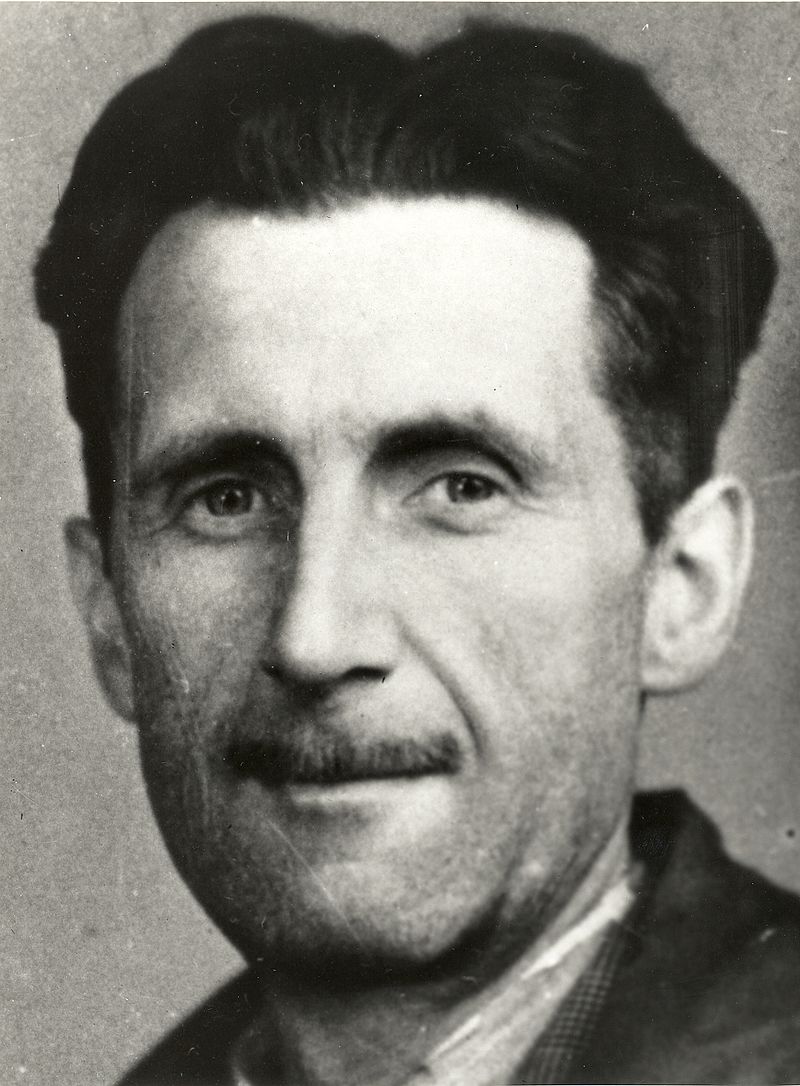
“In a time of deceit telling the truth is a revolutionary act.”

—George Orwell

This is an extraordinary time; a time when post-truth culture is thriving in Russia, China, America, Australia, Britian, India, Japan and Turkey. This political climate is founded and furthered by appeals to emotion and on conclusions based on ignorance of and resistance to hard science and well-documented history. A perhaps unprecedented level of bombast replaces common sense, honesty and sincere promise creating a climate that rests on disinformation, intimidation and divide-and-conquer as its primary weapons of control. This all combines to undermine rule of law, free speech and free media. We have administrations evolving in the spirit of Orwell’s 1984 where diplomacy and statesmanship have devolved into manipulative spins calculated to influence the gullible and solidify the power of would-be autharitarians.

With the mixed blessing of social networking citizens seem unable – or perhaps unwilling – to distinguish lies from truth and fact from fallacy. President Obama is described as “obsessed” with this problem (hyperreality) and the mixed ecosystem of professional journalism and social network reportage in which “everything is true and nothing is true.”

“In an age where there’s so much active misinformation, and it’s packaged very well, and it looks the same when you see it on a Facebook page or you turn on your television, where some over-zealousness on the part of a US official is equated with constant and severe repression elsewhere, if everything seems to be the same and no distinctions are made, then we won’t know what to protect…If we can’t discriminate between serious arguments and propaganda, then we have problems.”
—Barak Obama

We’ve decided this month to address the challenges that face our countries and the world. We’ve addressed these in essay and poetry, sometimes head-on and sometimes by a thread. Though perspectives and solutions may differ to some degree, there is clear agreement that the concerns are real as is the need to “resist.”

A last note: Thanks to Michael Dickel for further technical refinements to make this zine more accessible and readily readable. Thanks also to the members of our core team, to our guest contributors and to our readers for continued support, encouragement and the pleasures of our shared values.

In the spirit of peace, love and community
and on behalf of The Bardo Group Bequines,
—Jamie Dedes, Founding and Managing Editor

“Political language is designed to make lies sound truthful and murder respectable, and to give an appearance of solidity to pure wind. ”
― George Orwell

For this issue of The BeZine

  • Click HERE to read the entire magazine by scrolling (includes the intro above) and
  • To learn more about our guests contributors, please link HERE.

Posted in General Interest, The BeZine, The BeZine Table of Contents

April 2017, Vol. 3, Issue 7, Celebrating interNational Poetry Month

April 15, 2017

Poetry Month means that we have arrived at

…the cruelest month, breeding
Lilacs out of the dead land, mixing
Memory and desire, stirring
Dull roots with spring rain. (T. S. Eliot, The Wasteland)

One of the most famous poems “about” poetry, Marianne Moore‘s poem, “Poetry.” It famously begins with

I, too, dislike it: there are things that are important beyond
all this fiddle.

However, she goes on in the very next lines to say

Reading it, however, with a perfect contempt for it, one
discovers that there is in
it after all, a place for the genuine.

There is much that is genuine in this April issue of The BeZine, which celebrates Poetry Month globally with our celebration of interNational Poetry Month. We are proud to present a wide variety of poets and poetry from all over the world. We have 45 posts of poetry (many with more than one poem), an essay, and one short story. This issue of The BeZine is an anthology!

Over the years, questions of poetry’s health, suggestions of its “death,” and concerns over who, if anybody, might be reading it, continue to swirl around in various articles, essays, and round tables. While many of the debates one might encounter in this bubbling broth come from a perspective of poetry’s decline, it seems to me that the reasons that such questions arise come from two primary sources.

One is an anxiety about how society values what we do, as poets or readers of poetry. It seems that the writers from this vein often worry that, in fact, society does not value poetry—as recorded in statistics about readership or as suggested by some other perceived decline in attention to it. The other vein, in my view, is a more healthy concern with what poetry is and what we are doing when we “do” poetry (read, write, critique).

This past year, a lot of words spilled onto the screen and page regarding Bob Dylan receiving the Nobel Prize—is a song writer a poet? Of course, poetry comes from song, so a song writer is a poet. Is poetry still song, then, or has it gone “beyond”? These articles and essays seem to flow from both of the sources I’ve suggested: anxiety and reflection. If our modest zine is any indication, poetry thrives throughout the world.

While the anxieties and reflections continue—and they are not new, witness the 1919 date of Marianne Moore’s poem—poets continue to write, and readers continue to read. You are reading this, so you are evidence of readers who have an interest in poetry. Whether there are more or fewer readers in any year or decade might fluctuate, or the methods of measuring them might change. However, as there are poets, there are those who read poetry. And listen to it—as in spoken word and slam.

Billy Collins opens his essay, The Vehicle of Language, suggesting that a problem with the reception of poetry is how poetry is taught:

For any teacher of poetry with the slightest interest in reducing the often high-pitched level of student anxiety, one step would be to substitute for the nagging and ultimately pointless question, “What does this poem mean?” the more manageable question “Where does this poem go?” Tracking the ways a poem moves from beginning to end puts the emphasis on the poem’s tendency to travel imaginatively and thus to carry the reader in the vehicle of its language.

In principle, I agree that the emphasis should be on where poetry goes, how it plays with language—not on decoding “meaning.” The same approach could be applied to the concerns expressed about poetry. The concerns need not be about where poetry is as measured against expectations of its current quality, akin to the “meaning” anxiety of its teaching.

Although some express an anxiety about the “quality” of online poetry or spoken word or even “today’s” written word, we would do well to reflect instead on where poetry is going, for us as readers and writers—where we as writers of it want to go with our poetry, and where we as readers of it want poetry to go to be most satisfying.

Poetry invites us to take an imaginative journey: from the flatness of practical language into the rhythms and sound systems of poetic speech. (Billy Collins, The Vehicle of Language)

It is our hope that you will read the poetry here with an appreciation for poetry’s “place for the genuine,” and find satisfaction in the depth and breadth presented here. Whether or not you will have “a perfect contempt for it” as you read, we leave up to you…

Michael Dickel
Contributing Editor


TABLE OF CONTENTS

Celebrating interNational Poetry Month

To Read this issue of The BeZine

  • Click HERE to read the entire magazine by scrolling, or
  • You can read each piece individually by clicking the links below.
  • To learn more about our guests contributors, please link HERE.

Poetry

April Fool, Iulia Gherghei
Barricades and Beds, Aditi Angiras
The Burgundy Madonna, Patricia Leighton
Common Ground, Dorothy Long Parma
dancing toward infinity, Jamie Dedes
Don’t Let Fall Go – sonnet, Liliana Negoi
Donatella D’Angelo | unpublished poems 2016
Dreaming of Children, Renee Espiru
A few from the vaults …, Corina Ravenscraft
Four Poems by Reuben Woolley
Full Buck Moon and other poems by Lisa Ashley
gary lundy’s poetics | 5 prose poems
A geography of memories | Reshmi Dutt-Ballerstadt
Grandmother, Dorothy Long Parma
having found a stone in my shoe …, Charles W Martin
healing hands …, Charles W Martin
Kali, Gayle Walters Rose
Kinga Fabó | 3 Hungarian Poems in Translation
Lead Boots, David Ratcliffe
levels, Liliana Negoi
luke 10:25-37…, Charles W Martin
Melissa Houghton | 3 Poems
Michael Rothenberg and Mitko Gogov
Ms. Weary’s Blues, Jamie Dedes
not with a bang but a whimper, three poems, Jamie Dedes,
One of My Tomorrows, John Anstie
patriarichal wounds…, Charles W Martin
Poetry and Prayer, Phillip T Stephens
PTSD Children, Charles W Martin
Rachel Heimowitz | Three Poems from Israel
the red coat, Sonja Benskin Mesher
Science Fiction, Phillip T. Stephens
Socks | Michael Dickel
Spring in my Sundays, Iulia Gherghei
Standing Post: Trees in Practice, Gayle Walters Rose
Teaching Poetry | Michael Dickel
Terri Muuss | and the word was
The Marks Remain, David Ratcliffe
Three Poems by Paul Brookes
Three Poems by Phillip Larrea
Three Poems from Albanian | Faruk Buzhala
To Our Broken Sandals, Mendes Biondo
To the Frog at the Door, Jamie Dedes
Two Poems by Denise Fletcher
Valérie Déus | 3 Poems

BeAttitude

Look Upon My Works, Ye Mighty, Naomi Baltuck

Short Story

Whispers on an April Morning Breeze, Joseph Hesch


Except where otherwise noted,
ALL works in The BeZine ©2017 by the author / creator


CONNECT WITH US


Daily Spiritual Practice: Beguine Again, a community of Like-Minded People

Facebook, The Bardo Group Beguines

Twitter, The Bardo Group Beguines

Posted in General Interest, The BeZine, The BeZine Table of Contents

March 2017, Vol.3, Issue 6, Science in Culture, Politics and Religion

March 15, 2017

The title of David Cooper’s book on Kabbalah invites us to re-think the Creator as Creating: God is a Verb. While I don’t want to equate science to God in a religious sense, I want to borrow this re-conception. Science is creative, creating, if you will, knowledge of the world. Science is a verb.

Too often we get tied down to a concept of science as about facts. However, as Thomas Kuhn describes it in The Structures of Scientific Revolutions, science is a process (hence, verb). The process involves a method (the scientific method), observation, repeated results, and, if repeated results are consistent, an assertion that a hypothesis is likely to be true. However, Kuhn explains that it is also a sociological process where the method and affirmed hypotheses lead to paradigmatic beliefs—models that predict reasonably well future observations.

The paradigms are not easily changed—the paradigm of Newtonian Mechanics, which work very well in most real-world situations, did not easily yield to Relativity and Quantum Mechanics even as Newtonian physics accumulated observations it couldn’t explain while quantum physics explained more and more. As a model for most human activities on Earth, though, Newton’s model still works. It’s when boring down to atomic particles or moving out into massive astronomical systems, or specific cases like black holes and light itself, that we need Quantum Mechanics.

The different (and often competing) models—also known as theories—are products of science, the verb. The scientific process refines, overturns, explores new models. Science, at its best, produces closer and closer approximations of the actual universe it models. This is different from a belief in an unwavering truth or an ideology—in part, because it relies on observation and corrections if observations do not show what the model predicts. And second, because science does not make truth statements but, rather, probability statements. Sometimes, the probability approaches 100%, sometimes only 95%.

The flexibility that comes from self-correction unfortunately also provides ammunition for “science deniers,” such as those who deny climate change. As science is a process and models do change, as models are based on predictive ability and that ability is not 100% even in the best cases, those whose ideology or greed get in the way of accepting the predictions (even the very strongly likely ones) often claim the whole model is “unreliable,” or point to earlier results that required corrections to the model in order to discredit the whole theory. Yet, those who object do not offer an alternative model that does stand up to the process of scrutiny, repeated results, and reliable prediction of future events. They often offer no alternative at all.

At its outer theoretical spheres, the science verb sometimes takes us to conversations that sound like mysticism—as do some of aspects of that mysterious energy, light. Humans have a long cultural (and religious) history with light. Arthur Zajonc’s book Catching the Light: The Entwined History of Light and Mind provides a wide ranging cultural and inter-cultural exploration of human understanding of light through history. In the end, Zajonc re-connects current quantum physics concepts with those from ancient myths as accurate metaphors (or analogies). Zajonc, a professor of physics at Amherst (now retired), has studied culture, mind and spirit in relation to physics from his perspective as a physic working in quantum optics (for example: The New Physics and Cosmology: Dialogues with the Dalai Lama, one of his better known books).

In a very real sense, the verb science interacts with arts and culture. It is an active process of human society, a developed methodology for producing close observations and repeatable results to help us build models that predict future results under different conditions. It is not a series of facts, but rather a system of understanding and predicting creation. In this way, it actively creates the world, literally as we know it. And it has influence culture. Certain newly (re)discovered understandings from mathematics helped European artists develop perspective in painting. A recent example, Chaos Theory, with its fractals and butterfly effect, has influenced art, music, and literature, and not just with science fiction movies.

In this issue, we celebrate, explore, and raise questions involving science, culture, politics, and religion. John Anstie and I both contribute poems that have sub-atomic particles at their centers, but are not (only or even mostly) about them. Naomi Baltuck explores Galileo through the Musee Galileo, in another one of her marvelous photo-essays. An sampling of snippets from science take us through Science in culture, politics and religion”  in Corina Ravenscraft’s exploration of connections. In “A Life,” Michael Watson gives a highly personal account of his own encounters and loves with different ways of understanding — or knowing — embodied in the theme’s elements of science, culture, religion, and politics. Current politics seem to attack the different approaches each has to offer. Phillip T. Stevens begins with Chaos Theory and moves into myths, the myths of myths, as it happens. Hearts, Minds, and Souls, by John Anstie, considers the theme from a socio-political framework, considering societies need to control as one of many elements in shaping science, culture, and religion through politics.

The issue has much more to offer— fiction by Joseph Hesch and lots of poetry by Jamie Dedes, Renée Espiru, Priscilla Galasso, Terri Muuss, and Phillip T. Stevens. The more light section has three more poems that are not directly related to this month’s theme, but we wanted to share with our readers at this time.

Michael Dickel
Associate Editor


“It is frequently the tragedy of the great artist, as it is of the great scientist, that he frightens the ordinary man.” Loren Eiseley (1907 – 1977), American anthropologist, educator, philosopher, and natural science writer

This issue of The BeZine is dedicated to scientists the world over, especially those who are conscientiously fighting to preserve this earth, its people, and scientific integrity. Throughout history scientists have met with the same skepticism they face in some quarters today. They were sometimes misunderstood and crudely punished. Alan Turing comes to mind first, cruelly treated after being of enormous service to his country.

I think of  Rhazes (865-925), a forward-looking medical scientist who wrote a compendium of all that was known about medicine in his time.  He was beaten over the head with his book, went blind and was unable to continue his work. Galileo’s (1564-1642) insight and honesty was labeled heresy. Albert Einstein’s (1879-1955) books were burned. Henry Oldenburg (1619-1677) was suspected of spying when he sought to acquire and publish worthy works by people outside his own country.

The tensions between ignorance and cognoscence continue today. So much so that in my country scientists are planning an Earth Day march on Washington to protest the current regime’s dismantling of climate protections. Members of many scientific and research groups are scrambling to archive government data they believe could be in jeopardy under this new regime.

Many thanks this month to Michael Dickel for having my back on this issue and for his distinguished contributions. Thanks also to all our supporters – especially Terri Stewart, Charlie Martin, Chrysty Darby Hendrick, Ruth Jewel, Lana Phillips, Sharon Frye, Silva Merjanian, M. Zane McCllelan and Inger Morgan and to this month’s contributors (not in any particular order) Priscilla Galasso, Corina Ravenscraft, Joe Hesch, Michael Watson, Naomi Baltuck,  John Anstie, James R. Cowles, Terri Muuss and Pat Leighton. All are valued as we pursue this small effort in the name of peace and understanding.

New to our pages this month is Phillip T. Stevens. Phillip tells me he spent most of the eighties and nineties as a community and arts activist. To pay his bills he taught writing and visual design to community college students and at-risk youth for the Texas Youth Commission. He published four novels, two volumes of poetry and academic papers (including a series of articles on the role of metaphoric thinking in the development of scientific theory and religious belief for the International Journal of Religion and Spirituality in Society). Phillip lives with his wife Carol in Oak Hill, Texas, where they rescue abandoned cats for Austin Siamese Rescue.

And here we are. Thanks to the efforts of many, we leave the March issue in your hands. Enjoy and …

Be inspired. Be creative. Be peace. Be …

On behalf of the Bardo Group Beguines
and in the spirit of love and community,
Jamie Dedes, Managing Editor


TABLE OF CONTENTS

Science in Culture, Politics and Religion

To Read this issue of The BeZine

  • Click HERE to read the entire magazine by scrolling. (I place it in  backwards though, so you’ll be starting at the end and moving forward.  Sorry about that.  Just getting this down. J.D.), or
  • You can read each piece individually by clicking the links the below.

BeAttitudes

The Speed of Light Poem, Michael Dickel

Unreality, John Anstie

Lead Features

That Was Then, This Is Now, Naomi Baltuck
Some Scientific Snippets, Corina Ravenscraft
A Life, Michael Watson
Still Phoning ET, James R. Cowles
Myths of Eden and Science, Phillip T. Stevens

Hearts, Minds and Souls, John Anstie

Fiction

Shills Like White Elephants,  Joseph Hesch

Poetry

The Return of Primordial Night, Jamie Dedes
Butterfly Effect, Michael Dickel
The Road Leads Away and Back, Renee Espiru
Brain Tools, Priscilla Galasso
Landscape with rice, Patricia Leighton
and the word was, Terri Muuss
Two Excerpts from “Poems, Parables and Prayers”, Phillip T. Stevens

More Light

Once Upon a Sea Green Day, Jamie Dedes
Purim Fibonacci, Michael Dickel
How Can It Be, Ann Emerson
What I Can Say, Terri Muss
Spread of Fear, Carolyn O’Connell


CONNECT WITH US

Daily Spiritual Practice: Beguine Again, a community of Like-Minded People

Facebook, The Bardo Group Beguines

Twitter, The Bardo Group Beguines

Posted in General Interest, The BeZine Table of Contents, TheBeZine

The BeZine, Vol. 3, Issue 5, February 2017, Overcoming Hate

think how wonderful when all the registries are
…..thrown out with the trash
so that the children of the poor come out ahead
some half-pint future president
on the street the man who stopped you with his
…..pockets inside out
is loading you with fruits & sweets is kissing you
a hero who can send a message into every little head
…..the thought of some enchanted evening
the reciprocal tyranny of fathers & of sons is over
& the need or love grows always stronger makes the
…..master builder stretch the promenades into the
…..farthest outskirts
which is freedom yes & which is love

excerpt from Tyranny or Love by Vítêzlav Nezval in Atilyrik & Other Poems

Love can be a kind of tyranny but hate tyrannizes the hated and the hateful and everyone around them. My godmother used to say that it is harder to hold onto hate than to let go in love.  How do we overcome the hate in ourselves?

Michael Dickel comes to the subject by exploring the biblical story of Yaakov (Jacob) wrestling with himself and God.

“To overcome hate, we must wrestle with our own soul (tendencies toward harsh judgments, anger, hate—that is, wrestle with our own fears and demons) and with God …” Michael Dickel

Naomi explores all the “H” words, some positive and some not so much, including hate and arriving at like-Hearted. She gives us balance. Corina Ravenscraft explores how hate manifests and Priscilla Galasso comes to it from the position of personal growth. She says:

“The more I work with my own feelings and come to understand myself, the more I can begin to understand others. When I see someone who is angry and hateful, I understand that he is suffering.”

The times are challenging us to explore our emotions and how we react to the encroachment by some elements into the domain of compassion, freedom and justice. We see this expressed in Mark Heathcote’s poem, which reminds us that strong emotion needs fuel, and in Michael Dickel’s Hate Is Not the Opposite of Love and my own Time for the Temple Whores To Sleep With Insanity.

“The opposite of love is not hate, it’s indifference. The opposite of art is not ugliness, it’s indifference. The opposite of faith is not heresy, it’s indifference. And the opposite of life is not death, it’s indifference.”  Elie Wiesel

The core issues it turns out are indifference and fear. George Orwell reminds us of what we have to fear if we are not vigilant and proactive. The Rev. Dr. Martin Luther King reminds us that “Darkness cannot drive out darkness: only light can do that. Hate cannot drive out fear: only love can do that.”  Love is freedom, the absence of tyranny, and the more we love, the more we are able to love.

In the spirit of Peace, Love and Community
and on behalf of The Bardo Group Beguines,
Jamie Dedes
Managing Editor


To read this issue of TheBeZine

  • Click HERE to scroll through and read the entire magazine.
  • Or, you can read each piece individually by clicking the links in the Table of Contents below.  Enjoy!

Table of Contents

BeAttitude

“The Party told you to reject the evidence of your eyes and ears. It was their final, most essential command.” George Orwell, 1984

The Animals Are Running the Farm, Jamie Dedes

Overcoming Hate

Lead Features

Your Attention, Please, Corina Ravenscraft
The “H” Word, Naomi Baltuck
Transcending Anger, Power and Fear, Priscilla Galasso
Hate Is Not the Opposite of Love, Michael Dickel

Poetry

Silencing the Lambs, John Anstie
Time for the Temple Whores to Sleep with Insanity, Jamie Dedes
Wrestling with God, two poems, Michael Dickel
Five Glosses from Imaginary Exegesis, Michael Dickel
Deconstruction, Michael Dickel
Flying without dice, Michael Dickel
I remember dreaming, Michael Dickel
Hate, it is a termite mound, Mark Heathcote

– End – 

CONNECT WITH US
Daily Spiritual Practice: Beguine Again, a community of Like-Minded People

Facebook, The Bardo Group Beguines

Twitter, The Bardo Group Beguines

Posted in General Interest, The BeZine, The BeZine Table of Contents

THE BeZINE, Jan. 2017, Vol. 3, Issue 4 – Resist

“When injustice becomes law, nonviolent resistance becomes duty.” Petra Kelly (1947-1992), co-founder of the German Green Party (1979) at a rally in Nuremberg (1983).

15253540_10153871288971612_1728300874287005039_nOur theme this month is Resist! We chose it to coincide with a protest today that was initiated by poets Alan Kaufman and Michael Rothenberg. Thanks to Alan and Michael, poets across the United States will gather on the steps of their local city halls and take their stand against the backward values that the U.S. President Elect represents. PEN America also sponsored an event today at the New York City Public Library and thanks to them protests are happening today in ninety U.S. cities and some cities outside the States.

As is our tradition at The BeZine, voices in protest are not limited to the U.S.

What are we trying to accomplish by protesting? “Dump Trump” is a rallying cry for some but it’s unlikely to happen, at least in the short-term.

We think what makes sense and what people want to focus on is creating awareness and building bridges, not walls. We want to stand in solidarity against scapegoating and the sort of rhetoric that fuels misunderstanding, hate and violence. We stand in support of the rule of law, civil rights and human rights. We want to keep the feet of the power elites to the fire and demand accountability.

Michael Rothenberg and Alan Kaufman have written that with “the Fourth Estate under siege it is now up to writers, poets, artists and musicians to join in and put our shoulders to the wheel.…There is no Post-Truth Era for the world of [the arts].” And here we are …

It takes courage to speak out, but speak out we must and today we bring you a collection that we hope will hearten you, if only by virtue of seeing just how many people share your values. There is hope in that.

It begins, with one brave enough to appear.
One idea, one voice in an asphalt void.
Oligarchs try to crush all dissension with fear.
Undaunted, the idea will not be destroyed,
Shares roots with others; reassures, “I’m still here.”  —Corina Ravenscraft

In this issue, Michael Watson, Priscilla Galasso, and Naomi Baltuck gift us with BeAttitudes that are measured, gain their wisdom from history and the arts, and speak to the long-term and to the preservation of democratic values.

“There’s a striking parallel between our current social order and that of the Middle Ages, in which the wealthy ruling class acted and peasants endured.”  — warns Naomi Baltuck in Boots on the Ground

Thanks to Michael Dickel we offer a fine collection of protest music and an apologia for activist poetry.  Zena Hagerty of HamiltonSeen brings us the life of Joe Hill, labor activist and song writer.  In The Push, from Zena and her business partner, Cody Lanktree, we learn how Hamilton—the fourth largest city in Canada—courageously pushed back against abuses and lack of transparency in their city government.  We have a flash fiction piece from poet and writer, Joe Hesch.

This month’s poetry collection is a rather extraordinary gift from poets who are well-established. They are published here alongside emerging poets we want to support and encourage. Together the poems serve to frame the current challenges we face in our world.

New to our pages this month (presented in no special order) are Greg Ruud, Russ Green, Joy Harjo, Alan Kaufman and our featured poet, Reuben Woolley. We are delighted to welcome Dianne Turner back.

Enjoy the Zine and do Resist! This is the moment.
—Jamie Dedes, Managing Editor

My first contact with The BeZine came when Managing Editor Jamie Dedes wanted to review my book of poems, War Surrounds Us, and to interview me. Somehow, from there I became one of the many “core” writers who contribute to The BeZine community—and, because I am involved with 100-Thousand Poets for Change (100TPC), I ended up taking some responsibility for our annual live 100TPC online event. Now I have a nice title, Contributing Editor. As one of the core writers, and a contributing editor, I suggested the theme Resist! for this issue to coincide with the protest readings my friends Michael Rothenberg and Alan Kaufman have instigated.

I have been active in peace and anti-racism movements for years. I recall when I first heard about the Women’s Movement, as a high school student planning a student protest against the Viet Nam War. My academic work relates to violence and masculinity (see my essay, The Warm Blanket of Silence, in this issue).

However, this autumn marks, for me, one of the darkest periods in my memory. The rising influence of white supremacy (sic) movements, blatant misogyny, unapologetic homophobia, open anti-Semitism (from the right and the left), and sword-rattling (fake?) machismo in this last U.S. election—manifested openly and through “dog-whistles” by the President Elect, his supporters, and his advisors—recall the period before WWII. And not just in 1930s Germany—fascism was popular in the U.S. and much of Europe before the war, including a notorious “Fascist Plot,” also called “The White House Coup,” in 1933. Now the industrialists will have The White House—they don’t need a coup. The probable influence of Russia on our elections (not to mention the FBI) comes straight from 1950s nightmares. These dark shadows oppress my mood and sap my energy.

The only solution I know is to Resist! To stand with others and to say, loudly, “No!

Jamie has expressed the idea of resistance positively above. And I agree with her. Resistance must be positive, but also strong. It should be non-violent (until violence becomes a necessary and last-resort defense). And it must be embedded in all that we do. My own poetry, art, music, teaching, and life should help awaken, empower, and facilitate resistance to the hate, indifference, and greed that permeate our political culture (a lofty goal I expect I will fail in, even as I attempt to achieve it). I hope to do so in ways that welcome dialogue and allow for diverse responses and approaches across a wide range of contexts. However, I will not “give him a chance” to promulgate hate, strip the environment, legislate for racism or hate, or further oppress those under the heal of the capitalist boot. I resist.

I resist the numbness.

I find energy in resistance.

I resist!
—Michael Dickel, Contributing Editor

Link HERE

to scroll through the entire zine
If you read something you’d like to share, just click on its title in the header to get the URL for a specific piece.

IN A NUTSHELL

Let Us, a poem by Alan Kaufman
letting my freak flag fly, a poem by Charles W. Martin
Scraggly Dandelion in a Concrete Crack, a poem by Corina Ravenscraft

BeATTITUDES

The Act of “Survivance”, Michael Watson
Practising Freedom of Choice, Priscilla Galasso
Boots on the Ground, Naomi Baltuck
Werewolves—the Hounds of Hate, Michael Dickel

MUSIC

I ain’t no millionaire’s son, Michael Dickel
Democracy is Coming to the U.S.A., Michael Dickel

DOCUMENTARY FILM

One Wobblie’s Life: Joe Hill, Labor Activist and Songwriter, Zena Hagerty with Jamie Dedes
“The Push” or how the eleventh largest city in Canada is pushing back, Zena Hagerty and Cody Lanktree

FEATURE ARTICLES

In Defense of Activist Poetry, Michael Dickel
Silence i—Warm Blanket in Silence, Michael Dickel
Silence ii—Sound of Silence, Michael Dickel

Writer’s Block: Doubt, Fear and Heartbreak, Jamie Dedes

FICTION

The Nature of the Beast, Joseph Hesch

FEATURED POET: Ruben Woolley

Congratulations to UK poet Reuben Woolley for the distinction of an invitation to The Fourth International Festival of Poetry in Marrakesh. All expenses are paid for by the festival organizers but the airfair. Just like the rest of us who earn our bread with poetry, Reuben’s purse is a bit light. Reuben has set up a Go Fund Me page to raise the money for airfare HERE.

natural killers, Reuben Woolley
the uncertainty of bright maps, Reuben Woolley
shade talking, Reuben Woolley
venus of coventry, Reuben Woolley
barely anywhere in time, Reuben Woolley
darker application, Reuben Woolley

POETRY

Deconstruction, Michael Dickel
So Thirsty, Michael Dickel
Circulating Language Manfesto, Michael Dickel

Dovetailed, Renee Espiru

Fire Song, Russ Green

Fear Poem, Joy Harjo

The Taste of Cyanide, Mark Heathcote

The Oak, the Man and the Mighty Weed, Joseph Hesch

Into the Unknown Flee, M. Zane McCllelan
War Lore, M. Zane McCllelan
This Is Not a Lullaby, M. Zane McCllelan

Of Seas, Bicycles and Whiskey, Liliana Negoi
no rain, Liliana Negoi
congregrating war, Liliana Negoi
faulty darwinism, Liliana Negoi

Noblesse Oblige, Carolyn O’Connell

Now That Anything Can Happen, Greg Ruud
Righteous Anger, Greg Ruud

Goat Herders, Dianne Turner

Waiting, Lynn White
Separate Development, Lynn White

Leaving Aleppo, Peter Wilkin

In close:

Here and Hereafter, Jamie Dedes

CONNECT WITH US
Daily Spiritual Practice: Beguine Again, a community of Like-Minded People

Facebook, The Bardo Group Beguines

Twitter, The Bardo Group Beguines

Posted in Peace & Justice

Wishing you every blessing ….

14720398_1514186551925651_1821171829511947280_n

From all of us here at “The BeZine,” Beguine Again and in The Bardo Group Beguines, wishing you every blessing throughout this holy day season.  Be the peace and peace will be with you.

Posted in General Interest, The BeZine, The BeZine Table of Contents

DECEMBER 15, 2016, VOL. 3, ISSUE 3, THE HEALING POWER OF THE ARTS

“Poetry finds you when you are broken, insists on taking you into its fold, puts your pieces together and then you never leave.” Reena Prasad

Long before we had libraries teeming with medical and psychiatric tomes, we had cave paintings, carved images, storytelling, song, musical instruments and dance. The power of artistic expression to transform both creator and consumer was assumed.

The arts bear witness to sacred space, to the spontaneous dance between the conscious and the unconscious, to the existence of a symbolic realm. It is from these liminal places that our truest art and our healing words, visions, sounds and movement are born. Through art we experience a shamanic-like world that is beyond the consensual one, a world where each spirit is free to find its own core truth.

Hence, this month, we have: a poet (Reena Prasad) finding sanctuary and rebirth by reading and writing poetry: a singer/musician/poet (John Anstie) connecting with his own joy and the people with whom he collaborates; and Corina Ravenscraft’s interview with a soldier suffering from PTSD and finding relief in building and painting hundreds of miniature figurines.

Italian journalist, Mendes Biondo, brings us an interview with and three poems by Poemedic Deborah Alma, who prescribes “emergency poetry.” Our resident storyteller Naomi Baltuck offers us a PhotoStory that suggests just how empowering it is to tell our own stories. It is an excerpt from her book Apples From Heaven: Multicultural Folk Tales About Stories and Storytellers.  Michael Watson takes us for an intriguing peek into toy theatre/object theatre performance as therapy.

Our BeAttitude this month is by Priscilla Galasso, who tells it like it is, as she always does, a critical must-read.

You’ll find the poetry ranges from catharsis to confirmation. We feature the work of three emerging poets: M. Zane McClellan, new to our pages; Inger Morgan, who shares her poem, the splendor of blue, in Swedish and English and debuted last month; and Mark Heathcote, whose work has graced several issues.  Be sure to encourage them your “Likes” and comments.

The accomplished Reena Prasad who debuted with us last month is back with two poems.  Her stunningly beautiful essay Sanctuary is written from the perspective of the poet, but I’m sure other art forms offer the same potential for comfort and transformation to their own devotees.

We’re pleased to treat you to the work of regular favorites:  contributing writers Charlie Martin and Lily Negoi and guest writers Renee Espiru and Carolyn O’Connell.

We have a special guest poet this month, Myra Schneider, who has been featured in these pages before.  Myra is most well-known in the UK where – on turning 70 this year – she celebrated both her birthday and the publication of her fourteenth collection, Persephone in Finsbury Park. She teaches at Poetry School and is a consultant to Second Light Network.

THE JANUARY ISSUE

In January, our topic is Resist. We are piggy-backing on Michael Rothenberg’s and Alan Kaufman’s call to American poets to resist the incoming president.  Our effort is not restricted to poetry or to the United States. We’re doing a global call for submissions that counter policies – no matter what country – which undermine equity, foster poverty, encourage elitism, hate and scapegoating … all those things that pit people against people, putting many people at risk of disease, homelessness, starvation and murder. Please read the submission guidelines first. Send your work to bardogroup@gmail.com. American-Isreali poet and contributing editor to The BeZine,  Michael Dickel, and I will collaborate on the production of the January issue.

HAPPY HOLIDAYS FROM ALL OF US AT THE BeZINE!

We represent the beautiful and great wealth of the world’s wisdom traditions, nationalities, races, disabled and LBGTQ.

The historic experience of our Jewish friends, the plight of our Palestinian friends, the suffering of our Syrian brothers and sisters and others who are or have been victims of social and economic injustice and human rights violations informs our effort. We know that lines must be drawn, that silence is not an option, and that scapegoating can only lead to pain. Having said that, we are  “prisoners of hope*,” and our hope is founded on our faith in you and on the foundation of those values we hold in common.

14720398_1514186551925651_1821171829511947280_n

In the spirit of community and
on behalf of The Bardo Group Beguines,
Jamie Dedes
Founding and Managing Editor

* Rev. Doctor William J. Barber
Illustration source unknown: if it’s yours, please let me know. I’ll take it down or credit as you prefer.

Bios of Contributing Editors and Writers

Bios of Guest Contributors

TABLE OF CONTENTS

Link HERE to read The BeZine My apologies: I had some technical challenges and the Zine lays out in reverse order. I know what the problem is and the next issue will be fine. I recommend that you scoot to the end and move forward to read it in the correct order. Thank you! J.D.

THE HEALING POWER OF THE ARTS

BeAttitude

Armageddon and The Art of French Cooking, Priscilla Galasso

Essay

Sanctuary, Reena Prasad

Feature Articles

Power of the Word, Carolyn OConnell
Aftermath, Michael Watson
Piece by Painted Piece, Corina Ravenscraft
The Healing Adventures of Deborah Alma, Poemedic, Mendes Biondo
Singing for the Love of It, John Anstie
Don’t Confuse Hunger for Greed, the poems of Ruth Stone, Jamie Dedes

PhotoStory

Telling It To the Walls, Naomi Baltuck

Poetry

Special Guest Poet

Mahler’s Ninth, Myra Schneider

Poems

Dark over Light Earth / Violet and Yellow in Rose,Laura Braverman
Wabi Sabi, Jamie Dedes
More Than a Gift, Renee Espiru
The Artist’s Restorative, Mark Heathcote
a poet’s prescription, Charles W. Martin
Laying on of Hands, M. Zane McClellan
Birthing to Earthing, M. Zane McClellan
Writing to Stay Alive, Reena Prasad
The World in the Cracks, Reena Prasad

MORE LIGHT

Poetry

Special Guest Poet

The Silence in the Garden, Myra Schneider

Poems

the splendor in blue, Inger Morgan
december mail, Liliana Negoi
the was of the will be, Liliana Negoi
water, Liliana Negoi

CONNECT WITH US
Daily Spiritual Practice: Beguine Again, a community of Like-Minded People

Facebook, The Bardo Group Beguines

Twitter, The Bardo Group Beguines

Posted in General Interest, The BeZine Table of Contents

November 2016, Vol.3/Issue 2, Loving Kindness

November 15, 2016

later that night
i held an atlas in my lap
ran my fingers across the whole world
and whispered
where does it hurt?
it answered
everywhere
everywhere
everywhere.”
excerpt “what they did yesterday afternoon” by Warsan Shire

In our themed section this month our writers explore acts of kindness that are motivated by love (respect) as expressed to neighbors, to self and for the peoples of the world and the environment.

London-based Somali writer Warsan Shire’s poem above makes a powerful statement about the world today. Our writers define some of the issues, express their pain and encourage right action. They move from a hip-hop poem calling us to unity, collaboration and a sense of self-worth to an experimental expression of sadness and disillusionment in the aftermath of a mean-spirited presidential campaign and the inclusion of an impassioned piece asking us to stand against moral injustice and not use our cultural differences as an excuse to hate.

You’ll find a stunningly beautiful photo-story, a short story, some short articles along with a wealth of poetry. You’ll see a few emerging writers whose values are appreciated and who need our encouragement. They stand alongside many polished professionals whose work will take your breathe away. You’re sure to be delighted with the poems in our More Light section which includes a wonderful blues poem – a villanelle – riffing on the Robert Johnson lyric “blues walkin’ like a man.”

THE TALENT IN THIS ISSUE

Our old friend, Marilynn Mair, the queen of mandolin, is back and so is Liliana Negoi after a hiatus. They were much missed. This month we are pleased to feature again Aprilia Zank, Mendes Benido, Kimberly Wilhelmna Floria, Renee Espiru, and Carolyn O’Connell.

New to our pages are: Kinga Fabo (poems in English and Hungarian), Inger Morgan, LaMont Anthony Wright (a.k.a. Graffiti Bleu), Ruth Hill, Mark Andrew Heathcote and Reena Presad. Please welcome them with “Likes” and comments.

From our stellar core team we have Naomi Baltuck, Michael Dickel, Priscilla Galasso, Joe Hesch, Corina Ravenscraft and Lana Phillips.

Thank you all for your generosity and for your commitment to our shared mission.

Check out bios in page links down below the Zine.

NEWS

Now you can read The BeZine by clicking on one link.You’ll be able to scroll through all the features.  When you get to “older posts,”  just click on it to view the rest of the magazine. No more need to go back-and-forth to the Table of Contents.  There are no longer tacky WordPress ads to distract and annoy us. Note also our new url: thebezine.com.

Regular readers will have noted our new look and a new style. I opted for something that would showcase each feature and that is simple and uncluttered. You can “Like” easily and if you click on featured title, you can leave a comment. If you want to link a piece to your blog, website or  Facebook, just click on the title and copy and paste the url. Easy peasy.

We’re still flying with WordPress, though over the course of a year I’ve experimented – as time, energy and finances allowed – with a variety of options including virtual flip books.  I also tested  different WordPress themes, which I have used for some issues. I’ve appreciated the evals some of you gave me.  Thank you! You know who you are and I love that you care. I factored in your comments as I explored the remarkable number of options available for eZines today. Special thanks to Priscilla Galasso who often cleans up after my dyslexia.

In the spirit of Love and Community and on behalf of The Bardo Group Beguines,

Jamie Dedes, Managing Editor

Volume 3/Issue 1, Loving Kindness

Link HERE to read The BeZine

Theme Features

BeAttitudes

Godbody, LaMont Anthony Wright
Hate is not the opposite of Love, Michael Dickel
I Believe in a Higher Power, Kimberly Wilhelmna Floria

Features

A Little Kindness, Corina Ravescraft
Meeting My Neighbor, Priscilla Galasso
Another Kind of Charity, Mendes Biondo

PhotoStory

Resistance is Not Futile, Naomi Baltuck

Fiction

A More Perfect Union, Joseph Hesch

Poetry

Seeds of Love, Reena Presad
Mea Culpa, Inger Morgan
Love Is, Carolyn O’Connell
The Nature of Metta, Renee Espiru
Unconditional Love, Mark Andrew Heathcote
Wild, Ruth Hill
Chaos in a Time of Wildfire, Lana Phillips

More Light

blues walking like a woman, Marilynn Mair
Isadora Duncan Dancing, Kinga Fabo
Transfiguration of the Word, Kinga Fabo
Poison, Kinga Fabo
No filigree angels, Aprilia Zank
Love on the Wall, Carolyn O’Connell
call me, Liliana Negoi
in time, Liliana Negoi

CONNECT WITH US
Daily Spiritual Practice: Beguine Again, a community of Like-Minded People

Facebook, The Bardo Group Beguines

Twitter, The Bardo Group Beguines

Posted in The BeZine, The BeZine Table of Contents

THE BeZINE, October 2016, Vol. 3, Issue 1, Rituals for Peace, Healing, Unity

October 15, 2016

I am honored to take the lead for this issue of Rituals for Peace, Healing and Unity. Lately, I have not felt very peaceful. In large part, it is due to the election cycle in the United States. It fills me with incredible anxiety. At the same time, I am actively part of a movement called Peacemaking Circles. Peacemaking Circles came to me via Saroeum Phoung who was taught by the Tagish Tlingit First Nation Peoples. Peacemaking is an ancient process that has been traditionally used in all forms of communal and family decision-making. The first principle of Peacemaking Circles is: The only change you can make is within yourself.

As painful as that reality is, it is true. If you change yourself to become peaceful, to be healed, to be one with the greater cosmic community, that will be enough. Because as you are settled and grounded in peace, it will ripple out towards others.

In some ways, I think that we are seeing the rippling of a great many people that have a cosmic concern for the ways of peace. As it ripples towards others, it does, unfortunately, lead to an increase in violence, intolerance, and ickiness. But it will be overcome. Love will win in the end. But the journey can be an anxious one. Staying grounded in peace while the world loses its collective mind is a challenge. Being a non-anxious listening presence in the midst of overwhelming anxiety is hard. And so, we offer you this issue focusing on expressions of rituals for peace, healing, and unity.

You will find an exploration of the ritual of writing as a spiritual practice from Jamie Dedes, a dharma talk from Gil Fronsdale, a reminder from Ram Dass on how to see others, a beautiful poem on healing from Carolyn O’Connell, a folk tale and illustrative photograph from Naomi Baltuck, a calming video and poem from Bridget Cameron, a poem from Renee Espriu that aligns with Ram Dass and how we see, Michael Watson offers an essay on ritual that is spot on, Corina Ravenscraft offers her daily ritual as does John Anstie, and I am offering five rituals that I have written that focus on gratitude, naming and releasing negative feelings, decision-making, a ritual for touch, and a ritual for release.

I’m sure I’ve missed someone. It is not intentional! We have such a generous community.

So, I offer you this issue. Get your warm cup of tea or coffee or water, take a deep breath, sit back and read. Enter into the spirit of peace, pax, shalom, salaam, and pace.

Table of Contents

Editorial Contributions on Rituals by Terri Stewart

A Ritual for Gratitude
A Ritual for Naming Difficult Emotions
A Ritual for Touch
A Ritual for Decision Making
A Ritual for Release

Rituals, Tales, and Poems of Peace and Healing from The BeZine Community

Breathless Between Language and Myth, Jamie Dedes
A Ritual for Peace, John Anstie
Convergence of Healing, Carolyn O’Connell
Ritual, Hélène Cardona
Holding Up the Sky, Naomi Baltuck
Visualize the Raindrops Falling, Renee Espriu
Falling into Ritual, Michael Watson
The Day Begins with You, Corina Ravenscraft
Waiting, Lynn White
A Rose for Gaza, Lynn White
Separate Development, Lynn White
Looking for Poland, Naomi Baltuck

Rituals, Tales, and Poems of Peace and Healing from the Wider Community

A Meditation for Peace, Nyoshul Khen Rinpoche (video)
Starting Where You Are At, Gil Fronsdale
I Practice Turning People Into Trees, Ram Dass
Grace, Bridget Cameron

When you are done, take five deep cleansing breaths, slowly, in and out. Then go, carrying peace and healing in your heart.

Shalom,

Terri

2016-sequim-0631
Photo by Terri Stewart

CONNECT WITH US
Daily Spiritual PracticE: Beguine Again, A COMMUNITY OF LIKE-MINDED PEOPLE

Facebook, The Bardo Group Beguines

Twitter, The Bardo Group Beguines

Access to the biographies of our core team, contributing writers and guest writers is in the blogroll where you can also find links to archived issues of The BeZine.

Posted in 100,000 Poets, Musicians, Artists and Activists for Change, TheBeZine

AN INVITATION

14463159_558672104322694_2211120892025752443_nWe’ve almost put a wrap on 100TPC 2016 and we’re nearing the end of the year. It’s time to start thinking about possible themes:

* for 100TPC 2017 and
* for the monthly themes used for The BeZine.
You are invited to suggest themes of global significance and having to do with sustainability, social justice and peace. Leave your suggestions in comments below. The core team will review them and make final decisions. Thank you for your participation, support and interest in making this a kinder world through the connections, information and concerns shared here. This is an interfaith multicultural and multinational effort. We are sisters and brothers and citizens of the world. May peace prevail.

Posted in The BeZine, The BeZine Table of Contents

THE BeZINE, Vol.2, Issue 12, Environment/Environmental Justice

September 15, 2016

The Environment is a complex array of interconnections and interbeing (as Thich Nhat Hahn would say). Steve & I have various metaphors for this. He likes to refer to “his bowling pins”. He imagines setting up a toy set of pins on a lawn and bowling at them. When they scatter, you set them back up exactly where they landed and bowl again. This takes you all over the neighborhood in endless permutations. I think of “trophic cascades”, changes in an ecosystem that originate at an extinction or other dramatic altering of balance, similar perhaps to “the domino effect” but less linear. However you try to wrap your brain around it, the nature of Life on this planet is intricate and incomprehensible. We are wise to approach it with the utmost humility. Because we are intrinsically involved, however, we must not fear to engage. We are already immersed. We might as well learn to float, swim or drown with awareness. With that understanding, we invited our contributors to share their perspectives from where they are. And there are many other currents besides. Let me just mention a few for further research:

Environmental Law – there are some exciting changes emerging in the championing of the Rights of Nature in legal systems. Corporations have legal protection and rights as individuals in many countries, while communities and natural entities (bodies of water, land, animals, etc.) do not. The ability to stand up against the interests of a Corporation and say, “We don’t care if you want this resource. You can’t have it!” is an idea that can be incorporated into law. Thomas Linzey of the Community Environmental Legal Defense Fund (CELDF) is working to make that happen. Watch his keynote address to the Public Interest Environmental Law Conference (PIELC) HERE.

Deep Ecology/Environmental Philosophy – Deep ecologists are a group of philosophers who question the anthropocentrism embedded in the logic and ethics of Western culture. Arne Naess is the “Father of Deep Ecology”. Peter Singer is another important philosopher who spearheaded the discussion about the ethical treatment of animals in the early 70s. These philosophers are everything from temperate reformers (Aldo Leopold and Wendell Berry) to anti-civilizationists (Derrick Jensen).

Habitat/Wildlife/Green Corridors – where human interference has fragmented the landscape, other species suffer huge losses. Establishing connected corridors of undisturbed terrain help to shift the paradigm from domination to coexistence. The American Prairie Reserve has a habitat base of more than 353,000 acres. Read the story of this amazing management project HERE.

Organic Farming – the proliferation of large factory farms that employ pesticides, herbicides, hormones and other chemicals while dumping huge amounts of toxic waste on the land has significantly impacted the health of the planet. Soil health, human health, pollinator health – so many things are involved here. Returning to methods of food production that are more locally-scaled and less dependent on chemicals is a natural remedy, but must be radically and quickly implemented to turn degradation around. Support organic farming in your area!

And now, we proudly introduce our Table of Contents,
Priscilla Galasso (scillagrace) with Steve Wiencek

Editorial Notes

How Will I Behave Here?, Priscilla Galasso, Contributing Editor
Nature…Place…Community, Steve Wiencek, Guest Editor
Cruel Legacy, Jamie Dedes, Managing Editor

Environment/Environmental Injustice

Awareness

All Things Are Connected,  Naomi Baltuck
The Power of Place, Michael Watson
The Hoopoes Are Back, Lynn White
Dawn Chorus, Lynn White
Another Kind of Beauty, Jamie Dedes
Cloud Watching, Jamie Dedes
Meditating on Ancient Oak, Carolyn O’Connell
The Wordless Mystery, Jamie Dedes
There Is Pleasure in the Pathless Wood, Gordon George Byron, Lord Byron

Action

The Victories Are Important!, Corina Ravenscraft
Regicide, Joe Hesch
Trespass, Terri Stewart
Naturally Devoted, Priscilla Galasso
Environmental Injustice,  Mark Heathcote
Soil Isn’t Sexy – Neither is War, Michael Dickel
Climate Change (poem), Michael Dickel

Extinction

Rounded With a Sleep, Part 1, James Cowles
Rounded With a Sleep, Part 2, James Cowles
For the Last Wolverine, video reading, James Dickey
Last Call, Corina Ravenscraft
Eden Revisited, Charles Martin
Black Honey Fare, Renee Espriu
Hoping It Regenerates – Again (artwork), Jerry Ingeman

CONNECT WITH US

succulents
Daily Spiritual Practice, Beguine Again

Facebook, The Bardo Group Beguines

Twitter, The Bardo Group Beguines

Access to the biographies of our core team, contributing writers and guest writers is in the blogroll where you can also find links to archived issues of The BeZine.

Posted in 100,000 Poets, Musicians, Artists and Activists for Change, Environment/Deep Ecology/Climate Change, justice, Priscilla Galasso, Writing

Tell Me: What IS Environmental Justice?

The BeZine is currently open for submissions for the September 15 issue (September 10, submission deadline) that will focus on Environmental Justice, which is also the theme of our 100 Thousand Poets (and friends*) for Change virtual event on September 24. In order to propel the discussion into deeper focus from the outset, we invite and encourage contributing authors to ponder a few things about their perspective and their voice on this topic.

When we talk about Justice, it is sometimes assumed that people will agree on what is ‘the right thing to do’. However, as with anything else, our decision-making about Justice is influenced by our values, by the things that we deem ‘special’, ‘important’, or ‘sacred’. I propose that there are (at least) three categories of valued environments, or ‘Holy Ground’: Nature, Place and Community. Think about these three different arenas and how you see Justice being applied to them.

For example, if Community is your value, you may feel that Environmental Justice has to do with how people are impacted and how human activity creates change. If Place is your value, then questions about Justice probably will involve a particular area with borders of a physical or conceptual nature. It may be that feelings of injustice are felt in terms of ‘This, not That’ or ‘Us, not Them’ or in a desire to see a Place resist change. If Nature is your value, then you may see Justice in more fluid terms as the balance of resources between producers/consumers and prey/predator is in a state of constant flux with perhaps no ultimate goal.

So, as you sit down to write about Environmental Justice in your unique voice, identify your values. Perhaps use the lenses of Nature, Place and Community to focus. What is important to you? Why? How does it affect your decision-making? What factors impact this ‘sacred’ ground? How do different cultural models or systems impact your cherished home? What feelings arise in you – what empathy for Living Things or Living Habitats? What fears?

Thank you for spending time with these concepts and these questions. Your presence, your life energy, and your embodiment of love is a gift that we are privileged and honored to receive. Please, share your thoughts, your words and pictures with us!

  • What started as a poets’ event in 2011 now includes artists, photographers, musicians, drummers, mimes, dancers, arts lovers and other peacemakers. Neither the September issue of The BeZine nor the 100,000 Poets for Change (100TPC) virtual event to be held here on September 24 are restricted to poetry. Send Zine submissions to bardogroup@gmail.com no later than September 10.  For the 100TPC event, work can be shared in the comments section and via Mister Linkey.  Michael Dickel, 100TPC Master of Ceremonies, will provide direction for sharing in his blog post on the 24th.  All work will be archived here and at Standford University. Feel free also to post comments, work in progress and questions in the comments section here today.  

Priscilla Galasso and Steve Wiencek, editors

me & Steve

© 2016, prompt text and photograph, Priscilla Galasso and Steve Wiencek, All rights reserved.

RELATED:

Posted in 100,000 Poets, Musicians, Artists and Activists for Change, The BeZine

INVITATION …. and reminder

City Birds
City Birds

Here today is an invitation/reminder to join us –  The Bardo Group Bequines – at The BeZine for 100,000 Poets (and other artists and friends) for Change (100TPC): on September 15th for the Zine and on September 24th for the 100TPC virtual event, which is celebrated from our blog.  The themes for both are Environment and Environmental Justice.

Priscilla Galasso is the lead for the Zine in September.

Michael Dickel is the Master of Ceremonies for our 100TPC virtual event.

These are worthy efforts to:

  • help steer public discourse in a productive direction,
  • define issues and suggest possible solutions,
  • encourage consensus for the environmental and social good, and
  • connect people and raise the general consciousness.

Please do participate. All work will be archived on site and at Stanford University.

Zine submissions should be sent to bardogroup@gmail.com. Please read submission guidelines first. The deadline is September 10th.

Reader participation on the 24th for the virtual event is by way of the comments section or Mister Linkey. Michael will provide direction in his blog-post that day.

More detail is included in: If We Were Rioting in 120 Countries, You’d See Us on the 6 P.M. news: We’re not, so here’s everything you need to know about 100TPC.

Also of note, Michael Rothenberg, cofounder of the 100TPC global initiative, reminds everyone today that it is not too late to register as an organizer of an event.  While ours is a virtual event, people all over the world in 120 countries to date are sponsoring events in homes, schools, places of worship, cafés and restaurants, parks, community centers and other sites where people gather. Link HERE to register.

By way of warm-up, this Wednesday and next, I’ll post prompts on The Poet by Day related to the themes. 

In the Spirit of Peace, Love and Community
and on behalf of The Bardo Group Beguines,
Jamie

© photograph, Jamie Dedes

Posted in The B Zine, The BeZine Table of Contents

August 2016 . Vol.2/Issue 11 ~ Hope: Great Expectations and Quiet Desires

August 15, 2016

“to love life, to love it even
when you have no stomach for it
and everything you’ve held dear
crumbles like burnt paper in your hands,
your throat filled with the silt of it.
When grief sits with you, its tropical heat
thickening the air, heavy as water
more fit for gills than lungs;
when grief weights you like your own flesh
only more of it, an obesity of grief,
you think, How can a body withstand this?
Then you hold life like a face
between your palms, a plain face,
no charming smile, no violet eyes,
and you say, yes, I will take you
I will love you, again.”
© Ellen Bass

In this issue our writers touch on many aspects of hope and its flip-side grief, sometimes head on and sometimes by a thread. In our lead features, Corina Ravenscraft urges us to act without expectation, to take life as it comes and Priscilla Galasso encourages us to do the work so that our hopes and dreams honor our true selves. In “You Just Never Know,” Naomi Baltuck gives us a fable about hope, perseverance and the unexpected.

Life, love, hope and dreams are explored from different perspectives by our poets, often from the perspective of the hopes we cling to despite wars and abuse. For the later see especially the Landays of Pashtun women in “I will die with a heart full of hope” and the poems of Imen Benyoub and Jenean Gilstrap. In “Ashen” k. writes about the quiet desire of a husband to stay connected to his wife who has died. In Hollie McNish’s poem, “Embarrassed,” she hopes – argues for – a society that gets past its nonsensical and puritanical attitudes toward breastfeeding. Renee Espriu speaks simply of hope and family in her poem “Eucalyptus Trees.” With Hélène Cardona’s “Life in Suspension” she trusts “the ripeness of the moment.”  No stress. No strain. Luke Prater writes about the sacred moments and …

“When I knew mine was the life needed saving,
however seemingly insurmountable: this
is not an easy fade-to-black halfway home.”

With all our advice and encouragement, it’s never easy and we all need saving.

Jenean Gilstap and Hélène Cardona are new to our pages, and we are proud to introduce their work to you. Please be sure to check out their bios and Renee’s and Luke’s. This is not Renee’s or Luke’s first time here, but its been a while and we are delighted to welcome them back.

Terri Muuss is featured this month with her editorial, “For or Against,” wherein she clarifies the misconceptions and misunderstandings that arise from our communications in social media.

Enjoy!

In the spirit of peace, love and community,
for The Bardo Group Beguines,
Jamie Dedes
Managing Editor

BeATTITUDES
(Editorial)

For or Against, Terri Muss

HOPE: Great Expectations and Quiet Desires

Lead Features

Life on Life’s Terms, Corina Ravenscraft
Dream What You Will and Will What You Dream, Priscilla Galasso
You Just Never Know, Naomi Baltuck

Special Feature

I will die with a heartful of hope, the Landays of Pashtun women

Poetry

This Peaceful Morning in Wartime, Imen Benyoub

Life in Suspension, Hélène Cardona
Ouranoupolis Pantoum, Hélène Cardona
To Kitty, Who Loved the Sea and Somerset Maugham, Hélène Cardona

from their prison of lost hope, Jamie Dedes
after the injera, the wat, the niter kibby, Jamie Dedes

Eucalyptus Trees, Renee Espriu

my name is huda, Jenean Gilstrap

Sacred Moments, Luke Prater

CONNECT WITH US

succulents

Daily Spiritual Practice, Beguine Again

Facebook, The Bardo Group Beguines

Twitter, The Bardo Group Beguines

Access to the biographies of our core team, contributing writers and guest writers is in the blogroll where you can also find links to archived issues of The BeZine (currently in the process of updating), our Mission Statement and Submission Guidelines.