The Mass of Humanity from the Fountain of Time Sculpture by Lorado Taft
“May there be peace in the heavens, peace in the atmosphere, peace on the earth. Let there be coolness in the water, healing in the herbs and peace radiating from the trees. Let there be harmony in the planets and in the stars, and perfection in eternal knowledge. May everything in the universe be at peace. Let peace pervade everywhere, at all times. May I experience that peace within my own heart.” Yajur Veda 36.17)
At The BeZine when we discuss Waging Peace, we mean radical peace. We mean putting down weapons and using words. We are realists. We don’t envision a utopia. We do envision compromise, an imperfect peace but peace non-the-less.
Some of our contributors rightfully see Waging Peace as a path that starts with inner peace. Others were moved to bear witness, to raise consciousness, or to imagine a world at peace and some are inspired to suggest potential solutions.
It’s quite a package we gift you with today from poets and writers representing several of the world’s wisdom traditions and about ten countries including those of the U.K., Western Europe, Eastern Europe, the Indian Subcontinent, Africa, and the U.S.. Soul stirring. Thought provoking. Satisfying.
Thanks to all our contributors, to our core team members, and to the readers who are an important part of this effort. Please read, “like”, and comment. You – and your thoughts – are valued.
On behalf of The Bardo Group Begines
and in the spirit of love (respect) and community, Jamie Dedes
Founding and Managing Editor
Photo credit: Fountain of Time courtesy of Johntb17 (Wikipedia) under CC BY-SA 3.0
TABLE OF CONTENTS
How to read this issue of THE BeZINE:You can read each piece individually by clicking the links in the Table of Contents or you can click HERE and scroll through the entire zine.
“Walk with the dreamers, the believers, the courageous, the cheerful, the planners, the doers, the successful people with their heads in the clouds and their feet on the ground. Let their spirit ignite a fire within you to leave this world better than when you found it…” The Art of Living, Wilfred Peterson
December 15, 2018
A Life of the Spirit is a many-faceted jewel. Some of our contributors interpreted the theme for this month as Spirit (Being, the Ineffable, the Divine) and others more as spirited, strong. Some find Spirit and courage in the great love of their life or in their art, in their religion or spiritual practice. Others find it in an inspiring parent or grandparent. You will see that nature plays a role for nearly everyone.
I don’t think I’ve ever used as many hankies in pulling together an issue of The BeZine as I have with this issue. Contributors this quarter speak intimately from both joy and heartbreak, which is perhaps not surprising given the theme.
Our contributors have also rallied their spirits to speak out against gun violence and to speak up for the LGBTQ community. Violence and cruelty are not an absence of Spirit but a lack of awareness.
c 2018, Anjum Wasim Dar
My country – America – has a gun violence history that is notorious but firearms are ubiquitous on this Earth and complicit in wars and conflicts, hate crimes, terrorism, suicide and accidental shootings. Death by fire arms is grotesquely common in South American countries, Jamaica, and Swaziland.
Gun-suicides: I’ve taken the liberty of including a poem about my big sister, Teresa Margaret, who died of a self-inflicted gunshot to the head. She was twenty-seven. I was fourteen. Fifty-four years later, the trauma remains. The questions remain: Why? Where did the gun come from? Who taught her how to use it?
“Although the USA ranked fourth in the world with 12,400 firearm-related homicides, that figure pales in comparison with its 23,800 gun suicides. None of the other 194 nations and territories [ … ] came close; India ranked second at 13,400.” USA Today HERE
Easy access to firearms is cited by experts as one reason for the prevalence of their use in suicide. Another may be that guns offer an effective means of suicide.
Since there is history, culture, identity, and ethic involved in gun ownership and use, attempts at doing away with guns are not feasible at this time. Complicated core issues need to be defined and addressed first. Will we ever come to a unified place where we agree that murder and torture are not options? How then would Spirit play in the garden of material life?
Thanks to The Bardo Group Bequines team and to our guest writers for helping us put together an issue that is honest, artful, and inspiring, one that walks “with the dreamers, the believers, the courageous, the cheerful, the planners, the doers, the successful people with their heads in the clouds and their feet on the ground.”
As you read, we hope that you will leave your “Likes” and comments behind to let each contributor know they were read and appreciated and to enrich the experience for others.
In the spirit of love (respect) and community,
and on behalf of The Bardo Group Bequines, Jamie Dedes Founding and Managing Editor
TABLE OF CONTENTS
How to read this issue of THE BeZINE:You can read each piece individually by clicking the links in the Table of Contents.
To learn more about our guests contributors, please link HERE.
To learn more about our core team members, please link HERE.
“Poetry. It’s better than war!” Michael Rothenberg, cofounder of 100,000 Poets (and friends) for Change
“It is from numberless diverse acts of courage and belief that human history is shaped. Each time a [woman or] man stands up for an ideal, or acts to improve the lot of others, or strikes out against injustice, he [or she] sends forth a tiny ripple of hope, and crossing each other from a million different centers of energy and daring, those ripples build a current that can sweep down the mightiest walls of oppression and resistance.” —Robert F. Kennedy South Africa, 1966
Today, under the banner of 100,000 Poets (and friends) for Change (100TPC), people the world over are gathered to stand up and stand together for PEACE, SUSTAINABILITY and SOCIAL JUSTICE.
Think on this when you are tempted to lose all hope for our species. Remember that—not just today, but everyday—there are ripples and waves and tsunamis of faith and courage crossing borders in the form of poetry, stories, art, music, friendships and other acts of heroism. Hang tough. And do join with us—The Bardo Group Beguines—todayto share your own creative work and to enjoy the work of others. All are welcome no matter where in the world you live.
POST YOUR WORK HERE TODAY
TO SHARE YOUR POEMS, ART, PHOTOGRAPHY AND MUSIC VIDEOS FOR OUR “LIVE” VIRTUAL 100TPC TODAY, PLEASE USE MISTERLINKY FOR URL LINKS. JUST CLICK ON THE ICON BELOW. YOU CAN ALSO SIMPLY PASTE YOUR COMPLETE WORK OR THE URL TO IT INTO THE COMMENTS SECTION.
REMEMBER THE THEMES ARE PEACE, SUSTAINABILITY AND SOCIAL JUSTICE.
To read shared work see the comments section and click on Mister Linky. Enjoy!
On behalf of Michael Dickel—our World-Class Master of Ceremonies—
and the rest of The Bardo Group Beguines,
and in the spirit of peace, love (respect) and community,
—Jamie Dedes
Founding and Managing Editor, The BeZine
Labyrinth Digital landscape from photo @2018 Michael Dickel
The Zeitgeist of Resistance—a Historical River Flowing
Justice is a historical river flowing to us, around us, and through us, toward freedom. The river’s current, like our current Zeitgeist, is one of resistance. In times of extreme injustice(s), people rise. This issue of The BeZine dedicated to Social Justice brings you some of the history and much of our Zeitgeist of resistance.
You will read about the current White House occupant, the state of race and gender relations, economic disparity, oppression, and more that disturbs us in our time. However, coming to The BeZine from unrelated directions—some invited, some offered, some come across by seeming chance—history has sent reminders to us that we are not alone. Others have lived in times of extreme injustice(s). And people rose up to defy and resist injustice, in the name of freedom. This river of historical struggle for justice can help sustain us in our resistance to the flood of today’s injustice(s).
The ongoing history of resistance certainly underlies the choices of music in a new album by New York guitarist Marc Ribot—Songs of Resistance 1942–2018. Ribot brings together songs from the Italian resistance, the Civil Right Movement, and new songs protesting Donald Trump—reminding us that movements need songs, and that fascism has been defeated in the past. Yes, also that we are in its shadow once again, and we have yet to get our race relations straightened out. In this issue, you can read more about the record, officially released Friday (September 14, 2018), and hear a cut from that album, with Tom Waits vocalizing Bella Ciao, an anthem of the Italian partisans.
While Marc Ribot chronicles this recent stream of freedom songs, Tamar Tracy Moncur’s poem in this issue sings of the problems facing the U.S. (and the world, I hasten to add), but reminds us that “America Still Sings of Freedom,” its title and chorus. Two poets, Michael C. Odiah and Joseph Hesch, sing to us about slavery. Odiah marks the continued echoes and reverberations of slavery today. Hesch touches on those, but in light of the Civil War—asking us if we don’t risk seeing the sacrifice of life during that bloody conflict negated as we witness democracy evaporating around us and a rise of white nationalism. Linda E. Chown sings about the mid-Twentieth Century fight against fascism in a poem about Isidora Dolores Ibárruri Gómez, aka “La Pasionaria,” a Spanish Republican leader of the Spanish Civil War. In another poem by Chown, the speaker returns to Spain in 1988, after Franco’s death. Chown’s third poem in this issue shows McCarthyism, the tactics of which continually float up in the flood of our time.
Word War II comes up in this historical river, also, in two essays in our Be the Peace section. A British Officer from World War I had a spiritual experience, so the story goes, that led him to propose during the Second World War that people in the U.K. take a minute of silence for prayer or meditation to help end—and win—the war, but more broadly, for a lasting peace. His effort was quite successful, gaining the support of the King of England and Prime Minister Winston Churchill. You can read about the Silent Minute’s history in John Anstie’s recounting, and about a recent movement to bring it back for the resistance in Lynne Salomon Miceli’s account of her own efforts.
These historical streams come together for our issue in what I have been calling a historical river at a time when the present overwhelms us and floods our sensibilities. How can we resist? How can we find peace and social justice while preserving the environment in the face of an administration that seems bent on shredding all of those apart like a level-5 hurricane stalled out just offshore? How can we protect children torn from their parents, denied health care, and deprived of a reasonable future (theirs being stolen from them in the present)? These questions help to define the Zeitgeist. The historical river perhaps offers some answers in its rushing water.
Slaves survived, rose up (see the history of Haiti), and while they often got beaten down, eventually others joined in a movement that abolished slavery. Yes, we have a long way to go to heal from that terrible injustice and to resolve the racist legacy of colonialist slave-holding mentality institutionalized throughout the West, but people continue to rise to the challenge and struggle toward equality and justice. Yes, Black Lives Matter!
The partisans fought the fascists, lost many battles (and the Spanish Civil War), but also won—Hitler and Mussolini fell, defeated. Stalin may have continued, Western Imperialism may have shifted into Capitalist Imperialism, its center moving from Western empires to a global military-industrial complex held up by the remnants of those empires—but the tide went against the fascists. Democracy—real democracy, not “open markets”—still has a chance.
And yes, we now stand with fascist flood-waters rising again, using anti-immigrant, nationalistic rhetoric throughout the world to once more inflame conflict and division. Yet, people are calling it by name, and many are saying: “No.” Despite the bleakness of the picture, people are rising up—more than ever, louder than ever, on social media, and in protests on the streets. We are filling the sandbags against the flood.
Most importantly, in the U.S., women and people of color are standing for election as progressives and winning elections. Incumbents who have not stood up to the current U.S. administration’s anti-democratic policies have fallen to new-comers / outsiders who proudly project progressive values and propose progressive policies in opposition to that administration. We don’t yet know where this will lead for the mid-terms, but the weather vanes seem to be pointed toward hope. Change can’t wait!
I hope, we at The BeZine hope, that the forces of social justice, peace, and (economic and environmental) sustainability will win and lead to freedom for all. And to get there, deb y felio reminds us that community action is the collective action of individuals. Each one of us must act, personally, for the community to function. Corina Ravenscraft opens the Be the Peace section on a similar theme, with some helpful hints for how to maintain our own peacefulness in these times.
The writers in this issue call out injustice, but they also offer us reasons to believe that we who believe in democracy and equality, who focus on humanity and our living planet, can prevail. The words we bring you with this issue come as songs along a river of resistance history, with concern for social justice, peace, and sustainability, tuned to melodies that harmonize with the song(s) of freedom.
—Michael Dickel, Contributing Editor
Jerusalem, 14 September 2018
I’ve observed in the spiritual practice of various Indian traditions that “shanti”—the Sanskrit word for peace—is invoked three times in prayer and chant.
I learned from a friend that the first invocation is about making peace with ourselves. The thought is that we cannot make peace with and in the world without inner peace.
The second invocation is about making peace with – embracing – the human community, from our family, friends, neighbors and our smaller communities to the greater global family.
The third invocation is about making peace with nature.
Thus we have three spheres of peace action: personal, social, and the natural world.
For the personal, Corina Ravenscraft offers suggestions for balance, Miki Byrne gives insight into mental anguish, and Changming Yuan’s brilliant metaphysical gift to us presents the complex interplay of elements in the search for self and truth. Kerry Darbishire and Miki Byrne call our attention to forgiveness, letting go, and accepting the gift of love. Tricia Knoll and Joseph Hesch suggest healing, the former through love and the latter through art.
The Venerable Bhikkhu Bodhi and Paul Fullmer beautifully and wisely address our pathway to peace in the context of the social sphere. John Anstie and Lynne Salomon Miceli propose shared silent moment as a means to unify in a profound way, especially with the Silent Minute, borrowed from WWII England.
Our connection to nature is featured in Wabi Sabi, and in Anne Myers’ The Other World.
Yes to Blue
The work on this issue has been thoroughly enjoyable and made the more so by Michael Dickel’s genius, commitment, and hard work. This issue would not be half as good without him. His dedication each year to taking the lead on the September issue and on our virtual 100,000 Poets for Change on the fourth Saturday of September is the more remarkable because these always coincide with Jewish holy days, a busy time for him.
For my part, our editorial collaborations are fun and a delightful change of pace from the solitary endeavors of writing and poetry. I am in California and Michael is in Israel, so the back-and-forth of things is probably not as fluid and detailed as it might be under other circumstances, but there is an editorial flow, a sorting, strategizing, tossing, absorbing, updating, and always struggling with tech challenges (I struggle, Michael saves). Jim Haba‘s poem, Yes to Blue, rather captures the feel of it all…
Yes to blue after trying to separate green from yellow and hoping that everything will get simpler each time you bring an idea closer to the light which is always changing always being born day after day again and again now
So now, with love and gratitude for our indefatigable Michael Dickel, for all our wise contributors, our readers, and our dedicated core team, The Bardo Group Bequines…
In the spirit of peace, love (respect), and community, and
on behalf of The Bardo Group Bequines,
“Having the right priorities in a wrong world will humble you with a journey that only love can sustain.” Bryant McGill, Simple Reminders: Inspiration for Living Your Best Life
As I sorted through the sustainability submissions for this issue, I was struck by two things: a preponderance of both love and sadness. The love with which so many of us – I’d like to think most of us – have for this planet, its natural beauties, and its voluptuous generosities and a sadness for the issues we largely lay at the feet of unenlightened, irresponsible corporate and government policies. The former combined with our willingness to speak up and speak out gives me hope that we will overcome the profound challenges of our day. We have after all the power to unite our voices, vote with our dollars, and refuse to play the games.
You’ll find here this quarter a collection of works on nature and the environment that encourages and admonishes, that makes love to the earth and its natural beauties, that shares frustrations and anger, and that heartens us with its very breath of awareness.
Special thanks to team member, Priscilla Galasso, for our lovely cover photo this quarter.
We’ve also included a profoundly moving collection of work on abuse, mainly domestic. This section is published in response to reader requests, and together the collection affirms courage and provides confirmation, insight and information. We are honored to have England’s Emergency Poet, Deborah Alma, introduce this section. Deborah is the editor of #MeToo, rallying against sexual assault and harassment, a women’s poetry anthology.
We welcome contributions from all over the world and know that you will appreciate the work of our new guest contributors (writers, photographers, and artists) this month as well as old friends and our core team members. Please support them with your “likes” and comments. This year in October we plan to nominate writers (guests, not team members) for Pushcart, so do please leave notes to let us know your faves. Thank you!
In closing, once again I share this quotation (as I did in the last edition of The BeZine) from L.R. Knots. It seems to encapsulate the best rallying cry for our times.
“Do not be dismayed by the brokenness of the world.
All things break. And all things can be mended.
Not with time, as they say, but with intention.
So go. Love intentionally, extravagantly, unconditionally.
The broken world waits in darkness for the light that is you.”
—Author and counselor, L.R. Knost
In the spirit of peace, love (respect), and community
and on behalf of The Bardo Group Bequines, Jamie Dedes
Founding and Managing Editor, The BeZine
TABLE OF CONTENTS
How to read this issue of THE BeZINE:You can read each piece individually by clicking the links in the Table of Contents.
To learn more about our guests contributors, please link HERE.
To learn more about our core team members, please link HERE.
We all know the wisdom around why it is so important to speak up about any form of abuse; the reasons are many and various. But often our abusers are close to us, members of our own family or community, and so speaking out is a great act of bravery. It may be difficult because we may also carry feelings of guilt, responsibility or shame. But if we can overcome such strong reasons to be silent, we are hugely empowered; we are made stronger by facing our fears.
It can also help to turn the abuse into a narrative that distances us from the pain in each retelling; an act that helps us to understand, to process and then to move beyond it; and in an act of alchemy to turn it into the piece of art that is the poem; that gives us gold out of the dirt. We ourselves as writer are transformed by it, and for those who come after as readers, the work can hold out its hand from those who have been there before, who have worked something out for us.
To read the stories and poetry of those who have been abused can also act as a warning or a flag that says ‘Yes this IS abuse. Take care! This is how I made myself safe or sane again.’
“We carry the world in our hearts: the oppression of all peoples, the suffering of our friends, the burdens of our enemies, the raping of the Earth, the hunger of the starving, the joy of every laughing child.”
—Sister Joan D. Chittister, O.S.B (b. 1936), Benedictine nun, author, and speaker
As we wage peace in this quarter’s The BeZine you’ll find exquisitely confirmed what you already know: that while the psychopaths and sociopaths will always be with us, so will the sane and sensible who are able to sit in contemplation, to recognize insanity and injustice, to frame the questions and outline issues, to open dialog and take action that will help to keep or generate the calm and rational, all first steps to a more peaceable H. sapiens kingdom.
Thank you to the contributors to this edition of The BeZine and to the twelve-member Bardo Group Beguines core team. Special thanks also to Mike Stone and Terri Stewart for writing introductions to this quarter’s two subsections: Migration (Mike) and March on Guns (Terri). Much much appreciation to Michael Dickel for his technical assistance and innovation. And always, thanks to readers for their time, energy, comments and shares. You are an important part of this peace-loving collective.
“Do not be dismayed by the brokenness of the world.
All things break. And all things can be mended.
Not with time, as they say, but with intention.
So go. Love intentionally, extravagantly, unconditionally.
The broken world waits in darkness for the light that is you.”
—Author and counselor, L.R. Knost
On behalf of The Bardo Group Beguines
and in the spirit of peace, love (respect) and community,
—Jamie Dedes
Founding and Managing Editor The BeZine
TABLE OF CONTENTS
How to read this issue of THE BeZINE:
Click HERE to read the entire magazine by scrolling, or
You can read each piece individually by clicking the links in the Table of Contents.
To learn more about our guests contributors, please link HERE.
To learn more about our core team members, please link HERE.
I’m both a third-generation American and a first-generation Israeli. My immediate roots are English-Scotch-Irish and Russian. That said, except those born in a narrow region of Africa, we are all immigrants who came from Africa (and most Africans probably are immigrants within Africa), our motherland, and we come from all men (and women) and our descendants will go to all men and women.
We have all tasted the double-edged sword of fear and hope upon entering a new land, a new life, carrying our hungry children and our infirm parents on our backs, only some of us have forgotten or cannot see through the thick mists of time. When we think about it, we must realize just how lucky we are to be immigrants and to be able to contemplate our roots.
Being an immigrant confers on us huge advantages, like those of being able to speak two or more languages or to be able to consider two or more points of view. I’m reminded of the well-known lines of the Scottish poet, Robert Burns, “O wad some Power the giftie gie us, to see oursels as ithers see us!” Immigrants carry their homes on their backs. They never quite leave the homes of their old country but, as soon as they set foot on new shores, they must build new homes and new lives, because they can no longer live in the old ones.
When an immigrant walks alone in a strange new land, he walks with the ghosts of friends and loved ones he left behind. If you came to this land before the newly arrived immigrant, it’s not enough to welcome him. You should also show him empathy by listening to the stories and the ghosts he carries on his back. Yes, an immigrant might need your help, especially in the beginning when everything is brand spanking new to him. Yes, in an attempt to provide for his family and be less dependent on your charity, he may be willing to work for less than you’d be willing to work for, just to get out from under the guillotine of abject poverty. Yes, if he works beside you, he may work longer hours or do better work than you, but consider whether you would rather pull him down or have him lift you up, which he would gladly do to return your generosity.
It’s been said that new immigrants, like new religious converts, see their new country through rose-colored glasses. That’s not completely true. They see through eyes of hope. They want to see the good. The not-so-good frightens and pains them, but being an immigrant doesn’t mean they see their adopted motherland only through rose-colored glasses, as though all is great when it isn’t so great. Sometimes, when you love something so much and you see it coming to harm, you lash out at the thing harming it and want to protect what is innocent and good in your new country with your body and soul. If you want to feel what it’s like to be an immigrant in a new country like yours, to be a stranger in a strange land, read the poems and a story by Anjum Wasim Dar (links below, in the Table of Contents).
Gun violence is at the center of our attention for the current moment. The shooting in Parkland, Florida where seventeen people were killed by a mass shooting. [I am intentionally leaving the shooter’s name out of the conversation.] We have been riveted by this moment since 2013, that is in the last five years, 291 times. 291 times. And we have not taken meaningful action. Granted, some shootings are more grandiose than other school shootings. But does the number of people killed make a difference? Is there a magical tipping point of the number of folks murdered that will suddenly create a call to action?
I don’t think so. The United States embodies a culture of violence that is rooted in our inability to create meaningful reform. What may be different this time is that the youth are rising up with a clear and steady message:
Sensible reform now.
Republican or Democrat, if you take money from the NRA, we will hold you accountable.
We are registering to vote.
This is #NotJustParkland.
This has spread across the United States. Here, in Washington state, nearly as far away from Parkland as possible, students are organizing. Adults are joining in. There is a forming March For Our Lives (or March on Guns) movement. The dates of marches are:
It is not enough that we sit in our safety and support others to do the hard work of creating change. It is time for action.
I teach Bystander Intervention Training. In that training, I talk about discernment as part of the process of knowing what to do. What to risk. Can you put your body on the line? Do it! Can you risk arrest? Do it! Can you write persuasive testimony? Do it! Can you talk to your neighbor about common sense gun reform? Do it! Do what you can do. Risk what you can risk.
In many ways, there are two things that I think are very important. Showing up and being thoughtful. If you can show up to one of the walkouts or marches, then please do. The more our bodies are counted as standing against the culture of violence, the better. Numbers matter.
Second, have that difficult conversation. Do not descend into a shouting match. Here’s your task before you have a real dialogue with that person in your life who is wedded to the idea of no need for gun reform.
1-Reflect on your position. Become informed. Know what a bump stock is. Use the internet to help you.
2-Encounter the skeptic and ask some questions. Be curious not judgmental. Listen to their story.
3-Here’s the hard part. Find a place in their story to connect. Relate a personal story that connects in some way to their story. Maybe it is a concern about safety – For example, “I understand that protecting your family is important. My house was burglarized. I lived with fear of other people for a while after that happened.” Empathy is important.
4-Find a way to expand their thinking. Finish the story. Use different language – this isn’t about gun control but about gun reform. We put limits on most of our rights, such as limits on a free press, limits on free speech.
We definitely need mental health reform in the United States. Currently our best mental health treatment is prisons. That is unhelpful for all of us!
We know that there is a correlation between domestic violence and mass shooters. Tightening up access to guns for known domestic violence offenders would be a big step.
We know that people start out with a regular gun and buy bits and pieces, like bump stocks, that enable them to be created into killing machines. We can regulate bump stocks.
We need to study violence with guns in order to really know what the problem is. We can fund the CDC doing research rather than blindly shooting at unknown targets. (see what I did there?!)
We need to make sure our databases that do background checks are fully operational and work at capacity.
And we need to make sure every person that buys a gun should have a gun. Keeping guns in the hands of legal, careful gun owners.
If you can get one person to move towards one of these positions, you will have succeeded. But you must keep calm and keep curious and not take up too much space in your own opinion.
I hope that you are successful in creating a space where you can move into doing what is right for you as we march together in response to violence with guns.
PS: I want to recognize Dr. David Campt for the outline of the method of communication above.
Eds. Note: Michael Rothenberg and Terri Carrion, founders of the 100 Thousand Poets for Change (100TPC) organization, have been working with poet-activists to organize 100TPC anti-gun / memorial readings throughout Florida for March and April. More information here.
Please scroll down for features and poems on this topic.
“The spiritual life . . . is not achieved by denying one part of life for the sake of another. The spiritual life is achieved only by listening to all of life and learning to respond to each of its dimensions wholly and with integrity.”SisterJoan D. Chittister, Wisdom Distilled from the Daily: Living the Rule of St. Benedict Today
The theme this month is “Spiritual Paradigms, Awakenings, Miracles.” I expected to get submissions that spanned the distance from atheism and agnosticism to firmly entrenched faith, which I did. I did not expect to get several notes from writers and poets who admitted that though they wanted to contribute, they found themselves seriously blocked. Despair.Depression. Those two do confound our creativity and both are rife in a world where 1.6 million people lack access to adequate housing (Habitat.org), where forced displacement is “an unpresidented 65.6 million people” (UNHCR, The UN Refugee Agency) and where, while hunger in general is on the decline, 3.1 million children still die of malnutrition each year (Independent).
For people in kinder circumstances it’s often near impossible to reconcile with the realities of physical illness, disability and mortality, poverty and food “insecurity”, decreased opportunity/upward mobility, and difficulty finding employment and/or getting an education. These circumstances create anger and make it understadable that some doubt a compassionate God or simply find it impossible to believe in a God at all. My own thought is that perhaps God, like Creation, is evolving. That thought is not new with me.
Having said all that, what for me came through in reading submissions is that atheist or agnostic, religionist or independent spiritual being, all have a Life of the Spirit. The spark of Light is clear from the writing desk to the neighborhood bar. Sometimes the Light goes by other names: Hope, Compassion, Wisdom, Generosity. To paraphrase Rabbi Meachem Mendel Morgenszter of Kotak, Poland, God (however you might define that Being) is found wherever you let the Light in.
This month we are proud to introduce a wealth of new-to-us writers: Julie Henderson (U.S.), Eithne Lannon (Ireland), Imelda Santore (Philippines), Mike Stone (Israel), Anthony Vano (U.S.), and Ali Znaidi (Tunisia). We welcome back: bogpan (Bozhidar Pangelov, Bulgaria), Paul Brookes (England), Kakali DasGhosh (India), Mark Heathcote (England), Juli [Juxtaposed] (England), Michele Riedel (U.S.), and Sonja Benskin Mesher (England).
My warm thanks to all twelve members of our core team, some of whom have contributed poems or feature material to this issue: John Anstie (England), Naomi Baltuck (U.S.), James R. Cowles (U.S.), Michael Dickel (Israel), Joe Hesch (U.S.), Charlie Martin (U.S.), and Corina Ravenscraft (U.S.).
On behalf of our entire core team, The Bardo Group Beguines, I wish everyone wonderful year-end celebrations and a peaceful 2018.
In the spirit of peace, love (respect) and community, Jamie Dedes,
Founding and Managing Editor, The BeZine
A LIFE OF THE SPIRIT
How to read this issue of THE BeZINE:
Click HERE to read the entire magazine by scrolling, or
You can read each piece individually by clicking the links in the Table of Contents.
To learn more about our guests contributors, please link HERE.
To learn more about our core team members, please link HERE.
In the four-year history of TheBeZine, this is the most significant edition.All of our concerns – peace, environmental sustainability, human rights, freedom of expression – depend on a more equal distribution of wealth, on making sure no one goes hungry and on breaking-down barriers to employment, healthcare, education and racial and gender equity.
This pyramid (courtesy of Wikipedia) reveals that:
half of the world’s wealth belongs to the top 1%,
top 10% of adults hold 85%, while the bottom 90% hold the remaining 15% of the world’s total wealth,
top 30% of adults hold 97% of the total wealth.
We’re all cognizant of that profile, but if you feel you’re sitting pretty and you’re not at risk, you’re employed, educated and middle class after all, you’d be well-advised to reconsider. The middle class is now – and has been for some time – dramatically challenged to find work, to acquire jobs that are fairly paid, offer stability and reasonable hours, and in the U.S., enable them to send their children to college.
The implications of a concentration of wealth in the hands of the few, the oligarchs and mega-corporations, are horrendous. Not the least is the undermining of democracy. Those who vote for and support the oligarchs because they think that’s where their security lies are victims of propaganda and bound for disappointment. The shadow of catastrophe (not too strong a word) that hangs over us is not due to the poor or the “other” who doesn’t look like us, worship the same God, or speak the same language, but to the 1%. Huxley was disconcertingly prescient.
This month our core team and guest contributors create a picture that beckons and behoves us to abandon stereotypes and propaganda about the poor, to recognize slave labor in its most absolute terms (human trafficking and prison labor) and more subtly in the conditions faced by workers at almost all levels of the corporate pyramid. We are called to ethically source the products we buy, to study our history, to bravely speak out against injustice and stupidity and, by implication, to shine a light on best-practices, those programs, services and unofficial efforts in your city/town, region or country that are helping and that can easily be implemented anywhere in the world. (You can share these with everyone via our Facebook discussion group.)
Beginning with Juli’s impassioned editorial, The Exponential Demise of Our Well-being, and moving to our BeAttitudes: John Anstie’s powerful Dictators and Desperadoes … Delegation and Democracy; Corina Ravenscraft’s and Trace Lara Hentz’ thoughtful invitations to awareness; Phillip T. Stephens on prison injustice; Sue Dreamwalker’s encouragement to see the homeless as fully human (and she connects us with homeless poets and artists in England); and Joe Hesch’s honest exploration of self, we are called to responsibly participate in history.
We present a memoir from Renee Espriu and a short story from Joe Hesch this month. These are followed by yet another stellar poetry collection from poets around the world, including work by core-team members: Charles W. Martin and John Anstie.
New to our pages, a warm welcome to: Juli [Juxtaposed], Sue Dreamwalker, Michael Odiah, Evelyn Augusto, Michele Riedele, Irene Emmanuel and bogpan. We welcome work from among our previous and regular contributors: Paul Brookes, Trace Lara Hentz, Renee Espriu, Sonja Benskin Mescher, Denise Fletcher, Phillip T. Stephens, R.S. Chappell, Rob Cullen and Mark Heathcote.
In the spirit of peace, love (respect) and community
and on behalf of The Bardo Group Beguines, Jamie Dedes, Founding and Managing Editor, The BeZine
HUNGER, POVERTY and THE WORKING CLASS AS SLAVE LABOR
How to read this issue of THE BeZINE:
Click HERE to read the entire magazine by scrolling, or
You can read each piece individually by clicking the links in the Table of Contents.
To learn more about our guests contributors, please link HERE.
To learn more about our core team members, please link HERE.
” After silence, that which comes nearest to expressing the inexpressible is music ”
~ Aldous Huxley
From: ‘Notable Quotes’ hand carved code
Reading Michael Dickel’s introduction to last month’s edition of The BeZine, sowing the seeds of the mindset at the roots of the ethos of this publication – promoting peace, sustainability and social justice – but in particular, overcoming anger and harnessing it for good, he quotes a good deal of Audre Lorde’s laudable speech and essay The Uses of Anger: Women Responding to Racism, perhaps a reflection on what divides the world, what creates so much anxiety, political division, protective greed and selfishness.
So, we have music.
I don’t know about you, but there are few times in my life when music has done anything other than have a life enhancing and positive effect on me – with the possible exception of a Moody Blues concert I went to in 1969, in my university days, when I was left with a ringing in my ears for several days. This was, along with competitive shooting of Lee-Enfield .303 bore rifles at school, without ear defenders, probably the root of my tinnitus! Subsequently, I carry ear plugs and try to avoid over amplified performances by groups of musicians, who employ sound engineers, who may be – shall we say – aurally challenged!
Music, particularly live and acoustic music has played and still does play an increasingly major part in most of my life; it provides a therapy against the rigours and stresses of everyday living. But it does more than this.
My personal perspective on the value of poetry has some relevance here. It is a belief that poetry should always be one step removed from the obvious, the logical and rational, in order for it to awaken the right brain, the creative side of our amazing abilities as humans; to stimulate the visceral (as opposed to the purely intellectual, rational, ‘logical’) response. In turn, this has the potential to stimulate a fresh approach to solving our challenges, be they personal or global. This hits on the core mission of The BeZine in a big way.
From: ‘Notable Quotes’ hand carved code
But if poetry has this potential power to stimulate a new way of thinking outside the framework imposed by a culture of consumerism, greed and material comfort, as opposed to our social well being, then music does so with a vengeance. It is truly visceral without the constraints of language. Of course, when the poetry of lyrics is introduced to create song, then there is the opportunity to create something that is greater than the sum of its parts; synergy. It can provide something that dwells in the conscious and even subconscious for a lifetime – whoever forgets the words and melody of a song that they heard at a very poignant moment in their lives, which continues to inhabit a special place in memory, resonate and invoke the most emotional response every time it is heard. There are a few who would argue this is ‘just an over-emotional response’, but it may well be the last resort to aid the development of a greater understanding and a clearer insight into the human need for compassion as well as passion in their lives.
“If music be the food of love, play on;” said Duke Orsino “give me excess of it”. The opening lines of Shakespeare’s “Twelfth Night” speaks much for music, even though he goes on, cynically “that, surfeiting, the appetite may sicken, and so die”. Can you get too much of a good thing, I ask?
From: ‘Notable Quotes’ hand carved code
Music is so often a catalyst for romance. We could not even begin to count the number of songs that have ever been written over the ages on the subject of romantic or divine and spiritual love … and its consequences. However, I wonder how often we may contemplate how many instrumental or orchestral compositions there are, which, without words, in a different way, on a very different level, are capable of promoting a feeling of love and, equally, a sense of calm, peace, remorse, sadness, melancholy, a whole gamut of emotional responses that can and very often do bring about a state of mind that is elevated above the daily grind of our lives, the trauma, the tragedies, the disasters and injustices we witness every day in the news, and above all, the ability it has to help us cry. In this way, music can act as a protest against injustice and, in a sense, be ‘angry’, but still it can act as a relief for that anger, just as poets can find simply by writing a ‘political’ poem, which can relieve the frustration and anxiety brought about by political injustice. It is this value that I attach to music that I hold highest in my personal esteem for this art of arts.
It is, in fact, an art that can, like no other, combine the poetry of good lyrics, the rhythms of our roots, the vast array of instrumental sounds and voices, and the spine tingling harmonies they can create, into one; that can team itself with other art forms, particularly in photography, film and dance, but also notably in storytelling. What broadcast programme, be it documentary, drama, comedy, film (movie) is made without serious thought for the addition of music, a song, an orchestral piece, which so often includes a main theme along with incidental ‘tracks’ throughout its production, which then, of course, naturally leads to the merchandising of a soundtrack album.
Even the latest generation of advertisers have realised the visceral value of music, sometimes combined with poetry (look at Apple’s poetic narration by the inimitable and dearly missed Robin Williams, who significantly quoted from Walt Whitman’s poem O Me, O Life to evoke the kind of emotional responses that are known to drive most human decisions … in this case, to buy!
As a test of how important a part music plays in teasing our wallets from our pockets, next time such an advert hits your screen, try turning off the sound. What are you left with … not a lot that is meaningful. Now here, I hope the photographers and cinematographers amongst us (Naomi Baltuck) will not take exception to this notion that still and moving pictures cannot move us, which of course they can and a similar thesis to this could be written for the visceral value of great pictures, but I know you will trust that my meaning, in this context, is well intended!
This month, as lead editor for the anniversary edition of The BeZine, the first of its fifth year, we feel quite frankly blessed with the quantity and quality of contributions we have received from our regular core contributors, and I take my hat off to our new guest contributors, including some very talented young writers and musicians. The sizeable response of quality submissions makes this, I believe, our largest issue yet; like a big fat magazine, but without any adverts, in itself, says something about the importance we attach to music.
We have poems galore, almost all of which touch the music theme or contain subtle references to it. Two fellow Brits are amongst the new contributors to The BeZine. From musician and composer, Joseph Alen Shaw, a piece that addresses the core of the Bardo Group Bequines mission, Music Beyond Belief, on the subject of faith and musical composition in the 20th Century. Joseph has also contributed another account of one of his recent compositions, the Wentworth Cantata. British newcomer, historian and musician, Emily Needle, has written an account of her research on her travels through Eastern USA in 2015, into the achievements of a remarkable and little known Charleston man, who had a surprisingly big influence on Jazz music in the early 20th Century.
Beside Joseph and Emily, other new contributors have all embraced the music theme in such creative ways, mostly poetry but also some lyrical prose, with very interesting results. Stephanie Williams’ Singing Man is a charming prose piece that evokes a child’s certain view of what they like. S.R. Chappell has written a couple of poems in praise of music. Kakali Das Ghosh, in her poem, presents us with some very mystical feelings. Andrew Scott gives us a story of a gritty performer with all the emotional baggage that can accompany that way of life, and JB Mulligan writes three deeply insightful and thought provoking poems.
All of our regular contributors have also given us a wealth of musical delight and I thank them all for their excellence that has made this a very special issue.
Further Acknowledgments
Thanks are due to Glen Armstrong (his deeply nostalgic plea for vinyl records that ‘once had purpose’), Naomi Baltuck (for your photo essay with a family musical conclusion), Sonja Benskin Mesher (her beautiful reflective on ageing, remembering, companionship ends with music), Paul Brookes (fine poems, particularly clever is his onomatopoeic on a Bodhrán), Miki Byrne (whose poems about performance are both clever and revealing), Bill Cushing (and his handful of poems with oh so subtle musical references), Jamie Dedes (whose Orchestra of Impossible Beauty relates the moving story of the British ‘ParaOrchestra’ comprised of people with a variety of disabled conditions), Renee Espriu (and who can resist the image of how a child can hear the recording in a seashell of the sound of the sea or how they can bring home from school a musical instrument that’s bigger than themselves!), Denise Fletcher (on a trip to a Country Music Festival or the intrusive quality of loud music), Priscilla Galasso (for her usual insightful qualities), Mike Gallagher (for his remarkable, lyrical prose piece), Mark Heathcote (and his Whispering Muse), Charles Martin (and his ekphrastic haiku / senryu triplet), Liliana Negoi (for super imaginative variety of expression), Phillip Stephens (with a further challenging ekphrastic poem), John Sullivan (whose poems include a conversation with his radio, deeply embedded with the blues and a call to the Tripitaka of Buddhism), Lynn White (for not allowing us to forget the importance in our lives of birdsong), and the artful collaboration of photograph Amy Bassin and poet Mark Blickley in Screaming Mime.
So much delight from each and every one of our writers, I can’t tell you what a pleasure this has been, to write about one of my favourite pastimes.
Enjoy.
John Anstie
THANK YOU!
It seems somehow right that we dance into our fifth year on a musical note and John’s perceptive and passionate introduction to this month’s The BeZine. It is no exaggeration to say that the longevity of this 100% volunteer effort is the outgrowth of the stalwart support of readers and contributors and the work, creativity, vision and perspicacity of our core team: John Anstie, Naomi Baltuck, James R. Cowles, Michael Dickel, Priscilla Galasso, Chrysty Hendrick, Joseph Hesch, Ruth Jewel, Charlie Martin, Liliana Negoi, Lana Phillips, Corina Ravenscraft ,Terri Stewart (founder of Beguine Again, our sister site), and Michael Watson.
There are so many other ways readers, contributors and team could choose to spend valuable time, but you have all chosen to invest a portion in this small effort to build a community of others.
This site was founded in 2011 with three American Buddhist friends. Two have passed on. Since that time as both blog and zine we have published the works of like-minded representing all races, at least six religions, agnosticism and atheism and, I believe, nearly thirty countries. We have stood in solidarity for kindness and joy and raised our voices for peace, environmental sustainability and social justice.
HAPPY ANNIVERSARY to all of us. Thank you everyone and may peace and friendship prevail.
On behalf of the Bardo Group Beguines
and in the spirit of peace, love (respect) and community, Jamie Dedes
Managing Editor
MUSIC TO THE EYES
How to read this issue of THE BeZINE:
Click HERE to read the entire magazine by scrolling, or
You can read each piece individually by clicking the links in the Table of Contents.
To learn more about our guests contributors, please link HERE.
To learn more about our core team members, please link HERE.
This year, the last Saturday of September, the regular day for the Global 100,000 Poets for Change Events around the world, falls on Yom Kippur, considered the Holiest day of the Jewish religion. Observant Jews around the world are fasting, having spent the Days of Awe leading up to Yom Kippur asking the people in their lives for forgiveness and inventorying their transgressions against Creation. Today, we Jews go to synagogue and ask Creation (G-d) for forgiveness. Another name for Yom Kippur is the Day of Atonement.
First, the order matters: We ask the people in our lives for forgiveness. Then we think how we have acted against the World. Then and only then do we turn to G-d for forgiveness.
Second, saying sorry is not enough, in our tradition. It is a start. In the Jewish tradition, people must also act differently, that is, they must enact the apology with a change in how they are in the world.
Third, human purpose can be understood—in how I have been taught—as working toward Tikkun Olam. Tikkun Olam is the repair or healing of Creation. While there is definitely a range of interpretations that could be made on what this healing entails, it certainly incorporates attention to the physical world as well as the spiritual. These two intertwine and interrelate in such a way as to be inseparable. Social Justice, Environmental Sustainability, and Peace—and writing, the arts, music in service of activism for positive change—are very relevant issues to our human purpose, from this view.
And thus, on the Holiest Day of the Jewish Year, it is appropriate to work toward Tikkun Olam, asking G-d’s forgiveness for all we have done that harms our fellow humans, inventorying our own role, and moving forward with action that shows our genuine desire to change and make things right again.
And, further, as the spiritual and the physical are interrelated, so are all of the arts (literature, art, music, dance, stage, film…), so are all three of the themes: Social Justice, Environmental Sustainability, and Peace.
So this year, on Yom Kippur, we ask you to join in with your contributions from any of the arts—share your efforts toward healing and repair of our World. As you do, remember this, paraphrased from the sages:
Do not despair at the iniquity and injustice of the world in which we live. For today, that is, in this period where injustice, racism, and greed seem to have risen to power, do not give up or give in.
It is not up to us to complete the work of Tikkun Olam, but this does not free us from working toward the healing and repair of Creation. That is, although we may not achieve our goals of a just, sustainable and peaceful world in our lifetime, we must continue to make progress, and in working toward them, the healing of Creation will occur, one poem, one essay, one novel, one painting, one sculpture, one song, one symphony, one performance at at a time…
By action, not words alone, will this be done. If ever there was a time when this action is more needed than others, certainly now is one—Resistance! Activism! Peace! Sustainability! Social Justice!
Instructions for how to participate follow below.
—Michael Dickel, Contributing Editor
Thanks to Jamie Dedes for getting our virtual 100TPC underway. Travel issues left me in the lurch. My apologies. May this introduction partially atone for my tardiness in getting the event going! Instruction on how to participate in today’s event are included below:
“It is from numberless diverse acts of courage and belief that human history is shaped. Each time a [woman or] man stands up for an ideal, or acts to improve the lot of others, or strikes out against injustice, he sends forth a tiny ripple of hope, and crossing each other from a million different centers of energy and daring, those ripples build a current that can sweep down the mightiest walls of oppression and resistance.” ~ Robert F. Kennedy South Africa, 1966
Today under the banner of 100,000 Poets (and friends) for Change (100TPC) people the world over are gathered to stand up and stand together for PEACE, SUSTAINABILITY and SOCIAL JUSTICE.
Here is a sampling of the posters announcing these gatherings.They give you a small idea of how far-reaching this annual global event is and for which we have the work and vision of 100TPC cofounders Michael Rothenberg and Terri Carrion to thank.
Think on this when you are tempted to lose all hope for our species. Remember that—not just today, but everyday—there are ripples and waves and tsunamis of faith and courage crossing borders in the form of poetry, stories, art, music, friendships and other acts of heroism. Hang tough. And do join with us—The Bardo Group Beguines—todayto share your own creative work and to enjoy the work of others. All are welcome no matter where in the world you live.
This slideshow requires JavaScript.
Meanwhile our 100TPC host, Michael Dickel, was caught somewhere between Israel and the American Midwest, so we got off to a late start. Michael will be around during the day today. He did especially want you to have the link to the 100TPC Resist Wall, where you can post activist and resistance poetry today or any day.
POST YOUR WORK HERE TODAY
To share your poems, art, photography and music videos for our “live” virtual 100TPC today, please use MisterLinky for url links. Just click on the icon below. You can also simply paste your complete work or the url into the comments section. Remember the themes are peace, sustainability and social justice.
To read shared work see the comments section and click on Mister Linky. Enjoy!
On behalf of Michael and the rest of The Bardo Group Beguines
and in the spirit of peace, love (respect) and community, Jamie Dedes
Managing Editor, The BeZine
Fragments—
Reflecting on anger
a sort of Introduction
i
I am trying to write a social justice-sustainability-peace song. This is as far as I have gotten.
Where have all the flowers gone, since the election? Where has the dialogue gone, now that we yell and scream? You may say it’s social media, typing, and not raised voices, But you know we’re all making some dissonant choices.
This divisiveness, it’s like some sort of infection, All the medicine won’t do any good, not pill or cream, You may say it’s someone else, spreading these angry voices, But you know we’re all making these dissonant choices.
Take care of others now, it’s time to give a helping hand, Find the empathy in your heart, spread it through the land, Stand up for justice, peace, sustainability, while you can, Find the common ground where all of us can stand…
ii
I am searching for interconnections and intersectionality between social justice, sustainability, and peace—how each affects the other. I don’t want to focus on the negative, but I do feel a need to say something that would get at the role of divisiveness and hate in our current anxieties and politics—not just in the November 2016 elections, not just between the camps, not just within the left. It is everywhere, infused with out morning hot drink.
iii
We must reach out our hands to each other. Yes, we can and should express our differences, speak our anger, listen to the anger of others. However, we cannot afford to weaponize that anger, to externalize it into missiles and nuclear warheads. Don’t let anger shoot, stab, run us over in an un-civil war of accusations and blame that wounds our souls. We cannot let this roiling rage keep us from joining together in common cause, which we all have—the need for peace, social justice, and environmentally-sustainable practices. We must use our real angers, somehow, as building tools, to join together to create more humane, just, sustainable, and peaceful structures in our world. We must harness the anger to make love, not war.
Even so, it will be an imperfect world.
But, if we find a way to work together, through our differences, it will be a better world, too.
Every woman has a well-stocked arsenal of anger potentially useful against those oppressions, personal and institutional, which brought that anger into being. Focused with precision it can become a powerful source of energy serving progress and change. And when I speak of change, I do not mean a simple switch of positions or a temporary lessening of tensions, nor the ability to smile or feel good. I am speaking of a basic and radical alteration in those assumptions underlining our lives.
I have seen situations where white women hear a racist remark, resent what has been said, become filled with fury, and remain silent because they are afraid. That unexpressed anger lies within them like an undetonated device, usually to be hurled at the first woman of Color who talks about racism.
But anger expressed and translated into action in the service of our vision and our future is a liberating and strengthening act of clarification, for it is in the painful process of this translation that we identify who are our allies with whom we have grave differences, and who are our genuine enemies.
Anger is loaded with information and energy. When I speak of women of Color, I do not only mean Black women. The woman of Color who is not Black and who charges me with rendering her invisible by assuming that her struggles with racism are identical with my own has something to tell me that I had better learn from, lest we both waste ourselves fighting the truths between us. If I participate, knowingly or otherwise, in my sister’s oppression and she calls me on it, to answer her anger with my own only blankets the substance of our exchange with reaction. It wastes energy. And yes, it is very difficult to stand still and to listen to another woman’s voice delineate an agony I do not share, or one to which I myself have contributed.
Why has this passage come to mind? Besides the fact that it remains relevant about privilege, more than 35 years later, it also speaks to the in-fighting among people who want to change the world positively, who have shared goals in making change—activists, if you will. The need to share our “grave differences,” but at the same time to work together as allies to resist—and overcome—”our genuine enemies.”
It seems to me that these are some of the tools and forces of our genuine enemies: greed, oppression, racism, ethnocentricity, genders-based bias, unfettered capitalism, and fascism. Also: war, famine, and destruction of resources. Also: hatred, division, rage. Also…
vi
Right now, my Facebook feed streams with angry posts between Clinton and Sanders supporters and third camp—fourth, fifth, sixth… camps—who attack both and each other, all arguing an election nearly a year old and few looking for ways to work together for the mid-term elections a little over a year away. People argue about the best way to resist, all the while they criticize and attack each other for not approaching a particular issue in the “correct” way.
What I don’t feel is a constructive analysis and dialogue emerging from this divisiveness. I don’t feel that the anger focuses on the genuine enemies. Instead, the angry posts shred our (potential) allies against those who would divide us on the way to grinding us up. At times, my paranoia rings its tocsin, suggesting that those who oppose positive, life-and-humanity affirming change—my genuine enemies—foment the pitched battles (especially those in social media). I feel that too many of us (yes, I would include myself) think we “understand” the problems we face, and that others “don’t get it.” We want to be correct. My way or the highway.
That path only leads to traffic jams.
vii
Lorde tells us, “Anger is loaded with information and energy.” Are we listening? I often bristle and respond with anger—I fire off a few well-aimed zingers, a few capable of carrying nuclear warheads. Or else, I turn away and don’t listen. I miss the opportunity to learn from the information in the anger.
I fight against the energy in the anger, draining us both, as I argue my point of righteousness. I don’t take in the energy in the “anger expressed” to help energize our (potential) alliance. I don’t look for ways to translate it “into action in the service of our vision and our future.”
Thus, by not listening and firing my “defensive” missiles, I miss opportunities for “a liberating and strengthening act of clarification.”
This is critical when listening across the social, racial, economic, regional, generational, religious, gendered, and so many other divides of the world. It is as critical when listening to the anger that appears ready to pull apart groups of people who want to make a positive difference. When we are torn apart from each other. Divided, we will fall.
Yet, to stand together, we will have to listen to each other, to engage in learning from each other, and to find ways to translate our anger, our pain, our fear for the future into “… the painful process” of this translation, so that we identify who are “our allies with whom we have grave differences,” and who are “our genuine enemies.”
viii
A storm hammers my brain—this tide of attacks without engaged dialogue hammers my brain—my brain hammers against the ways in which I fail to do all of the many right things that need doing. And in my frustration, I forget to try to do just some of those many right things as well as I can—even if not to the level of an ideal and perfect world.
And here is where I end up, stalled, frustrated, angry. But where I want to end up is caring for humanity with empathy at the intersections of social justice, sustainability, and peace. The writing, music, and photographs in this issue have at their heart, I believe, empathic caring for all of our fellow humans. This caring motivates the work you will find ahead. Yes, you will feel anger. Yes, you will hear anguish. But all of it comes from hearts full of a desire to create “liberating and strengthening act[s] of clarification.”
—Michael Dickel, Contributing Editor
100TPC PREQUEL ISSUE: PEACE, SUSTAINABILITY, SOCIAL JUSTICE
How to read this issue of THE BeZINE:
Click HERE to read the entire magazine by scrolling, or
You can read each piece individually by clicking the links in the Table of Contents.
To learn more about our guests contributors, please link HERE.
To learn more about our core team members, please link HERE.
Some of them are—like ours—straight-forward with a simple and clear message, some are cluttered with messages, and others are true works of art. No matter which, together they demonstrate the strength of this movement, the passion and commitment.
This slideshow requires JavaScript.
The BeZine 100TPC Virtual Event
The BeZine September issue previews the themes of the 100TPC BeZine online “live” event we will host 30th September, 2017: peace, sustainability, and social justice. We are particularly interested in a positive focus on the need for human connectedness, healthy human interrelations, and caring for our fellow humans as well as ourselves. Sometimes, it takes clarifying anger. More often, this connectedness comes from listening to and learning from the anger and anguish of our fellow humans.
From police killings of unarmed citizens to governments rejecting immigrants and refugees; from racism to anti-Islam and anti-Semitism; from state-sponsored violence to terrorism—the political and social landscape increasingly values some among humanity over others. Any de-valuing of one human devalues all of us.
Given the rise of anti-humanity activism in struggle for “power over”—militarization of police, white supremacism, NAZIism, KKK, and corporate greed, for examples— as part of the “mainstream” U.S. political landscape that culminated with the election of Donald Trump and in the recent violence in Virginia (among other white supremacist terrorist acts), the focus of this year’s 100TPC live event at The BeZine will be why caring for our fellow human beings is the prime desirable human value, and how social justice, sustainability, and peace arise from that caring and contribute to all of humanity.
Come to the event to browse, view, read, and listen; to contribute your own words, art, music, or links; to comment on what others have posted. Instructions will be available here, beginning at 12:01 AM, 30th September (West Coast U.S. Time). Check in throughout the day to see what new has been posted, to post something new yourself.
CONNECT WITH US
The BeZine: Be Inspired, Be Creative, Be Peace, Be (the subscription feature is below and to your left.)
Daily Spiritual Practice: Beguine Again, a community of Like-Minded People
In the introduction to his translation of Beowulf, Seamus Haney comments that “as a work of art it lives in its own continuous present.” For me, theatre (whether in its broadest or narrowest sense) is very much the same. Theatre always encourages us to be in that continuous present. As an over-arching art form it can integrate every other form of human (and even animal) expression. It usually rewards our engagement and disdains our detachment. Even when a show runs for a thousand performances, it can never be quite as canned, as mass produced as many of our other entertainments. Human variability is on display every night.
More broadly, theatre tends to mean any place in which we think there is a scripted or specialized drama occurring. In that sense it often indicates that we’re seeing a performance driven by an agenda and perhaps designed to deceive. We criticize this as hypocrisy. In ancient Greece, a hypocrite was merely an actor, i.e. one who had made a judgment or assessment of a script when preparing to perform that script for others. At that time, it was also thought unworthy for actors to become politicians since actors were skilled at impersonation. We could not know their true selves.
In the context of our art, we would probably judge this as unfair. We’ve all had the experience of “donning the mask” or crafting a persona as a way of freeing ourselves. In expressing the lie, we hope to tell the truth.
I’m delighted to be Guest Editor this month. It coincides with a production that I’m currently in. This is an experimental production staged as immersive experience. We’re telling the story of a family in crisis (the passing of parents, dealing with aging and the end of life, and the break-up of relationships). We tell this story in a residence where small audience groups (a dozen to two dozen at a time) sit in the “living rooms” of the characters. This intimacy connects us with our audience. They do not participate in the sense of interacting with the actors. But, they are side-by-side with us as we make the journey, watching us, crying with us, laughing with us and even eating with us. Detachment is not an option. We join together in the continuous present.
This month’s pieces remind us of these connections and touch on so many of the stages on which we act.
Priscilla Galasso speaks of her experience with theatre and its broad impact in her life. “Playing the muck of human behavior” as she says.
Charles W. Martin’s poetry talks passionately of life’s stage, reminding us that, yes, detachment is not an option.
Corina Ravenscraft gets to the root of why we should all spend time in “the seeing place.” It’s a broadside worth taking around when it comes time to fund arts in schools and communities.
Michael Watson recounts an early experience where his personal humiliation also reflected larger and deeper ones around him. He shows us how Playback Theatre is another powerful way to connect.
John Anstie recounts the life of his mother. In reading her story, I think on the many roles we are often forced to play and how we adopt certain personas to help us survive.
I feel that basic joy of theatre in Renee Espriu’s contribution. “The hills are alive…” means a little more to me now than it did before.
Jamie Dedes points us to theatrical entertainment with its golden moments and the theatre of life with it’s chaos and absurdity. [And, seriously, check out Fanny Brice’s physical comedy.]
John Sullivan’s four poems this month are, for me, intriguing and searching meditations on the self. They speak to who we are, the personas we have, the masks we wear, the music we sing. And, he’s allowed us to publish an excerpt from his new play, Hey Fritz, Looks Like You Lost It All Again in the Ghosting.
Naomi Baltuck’s discussion of Come From Away focuses right in on an essential aspect of our experiences both in life and in theatre. Specifically, I’m thinking about what it means to literally commune with strangers, whether it’s the characters in Come From Away or the audience who watches it.
Karen Fayeth shows how, no matter what size or shape the spectacle, there is something profound in the simplest of relationships. Say, between a boy and his horse. Because, whether we’re seeing animals at play or a play about animals we are moved.
In bringing together both her visual art and her poetry, Sonja Benskin Mesher has each explain the other. And, yet, each also enlarges the other and perhaps we see our own actions a little differently, too.
Of course, plays and poetics go hand-in-hand. Michael Dickel thoughtfully discusses how one arises from the other and the personal origins of both.
Paul Brookes’ poems read as very modern, but also touching on things quite old, such as shared rituals and the hypocrisy of actors (in the classical sense).
And, finally, there’s a last word from Denise Fletcher. I hope we’ve achieved a kind of success along the lines of what she describes.
Thank you to all who contributed this month and for letting me join the show. I’m having a wonderful time! I look forward to seeing where the story goes from here. And, to the last one who leaves the theatre, please turn on the ghost light.
Richard Lingua
Guest Editor
THEATRE
How to read this issue of THE BEZINE:
Click HERE to read the entire magazine by scrolling, or
You can read each piece individually by clicking the links below.
To learn more about our guests contributors, please link HERE.
To learn more about our core team members, please link HERE.
Photograph: Gargoyles as theatrical masks above a water basin. Mosaic, Roman artwork, 2nd century CE. The piece can be found at the Capitoline Museum in Rome, Palazzo dei Conservatori, first floor, hall of the Horti of Mæcenas. From the Baths of Decius on the Aventine Hill, Rome.
This month’s publication focuses on Restorative Justice. This is a topic that is dear to me. I am the Director of the Youth Chaplaincy Coalition. I have been working with incarcerated folks and those touched by incarceration since 2003. I have seen the ripples of harm that have come. There is harm to the victim, of course. But there is also harm to the person who committed the harmful act, harm to their families, and harm to the communities that encircle all of these people.
Restorative Justice is an en vogue term. Everyone wants it but we don’t know much about how to do it. Most of us look backwards at the ancient ways of first peoples such as the Māori people of New Zealand or the Tagish and Tlingit First Nation people of the Yukon. We lift their practices and bring it forward into a defined court case.
This somewhat misses the point.
The circling process that the first peoples used far pre-dates the term restorative justice. At the same time, restorative justice has become a term to be used by the justice system. And so we create another circling process that is set aside for the courts, jails, and prisons to use.
Circling or Peacemaking Circles, the process given to us by the ancients, is to be used everywhere and with anything: healing, sentencing, discernment. And it involves the entire community. The entire circle of ripples affected by an act. It is a big process. And that’s why we relegate it to the justice system.
Because if we don’t relegate it to the work of the justice system, that means we will have to change and do better. The first principle of the circle: You can only change yourself. As long as we make restorative justice the property of the courts, we don’t have to change. We don’t have to be more welcoming, giving, or inclusive. We don’t have to mentor, feed the hungry, clothe the naked. But I have news! Great news of good tidings! Restorative justice, Peacemaking Circles, is, as the ancients say, the wisdom of the universe. It belongs to no one person and is there for all for the healing and transformation—not of the world, but of each one of us.
This issue about Restorative Justice and new forays into restoration is explored by our core team and guest writers. Each brings their own wisdom to the topic.
Writing on aspects of justice and restorative justice are: Myself, James Cowles, and Chris Hoke. Justice oriented creative writers are Lisa Ashley, Carolyn O’Connell, Paul Brookes, Rob Cullen, Charles W. Martin, Marieta Maglas, Sonja Benskin Mesher, Paul Brookes, Jamie Dedes and a short stories by Joseph Hesch, Lisa Ashley and Rachel Barton. Gail Stone offers a video that speaks to her faith and hope in restorative justice. I have also offered a moderated discussion that I led regarding zero incarceration for youth. Denise Fletcher teaches us how to put together Comfort Kit Baskets for the incarcerated.
We hope this issue will give you pleasure even as it provokes you. Leave your likes and comments behind. As readers you are as import to the The BeZine project, values and goals as are our contributors. Your commentary is welcome and encourages our writers. As always, we offer the work of emerging, mid-career and polished pros, all talented and all with ideas and ideals worth reading and thinking about.
In the spirit of peace, love (respect) and community and on behalf of The Bardo Group Beguines,
Terri Stewart, Guest Editor
TABLE OF CONTENTS
How to read this issue of THE BEZINE:
Click HERE to read the entire magazine by scrolling, or
You can read each piece individually by clicking the links below.
To learn more about our guests contributors, please link HERE.
The environmental challenges are complex, an understatement I know.
Big Ag pollutes our waterways and groundwater, air and soil. Some wetlands, rivers and their tributaries can no longer sustain life. Much pastureland is befouled with pesticides, animal waste, phosphates and nitrates and other toxic residue from unsustainable farming practices.
Sudan Relief Fund, World Food Program, Oxfam, Catholic Relief Fund, Buddhist Global Relief, the World Food Program and many other organizations are working to mitigate widespread hunger, which is a problem of economic injustice as well as environmental degradation and environmental injustice.
Drought and resulting famine are devastating the Sudan, the West Upper Nile and Yemen.
In many areas of the world, access to potable water is sorely lacking.
Lack of access to clean water is exacerbated by a want of toilets for some 4.2 billion people, which has a huge impact on public health. The result of poor hygiene and sanitation is Dysentery, Typhoid, Cholera, Hepatitis A and death-dealing Diarrhea. More people die of diarrhea in Third World counties than of AIDs.
Our problems are pressing and complex and are made the more difficult as we struggle under a cloud of skepticism and division and the discouraging weight of a Doomsday Clock that was moved forward in January to two-and-a-half minutes to midnight in response to Trump’s election. That’s the closest we’ve been to midnight since 1953.
Access to potable water may be the most pressing of our challenges.
“The world runs on water. Clean, reliable water supplies are vital for industry, agriculture, and energy production. Every community and ecosystem on Earth depends on water for sanitation, hygiene, and daily survival.
“Yet the world’s water systems face formidable threats. More than a billion people currently live in water-scarce regions, and as many as 3.5 billion could experience water scarcity by 2025. Increasing pollution degrades freshwater and coastal aquatic ecosystems. And climate change is poised to shift precipitation patterns and speed glacial melt, altering water supplies and intensifying floods and drought.” World Resources Institute
The good news is that there are many working conscientiously to raise awareness and funds. Some of our readers and contributors are among them. There are good people offering time and expertise, sometimes putting their own lives and livelihoods in danger.
This month our core team and guest writers have chosen to focus largely on water, but they also address the need to respect science (Naomi Baltuck) and the need to acknowledge that war is a danger to the environment in general as well as a cause of human hunger. (Michael Dickel). If the Syrian Civil War were to stop right this second, one wonders how long – how many years, perhaps decades – it would take to make that country’s land farmable again.
Michael Watson, Carolyn O’Connell and Joe Hesch touch their experiences of farms before industrial farming. Priscilla Galasso, John Anstie, Paul Brooks, Marieta Maglas and Rob Cullen speak to us of water. Corina Ravenscraft and Sonja Benskin Mesher remind us of the element of greed – as does John – and Sonja points to gratitude. Enough is truly enough. Charlie Martin’s poems are poignant, making us think about how sad it would be if we lost it all. Liliana Negoi brings a quiet and practical appreciation of nature. Phillip Stevens paints the earth in all her delicacy and need for tender husbandry.
Thanks to our core team members for stellar, thoughtful work as always: John Anstie, Michael Watson and Michael Dickel, Priscilla Galasso and Corina Ravenscraft, Charles Martin, Liliana Negoi, Naomi Baltuck and Joe Hesch.
Welcome back to Paul Brooks, Phillip Stephens and Sonja Benskin Mesher and a warm welcome to Marieta Maglas and Rob Cullen, new to our pages.
We hope this issue will give you pleasure even as it provokes you. Leave your likes and comments behind. As readers you are as import to the The BeZine project, values and goals as are our contributors. Your commentary is welcome and encourages our writers. As always, we offer the work of emerging, mid-career and polished pros, all talented and all with ideas and ideals worth reading and thinking about.
In the spirit of peace, love (respect) and community
and on behalf of The Bardo Group Beguines, Jamie Dedes, Founding and Managing Editor
Photo credit: A Mongolian Gazelle, victim of drought, Gobi Desert 2009 courtesy of Mark Heard under CC BY 2.0
TABLE OF CONTENTS
How to read this issue of THE BEZINE:
Click HERE to read the entire magazine by scrolling (now includes this Intro), or
You can read each piece individually by clicking the links below.
To learn more about our guests contributors, please link HERE.
Due to technical problems, this issue didn’t get distributed to those who subscribe by email. J.D.
“In a time of deceit telling the truth is a revolutionary act.” —George Orwell
This is an extraordinary time; a time when post-truth culture is thriving in Russia, China, America, Australia, Britian, India, Japan and Turkey. This political climate is founded and furthered by appeals to emotion and on conclusions based on ignorance of and resistance to hard science and well-documented history. A perhaps unprecedented level of bombast replaces common sense, honesty and sincere promise creating a climate that rests on disinformation, intimidation and divide-and-conquer as its primary weapons of control. This all combines to undermine rule of law, free speech and free media. We have administrations evolving in the spirit of Orwell’s 1984 where diplomacy and statesmanship have devolved into manipulative spins calculated to influence the gullible and solidify the power of would-be autharitarians.
With the mixed blessing of social networking citizens seem unable – or perhaps unwilling – to distinguish lies from truth and fact from fallacy. President Obama is described as “obsessed” with this problem (hyperreality) and the mixed ecosystem of professional journalism and social network reportage in which “everything is true and nothing is true.”
“In an age where there’s so much active misinformation, and it’s packaged very well, and it looks the same when you see it on a Facebook page or you turn on your television, where some over-zealousness on the part of a US official is equated with constant and severe repression elsewhere, if everything seems to be the same and no distinctions are made, then we won’t know what to protect…If we can’t discriminate between serious arguments and propaganda, then we have problems.” —Barak Obama
We’ve decided this month to address the challenges that face our countries and the world. We’ve addressed these in essay and poetry, sometimes head-on and sometimes by a thread. Though perspectives and solutions may differ to some degree, there is clear agreement that the concerns are real as is the need to “resist.”
♦
A last note: Thanks to Michael Dickel for further technical refinements to make this zine more accessible and readily readable. Thanks also to the members of our core team, to our guest contributors and to our readers for continued support, encouragement and the pleasures of our shared values.
In the spirit of peace, love and community
and on behalf of The Bardo Group Bequines, —Jamie Dedes, Founding and Managing Editor
“Political language is designed to make lies sound truthful and murder respectable, and to give an appearance of solidity to pure wind. ” ― George Orwell
For this issue of The BeZine
Click HERE to read the entire magazine by scrolling (includes the intro above) and
To learn more about our guests contributors, please link HERE.
…the cruelest month, breeding Lilacs out of the dead land, mixing Memory and desire, stirring Dull roots with spring rain. (T. S. Eliot, The Wasteland)
One of the most famous poems “about” poetry, Marianne Moore‘s poem, “Poetry.” It famously begins with
I, too, dislike it: there are things that are important beyond all this fiddle.
However, she goes on in the very next lines to say
Reading it, however, with a perfect contempt for it, one discovers that there is in it after all, a place for the genuine.
There is much that is genuine in this April issue of The BeZine, which celebrates Poetry Month globally with our celebration of interNational Poetry Month. We are proud to present a wide variety of poets and poetry from all over the world. We have 45 posts of poetry (many with more than one poem), an essay, and one short story. This issue of The BeZine is an anthology!
Over the years, questions of poetry’s health, suggestions of its “death,” and concerns over who, if anybody, might be reading it, continue to swirl around in various articles, essays, and round tables. While many of the debates one might encounter in this bubbling broth come from a perspective of poetry’s decline, it seems to me that the reasons that such questions arise come from two primary sources.
One is an anxiety about how society values what we do, as poets or readers of poetry. It seems that the writers from this vein often worry that, in fact, society does not value poetry—as recorded in statistics about readership or as suggested by some other perceived decline in attention to it. The other vein, in my view, is a more healthy concern with what poetry is and what we are doing when we “do” poetry (read, write, critique).
This past year, a lot of words spilled onto the screen and page regarding Bob Dylan receiving the Nobel Prize—is a song writer a poet? Of course, poetry comes from song, so a song writer is a poet. Is poetry still song, then, or has it gone “beyond”? These articles and essays seem to flow from both of the sources I’ve suggested: anxiety and reflection. If our modest zine is any indication, poetry thrives throughout the world.
While the anxieties and reflections continue—and they are not new, witness the 1919 date of Marianne Moore’s poem—poets continue to write, and readers continue to read. You are reading this, so you are evidence of readers who have an interest in poetry. Whether there are more or fewer readers in any year or decade might fluctuate, or the methods of measuring them might change. However, as there are poets, there are those who read poetry. And listen to it—as in spoken word and slam.
Billy Collins opens his essay, The Vehicle of Language, suggesting that a problem with the reception of poetry is how poetry is taught:
For any teacher of poetry with the slightest interest in reducing the often high-pitched level of student anxiety, one step would be to substitute for the nagging and ultimately pointless question, “What does this poem mean?” the more manageable question “Where does this poem go?” Tracking the ways a poem moves from beginning to end puts the emphasis on the poem’s tendency to travel imaginatively and thus to carry the reader in the vehicle of its language.
In principle, I agree that the emphasis should be on where poetry goes, how it plays with language—not on decoding “meaning.” The same approach could be applied to the concerns expressed about poetry. The concerns need not be about where poetry is as measured against expectations of its current quality, akin to the “meaning” anxiety of its teaching.
Although some express an anxiety about the “quality” of online poetry or spoken word or even “today’s” written word, we would do well to reflect instead on where poetry is going, for us as readers and writers—where we as writers of it want to go with our poetry, and where we as readers of it want poetry to go to be most satisfying.
Poetry invites us to take an imaginative journey: from the flatness of practical language into the rhythms and sound systems of poetic speech. (Billy Collins, The Vehicle of Language)
It is our hope that you will read the poetry here with an appreciation for poetry’s “place for the genuine,” and find satisfaction in the depth and breadth presented here. Whether or not you will have “a perfect contempt for it” as you read, we leave up to you…
—Michael Dickel Contributing Editor
TABLE OF CONTENTS
Celebrating interNational Poetry Month
To Read this issue of The BeZine
Click HERE to read the entire magazine by scrolling, or
You can read each piece individually by clicking the links below.
To learn more about our guests contributors, please link HERE.
The title of David Cooper’s book on Kabbalah invites us to re-think the Creator as Creating: God is a Verb. While I don’t want to equate science to God in a religious sense, I want to borrow this re-conception. Science is creative, creating, if you will, knowledge of the world. Science is a verb.
Too often we get tied down to a concept of science as about facts. However, as Thomas Kuhn describes it in The Structures of Scientific Revolutions, science is a process (hence, verb). The process involves a method (the scientific method), observation, repeated results, and, if repeated results are consistent, an assertion that a hypothesis is likely to be true. However, Kuhn explains that it is also a sociological process where the method and affirmed hypotheses lead to paradigmatic beliefs—models that predict reasonably well future observations.
The paradigms are not easily changed—the paradigm of Newtonian Mechanics, which work very well in most real-world situations, did not easily yield to Relativity and Quantum Mechanics even as Newtonian physics accumulated observations it couldn’t explain while quantum physics explained more and more. As a model for most human activities on Earth, though, Newton’s model still works. It’s when boring down to atomic particles or moving out into massive astronomical systems, or specific cases like black holes and light itself, that we need Quantum Mechanics.
The different (and often competing) models—also known as theories—are products of science, the verb. The scientific process refines, overturns, explores new models. Science, at its best, produces closer and closer approximations of the actual universe it models. This is different from a belief in an unwavering truth or an ideology—in part, because it relies on observation and corrections if observations do not show what the model predicts. And second, because science does not make truth statements but, rather, probability statements. Sometimes, the probability approaches 100%, sometimes only 95%.
The flexibility that comes from self-correction unfortunately also provides ammunition for “science deniers,” such as those who deny climate change. As science is a process and models do change, as models are based on predictive ability and that ability is not 100% even in the best cases, those whose ideology or greed get in the way of accepting the predictions (even the very strongly likely ones) often claim the whole model is “unreliable,” or point to earlier results that required corrections to the model in order to discredit the whole theory. Yet, those who object do not offer an alternative model that does stand up to the process of scrutiny, repeated results, and reliable prediction of future events. They often offer no alternative at all.
At its outer theoretical spheres, the science verb sometimes takes us to conversations that sound like mysticism—as do some of aspects of that mysterious energy, light. Humans have a long cultural (and religious) history with light. Arthur Zajonc’s book Catching the Light: The Entwined History of Light and Mindprovides a wide ranging cultural and inter-cultural exploration of human understanding of light through history. In the end, Zajonc re-connects current quantum physics concepts with those from ancient myths as accurate metaphors (or analogies). Zajonc, a professor of physics at Amherst (now retired), has studied culture, mind and spirit in relation to physics from his perspective as a physic working in quantum optics (for example: The New Physics and Cosmology: Dialogues with the Dalai Lama, one of his better known books).
In a very real sense, the verb science interacts with arts and culture. It is an active process of human society, a developed methodology for producing close observations and repeatable results to help us build models that predict future results under different conditions. It is not a series of facts, but rather a system of understanding and predicting creation. In this way, it actively creates the world, literally as we know it. And it has influence culture. Certain newly (re)discovered understandings from mathematics helped European artists develop perspective in painting. A recent example, Chaos Theory, with its fractals and butterfly effect, has influenced art, music, and literature, and not just with science fiction movies.
In this issue, we celebrate, explore, and raise questions involving science, culture, politics, and religion. John Anstie and I both contribute poems that have sub-atomic particles at their centers, but are not (only or even mostly) about them. Naomi Baltuck explores Galileo through the Musee Galileo, in another one of her marvelous photo-essays. An sampling of snippets from science take us through “Science in culture, politics and religion” in Corina Ravenscraft’s exploration of connections. In “A Life,” Michael Watson gives a highly personal account of his own encounters and loves with different ways of understanding — or knowing — embodied in the theme’s elements of science, culture, religion, and politics. Current politics seem to attack the different approaches each has to offer. Phillip T. Stevens begins with Chaos Theory and moves into myths, the myths of myths, as it happens. Hearts, Minds, and Souls, by John Anstie, considers the theme from a socio-political framework, considering societies need to control as one of many elements in shaping science, culture, and religion through politics.
The issue has much more to offer— fiction by Joseph Hesch and lots of poetry by Jamie Dedes, Renée Espiru, Priscilla Galasso, Terri Muuss, and Phillip T. Stevens. The more light section has three more poems that are not directly related to this month’s theme, but we wanted to share with our readers at this time.
Michael Dickel
Associate Editor
“It is frequently the tragedy of the great artist, as it is of the great scientist, that he frightens the ordinary man.” Loren Eiseley (1907 – 1977), American anthropologist, educator, philosopher, and natural science writer
This issue of The BeZine is dedicated to scientists the world over, especially those who are conscientiously fighting to preserve this earth, its people, and scientific integrity. Throughout history scientists have met with the same skepticism they face in some quarters today. They were sometimes misunderstood and crudely punished. Alan Turing comes to mind first, cruelly treated after being of enormous service to his country.
I think of Rhazes (865-925), a forward-looking medical scientist who wrote a compendium of all that was known about medicine in his time. He was beaten over the head with his book, went blind and was unable to continue his work. Galileo’s (1564-1642) insight and honesty was labeled heresy. Albert Einstein’s (1879-1955) books were burned. Henry Oldenburg (1619-1677) was suspected of spying when he sought to acquire and publish worthy works by people outside his own country.
The tensions between ignorance and cognoscence continue today. So much so that in my country scientists are planning an Earth Day march on Washington to protest the current regime’s dismantling of climate protections. Members of many scientific and research groups are scrambling to archive government data they believe could be in jeopardy under this new regime.
Many thanks this month to Michael Dickel for having my back on this issue and for his distinguished contributions. Thanks also to all our supporters – especially Terri Stewart, Charlie Martin, Chrysty Darby Hendrick, Ruth Jewel, Lana Phillips, Sharon Frye, Silva Merjanian, M. Zane McCllelan and Inger Morgan and to this month’s contributors (not in any particular order) Priscilla Galasso, Corina Ravenscraft, Joe Hesch, Michael Watson, Naomi Baltuck, John Anstie, James R. Cowles, Terri Muuss and Pat Leighton. All are valued as we pursue this small effort in the name of peace and understanding.
New to our pages this month is Phillip T. Stevens. Phillip tells me he spent most of the eighties and nineties as a community and arts activist. To pay his bills he taught writing and visual design to community college students and at-risk youth for the Texas Youth Commission. He published four novels, two volumes of poetry and academic papers (including a series of articles on the role of metaphoric thinking in the development of scientific theory and religious belief for the International Journal of Religion and Spirituality in Society). Phillip lives with his wife Carol in Oak Hill, Texas, where they rescue abandoned cats for Austin Siamese Rescue.
And here we are. Thanks to the efforts of many, we leave the March issue in your hands. Enjoy and …
Be inspired. Be creative. Be peace. Be …
On behalf of the Bardo Group Beguines
and in the spirit of love and community, Jamie Dedes, Managing Editor
TABLE OF CONTENTS
Science in Culture, Politics and Religion
To Read this issue of The BeZine
Click HERE to read the entire magazine by scrolling. (I place it in backwards though, so you’ll be starting at the end and moving forward. Sorry about that. Just getting this down. J.D.), or
You can read each piece individually by clicking the links the below.
think how wonderful when all the registries are …..thrown out with the trash
so that the children of the poor come out ahead
some half-pint future president
on the street the man who stopped you with his …..pockets inside out
is loading you with fruits & sweets is kissing you
a hero who can send a message into every little head …..the thought of some enchanted evening
the reciprocal tyranny of fathers & of sons is over
& the need or love grows always stronger makes the …..master builder stretch the promenades into the …..farthest outskirts
which is freedom yes & which is love
excerpt from Tyranny or Love by Vítêzlav Nezval in Atilyrik & Other Poems
Love can be a kind of tyranny but hate tyrannizes the hated and the hateful and everyone around them. My godmother used to say that it is harder to hold onto hate than to let go in love. How do we overcome the hate in ourselves?
Michael Dickel comes to the subject by exploring the biblical story of Yaakov (Jacob) wrestling with himself and God.
“To overcome hate, we must wrestle with our own soul (tendencies toward harsh judgments, anger, hate—that is, wrestle with our own fears and demons) and with God …” Michael Dickel
Naomi explores all the “H” words, some positive and some not so much, including hate and arriving at like-Hearted. She gives us balance. Corina Ravenscraft explores how hate manifests and Priscilla Galasso comes to it from the position of personal growth. She says:
“The more I work with my own feelings and come to understand myself, the more I can begin to understand others. When I see someone who is angry and hateful, I understand that he is suffering.”
The times are challenging us to explore our emotions and how we react to the encroachment by some elements into the domain of compassion, freedom and justice. We see this expressed in Mark Heathcote’s poem, which reminds us that strong emotion needs fuel, and in Michael Dickel’s Hate Is Not the Opposite of Love and my own Time for the Temple Whores To Sleep With Insanity.
“The opposite of love is not hate, it’s indifference. The opposite of art is not ugliness, it’s indifference. The opposite of faith is not heresy, it’s indifference. And the opposite of life is not death, it’s indifference.” Elie Wiesel
The core issues it turns out are indifference and fear. George Orwell reminds us of what we have to fear if we are not vigilant and proactive. The Rev. Dr. Martin Luther King reminds us that “Darkness cannot drive out darkness: only light can do that. Hate cannot drive out fear: only love can do that.” Love is freedom, the absence of tyranny, and the more we love, the more we are able to love.
In the spirit of Peace, Love and Community
and on behalf of The Bardo Group Beguines, Jamie Dedes
Managing Editor
To read this issue of TheBeZine
Click HERE to scroll through and read the entire magazine.
Or, you can read each piece individually by clicking the links in the Table of Contents below. Enjoy!
Table of Contents
BeAttitude
“The Party told you to reject the evidence of your eyes and ears. It was their final, most essential command.” George Orwell, 1984
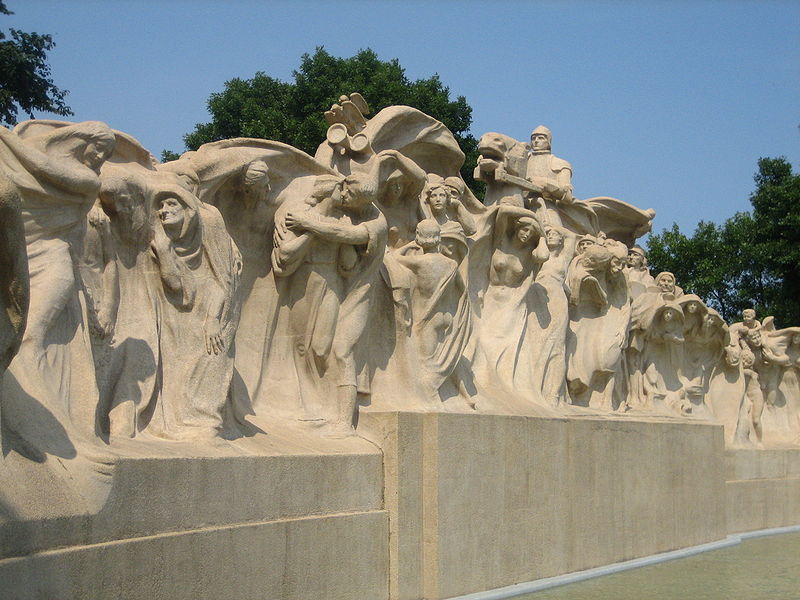


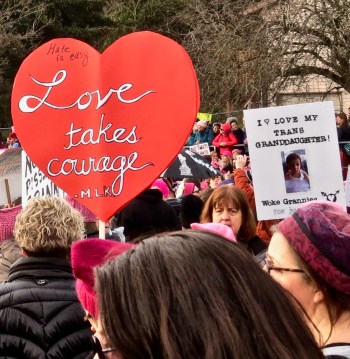

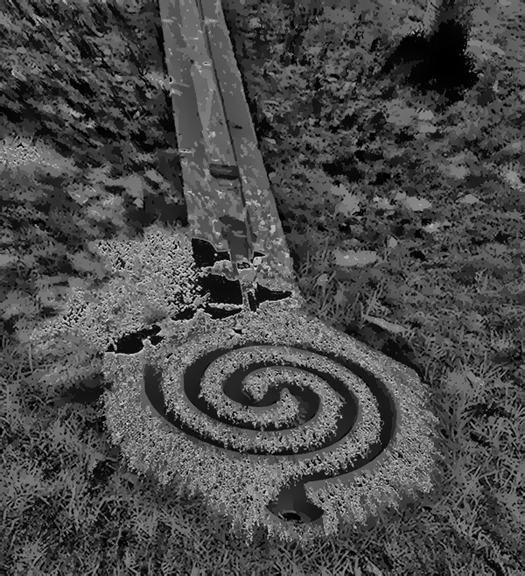
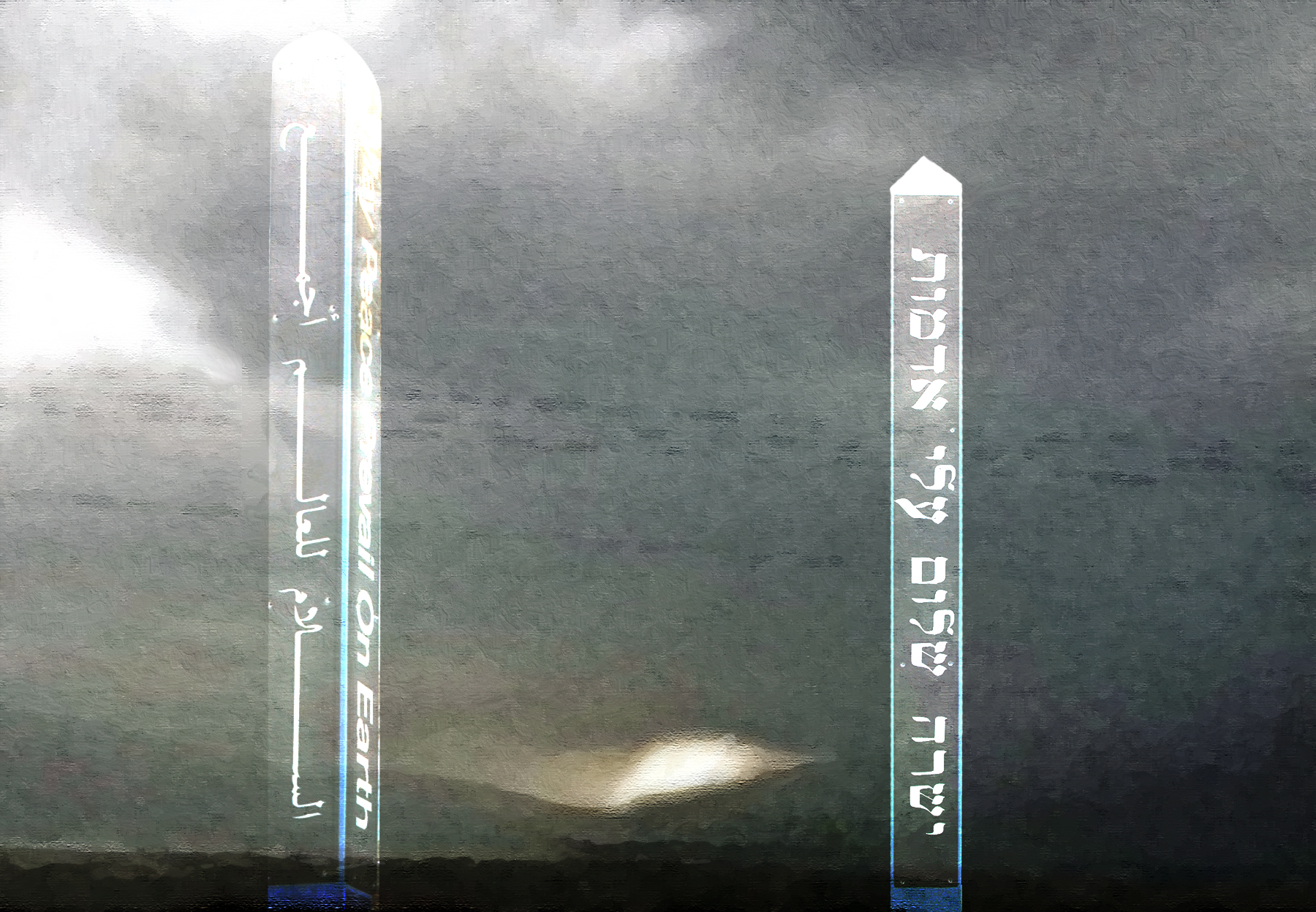

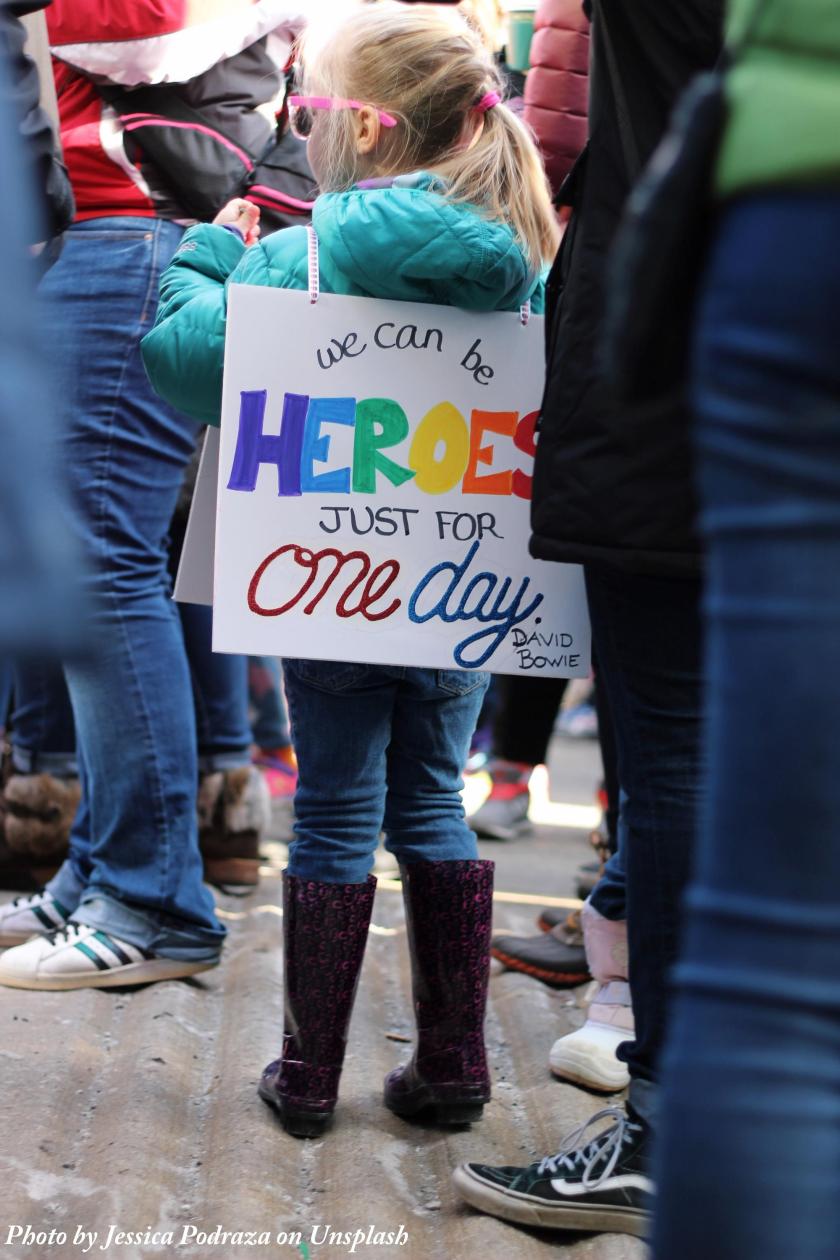
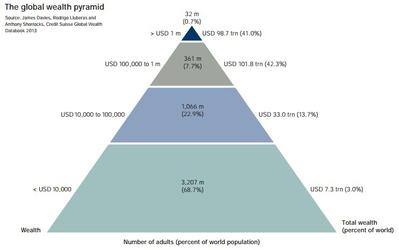
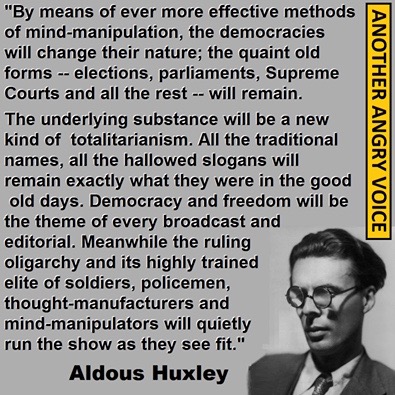
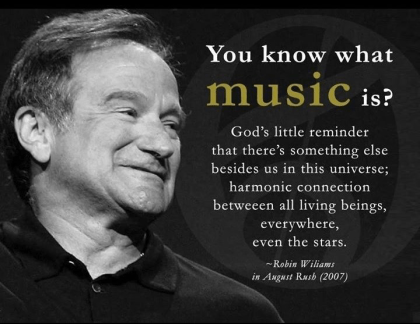
 references to it. Two fellow Brits are amongst the new contributors to The BeZine. From musician and composer, Joseph Alen Shaw, a piece that addresses the core of the
  It seems somehow right that we dance into our fifth year on a musical note and John’s perceptive and passionate introduction to this month’s The BeZine. It is no exaggeration to say that the longevity of this 100% volunteer effort is the outgrowth of the stalwart support of readers and contributors and the work, creativity, vision and perspicacity of our core team: John Anstie, Naomi Baltuck, James R. Cowles, Michael Dickel, Priscilla Galasso, Chrysty Hendrick, Joseph Hesch, Ruth Jewel, Charlie Martin, Liliana Negoi, Lana Phillips, Corina Ravenscraft ,Terri Stewart (founder of

 September 15, 2017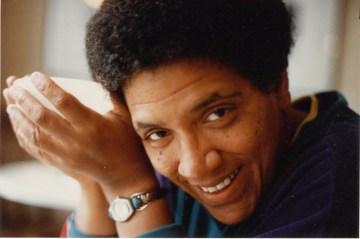
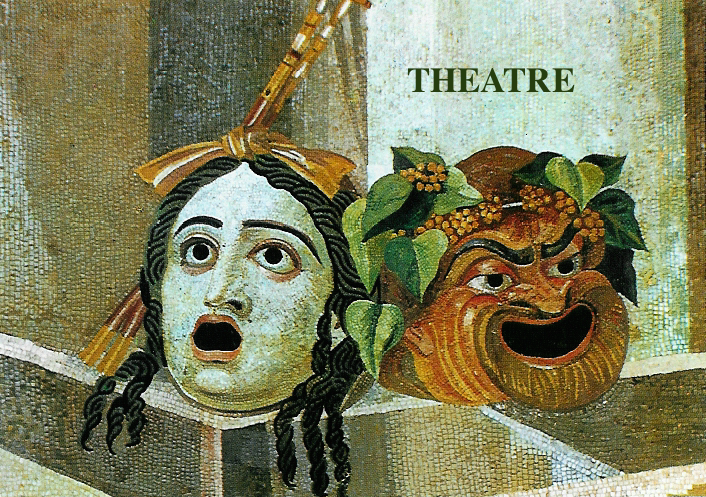
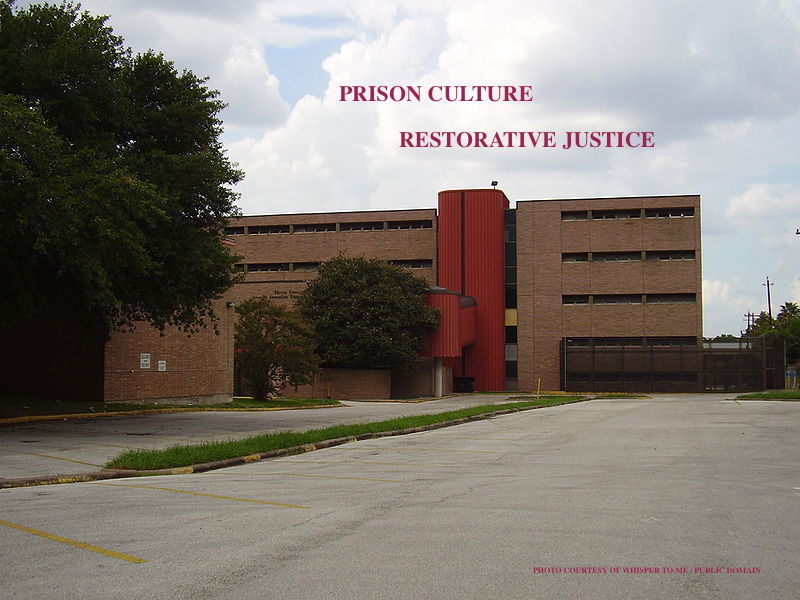 July 15, 2017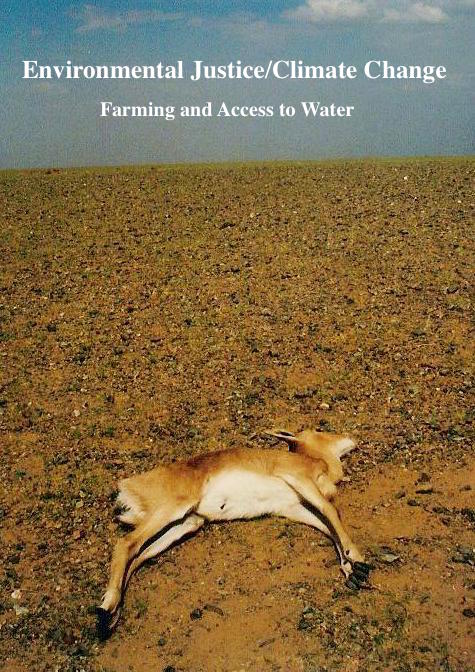
 “In a time of deceit telling the truth is a revolutionary act.”
 “In an age where there’s so much active misinformation, and it’s packaged very well, and it looks the same when you see it on a Facebook page or you turn on your television, where some over-zealousness on the part of a US official is equated with constant and severe repression elsewhere, if everything seems to be the same and no distinctions are made, then we won’t know what to protect…If we can’t discriminate between serious arguments and propaganda, then we have problems.”
 The BeZine